
Bar in New York City, United States
Point Seven
100ptsCorporate-Corridor Drinking
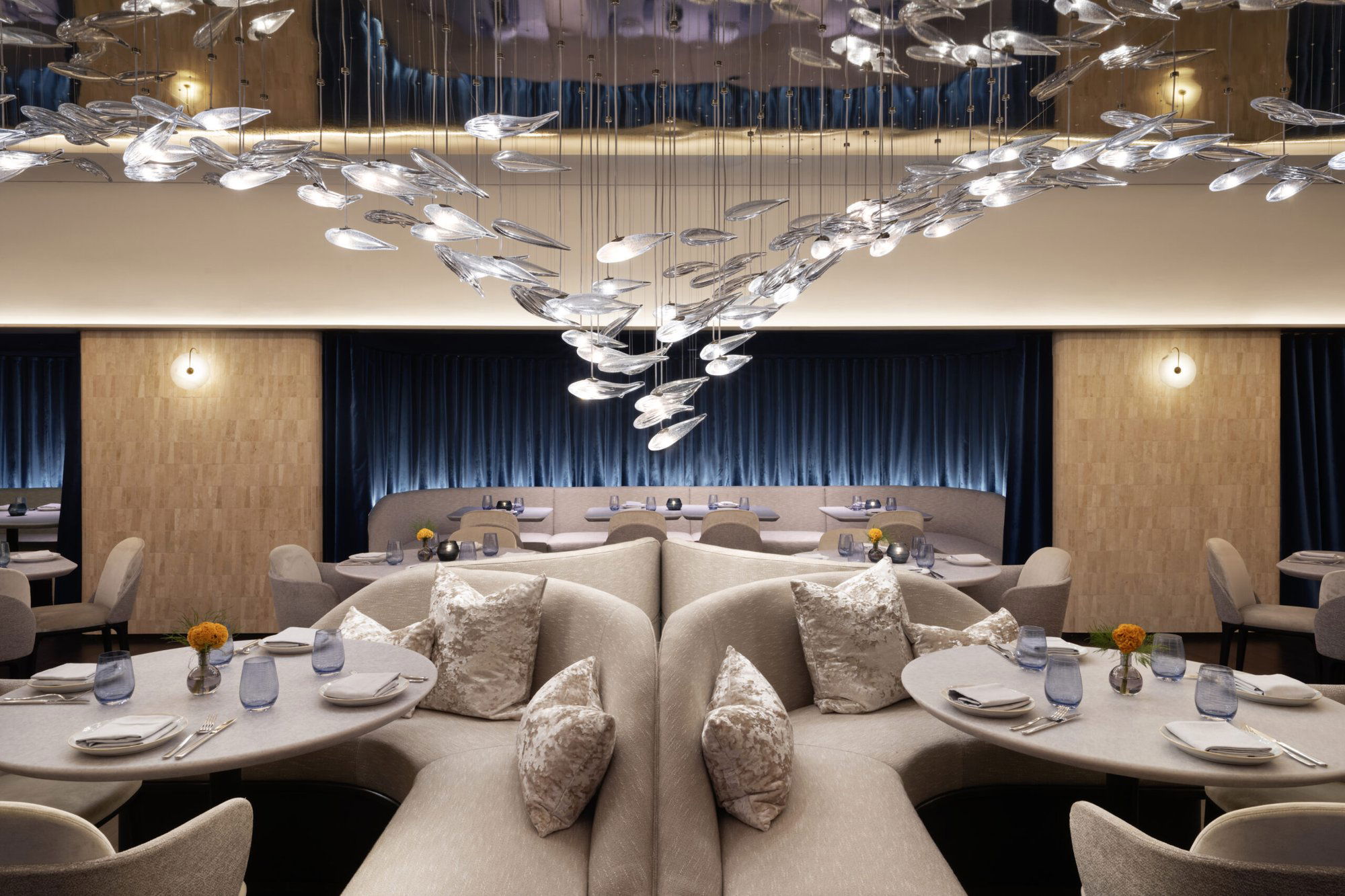
About Point Seven
Point Seven occupies a prominent address at 200 Park Avenue in Midtown Manhattan, placing it inside one of New York City's most competed-for commercial corridors. The venue sits at the intersection of corporate power dining and the city's broader shift toward destination drinking and eating, making it a reference point for understanding how Midtown has repositioned itself over the past decade.
Midtown's Long Reinvention and Where Point Seven Fits
For much of the past two decades, Midtown Manhattan operated under a reputation problem. The area around Park Avenue and Grand Central Terminal was associated with expense-account steakhouses, hotel dining rooms serving convention traffic, and bars that closed when the suits went home. That characterization was never entirely fair, but it was sticky enough to push serious food and drink coverage toward Downtown, Brooklyn, and the outer boroughs. The more interesting question now is how that has shifted — and what venues have emerged at the address level to signal a different kind of ambition.
Point Seven, at 200 Park Avenue, sits inside this longer story. The address alone carries weight: this is the MetLife Building, a structure that has processed more Midtown foot traffic than perhaps any other single building in New York. Operating at that address is not a neutral act. It positions a venue immediately within the gravitational pull of commuter patterns, corporate schedules, and the specific expectations that attach to power-corridor real estate. The question that shapes any honest assessment of Point Seven is whether it has found a way to operate on its own terms within that context, or whether the address has dictated the terms for it.
The Evolution of Drinking Programs in Corporate New York
New York's cocktail culture spent the 2000s and early 2010s anchored Downtown and in the East Village, where bars like Angel's Share had already demonstrated that serious, technique-driven drinking could sustain a loyal following without proximity to Midtown foot traffic. The model that emerged from those years — small format, citation-heavy menus, bartenders with strong program identities , was largely invisible in the Park Avenue corridor until the mid-2010s, when a broader commercial recalibration began pushing quality operators into Midtown real estate that had previously been considered too institutionally rigid.
That shift accelerated after 2020. The pandemic restructured office occupancy patterns in ways that forced venues in corporate corridors to reconsider who they were serving and when. The lunch-and-close model became financially unworkable. Venues that survived did so by extending their relevance across more parts of the day and by building drink and food programs capable of attracting guests who were choosing to be there rather than simply defaulting to proximity. Bars like Attaboy NYC and Amor y Amargo had already demonstrated that program depth creates destination behavior regardless of neighborhood. The lesson was available for Midtown operators willing to apply it.
Program Direction and the Current Moment
Point Seven's position at this specific juncture in the Midtown reinvention story makes it a useful case study in how a venue adapts across changing conditions. The evolution framing matters here: venues that opened in the MetLife Building orbit before 2015 were largely designed around a corporate client who wanted reliability and speed. The current operating environment rewards something different , a program that can hold the attention of a guest who has other options and is making an active choice.
What that means in practice, for any venue operating at this address in this period, is a set of pressures around menu distinctiveness, staff capability, and the ability to generate return visits outside the standard power-lunch window. The bars and restaurants that have found traction in comparable corridors , think of how Superbueno built a following on program specificity rather than foot traffic, or how Kumiko in Chicago demonstrated that a clear conceptual identity outperforms generic positioning in competitive urban markets , suggest that the path forward for Midtown venues runs through conviction rather than accommodation.
Comparable venues in other American cities have faced the same structural challenge. Jewel of the South in New Orleans and Julep in Houston both operate in historically complicated drinking corridors and have built their reputations through program depth rather than location advantage. ABV in San Francisco navigated a similar transition in a city where the relationship between commercial real estate and hospitality quality has been under sustained pressure. The thread connecting these examples is that address alone stopped being sufficient a long time ago.
Point Seven in the Wider New York Reference Frame
New York's current premium drinking and dining tier has spread geographically in ways that would have surprised observers from even a decade ago. The concentration of serious programs in the East Village and Lower East Side has been complemented by strong openings in Williamsburg, Greenpoint, and , increasingly , in Midtown proper. For a venue operating at 200 Park Avenue to hold its own against that broader field, it needs to offer something that the Downtown tier cannot simply replicate through convenience.
International comparison is instructive here. Bar Leather Apron in Honolulu built a program in a market with significant tourist traffic and demonstrated that technical rigor and a defined identity could coexist with a commercially heterogeneous clientele. Allegory in Washington, D.C. operates inside a hotel setting , not unlike Point Seven's immediate context , and has managed to develop a reputation that extends beyond the building's footprint. The Parlour in Frankfurt on the Main sits in a financial district with structural similarities to Park Avenue and has used a precise program identity to separate itself from the category defaults of its surroundings.
For readers building a New York itinerary that extends into Midtown, the relevant question is whether Point Seven has moved fully into that evolved tier , or whether it is still in transition. The address, the building, and the post-pandemic recalibration of Midtown's hospitality all point toward a venue at an interesting inflection point. Tracking how it develops over the next few years will say something useful not just about Point Seven itself, but about how much Midtown has genuinely changed.
For broader context on how Point Seven fits within New York City's wider food and drink ecosystem, see our full New York City restaurants guide.
Know Before You Go
Address: 200 Park Avenue, New York, NY 10166 (MetLife Building, Midtown Manhattan)
Getting There: Grand Central Terminal is directly connected to the MetLife Building via underground concourse , no street crossing required. The 4, 5, 6, 7, and S subway lines all stop at Grand Central-42nd Street.
Timing: Midtown venues at this address experience peak demand during traditional business lunch windows and post-work evening hours on weekdays. Weekends offer a materially different pace.
Booking: Specific booking details are not confirmed in our current data. Contact the venue directly before visiting to confirm hours and reservation availability.
Dress Code: Not confirmed. The building's corporate context and Midtown location suggest smart-casual is appropriate at minimum.
Frequently Asked Questions
What should I drink at Point Seven?
The honest answer is that specific menu details for Point Seven are not confirmed in our current verified data, which means any recommendation at the dish or cocktail level would be speculative. What the venue's Midtown address and post-pandemic context do suggest is alignment with the broader New York shift toward technically grounded drink programs , the kind that have defined the city's better bars over the past decade. If you are building a drinking itinerary for the area, cross-referencing Point Seven with recognized programs like Amor y Amargo and Angel's Share will give you a useful quality benchmark before you visit.
Why do people go to Point Seven?
The primary draw is location: 200 Park Avenue places Point Seven inside one of New York's most heavily trafficked commercial corridors, directly above the Grand Central Terminal connection point. For visitors and professionals working in Midtown, that proximity reduces friction in ways that matter. Beyond access, the venue occupies a period in Midtown's evolution when the area is actively working to shake the reputation for formulaic, expense-account-only hospitality , which means there is genuine curiosity about what ambitious operators are doing at these addresses right now.
Is Point Seven a good option for visitors staying near Grand Central or in Midtown East?
For anyone staying in the Grand Central corridor or along Park Avenue's commercial stretch, Point Seven's address makes it among the most logistically accessible options in Midtown , the underground connection from Grand Central Terminal to the MetLife Building means you can arrive without navigating street traffic. The venue sits in a tier of Midtown hospitality that has been actively repositioning since the early 2020s, making it relevant for visitors who want to understand how the area is changing rather than defaulting to the neighborhood's older, more institutionally oriented dining rooms. Confirming current hours and format with the venue directly is recommended before planning a visit.
More bars in New York City
- (SUB)MERCER(SUB)MERCER occupies a basement address on Mercer Street in SoHo, positioning it as a deliberate destination rather than a drop-in. The subterranean format tends to keep ambient noise lower than street-level alternatives, making it a reasonable call for groups of four or more. Book ahead for weekends and confirm group capacity directly with the venue.
- 1 OR 81 OR 8 on DeKalb Avenue is a low-key Fort Greene bar that works best for two people on a weeknight when the room is quiet enough for conversation. Walk-ins are easy, no advance planning required. If a specialist cocktail program is your priority, Attaboy or Amor y Amargo offer more defined experiences — but for a neighbourhood drink without the fuss, this delivers.
- 230 Fifth Rooftop Bar230 Fifth is the easiest rooftop bar in Midtown to walk into, and the Empire State Building views justify the trip. The crowd skews groups and tourists, and the drinks are solid rather than craft-focused. Go early on a weekday for the best version of the experience; after 9 PM on weekends it tips firmly into party-group territory.
- 4 Charles Prime Rib4 Charles Prime Rib is a compact, reservation-required West Village dining room built around a focused prime rib format. It works well for dates and pairs but is too small for groups of four or more. Booking is easy relative to Manhattan peers, and the narrow menu signals a kitchen that executes one thing consistently well.
- 44 & X Hell's KitchenA low-key Hell's Kitchen neighborhood bar-restaurant that earns its place for easy weeknight dates and pre-theatre dinners. Booking is simple, the room is intimate enough for conversation, and there's no dress pressure. Not a cocktail destination, but a reliable, pressure-free option in Midtown West when you want comfort over spectacle.
- 58-22 Myrtle Ave58-22 Myrtle Ave is a low-key Ridgewood neighborhood spot that rewards return visits more than first impressions. Easy to get into, with no reservation headaches, it suits regulars looking for an unpretentious room rather than a structured cocktail program. If a strong drinks list or kitchen ambition matters to you, look to Attaboy or Amor y Amargo instead.
Related editorial
- Best Fine Dining Restaurants in ParisFrom three-Michelin-star icons to the next generation of Parisian chefs pushing boundaries, these are the restaurants that define fine dining in the world's culinary capital.
- Best Luxury Hotels in RomeFrom rooftop terraces overlooking ancient ruins to Michelin-starred hotel dining, these are the luxury hotels that make Rome unforgettable.
- Best Cocktail Bars in KyotoFrom sleek lounges to hidden speakeasies, Kyoto's cocktail scene blends Japanese precision with global influence in ways you won't find anywhere else.
Save or rate Point Seven on Pearl
Keep this venue in your Pearl passport, rate it after you visit, and track it alongside every other place you collect.