
Bar in New York City, United States
Llama Inn
100ptsAndean-Rooted Cocktail Craft
About Llama Inn
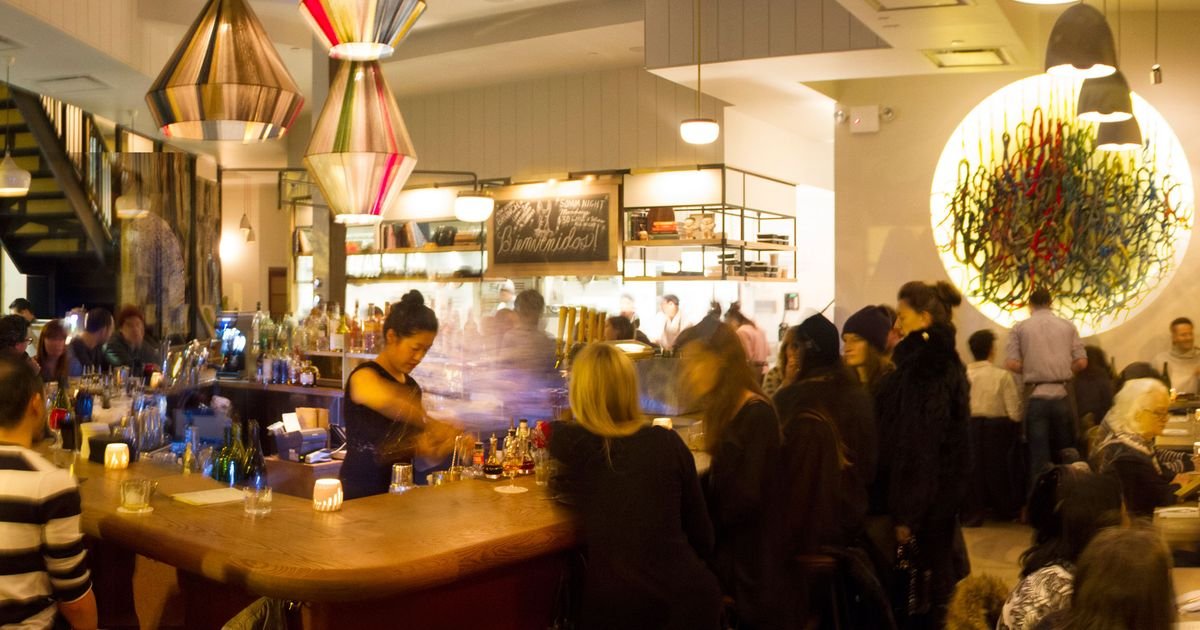
Llama Inn occupies a rooftop perch in Williamsburg, Brooklyn, where Peruvian-inflected cooking meets a cocktail programme built around South American spirits and technique. The bar draws from pisco, chicha morada, and Amazonian botanicals to produce drinks that sit well outside New York's standard Latin bar register. It belongs to a small tier of Brooklyn venues where the drink list carries equal editorial weight to the kitchen.
Where Brooklyn Meets the Andes: The Case for Llama Inn's Bar Programme
Williamsburg's rooftop dining scene has cycled through several identities since the neighbourhood's industrial conversion gathered pace in the early 2010s. What began as a cluster of casual beer gardens and pizza counters has, over the following decade, matured into a tier of destination restaurants where the ambition of the kitchen and bar matches any comparable address in Manhattan. Llama Inn, at 50 Withers Street in the northern stretch of Williamsburg, arrived as part of that maturation wave, staking out a position where Peruvian cooking and a technically serious cocktail programme share the same editorial weight.
That framing matters because Lima-influenced restaurants in New York have long concentrated their drink programmes on pisco sours and little else. The pisco sour is a legitimate canon drink and deserves its place, but it also functions, in lesser programmes, as a way of signalling South American identity without doing the harder creative work. The cocktail tradition that runs through the Andes and into the Amazon basin is considerably wider: chicha morada, the fermented and non-fermented purple corn drinks of the highlands; huacatay, the black mint native to Peru; Amazonian fruits that appear in aguardiente-based preparations across the region. A bar that reaches into those materials, rather than parking itself at the pisco sour and calling it done, is operating at a different level.
The Cocktail Programme in Context
New York's broader cocktail scene has, since roughly 2015, split into two legible camps. The first is the transparency-and-technique movement: bars where clarified milk punches, fat-washed spirits, and precise temperature control are the vocabulary, and where the menu reads like a production document. The second is the flavour-first camp, where region, ingredient provenance, and cultural specificity drive the list. Amor y Amargo sits emphatically in the first camp, with a bitters-focused programme that has defined its niche for years. Angel's Share, in the East Village, represents a longer-standing Japanese whisky and precision tradition. Attaboy NYC operates on a riff-and-rapport model where the bartender reads the guest and builds accordingly.
Llama Inn's bar occupies different territory from all three. The South American spirits base, combined with kitchen ingredients, means the cocktail list is oriented around ingredient specificity rather than technique display. That does not mean technique is absent: pisco preparation, the control of citrus acidity in a ceviche-adjacent context, and the use of fermented corn derivatives all require precision. But the legible identity of the programme is the ingredient set, not the method. Among bars doing serious work with Latin American spirits in New York, this places Llama Inn alongside Superbueno, though the two draw on different regional traditions and produce distinct results.
For a wider map of how this kind of ingredient-led cocktail thinking plays out across American cities, the comparison set is instructive. Kumiko in Chicago applies Japanese liqueur traditions to a similar philosophy of ingredient primacy. Jewel of the South in New Orleans works from historical American cocktail roots with a similarly serious approach to sourcing. Julep in Houston builds its identity around Southern spirits traditions. What these programmes share is the rejection of technique-as-spectacle in favour of legible, place-rooted flavour. Bar Leather Apron in Honolulu takes a comparable approach through a Pacific lens. Llama Inn fits into that peer set: a bar where the drink tells you something about a specific culinary geography rather than demonstrating what a centrifuge can do.
The Food Programme and Its Relationship to the Bar
The Peruvian kitchen at Llama Inn does not operate in a separate register from the cocktail programme. Lima's contemporary dining culture, as it has developed both in Peru and across its global diaspora, treats acidity, spice, and fermentation as structural elements rather than seasoning choices. Those same elements organise the cocktail list: citrus-forward pisco drinks read as natural companions to tiradito; the slight bitterness of Amazonian botanicals mirrors the char and roast notes in a wood-fired preparation. The coherence between plate and glass at Llama Inn is the kind of alignment that some restaurants achieve by accident and others build deliberately. The rooftop setting, with its views toward Manhattan across the East River, adds a spatial logic: the height and the open air suit the brightness of the food and drink both.
Williamsburg's restaurant density means Llama Inn competes in a crowded field. Dirty French, over on the Manhattan side in the Lower East Side, demonstrates what happens when French technique meets New York ambition and a strong bar identity. The comparison is useful not because the cuisines are related but because both venues show how a clearly defined kitchen-bar relationship can stabilise a restaurant's identity in a competitive market. Llama Inn's version of that relationship is, arguably, more coherent: the ingredients move between departments rather than the programmes merely coexisting.
Who Goes, and When
The rooftop format and the Williamsburg address together shape a particular crowd dynamic. The neighbourhood draws a mix of local residents, visitors crossing from Manhattan for a destination dinner, and the cocktail-curious contingent that tracks bar programmes across boroughs. The warm months from late spring through early autumn are when the rooftop operates at full advantage, and booking ahead for weekend evenings during that window is advisable. The bar seats, as at most comparable Brooklyn venues, tend to absorb walk-in traffic that cannot get a table, which makes the cocktail programme accessible even on busy nights. For those primarily interested in the drinks rather than a full dinner, positioning at the bar rather than waiting for a table is the efficient approach.
Readers building a broader New York itinerary around serious cocktail programmes can consult our full New York City restaurants guide for the wider context. Internationally, bars working in comparable tradition-rooted, ingredient-forward territory include ABV in San Francisco, Allegory in Washington, D.C., and The Parlour in Frankfurt on the Main, each anchoring their programmes in a distinct regional or cultural frame.
Know Before You Go
- Address: 50 Withers St, Brooklyn, NY 11211
- Neighbourhood: Williamsburg, Brooklyn
- Leading approach: The venue is accessible via the L train to Lorimer Street or the G train to Metropolitan Avenue; the walk from either station is under ten minutes
- Timing: Rooftop season runs late spring through early autumn; bar seating absorbs walk-in traffic on most nights
- Reservations: Recommended for weekend dinners; contact the venue directly for current booking options
- Drink focus: Pisco, South American spirits, and kitchen-integrated cocktails with Peruvian botanical ingredients
Frequently Asked Questions
- What should I drink at Llama Inn?
- The cocktail programme draws on pisco and South American botanicals, moving well beyond the standard pisco sour register that defines most Peruvian-adjacent bars in New York. The most useful entry point is a pisco-based drink that incorporates a kitchen ingredient, where the overlap between the bar and the Peruvian cooking is most legible. The list rewards guests who are familiar with Latin American spirits traditions but is designed to be navigable without that background.
- What's the defining thing about Llama Inn?
- The defining characteristic is the coherence between the Peruvian kitchen and the cocktail programme. Where many restaurants treat the bar as a revenue line that runs parallel to the food, Llama Inn operates the two departments around a shared ingredient logic. In Brooklyn's competitive restaurant market, and against the broader New York cocktail scene, that alignment is relatively unusual and constitutes the clearest reason to make a specific trip.
- Can I walk in to Llama Inn?
- Bar seating at comparable Brooklyn rooftop venues typically accommodates walk-in guests even when the dining room is fully booked, and Llama Inn follows that general pattern. For dinner tables, particularly on weekend evenings during the warm-weather rooftop season, a reservation is the reliable approach. Guests primarily interested in the cocktail programme have a reasonable chance of finding bar space without advance booking, though this is always subject to the evening's volume.
- Who tends to like Llama Inn most?
- The venue draws guests who are already engaged with either serious cocktail programmes or Peruvian and Latin American cooking, or both. Brooklyn residents treating it as a neighbourhood destination make up part of the crowd, alongside Manhattan visitors who cross the river for a specific dinner. The rooftop setting extends its appeal to those for whom the physical experience of the space matters alongside the food and drink.
- Is Llama Inn worth visiting?
- For anyone interested in how a South American spirits programme can be integrated with kitchen ingredients to produce a coherent drink list, Llama Inn represents one of the more developed examples of that approach in New York. The combination of the rooftop setting, the Peruvian cooking, and the cocktail programme creates a venue with a clear identity, which is a more useful basis for a visit than any single superlative. The bar seats alone justify a trip if a table is unavailable.
- How does Llama Inn fit into the broader tradition of Peruvian dining in New York?
- Peruvian restaurants in New York have historically concentrated in Queens, particularly Jackson Heights and Woodside, where the community established a dense cluster of traditional cevicherias and rotisserie chicken houses. Llama Inn operates at a different point in that tradition, bringing Lima's contemporary restaurant culture, with its Japanese and Spanish influences and its emphasis on precise acidity and fermentation, into a Brooklyn dining context. That positioning makes it part of a small group of New York venues where Peruvian cooking is engaged at the level of technique and ingredient sourcing rather than simply representing the cuisine to a broad audience.
More bars in New York City
- (SUB)MERCER(SUB)MERCER occupies a basement address on Mercer Street in SoHo, positioning it as a deliberate destination rather than a drop-in. The subterranean format tends to keep ambient noise lower than street-level alternatives, making it a reasonable call for groups of four or more. Book ahead for weekends and confirm group capacity directly with the venue.
- 1 OR 81 OR 8 on DeKalb Avenue is a low-key Fort Greene bar that works best for two people on a weeknight when the room is quiet enough for conversation. Walk-ins are easy, no advance planning required. If a specialist cocktail program is your priority, Attaboy or Amor y Amargo offer more defined experiences — but for a neighbourhood drink without the fuss, this delivers.
- 230 Fifth Rooftop Bar230 Fifth is the easiest rooftop bar in Midtown to walk into, and the Empire State Building views justify the trip. The crowd skews groups and tourists, and the drinks are solid rather than craft-focused. Go early on a weekday for the best version of the experience; after 9 PM on weekends it tips firmly into party-group territory.
- 4 Charles Prime Rib4 Charles Prime Rib is a compact, reservation-required West Village dining room built around a focused prime rib format. It works well for dates and pairs but is too small for groups of four or more. Booking is easy relative to Manhattan peers, and the narrow menu signals a kitchen that executes one thing consistently well.
- 44 & X Hell's KitchenA low-key Hell's Kitchen neighborhood bar-restaurant that earns its place for easy weeknight dates and pre-theatre dinners. Booking is simple, the room is intimate enough for conversation, and there's no dress pressure. Not a cocktail destination, but a reliable, pressure-free option in Midtown West when you want comfort over spectacle.
- 58-22 Myrtle Ave58-22 Myrtle Ave is a low-key Ridgewood neighborhood spot that rewards return visits more than first impressions. Easy to get into, with no reservation headaches, it suits regulars looking for an unpretentious room rather than a structured cocktail program. If a strong drinks list or kitchen ambition matters to you, look to Attaboy or Amor y Amargo instead.
Related editorial
- Best Fine Dining Restaurants in ParisFrom three-Michelin-star icons to the next generation of Parisian chefs pushing boundaries, these are the restaurants that define fine dining in the world's culinary capital.
- Best Luxury Hotels in RomeFrom rooftop terraces overlooking ancient ruins to Michelin-starred hotel dining, these are the luxury hotels that make Rome unforgettable.
- Best Cocktail Bars in KyotoFrom sleek lounges to hidden speakeasies, Kyoto's cocktail scene blends Japanese precision with global influence in ways you won't find anywhere else.
Save or rate Llama Inn on Pearl
Keep this venue in your Pearl passport, rate it after you visit, and track it alongside every other place you collect.