
Bar in New York City, United States
Lighthouse
100ptsSustainability-Driven Pours
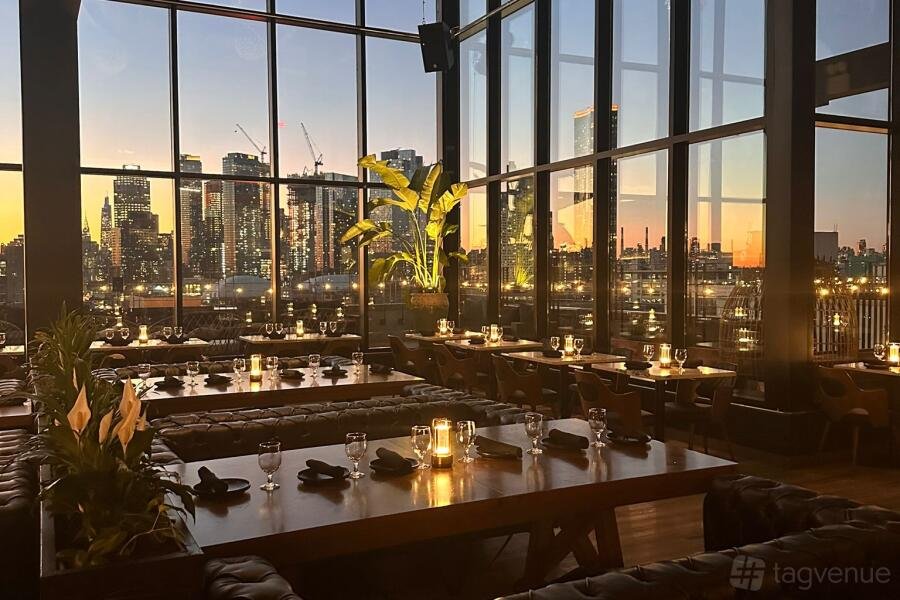
About Lighthouse
Lighthouse occupies a corner of Williamsburg's Borinquen Place where Brooklyn's bar culture intersects with a growing commitment to sustainable practice. The program draws on the neighbourhood's deeper tradition of craft-forward hospitality, placing sourcing and environmental accountability at the center of how drinks are built and served.
Williamsburg and the Ethics of the Pour
Brooklyn's bar scene did not arrive at sustainability through ideology alone. It got there through economics, neighbourhood identity, and a growing critical consensus that what goes into a glass matters as much as what comes out of it. Over the past decade, Williamsburg has become one of New York's most concentrated zones for bars that treat sourcing, waste reduction, and producer relationships as operational priorities rather than marketing footnotes. Lighthouse, at 145 Borinquen Place, sits inside that current.
The address places it at the southern edge of Williamsburg, a block pattern that has shifted gradually from light industrial use to a denser hospitality footprint over the past fifteen years. That history matters because it shaped the kind of bar that could survive here: one that appeals to a neighbourhood audience with genuine knowledge expectations, not a transient tourist circuit. The bars that have lasted in this pocket tend to be program-driven, and Lighthouse reads as exactly that kind of operation.
Where Sustainability Enters the Glass
The broader shift toward environmental accountability in American bar culture has moved through several phases. The first wave was about straws and ice reduction. The second, more substantive wave involved sourcing decisions: which spirits producers use regenerative agriculture, which wine and fortified wine suppliers can document their vineyard practices, which local farms supply fresh botanicals without the carbon weight of transcontinental freight. Bars operating at the thoughtful end of this second wave typically build menus around a smaller, more intentional ingredient list rather than a maximalist back bar designed to impress on volume alone.
This approach has trade-offs. Narrower sourcing means fewer options and more constrained menu-building. It also means the bar's identity becomes legible through its selections rather than its breadth. When done well, it creates a coherence that broader programs often lack. New York has a handful of bars working in this register with real discipline. Amor y Amargo has built its entire program around amaro and bitters with a clarity of purpose that few venues match. Attaboy NYC on the Lower East Side operates through a guest-responsive format that eliminates menu waste almost entirely. Lighthouse's position in Williamsburg places it in the same broader conversation, even as its specific approach is its own.
The Brooklyn Context and Its Competitive Set
Understanding Lighthouse means understanding where Williamsburg sits in New York's bar geography. Manhattan venues like Angel's Share in the East Village carry a different kind of institutional weight, built over decades and oriented toward a precision-cocktail tradition with Japanese influence. Williamsburg bars tend to operate with less ceremony and more neighborhood immediacy. The audience skews local, the format tends toward accessibility, and the critical pressure comes less from the Michelin orbit and more from a literate regular clientele who know their producers and their regions.
That competitive pressure has produced some of New York's more interesting bar programs. Superbueno has pushed agave-forward programming into creative territory that Manhattan venues rarely attempt at the same price point. These are the peer references that matter when thinking about Lighthouse's position: bars where the intelligence of the program is the draw, not the address or the celebrity affiliation.
Nationally, the same pattern appears in cities with strong craft bar cultures. Kumiko in Chicago built its reputation around Japanese whisky and technique. ABV in San Francisco operates with a commitment to natural wine and low-intervention spirits that mirrors the sustainability priorities now visible across American bar culture. Jewel of the South in New Orleans grounds its program in historical cocktail research. Julep in Houston has made Southern provenance a sourcing philosophy. Allegory in Washington, D.C. uses narrative and ingredient storytelling as a program structure. Even internationally, bars like The Parlour in Frankfurt on the Main and Bar Leather Apron in Honolulu have demonstrated that sustainability-conscious programming is not a regional quirk but a global shift in how serious bar programs define themselves.
Lighthouse joins a growing international cohort that treats the supply chain as part of the bar's editorial voice.
What the Address Signals
Borinquen Place runs through a part of Williamsburg with significant Puerto Rican and Latin American community history, a neighbourhood character that has exerted real influence on the food and drink culture of the surrounding blocks. Bars and restaurants that have built lasting relationships in this part of Brooklyn have generally done so by engaging with that context rather than ignoring it. A sustainability frame, when applied thoughtfully, includes relationships with local producers and awareness of the economic ecosystem the bar inhabits, not just the environmental mechanics of waste and sourcing.
For practical planning, Williamsburg is accessible via the L train, with the Bedford Avenue stop serving the northern end of the neighbourhood and Morgan Avenue covering the southern, more industrial corridor. Borinquen Place sits closer to the latter. Visitors coming from Manhattan should factor in the L train's variable weekend service patterns, particularly during late-night hours. Booking specifics for Lighthouse are not published in centralized databases, so arriving with flexibility or checking directly with the venue before visiting is the practical approach.
Planning Your Visit
For a broader map of where Lighthouse sits within New York's bar and restaurant ecosystem, our full New York City restaurants guide covers the range of neighbourhoods and program types across the five boroughs. The Williamsburg corridor specifically rewards visitors who move between two or three venues in an evening rather than anchoring at one, given the density of interesting programming within walking distance of Borinquen Place.
The case for bars built around sustainability is ultimately not an environmental argument alone. It is an argument about quality: that knowing where an ingredient comes from, building relationships with producers, and reducing waste through thoughtful menu design tend to produce better drinks than maximalist back bars assembled without a point of view. Lighthouse operates in a part of Brooklyn where that argument has been tested by a knowledgeable audience over time, and where the bars that endure are the ones whose program holds up under that scrutiny.
Frequently Asked Questions
- What's the must-try cocktail at Lighthouse?
- Specific menu details for Lighthouse are not available in published records at this time. As a reference point, bars in Williamsburg's sustainability-conscious tier typically build signature drinks around low-intervention spirits, local botanicals, and housemade syrups rather than high-volume commercial brands. Checking the venue's current menu directly will give you the most accurate picture of what the program is leading with.
- What makes Lighthouse worth visiting?
- Lighthouse operates in one of Brooklyn's most program-driven bar neighbourhoods, where the expectation is that sourcing and craft decisions are legible in the glass. For drinkers interested in bars that treat environmental accountability as a genuine operational commitment rather than a branding layer, Williamsburg's bar corridor, with Lighthouse as one of its participants, is one of the more compelling destinations in New York.
- Do I need a reservation for Lighthouse?
- Booking specifics for Lighthouse are not currently available through centralized databases. In general, Williamsburg bars at the craft end of the market can fill quickly on weekend evenings, particularly when a program has built a committed local following. Contacting the venue directly before visiting is advisable, especially for Friday and Saturday nights.
- What's Lighthouse a strong choice for?
- Lighthouse suits drinkers who want a Brooklyn bar experience grounded in sourcing awareness and program coherence rather than spectacle or scale. It sits in a neighbourhood with a literate bar audience and a history of supporting venues that prioritize substance. For visitors who have already covered the Manhattan circuit and want to understand where Brooklyn's bar culture is heading, this part of Williamsburg is a productive area to spend an evening.
- How does Lighthouse fit into Brooklyn's broader sustainability-focused bar movement?
- Williamsburg and the surrounding Brooklyn neighbourhoods have become a testing ground for bars that integrate environmental accountability into their core program structure, from producer selection to waste minimisation. Lighthouse's location on Borinquen Place places it within a community that has historically supported businesses engaged with local and ethical supply chains. For visitors tracking how American bar culture is evolving beyond the first wave of craft cocktails into a more rigorous sourcing conversation, Brooklyn's southern Williamsburg corridor is one of the more instructive stops, and Lighthouse is part of that emerging cohort.
More bars in New York City
- (SUB)MERCER(SUB)MERCER occupies a basement address on Mercer Street in SoHo, positioning it as a deliberate destination rather than a drop-in. The subterranean format tends to keep ambient noise lower than street-level alternatives, making it a reasonable call for groups of four or more. Book ahead for weekends and confirm group capacity directly with the venue.
- 1 OR 81 OR 8 on DeKalb Avenue is a low-key Fort Greene bar that works best for two people on a weeknight when the room is quiet enough for conversation. Walk-ins are easy, no advance planning required. If a specialist cocktail program is your priority, Attaboy or Amor y Amargo offer more defined experiences — but for a neighbourhood drink without the fuss, this delivers.
- 230 Fifth Rooftop Bar230 Fifth is the easiest rooftop bar in Midtown to walk into, and the Empire State Building views justify the trip. The crowd skews groups and tourists, and the drinks are solid rather than craft-focused. Go early on a weekday for the best version of the experience; after 9 PM on weekends it tips firmly into party-group territory.
- 4 Charles Prime Rib4 Charles Prime Rib is a compact, reservation-required West Village dining room built around a focused prime rib format. It works well for dates and pairs but is too small for groups of four or more. Booking is easy relative to Manhattan peers, and the narrow menu signals a kitchen that executes one thing consistently well.
- 44 & X Hell's KitchenA low-key Hell's Kitchen neighborhood bar-restaurant that earns its place for easy weeknight dates and pre-theatre dinners. Booking is simple, the room is intimate enough for conversation, and there's no dress pressure. Not a cocktail destination, but a reliable, pressure-free option in Midtown West when you want comfort over spectacle.
- 58-22 Myrtle Ave58-22 Myrtle Ave is a low-key Ridgewood neighborhood spot that rewards return visits more than first impressions. Easy to get into, with no reservation headaches, it suits regulars looking for an unpretentious room rather than a structured cocktail program. If a strong drinks list or kitchen ambition matters to you, look to Attaboy or Amor y Amargo instead.
Related editorial
- Best Fine Dining Restaurants in ParisFrom three-Michelin-star icons to the next generation of Parisian chefs pushing boundaries, these are the restaurants that define fine dining in the world's culinary capital.
- Best Luxury Hotels in RomeFrom rooftop terraces overlooking ancient ruins to Michelin-starred hotel dining, these are the luxury hotels that make Rome unforgettable.
- Best Cocktail Bars in KyotoFrom sleek lounges to hidden speakeasies, Kyoto's cocktail scene blends Japanese precision with global influence in ways you won't find anywhere else.
Save or rate Lighthouse on Pearl
Keep this venue in your Pearl passport, rate it after you visit, and track it alongside every other place you collect.