
Bar in New York City, United States
GERTIE
100ptsGrand Street Pour-Over
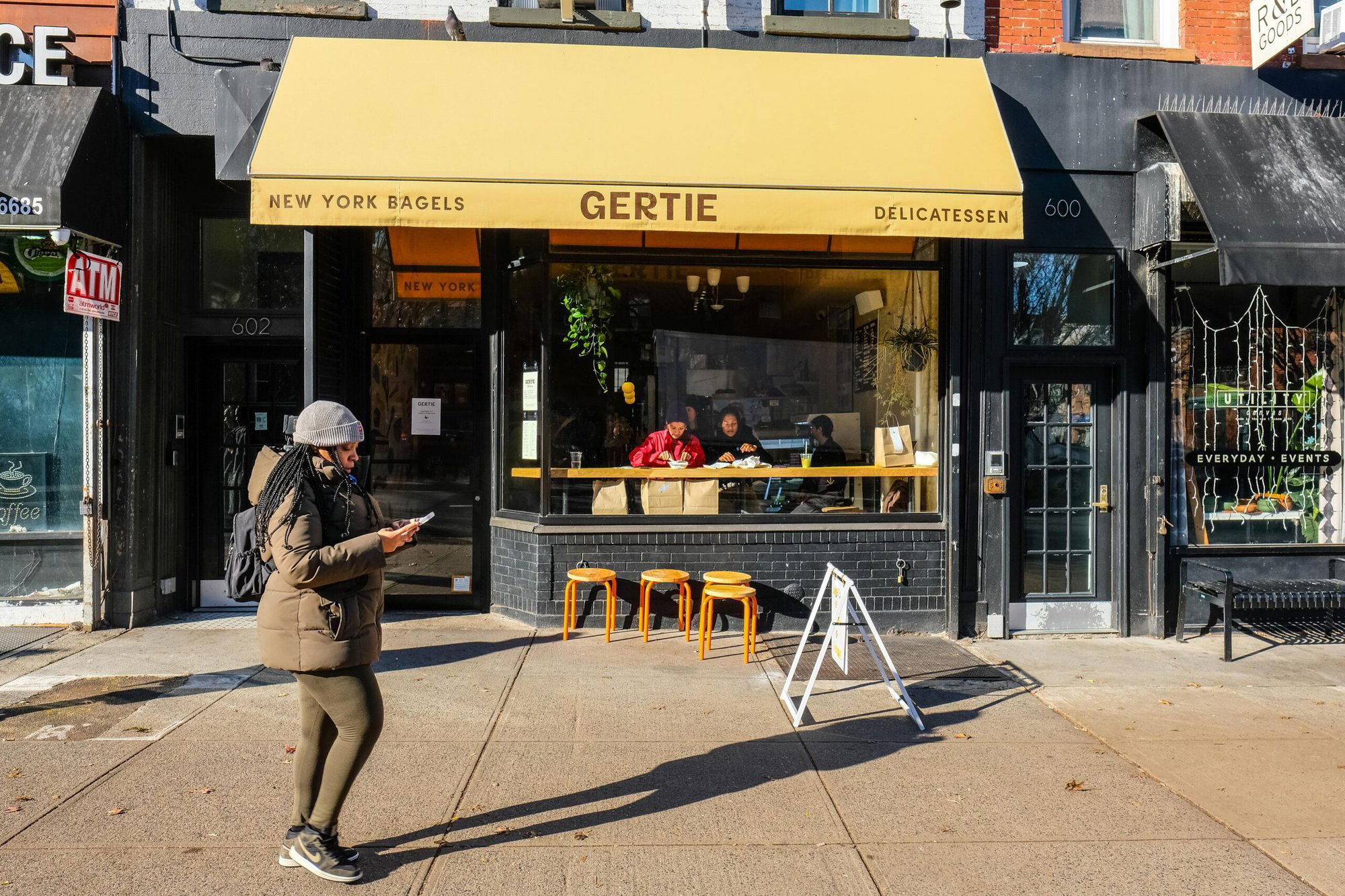
About GERTIE
A low-key Williamsburg bar on Grand Street, GERTIE occupies the quieter end of Brooklyn's drinking scene: neighborhood-focused, spirits-forward, and built for the kind of evening that stretches without effort. It sits in a borough that has produced some of New York's most considered drinking rooms, and it earns its place in that conversation through curation rather than spectacle.
Brooklyn's Spirits-Forward Drinking Room
The stretch of Grand Street that runs through Williamsburg operates at a different register from the neighborhood's louder commercial corridors. Where Bedford Avenue moves fast and loud, Grand Street has retained a residential quality that makes a bar feel like a destination rather than a pit stop. GERTIE at 357 Grand St sits within that grain, a room that reads immediately as a place for considered drinking rather than volume. The approach from the street sets the expectation: modest frontage, no theatrical signage, nothing designed to pull in foot traffic that doesn't already know where it's going.
That restraint is, in context, a position. Brooklyn's bar scene has matured significantly over the past decade, splitting into two broad camps: high-concept cocktail programs with ambitious technical menus, and neighborhood-anchored rooms that prioritize depth of selection and genuine hospitality over format novelty. GERTIE belongs to the second category, and that placement carries its own credibility. Across New York, this kind of bar often develops a more loyal and demanding regular clientele than its flashier counterparts, because the repeat visitor is the core audience, not the tourist making a one-night tour of the borough's drinking highlights.
The Back Bar as Editorial Argument
The organizing logic of a spirits-forward bar like GERTIE is the collection behind the bar. In a city where cocktail menus often absorb most of the creative energy, a room that instead invests in the depth and range of its bottle selection is making a different argument: that the drink's quality starts with what's in the bottle, not what's done to it afterward. This is a philosophy that connects GERTIE to a broader movement visible across American drinking cities. ABV in San Francisco built its reputation on precisely this kind of curation, as did Bar Leather Apron in Honolulu, where the selection of Japanese whiskies and amari reads as a sustained collector's argument rather than a commercial assortment.
The discipline required to build a meaningful back bar is different from the discipline required to design a clever cocktail menu. A good collection develops over time, through sourcing relationships, attentive allocation management, and a willingness to hold bottles that reward patience rather than chasing whatever is currently trending in the trade press. Bars that get this right tend to become reference points for a particular category of drinker: the person who walks in knowing what they want to try, or who defers entirely to the bartender's guidance because they trust that the selection reflects genuine expertise. Amor y Amargo in Manhattan built exactly that kind of authority around bitters and amaro, becoming the kind of room that serious spirits drinkers treat as an education rather than just an evening out.
Where GERTIE Sits in the New York Drinking Map
New York's bar scene is large enough to sustain genuine specialization, and the outer boroughs have increasingly become where that specialization lives without the overhead pressures that push Manhattan bars toward volume and throughput. Williamsburg specifically has produced a tier of drinking rooms that operate with the seriousness of the city's most recognized cocktail bars while maintaining a neighborhood scale. This is the competitive set GERTIE operates within, and it's a more demanding one than it might appear from the outside.
The comparison set across the East River is relevant. Angel's Share in the East Village has held its reputation for decades through strict format discipline and a commitment to Japanese whisky and sake-inflected cocktails. Attaboy NYC on Eldridge Street operates without a printed menu and relies entirely on bartender knowledge and guest dialogue to drive the drink. Superbueno pushes in a different direction, toward tequila and mezcal with a culinary framework that makes the food and drink inseparable. Each of these rooms has a defined identity within a specific category. A bar earns its place in that conversation not by claiming it, but by developing a point of view that holds up under the scrutiny of regular, knowledgeable visitors.
Beyond New York, the pattern of bars building identity through spirits depth rather than cocktail theatrics appears consistently in cities with serious drinking cultures. Kumiko in Chicago integrates Japanese spirits into a program that treats the ingredient as the primary subject. Jewel of the South in New Orleans grounds itself in historical cocktail research and the provenance of its spirits. Julep in Houston built a focused Southern spirits collection that serves as both a menu and an argument about regional identity. Allegory in Washington, D.C. takes the concept program route, but the underlying quality of the spirits selection remains the foundation. Even internationally, The Parlour in Frankfurt on the Main demonstrates how the back bar as curatorial statement translates across markets. GERTIE operates within this broader tradition of bars where what's on the shelf tells you as much about the room's identity as what's on the menu.
Planning Your Visit
GERTIE is located at 357 Grand St in Williamsburg, Brooklyn, accessible from the Marcy Avenue J, M, and Z subway stop or a short walk from the Broadway G train station. The address places it in a residential pocket that rewards a slow evening: this is not a bar you visit between two other bookings. Current booking details, hours, and any reservation policy are leading confirmed directly through the venue, as operating formats in this tier of Brooklyn bar tend to evolve without much fanfare. For a wider view of what New York's drinking and dining scene offers at this level, the EP Club New York City guide maps the full range of options across the boroughs.
Frequently Asked Questions
- What kind of setting is GERTIE?
- GERTIE is a neighborhood bar in Williamsburg, Brooklyn, with a low-key residential character that contrasts with the higher-volume drinking rooms on nearby commercial streets. It occupies the quieter, more considered end of the Brooklyn bar spectrum: a room built for a sustained evening rather than a quick round.
- What should I try at GERTIE?
- Given its spirits-forward framing, the strongest approach is to engage directly with the bartender about the back bar selection rather than defaulting to a standard cocktail order. Bars in this category reward guests who ask about the collection; that's where the knowledge of the room tends to concentrate.
- What's the defining thing about GERTIE?
- Its positioning within Williamsburg's residential drinking culture, where the emphasis falls on selection depth and repeat-visitor loyalty rather than concept novelty. In a borough that now has recognizable names across multiple cocktail categories, a bar that earns its place through curation and consistency occupies a meaningful niche.
- Is GERTIE reservation-only?
- Reservation details are not confirmed in current public data. Walk-in availability is common for bars at this neighborhood scale, but contacting the venue directly before visiting is the safest approach, particularly on weekends when Williamsburg draws significant foot traffic from across the city.
- How does GERTIE compare to other spirits-focused bars in Brooklyn?
- Brooklyn has developed a distinct tier of spirits-serious drinking rooms that operate outside the high-concept Manhattan cocktail format. GERTIE's Grand Street location places it in a neighborhood context where the regular clientele sets the tone rather than the tourist circuit, which tends to produce a more coherent and consistent bar identity over time. For travelers building a New York drinking itinerary across boroughs, it pairs logically with the more internationally recognized rooms listed in the EP Club New York City guide.
More bars in New York City
- (SUB)MERCER(SUB)MERCER occupies a basement address on Mercer Street in SoHo, positioning it as a deliberate destination rather than a drop-in. The subterranean format tends to keep ambient noise lower than street-level alternatives, making it a reasonable call for groups of four or more. Book ahead for weekends and confirm group capacity directly with the venue.
- 1 OR 81 OR 8 on DeKalb Avenue is a low-key Fort Greene bar that works best for two people on a weeknight when the room is quiet enough for conversation. Walk-ins are easy, no advance planning required. If a specialist cocktail program is your priority, Attaboy or Amor y Amargo offer more defined experiences — but for a neighbourhood drink without the fuss, this delivers.
- 230 Fifth Rooftop Bar230 Fifth is the easiest rooftop bar in Midtown to walk into, and the Empire State Building views justify the trip. The crowd skews groups and tourists, and the drinks are solid rather than craft-focused. Go early on a weekday for the best version of the experience; after 9 PM on weekends it tips firmly into party-group territory.
- 4 Charles Prime Rib4 Charles Prime Rib is a compact, reservation-required West Village dining room built around a focused prime rib format. It works well for dates and pairs but is too small for groups of four or more. Booking is easy relative to Manhattan peers, and the narrow menu signals a kitchen that executes one thing consistently well.
- 44 & X Hell's KitchenA low-key Hell's Kitchen neighborhood bar-restaurant that earns its place for easy weeknight dates and pre-theatre dinners. Booking is simple, the room is intimate enough for conversation, and there's no dress pressure. Not a cocktail destination, but a reliable, pressure-free option in Midtown West when you want comfort over spectacle.
- 58-22 Myrtle Ave58-22 Myrtle Ave is a low-key Ridgewood neighborhood spot that rewards return visits more than first impressions. Easy to get into, with no reservation headaches, it suits regulars looking for an unpretentious room rather than a structured cocktail program. If a strong drinks list or kitchen ambition matters to you, look to Attaboy or Amor y Amargo instead.
Related editorial
- Best Fine Dining Restaurants in ParisFrom three-Michelin-star icons to the next generation of Parisian chefs pushing boundaries, these are the restaurants that define fine dining in the world's culinary capital.
- Best Luxury Hotels in RomeFrom rooftop terraces overlooking ancient ruins to Michelin-starred hotel dining, these are the luxury hotels that make Rome unforgettable.
- Best Cocktail Bars in KyotoFrom sleek lounges to hidden speakeasies, Kyoto's cocktail scene blends Japanese precision with global influence in ways you won't find anywhere else.
Save or rate GERTIE on Pearl
Keep this venue in your Pearl passport, rate it after you visit, and track it alongside every other place you collect.