
Bar in New York City, United States
FREEHOLD
100ptsAll-Day Williamsburg Anchor
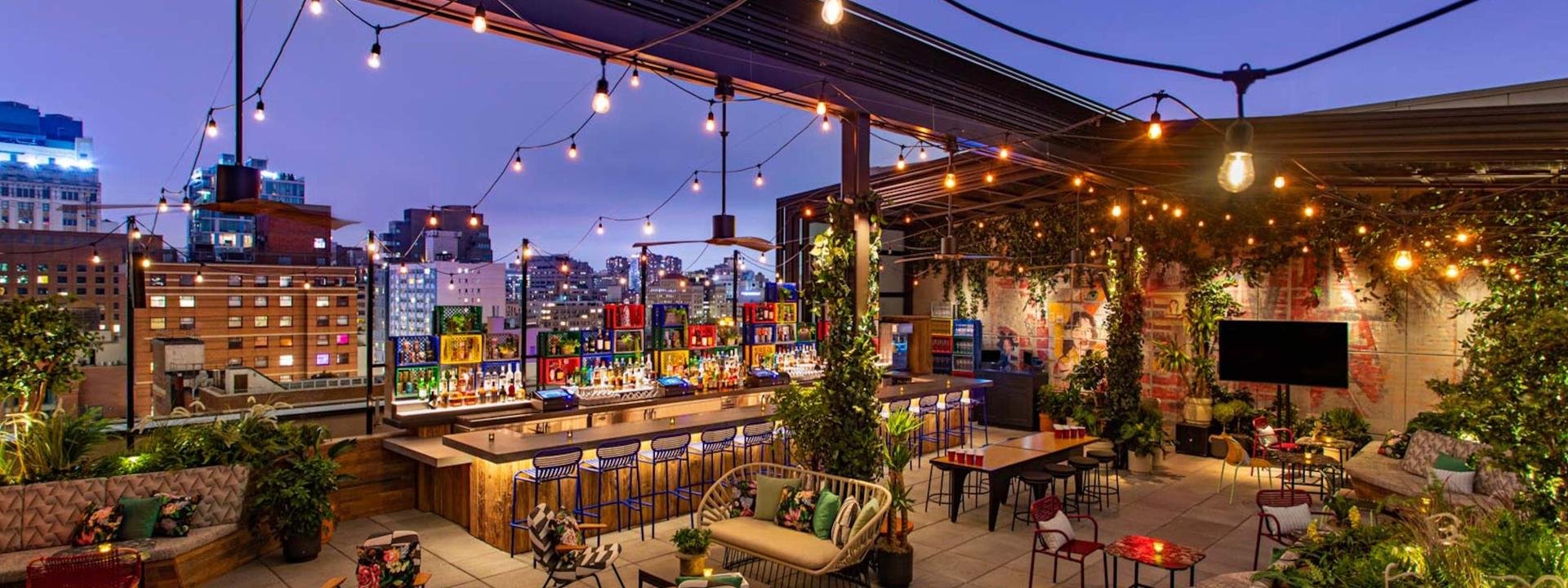
About FREEHOLD
Freehold occupies a distinct address in Williamsburg, Brooklyn, where the South Third Street corridor has drawn a consistent crowd looking for something beyond the standard bar format. The venue sits in a neighbourhood that has absorbed two decades of hospitality investment, and its position there reflects broader shifts in how Brooklyn approaches drinking culture.
Brooklyn's Shifting Bar Geography
Williamsburg's hospitality corridor along South Third Street didn't arrive by accident. The neighbourhood spent most of the 2000s absorbing successive waves of bar and restaurant openings, each generation pushing the format a little further from dive simplicity toward something more considered. By the time Freehold took its address at 45 South Third Street, the block had developed a clear expectation: spaces here needed to function across multiple hours and moods, not just anchor a single occasion. That multi-register format has become something of a Williamsburg signature, distinguishing it from the more specialised drinking rooms found in the West Village or the Lower East Side.
Freehold sits inside that broader evolution. Where early Williamsburg bars leaned on low prices and industrial aesthetics as their entire identity, the more recent cohort — of which Freehold is part — treats the space itself as a programme, something that earns its audience through usefulness rather than novelty. That shift mirrors what has happened in other American cities with strong neighbourhood bar cultures: spaces in ABV in San Francisco or Kumiko in Chicago demonstrate how a bar can hold its position across a full day and evening without defaulting to theme or gimmick.
The Cultural Logic of the All-Day Space
The all-day bar-restaurant format has specific roots in American hospitality. It borrows partly from the European café tradition , the idea that a single address can serve coffee, a working lunch, cocktails, and a late dinner without any of those uses feeling like an afterthought , and partly from the American diner, which long served as a community anchor rather than a destination. In a borough as densely residential as Brooklyn, that combination answers a genuine need. People who live within walking distance of a place like Freehold aren't choosing between it and a Michelin-starred counter across town; they're deciding whether the space earns a regular spot in their week.
That distinction shapes how such venues are leading read. The comparison set for Freehold isn't the cocktail-forward rooms of Angel's Share in the East Village or the precise, reputation-driven program at Attaboy NYC on Eldridge Street. Those venues ask for a specific kind of attention , you go for the bar itself, for a particular bartender's instincts, for a menu built around serious intent. Freehold operates in a different register, one where the bar program supports a broader social function rather than being the headline act. Understanding that distinction is the starting point for understanding what the address offers.
Neighbourhood Position and Peer Context
Williamsburg's South Third Street places Freehold within easy reach of the Bedford Avenue spine, which remains the most heavily trafficked pedestrian corridor in the neighbourhood. That geographic fact matters. Venues on or near Bedford inherit a built-in foot traffic advantage that more remote Brooklyn addresses , Carroll Gardens, Gowanus, Red Hook , don't share. The trade-off is visibility: a well-placed Williamsburg address competes with more options and a more fragmented audience than a destination room in a quieter part of the borough.
In that competitive context, the format decisions a venue makes become load-bearing. An address like Freehold holds its ground by functioning across occasions, attracting morning laptop workers, afternoon tables, and evening drinkers without any single use overwhelming the others. That programming logic is less common than it sounds. Most Brooklyn bars pick a lane , late-night, cocktail-forward, food-led , and design around it. The multi-use model asks more of a space and more of its staff, but when it works, it creates the kind of habitual loyalty that single-format venues rarely achieve.
For context on how bars in other American cities have handled the same tension between specialisation and breadth, Jewel of the South in New Orleans leans hard into cocktail heritage as its organising principle, while Julep in Houston anchors itself around a specific regional drinking tradition. Allegory in Washington, D.C. takes yet another approach, building a program around theatrical presentation. Each model works, but each requires clarity about what the venue is actually selling. The all-day Brooklyn model sells time and flexibility as much as it sells any specific drink or dish.
What Brings People to South Third Street
The draw of a space like Freehold is partly about the address and partly about what the format permits. Williamsburg draws a mixed crowd , long-term residents who predate the neighbourhood's transformation, newer arrivals who came for the density of food and drink options, and a regular stream of visitors from Manhattan who treat the L train as an evening transit option. That audience doesn't arrive with a single agenda, which is precisely why the multi-use format has taken hold here more firmly than in most other Brooklyn neighbourhoods.
For visitors arriving from outside New York, Williamsburg is often the first Brooklyn neighbourhood on the itinerary, which means venues here absorb some tourist traffic alongside their local base. That mix is manageable at most hours but can tip toward tourist-heavy on weekend evenings, particularly in summer. Weekday visits , especially mornings and lunches , tend to reflect the more residential character of the neighbourhood, and give a more accurate reading of what the space is like for its regulars. For a broader picture of where Freehold sits within New York City's drinking and dining geography, our full New York City restaurants guide maps the borough-by-borough spread in more detail.
Internationally, the comparison with The Parlour in Frankfurt on the Main is instructive: both operate in cities where the bar scene has moved away from narrow specialisation toward spaces that hold multiple functions without losing coherence. Bar Leather Apron in Honolulu represents the opposite end of that spectrum , a room built entirely around craft precision and reserved clientele, where the expectation is focused attention rather than casual flexibility. Neither approach is superior; they serve different needs in different contexts.
Planning Your Visit
Freehold sits at 45 South Third Street in Williamsburg, Brooklyn, accessible from the Bedford Avenue L train stop within a short walk. The surrounding block has a concentration of bars and restaurants that makes it a natural starting or ending point on a longer Williamsburg evening. Given the all-day programming model, it functions as well for a mid-afternoon stop as it does for a post-dinner drink. Those looking for a more cocktail-specific Brooklyn experience might also consider Superbueno for its agave-forward program, or Amor y Amargo in the East Village for a bitters-focused alternative with a narrower, more deliberate menu. Freehold's format positions it as a neighbourhood anchor rather than a destination room, which means it rewards proximity and habitual use more than a single planned visit.
Frequently Asked Questions
- What should I drink at FREEHOLD?
- Without confirmed menu data, it would be misleading to recommend specific cocktails. What the all-day Brooklyn format typically supports is a bar program with enough range to cover coffee, wine, beer, and spirits across different hours , not a single-focus menu. If cocktail depth is the priority for your visit, the more specialised rooms at Attaboy NYC or Amor y Amargo offer programs built around that specific intent.
- Why do people go to FREEHOLD?
- The draw is primarily locational and functional: a Williamsburg address on a well-trafficked corridor, with a format that accommodates different visit types across the day. For Brooklyn residents, the value is in regular use rather than a single destination visit. The neighbourhood's density means it competes with many alternatives, but the multi-use model earns a different kind of loyalty than format-specific bars elsewhere in the city.
- Can I walk in to FREEHOLD?
- Booking and walk-in policy details are not confirmed in our current data. Generally, Williamsburg's busier bars and restaurant-bars fill quickly on Friday and Saturday evenings, particularly in summer. Walking in during weekday lunch hours or weekday evenings carries a higher probability of finding space without advance planning. Checking directly with the venue before a weekend visit is advisable.
- When does FREEHOLD make the most sense to choose?
- The all-day format makes it a practical choice when the occasion is flexible or when a group has mixed needs , some looking to eat, some to drink, some to linger over coffee. It is less obviously the right call when the goal is a specific cocktail experience or a tightly focused dining moment, for which more specialised venues in Manhattan or elsewhere in Brooklyn are better matched.
- Is a night at FREEHOLD worth it?
- The question assumes a destination-visit framing that doesn't quite fit the format. Freehold functions better as part of a Williamsburg evening than as the sole reason to make a trip from across the city. If you're already in the neighbourhood, the address earns its place in a longer night out. If the bar program or dining is the primary objective, venues with confirmed award credentials or publicly available menus give a clearer basis for a deliberate visit.
- What kind of crowd does Freehold typically attract, and how does that shape the atmosphere?
- Freehold's Williamsburg address draws a mix that reflects the neighbourhood's demographic range: long-term residents, newer arrivals, and some visitor traffic from Manhattan via the L train. The all-day format means the room reads differently at noon than at ten at night , less charged in the daytime, more social in the evening. That range is the venue's working model, and understanding it sets realistic expectations before arriving.
More bars in New York City
- (SUB)MERCER(SUB)MERCER occupies a basement address on Mercer Street in SoHo, positioning it as a deliberate destination rather than a drop-in. The subterranean format tends to keep ambient noise lower than street-level alternatives, making it a reasonable call for groups of four or more. Book ahead for weekends and confirm group capacity directly with the venue.
- 1 OR 81 OR 8 on DeKalb Avenue is a low-key Fort Greene bar that works best for two people on a weeknight when the room is quiet enough for conversation. Walk-ins are easy, no advance planning required. If a specialist cocktail program is your priority, Attaboy or Amor y Amargo offer more defined experiences — but for a neighbourhood drink without the fuss, this delivers.
- 230 Fifth Rooftop Bar230 Fifth is the easiest rooftop bar in Midtown to walk into, and the Empire State Building views justify the trip. The crowd skews groups and tourists, and the drinks are solid rather than craft-focused. Go early on a weekday for the best version of the experience; after 9 PM on weekends it tips firmly into party-group territory.
- 4 Charles Prime Rib4 Charles Prime Rib is a compact, reservation-required West Village dining room built around a focused prime rib format. It works well for dates and pairs but is too small for groups of four or more. Booking is easy relative to Manhattan peers, and the narrow menu signals a kitchen that executes one thing consistently well.
- 44 & X Hell's KitchenA low-key Hell's Kitchen neighborhood bar-restaurant that earns its place for easy weeknight dates and pre-theatre dinners. Booking is simple, the room is intimate enough for conversation, and there's no dress pressure. Not a cocktail destination, but a reliable, pressure-free option in Midtown West when you want comfort over spectacle.
- 58-22 Myrtle Ave58-22 Myrtle Ave is a low-key Ridgewood neighborhood spot that rewards return visits more than first impressions. Easy to get into, with no reservation headaches, it suits regulars looking for an unpretentious room rather than a structured cocktail program. If a strong drinks list or kitchen ambition matters to you, look to Attaboy or Amor y Amargo instead.
Related editorial
- Best Fine Dining Restaurants in ParisFrom three-Michelin-star icons to the next generation of Parisian chefs pushing boundaries, these are the restaurants that define fine dining in the world's culinary capital.
- Best Luxury Hotels in RomeFrom rooftop terraces overlooking ancient ruins to Michelin-starred hotel dining, these are the luxury hotels that make Rome unforgettable.
- Best Cocktail Bars in KyotoFrom sleek lounges to hidden speakeasies, Kyoto's cocktail scene blends Japanese precision with global influence in ways you won't find anywhere else.
Save or rate FREEHOLD on Pearl
Keep this venue in your Pearl passport, rate it after you visit, and track it alongside every other place you collect.