
Bar in New York City, United States
Demo
100ptsVillage Address Dining
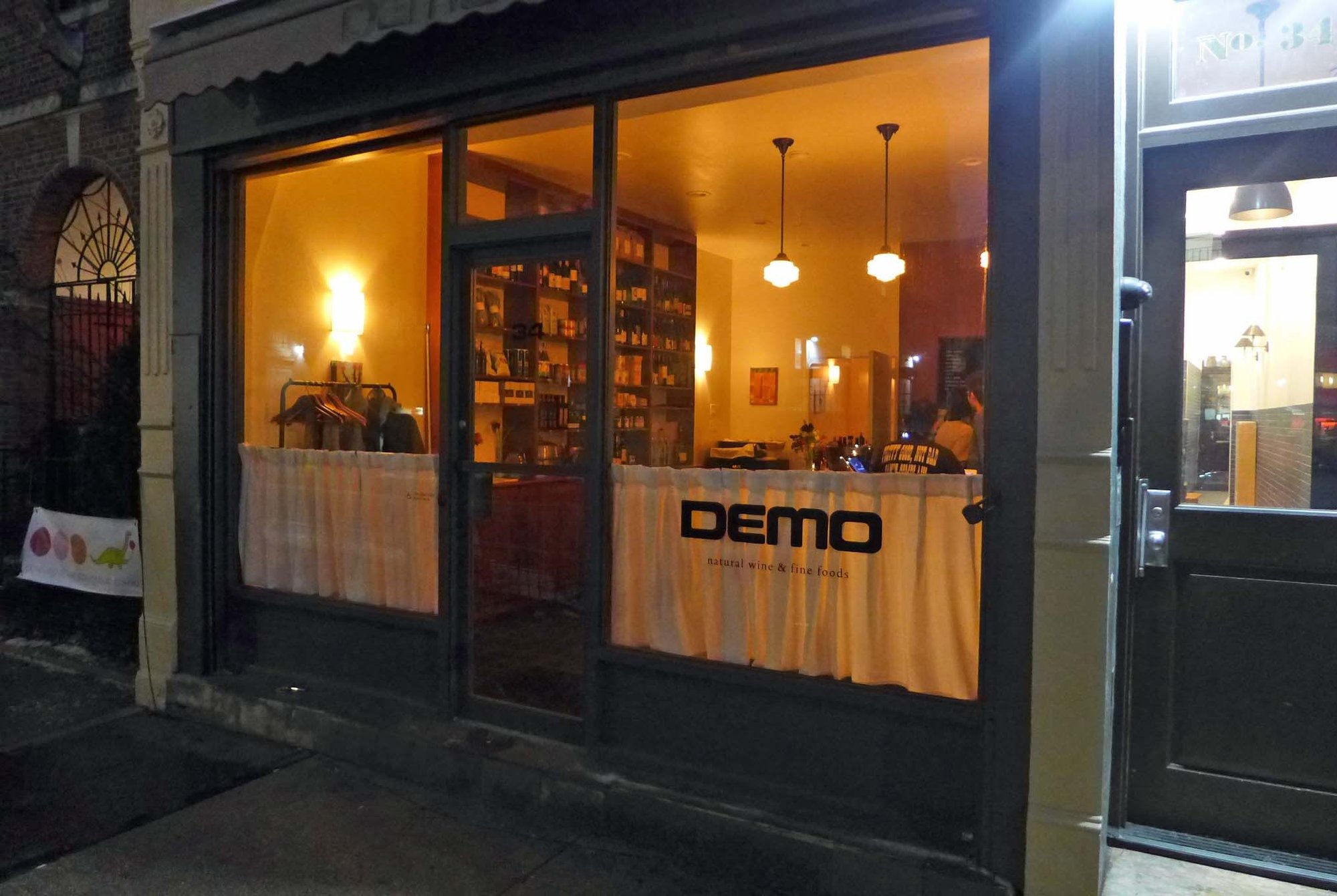
About Demo
On Carmine Street in Greenwich Village, Demo occupies a corner of downtown Manhattan where the neighbourhood's long-standing character still shapes what happens inside. The address places it within a few blocks of some of the city's most-watched bars and restaurants, and the room has undergone enough change over the years to sit in a different category than it started in.
Carmine Street and the Drift of Greenwich Village
Greenwich Village has spent the better part of three decades negotiating between preservation and reinvention. The blocks around Carmine Street — running between Bleecker and the Hudson — have cycled through neighbourhood institutions, short-lived concepts, and slow-burn survivors in roughly equal measure. What remains on Carmine today is a edited version of what the street once held: fewer red-sauce joints, more considered rooms that understand their address carries its own expectations. Demo at 34 Carmine sits inside that longer story, and its current form reflects the kind of gradual repositioning that defines how serious operators in this part of downtown tend to evolve.
How the Room Has Changed
The evolution of a downtown Manhattan address is rarely a single decision. It accumulates: a new direction in the kitchen, a shift in format, a recalibration of who the room is for. Carmine Street venues that survive a decade or more in Greenwich Village tend to do so by reading those shifts early, not by resisting them. Demo has moved through enough iterations that its present identity is meaningfully different from earlier versions, though the address itself remains consistent , a fixed point on a block that has seen considerable churn around it.
This is not unusual in the Village. Across the neighbourhood, the most durable places have used change strategically: tightening menus, reconsidering price positioning, or aligning with the bar and restaurant culture that has made lower Manhattan a reference point for the broader American dining conversation. The question for any evolving venue on Carmine is whether its current iteration reflects genuine editorial clarity or simply accumulated compromise. That distinction is what separates the places that earn repeat attention from those that drift toward irrelevance.
Placed in the Downtown Manhattan Bar and Dining Conversation
Greenwich Village and the immediately surrounding blocks have generated some of New York's most-referenced bar programs over the past fifteen years. [Amor y Amargo](https://www.enprimeurclub.com/bars/amor-y-amargo) on East 6th has built its reputation on a bitters-forward approach that influenced a generation of New York bartenders. [Angel's Share](https://www.enprimeurclub.com/bars/angels-share) in the East Village remains one of the few Japanese-influenced cocktail rooms in the city to have sustained recognition across multiple decades. [Attaboy NYC](https://www.enprimeurclub.com/bars/attaboy-nyc), operating on the Lower East Side without a menu and without a sign, occupies the far end of the accessibility spectrum , expertise on demand, no concessions to casual discovery.
The peer set matters because it defines what a Carmine Street address competes against. Venues further downtown , like [Superbueno](https://www.enprimeurclub.com/bars/superbueno-new-york-city), which applies a specific regional Latin lens to its program , illustrate how narrowly calibrated concepts are increasingly outperforming generalist approaches in the attention economy of New York hospitality. Demo's positioning relative to these programs is shaped partly by geography and partly by the direction its successive iterations have taken.
For a broader view of where Demo fits within New York's current dining and drinking map, the EP Club New York City guide provides neighbourhood-level context across multiple categories.
What the Address Implies About Format
34 Carmine is a Village address with the particular character that implies: foot traffic that skews local rather than tourist-dependent, proximity to both the moneyed West Village and the older, more mixed-income blocks to the north, and a building stock that tends toward ground-floor rooms with the kind of dimensions that suit intimate formats. Large, high-volume concepts have rarely landed well on this specific block , the street rewards venues that operate with some interiority, where the experience justifies seeking it out rather than being visible from a passing cab.
This is the physical logic that shapes Demo's current form. The room's size, the cadence of service, the way it handles the gap between drop-in traffic and regulars , these are all partly determined by what Carmine Street tolerates and what it rewards. Venues that have tried to scale beyond what the block supports have generally not lasted. Those that have read the address correctly have tended to find their audience and hold it.
A National Reference Frame
Understanding a New York room is sometimes easier when you hold it against what's happening in other American cities simultaneously. The bar culture that produced [Kumiko in Chicago](https://www.enprimeurclub.com/bars/kumiko) , Japanese technique applied to American ingredients with a high degree of precision , reflects a broader national movement toward format discipline and ingredient specificity. [Jewel of the South in New Orleans](https://www.enprimeurclub.com/bars/jewel-of-the-south-new-orleans) operates within a completely different tradition, one rooted in historical cocktail lineage and Southern hospitality rhythms. [Julep in Houston](https://www.enprimeurclub.com/bars/julep-houston) has made a case for regional specificity as a program in itself.
Further afield, [Bar Leather Apron in Honolulu](https://www.enprimeurclub.com/bars/bar-leather-apron-honolulu), [ABV in San Francisco](https://www.enprimeurclub.com/bars/abv), and [Allegory in Washington, D.C.](https://www.enprimeurclub.com/bars/allegory) each represent distinct local responses to the same underlying shift: hospitality programs that are growing more intentional, more specific, and more resistant to generic positioning. [The Parlour in Frankfurt on the Main](https://www.enprimeurclub.com/bars/the-parlour-frankfurt-on-the-main) makes the same argument from a European context. What connects all of them is that their current identity is a product of accumulated decisions, not a single founding gesture.
Demo operates in the same current. Its Carmine Street address places it in one of the American cities where that pressure to define and redefine is most acute.
Planning a Visit
34 Carmine Street is accessible from the West 4th Street subway station, roughly a five-minute walk north through the Village. The block is quiet by Midtown standards, which means the experience of arriving is part of what the address offers. Current hours, booking requirements, and pricing are leading confirmed directly with the venue, as available public data does not include confirmed operational details at this time. For programming or reservation inquiries, visiting the address directly or checking current listings through New York-specific reservation platforms is the most reliable approach.
Frequently Asked Questions
What should I try at Demo?
Confirmed menu specifics are not publicly available in current records, which makes prescriptive ordering recommendations difficult to stand behind. The address and neighbourhood positioning suggest a program that rewards asking what the kitchen or bar is currently focused on , in Village rooms of this type, the most considered choices tend to be whatever reflects the current iteration of the concept rather than legacy signatures from earlier versions.
What is Demo leading at?
Without confirmed cuisine type, price tier, or award documentation in the public record, the most honest answer is that Demo's strengths are leading assessed in the context of its current operational direction. Its Carmine Street address in Greenwich Village places it within a peer set of rooms that have built reputations through specificity and longevity rather than scale , that framing is the most useful starting point for any first visit.
Is Demo reservation-only?
No confirmed booking policy is available in current venue records. In Greenwich Village generally, rooms with fewer than forty seats and a defined format tend to require or strongly benefit from advance reservations, particularly Thursday through Saturday. Contacting the venue directly at 34 Carmine Street is the most reliable method for confirming current policy before visiting.
How does Demo's Carmine Street location compare to other Greenwich Village addresses?
Carmine Street sits between Bleecker Street to the north and the Hudson Street corridor to the west, placing it at a slight remove from the highest-footfall Village blocks without being off the map for the neighbourhood's regulars. The street has historically supported independent, owner-operated concepts rather than group-backed venues, which means the competitive set is made up of rooms with distinct identities rather than interchangeable formats. For visitors already familiar with the wider downtown New York scene, the Carmine address implies a certain kind of room: considered, relatively intimate, and shaped by the particular character of lower Greenwich Village rather than the broader tourist circuit.
More bars in New York City
- (SUB)MERCER(SUB)MERCER occupies a basement address on Mercer Street in SoHo, positioning it as a deliberate destination rather than a drop-in. The subterranean format tends to keep ambient noise lower than street-level alternatives, making it a reasonable call for groups of four or more. Book ahead for weekends and confirm group capacity directly with the venue.
- 1 OR 81 OR 8 on DeKalb Avenue is a low-key Fort Greene bar that works best for two people on a weeknight when the room is quiet enough for conversation. Walk-ins are easy, no advance planning required. If a specialist cocktail program is your priority, Attaboy or Amor y Amargo offer more defined experiences — but for a neighbourhood drink without the fuss, this delivers.
- 230 Fifth Rooftop Bar230 Fifth is the easiest rooftop bar in Midtown to walk into, and the Empire State Building views justify the trip. The crowd skews groups and tourists, and the drinks are solid rather than craft-focused. Go early on a weekday for the best version of the experience; after 9 PM on weekends it tips firmly into party-group territory.
- 4 Charles Prime Rib4 Charles Prime Rib is a compact, reservation-required West Village dining room built around a focused prime rib format. It works well for dates and pairs but is too small for groups of four or more. Booking is easy relative to Manhattan peers, and the narrow menu signals a kitchen that executes one thing consistently well.
- 44 & X Hell's KitchenA low-key Hell's Kitchen neighborhood bar-restaurant that earns its place for easy weeknight dates and pre-theatre dinners. Booking is simple, the room is intimate enough for conversation, and there's no dress pressure. Not a cocktail destination, but a reliable, pressure-free option in Midtown West when you want comfort over spectacle.
- 58-22 Myrtle Ave58-22 Myrtle Ave is a low-key Ridgewood neighborhood spot that rewards return visits more than first impressions. Easy to get into, with no reservation headaches, it suits regulars looking for an unpretentious room rather than a structured cocktail program. If a strong drinks list or kitchen ambition matters to you, look to Attaboy or Amor y Amargo instead.
Related editorial
- Best Fine Dining Restaurants in ParisFrom three-Michelin-star icons to the next generation of Parisian chefs pushing boundaries, these are the restaurants that define fine dining in the world's culinary capital.
- Best Luxury Hotels in RomeFrom rooftop terraces overlooking ancient ruins to Michelin-starred hotel dining, these are the luxury hotels that make Rome unforgettable.
- Best Cocktail Bars in KyotoFrom sleek lounges to hidden speakeasies, Kyoto's cocktail scene blends Japanese precision with global influence in ways you won't find anywhere else.
Save or rate Demo on Pearl
Keep this venue in your Pearl passport, rate it after you visit, and track it alongside every other place you collect.