
Bar in New York City, United States
Decoy
100ptsHudson Street Neighbourhood Authority
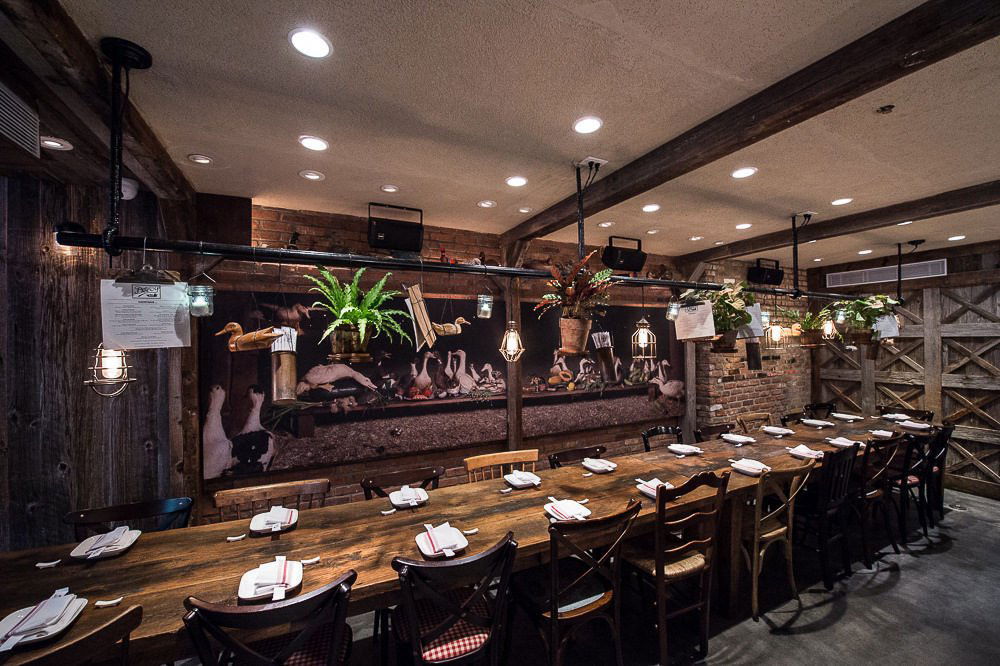
About Decoy
Decoy occupies a discreet address on Hudson Street in the West Village, where the neighborhood's relaxed density gives way to a bar format built around deliberate collaboration between those making the drinks, selecting them, and delivering them. The room operates at the quieter, more considered end of New York's downtown bar scene — a counter-programming choice in a city that often mistakes volume for energy.
What Hudson Street Tells You Before You Walk In
The West Village has a way of filtering out venues that rely on spectacle. Hudson Street, with its low-rise Federal-era buildings and foot traffic that moves at an unhurried pace, is not where you go to be seen arriving somewhere — it is where you go when the place itself is the point. Decoy, at 529 Hudson, sits inside that logic. The address puts it in a stretch of the Village where the bar and restaurant density is high enough to create real competition, but where the dominant register is neighbourhood institution rather than destination showcase. Walking toward it, that distinction matters.
The West Village Bar Scene and Where Decoy Sits Within It
New York's cocktail bars have sorted themselves over the past decade into a fairly legible hierarchy. At one end, high-volume operations compete on throughput, theatrics, and social media presence. At the other, a smaller cohort — closer in spirit to the approach you find at Amor y Amargo or Attaboy NYC , operates on the premise that a well-run bar is primarily a collaborative exercise between the people making drinks, the people selecting and sourcing ingredients, and the people on the floor managing the room's rhythm. Decoy's position on Hudson Street places it in the second category. The West Village has historically supported this kind of bar, partly because the neighbourhood draws residents who drink regularly and well rather than occasionally and ambitiously, and partly because the real estate constraints make large-format operations difficult to sustain.
That peer set matters when thinking about what Decoy is for. The bars closest to it in spirit , places like Angel's Share in the East Village, where format discipline and front-of-house composure are load-bearing elements of the experience , all share an operating philosophy that treats service as part of the product rather than a delivery mechanism for it. This is a meaningful distinction in a city where the gap between technically excellent drinks and a well-managed room can be wide.
The Collaboration Model
The editorial angle that applies to Decoy , and to the broader tier of New York bars it inhabits , concerns what happens when a bar treats the relationship between its drink program, its sourcing decisions, and its floor team as genuinely integrated rather than siloed. This is not universal even in premium bar culture. In many operations, the bartender designs the menu, the sommelier or spirits buyer handles procurement, and the front-of-house manages tables , three tracks that run parallel but rarely inform each other. The bars that resist this fragmentation tend to produce an experience that reads as coherent in a way that is difficult to articulate but easy to feel: the pacing of service aligns with the pacing of the menu, the floor team can speak to the drink program with enough fluency to actually guide a guest, and the whole room operates at a consistent register rather than producing moments of excellence around the bar and dead zones everywhere else.
This collaborative model is not unique to New York, but New York is where the pressure to abandon it is greatest. High covers, high real estate costs, and the economics of weekend volume all push bars toward specialisation and division of labour. The bars that hold the integrated model tend to do so by running smaller rooms, charging accordingly, and attracting a clientele that returns regularly enough to justify the investment in floor team fluency. At the neighbourhood scale of Hudson Street, that return-visit culture is structurally easier to cultivate than in a high-tourism corridor.
Comparable operations in other cities demonstrate the range the model can cover. Kumiko in Chicago runs a tightly integrated front-of-house and drink program with a format that treats hospitality as a design element. Bar Leather Apron in Honolulu achieves a similar effect in a market where the tourist-to-local ratio would theoretically work against it. Jewel of the South in New Orleans layers historical cocktail literacy into its service model. Allegory in Washington, D.C. builds narrative coherence across the menu, the room, and the team. What each of these shares is an insistence that front-of-house knowledge is not a luxury item , it is structural.
Drinking and Eating on Hudson Street
The West Village operates on a compressed geography where the gap between a bar and a full dinner option is rarely more than two blocks. Decoy's Hudson Street address puts it within the orbit of the neighbourhood's established dining, which means it functions as a destination in its own right rather than as a pre-dinner or post-dinner annex. Bars that hold this position , primary destination rather than supporting role , typically do so by having a drink program that rewards repeat visits and a food or snack offering that supports longer stays without requiring a full dining commitment.
For broader context on how to structure a New York evening around a bar visit at this level, the full New York City guide maps the relationships between neighbourhood drinking cultures across the boroughs. The West Village, lower Manhattan, and the East Village each have distinct internal logics, and understanding those logics changes how you sequence an evening. Superbueno in the East Village, for instance, operates on a higher-energy, more social register that would pair differently with a West Village stop than the quieter formats of the immediate neighbourhood.
Planning a Visit
529 Hudson Street is accessible from the Christopher Street-Sheridan Square station on the 1 train, or from 14th Street on the A, C, E, or L lines , a ten-minute walk along the Hudson River Greenway or through the Village grid. The West Village's bar concentration means that walk-in availability varies considerably by day and time; Thursday through Saturday evenings trend toward fuller rooms across the neighbourhood, and the blocks around Hudson Street fill early. Checking ahead, either by phone or in person earlier in the day, is the practical approach when a specific seat at a specific bar matters. For broader comparison across internationally recognised bar formats, operations like ABV in San Francisco, Julep in Houston, and The Parlour in Frankfurt on the Main offer useful reference points for the tier of craft and service discipline that distinguishes this class of bar from high-volume alternatives.
Frequently Asked Questions
What should I drink at Decoy?
The West Village bar tier that Decoy operates in typically supports drink programs built around spirits knowledge and balance rather than novelty theatrics. Without verified current menu data, the most practical approach is to ask the bar team directly about the current program , the collaborative service model characteristic of bars at this level means the floor staff should be equipped to guide that conversation with genuine fluency rather than defaulting to the most popular order.
What makes Decoy worth visiting?
The West Village has enough bar options that only the operations with a coherent point of view hold repeat-visit loyalty. Decoy's address on Hudson Street places it in a neighbourhood tier where the competition is real and the clientele is experienced enough to distinguish between technically competent drink-making and a genuinely well-run room. That combination , consistent execution across drinks, service, and room management , is what the bar's positioning in this neighbourhood implies, and it is the standard against which any visit should be measured.
Can I walk in to Decoy?
Walk-in availability at West Village bars depends heavily on the day and hour. The neighbourhood's residential density supports earlier drinking culture than many Manhattan corridors, which means rooms can fill before conventional prime time. If the booking method is unclear or unavailable online, arriving at or shortly after opening is the most reliable approach for securing a seat without advance planning.
Who is Decoy leading for?
Decoy fits the profile of a bar for regular drinkers rather than occasion visitors. The West Village's neighbourhood-institution model attracts a clientele that treats its bars as part of a weekly routine rather than a one-off experience, which shapes the room's pace and the service team's approach. Guests who want to be guided through a drink program, who drink spirits or cocktails with some existing knowledge, and who are not seeking a high-energy social environment will find the format appropriate to their expectations.
Is Decoy connected to the Peking duck restaurant of the same name below Mott Street?
The name Decoy is associated with a well-documented basement bar beneath the Peking duck restaurant Duck's Eatery on West 18th Street in Chelsea , a separate address and operation from 529 Hudson Street. New York has several venues operating under similar or identical names across different neighbourhoods, and the address is the reliable identifier. Anyone searching specifically for the subterranean duck-focused bar should confirm the address before visiting, as the two locations serve meaningfully different formats.
More bars in New York City
- (SUB)MERCER(SUB)MERCER occupies a basement address on Mercer Street in SoHo, positioning it as a deliberate destination rather than a drop-in. The subterranean format tends to keep ambient noise lower than street-level alternatives, making it a reasonable call for groups of four or more. Book ahead for weekends and confirm group capacity directly with the venue.
- 1 OR 81 OR 8 on DeKalb Avenue is a low-key Fort Greene bar that works best for two people on a weeknight when the room is quiet enough for conversation. Walk-ins are easy, no advance planning required. If a specialist cocktail program is your priority, Attaboy or Amor y Amargo offer more defined experiences — but for a neighbourhood drink without the fuss, this delivers.
- 230 Fifth Rooftop Bar230 Fifth is the easiest rooftop bar in Midtown to walk into, and the Empire State Building views justify the trip. The crowd skews groups and tourists, and the drinks are solid rather than craft-focused. Go early on a weekday for the best version of the experience; after 9 PM on weekends it tips firmly into party-group territory.
- 4 Charles Prime Rib4 Charles Prime Rib is a compact, reservation-required West Village dining room built around a focused prime rib format. It works well for dates and pairs but is too small for groups of four or more. Booking is easy relative to Manhattan peers, and the narrow menu signals a kitchen that executes one thing consistently well.
- 44 & X Hell's KitchenA low-key Hell's Kitchen neighborhood bar-restaurant that earns its place for easy weeknight dates and pre-theatre dinners. Booking is simple, the room is intimate enough for conversation, and there's no dress pressure. Not a cocktail destination, but a reliable, pressure-free option in Midtown West when you want comfort over spectacle.
- 58-22 Myrtle Ave58-22 Myrtle Ave is a low-key Ridgewood neighborhood spot that rewards return visits more than first impressions. Easy to get into, with no reservation headaches, it suits regulars looking for an unpretentious room rather than a structured cocktail program. If a strong drinks list or kitchen ambition matters to you, look to Attaboy or Amor y Amargo instead.
Related editorial
- Best Fine Dining Restaurants in ParisFrom three-Michelin-star icons to the next generation of Parisian chefs pushing boundaries, these are the restaurants that define fine dining in the world's culinary capital.
- Best Luxury Hotels in RomeFrom rooftop terraces overlooking ancient ruins to Michelin-starred hotel dining, these are the luxury hotels that make Rome unforgettable.
- Best Cocktail Bars in KyotoFrom sleek lounges to hidden speakeasies, Kyoto's cocktail scene blends Japanese precision with global influence in ways you won't find anywhere else.
Save or rate Decoy on Pearl
Keep this venue in your Pearl passport, rate it after you visit, and track it alongside every other place you collect.