
Bar in New York City, United States
Celestine
100ptsWaterfront Sourcing-Forward
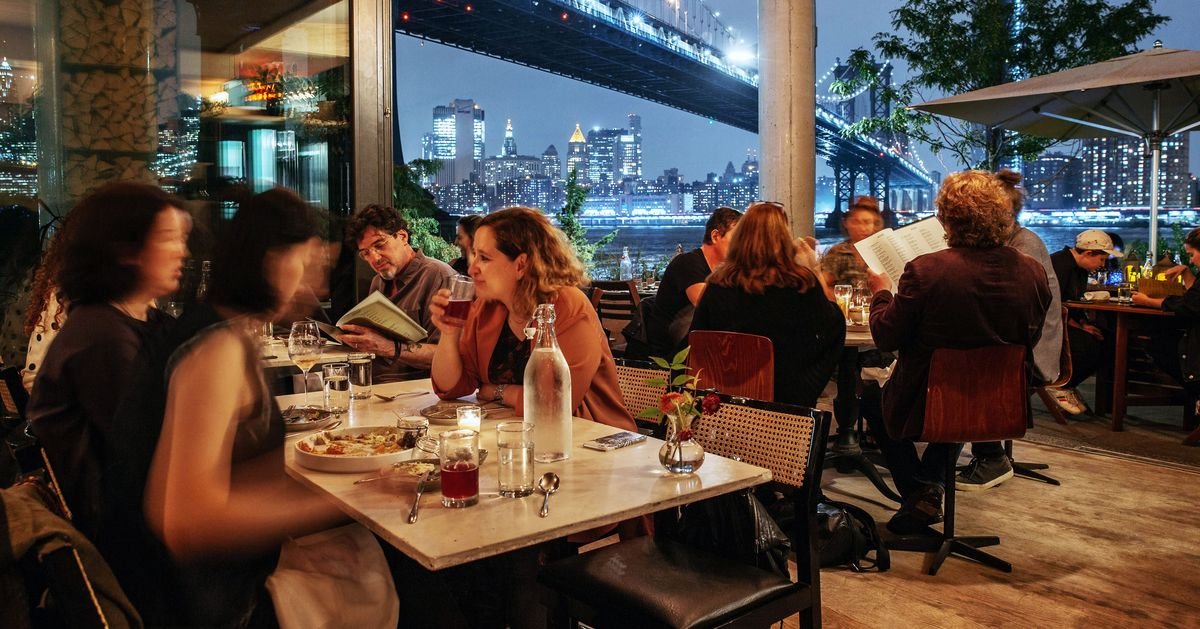
About Celestine
Situated at 1 John Street in Brooklyn Bridge Park's shadow, Celestine occupies a stretch of waterfront that has drawn a more considered class of bar and restaurant than most of lower Manhattan's neighbors across the water. The room reads as a counterpoint to high-volume DUMBO dining: lower in pitch, more deliberate in sourcing philosophy, and positioned against a peer set that takes environmental responsibility as a baseline rather than a selling point.
Where Brooklyn's Waterfront Meets a Quieter Kind of Intention
The approach along John Street, with the Brooklyn Bridge overhead and the Manhattan skyline filling the far bank of the East River, sets a particular kind of expectation. DUMBO has spent the better part of a decade sorting itself into tiers: the tourist-facing casual end, the mid-market restaurant row, and a smaller cohort of places that treat the waterfront address as incidental rather than as their entire pitch. Celestine sits in that third category, at 1 John Street, where the view arrives without being announced.
That physical context matters because it shapes what the room asks of you. Waterfront dining in New York has a long history of trading on the scenery while underdelivering on the plate and the glass. The more credible operators in this stretch have learned to use the setting as backdrop, not foreground, letting sourcing choices and program depth do the work instead. Celestine's positioning follows that logic.
The Sustainability Frame: Why Sourcing Is the Story Here
Across the broader Brooklyn dining scene, environmental sourcing has moved from differentiator to baseline expectation in the better-regarded rooms. What separates the more serious operators is not whether they source ethically but how that commitment shows up in the details: whether the wine list tracks certified producers, whether the kitchen handles whole animals and uses trim intelligently, whether the bar program treats shrubs and fermented modifiers as waste-reduction tools rather than trend signals.
Celestine operates inside this framework in a neighborhood where the surrounding competition ranges from the bistro-casual energy of places like Dirty French to the high-volume cocktail bars that line lower Manhattan's perimeter. Against that peer set, a room with a considered sourcing philosophy and a lower ambient pitch represents a distinct choice rather than a default. New York's more sustainability-oriented dining rooms have generally gravitated toward two formats: the casual natural-wine-bar model and the slightly more formal Mediterranean-adjacent room. Celestine belongs to the second category, where the commitment to provenance sits alongside a more composed service register.
That commitment extends naturally to the drinks program. Across the city's more thoughtful bars, the shift toward lower-waste cocktail production, including clarified stocks, preserved citrus, and fermented syrups, has become a marker of program seriousness. You see it in the technical work at Attaboy NYC, in the bitters-forward restraint at Amor y Amargo, and in the low-waste ethos that underpins the menu at Superbueno. The leading operators in this space treat waste reduction not as a constraint but as a creative parameter.
Brooklyn's Bar Scene and Where Celestine Sits Within It
New York's cocktail culture has undergone a visible shift over the past several years, moving away from speakeasy theatrics and toward programs that can be assessed on transparency and technique. The hidden-door format that defined an earlier era, still represented by the disciplined quiet of Angel's Share in the East Village, has given way to rooms where the craft is on display rather than concealed behind a gimmick.
Celestine's waterfront address places it in a different register from the dense, low-lit Manhattan cocktail bars. The room operates in daylight as comfortably as it does at night, which changes what a drinks program has to accomplish. In that environment, the emphasis shifts toward the kind of session-friendly, lower-ABV formats and botanical-driven builds that work across a two-hour lunch as readily as a late dinner. That range is increasingly common among the stronger regional programs elsewhere in the country, from the produce-led approach at ABV in San Francisco to the culinary-cocktail precision at Kumiko in Chicago and the spirit-of-place work at Jewel of the South in New Orleans.
What connects those rooms to a place like Celestine is the sense that the drinks list is composed rather than assembled. Whether that means house-fermented cordials, seasonal shrubs built from kitchen trim, or a wine program weighted toward low-intervention producers, the editorial logic behind the list is legible. That legibility is increasingly what separates the rooms worth a detour from those content to coast on location.
The Dining Room: Energy, Format, and the Pace of the Meal
DUMBO operates on a different rhythm from Manhattan's restaurant neighborhoods. The foot traffic peaks at weekends and drops sharply on weekday lunches, which means the rooms that survive are those with a loyal local following rather than a pure tourist dependency. Celestine's John Street address puts it at the quieter, more residential edge of the neighborhood, away from the highest-traffic sections near the carousel and the park entrance.
That positioning attracts a different crowd from the high-energy, large-format rooms nearby. The pace here is slower by design, calibrated for a meal that moves through courses rather than plates arriving all at once. In the broader context of New York's dining culture, that measured format has become more appealing to a specific diner: one who has tired of the loud, communal table model and wants a room where conversation is possible. The comparison set in this bracket, rooms with a deliberate pace and a sourcing-led kitchen, is small in DUMBO but well-represented across Brooklyn's more considered dining strip.
For reference points in other cities, the tasting-format composure of Bar Leather Apron in Honolulu, the botanical-led precision at Allegory in Washington, D.C., the classic-yet-current sensibility of The Parlour in Frankfurt, and the herb-garden approach at Julep in Houston all reflect the same underlying idea: that a strong program is built around a coherent sourcing and production philosophy, and the room follows from that rather than leading it.
Planning a Visit: What to Know Before You Go
DUMBO is accessible from Manhattan via the A and C trains to High Street or the F train to York Street, both within a short walk of the John Street address. Weekend afternoons fill quickly in the warmer months, when the surrounding Brooklyn Bridge Park draws significant foot traffic. Booking ahead is advisable for weekend evenings. For a complete picture of where Celestine sits within the city's wider dining and drinking culture, see our full New York City restaurants guide.
Quick reference: 1 John St, Brooklyn, NY 11201. Accessible via A/C to High Street or F to York Street. Advance booking recommended for weekend evenings.
Frequently Asked Questions
Is Celestine more low-key or high-energy?
Celestine runs at a noticeably lower pitch than the louder, large-format rooms in DUMBO. The John Street location sits at the quieter edge of the neighborhood, and the room's format is calibrated for a composed, course-driven meal rather than a high-turnover dining floor. If you are coming from Manhattan's more frenetic restaurant scene, the shift in register is immediate.
What's the must-try cocktail at Celestine?
Specific menu details are not confirmed in our current dataset, so we cannot point to a single signature build. What the program's framing suggests, however, is an emphasis on seasonal, low-waste production: shrubs, fermented modifiers, and botanical builds that work across daylight and evening sittings. Ask the bar team what is driving the list on the night you visit; that question tends to reveal the most current and considered options.
What makes Celestine worth visiting?
The combination of the waterfront setting and a sourcing philosophy that goes beyond surface-level sustainability positions Celestine in a small cohort of Brooklyn rooms where both the view and the program can be taken seriously. In a neighborhood that has a lot of places relying on location alone, that distinction carries weight. It is the kind of room that rewards a deliberate visit rather than a last-minute booking.
How far ahead should I plan for Celestine?
DUMBO's weekend demand is consistent enough that booking at least a week ahead for Friday or Saturday evenings is a reasonable baseline. Weekday visits, particularly at lunch, are generally more accessible. Check directly with the venue for current booking windows, as policies can shift with the season.
Does Celestine's approach to sourcing extend to its wine list as well as the kitchen?
In the Brooklyn rooms that take environmental sourcing seriously as a whole-program commitment, the wine list typically mirrors the kitchen's philosophy, leaning toward certified organic, biodynamic, or low-intervention producers. Whether Celestine's list follows that pattern specifically is not confirmed in our current data, but it is the natural extension of the sourcing ethos the room operates within. Ask the floor team about producer certifications when you arrive; it is the clearest indicator of how deep the commitment runs.
More bars in New York City
- (SUB)MERCER(SUB)MERCER occupies a basement address on Mercer Street in SoHo, positioning it as a deliberate destination rather than a drop-in. The subterranean format tends to keep ambient noise lower than street-level alternatives, making it a reasonable call for groups of four or more. Book ahead for weekends and confirm group capacity directly with the venue.
- 1 OR 81 OR 8 on DeKalb Avenue is a low-key Fort Greene bar that works best for two people on a weeknight when the room is quiet enough for conversation. Walk-ins are easy, no advance planning required. If a specialist cocktail program is your priority, Attaboy or Amor y Amargo offer more defined experiences — but for a neighbourhood drink without the fuss, this delivers.
- 230 Fifth Rooftop Bar230 Fifth is the easiest rooftop bar in Midtown to walk into, and the Empire State Building views justify the trip. The crowd skews groups and tourists, and the drinks are solid rather than craft-focused. Go early on a weekday for the best version of the experience; after 9 PM on weekends it tips firmly into party-group territory.
- 4 Charles Prime Rib4 Charles Prime Rib is a compact, reservation-required West Village dining room built around a focused prime rib format. It works well for dates and pairs but is too small for groups of four or more. Booking is easy relative to Manhattan peers, and the narrow menu signals a kitchen that executes one thing consistently well.
- 44 & X Hell's KitchenA low-key Hell's Kitchen neighborhood bar-restaurant that earns its place for easy weeknight dates and pre-theatre dinners. Booking is simple, the room is intimate enough for conversation, and there's no dress pressure. Not a cocktail destination, but a reliable, pressure-free option in Midtown West when you want comfort over spectacle.
- 58-22 Myrtle Ave58-22 Myrtle Ave is a low-key Ridgewood neighborhood spot that rewards return visits more than first impressions. Easy to get into, with no reservation headaches, it suits regulars looking for an unpretentious room rather than a structured cocktail program. If a strong drinks list or kitchen ambition matters to you, look to Attaboy or Amor y Amargo instead.
Related editorial
- Best Fine Dining Restaurants in ParisFrom three-Michelin-star icons to the next generation of Parisian chefs pushing boundaries, these are the restaurants that define fine dining in the world's culinary capital.
- Best Luxury Hotels in RomeFrom rooftop terraces overlooking ancient ruins to Michelin-starred hotel dining, these are the luxury hotels that make Rome unforgettable.
- Best Cocktail Bars in KyotoFrom sleek lounges to hidden speakeasies, Kyoto's cocktail scene blends Japanese precision with global influence in ways you won't find anywhere else.
Save or rate Celestine on Pearl
Keep this venue in your Pearl passport, rate it after you visit, and track it alongside every other place you collect.