
Bar in New York City, United States
Bacaro
100ptsBacaro-Format Precision
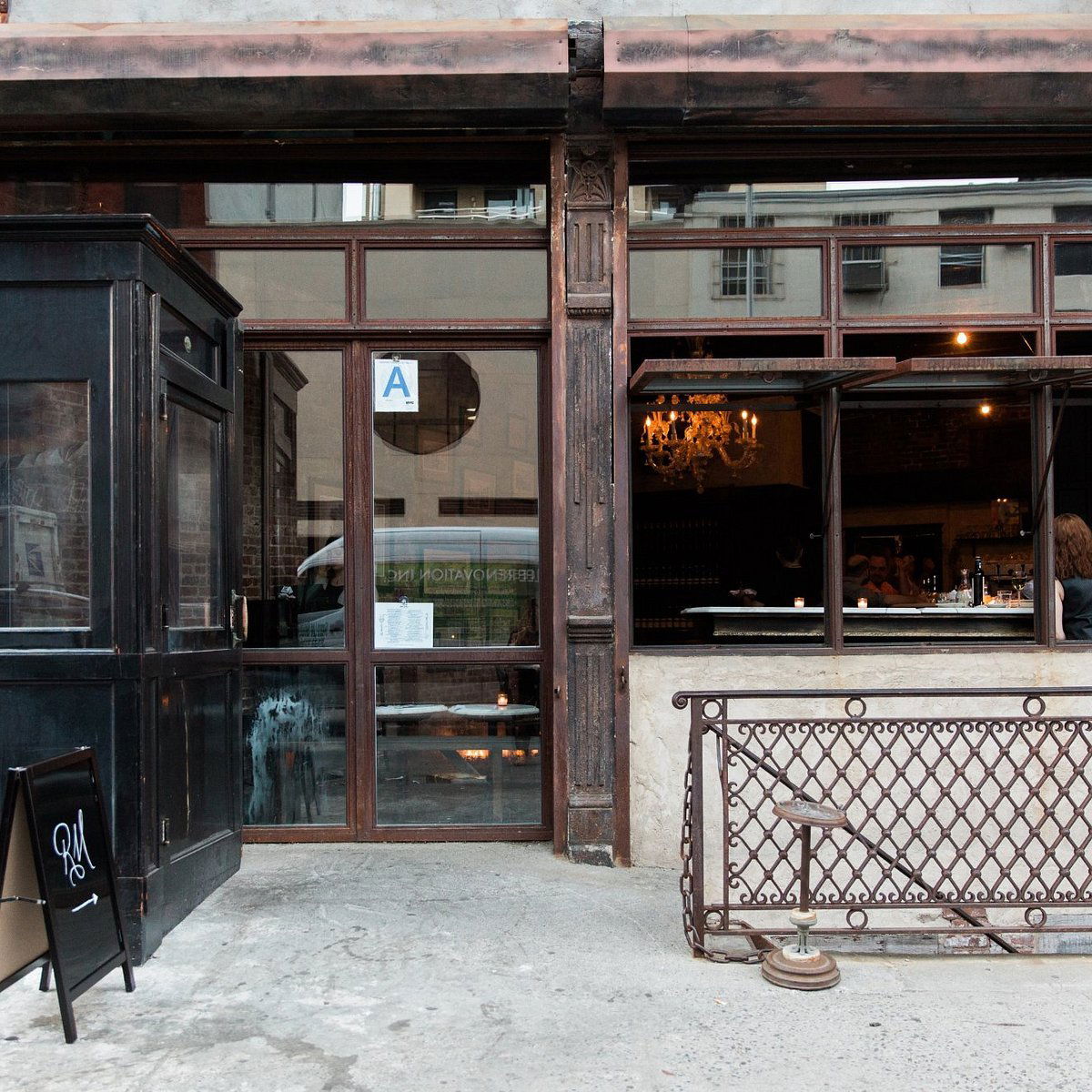
About Bacaro
On Division Street in Manhattan's Lower East Side, Bacaro occupies a space where Venetian wine-bar tradition meets downtown New York density. The format centers on cicchetti and a considered Italian wine list, positioning it within a small tier of New York bars where the drinking program and the food list carry equal weight. Walk-in seating at the bar remains the most direct way in.
Division Street runs through one of Manhattan's most compressed and historically layered corridors, where the Lower East Side's old tenement density sits alongside newer restaurant openings that have slowly repositioned the neighbourhood over the past two decades. It is in this context that Bacaro operates: a Venetian-style wine bar that draws on the bacaro tradition of northern Italy, where small plates of cicchetti and an approachable, rotating wine list define the rhythm of an evening rather than any single showpiece dish or tasting menu format.
The Bacaro Tradition and Why It Translates Here
Venice's bacari are working-class institutions in the leading sense. They function on the premise that wine and food should arrive in small, affordable increments, consumed standing or perched at a narrow counter, with the conversation carrying as much weight as the glass. That format has proven durable across transplant cities precisely because it asks little of the guest in terms of commitment: no prix-fixe lock-in, no two-hour window, no dress code negotiation. New York, a city that resists lingering in most dining contexts, has nonetheless embraced this model in pockets, and the Lower East Side has historically been more receptive to it than, say, Midtown.
What makes the bacaro format editorially interesting in a New York context is how it sits between categories. It is not a cocktail bar in the technical-program sense that defines places like Attaboy NYC or Amor y Amargo, where a bartender's methodology is the organizing principle. Nor is it a full-service restaurant. It occupies the productive middle ground where a knowledgeable floor team and a well-chosen Italian wine list do more work than any single signature dish.
The Team Dynamic: Where Service Becomes the Program
The bacaro format places unusual demands on the people running the room. Because there is no tasting menu narrative to carry the guest through an evening, the front-of-house carries that weight instead. A good bacaro depends on a floor team that can read a table accurately: when to suggest a second glass of Soave, when to pivot toward a more structured Friulian white, when to introduce the idea of a small cheese plate without it feeling like upselling. The sommelier function in this kind of setting is less formal than at a destination restaurant but arguably more technically demanding, because the wine list has to work across a very wide range of moments in the same evening.
This is the model that separates Bacaro from the broader category of Italian restaurants in the neighbourhood. The collaboration between whoever is pouring and whoever is plating operates on a shorter loop than at a conventional restaurant. Guests tend to self-sequence through an evening of cicchetti, which means the team has to pay closer attention to pacing than a kitchen-led tasting format would require. It is a more conversational style of hospitality, and when it works well, it produces the kind of evening that feels spontaneous even though significant craft is holding it together underneath.
Where Bacaro Sits in New York's Wine-Bar Category
New York's wine-bar tier has matured considerably since the early 2000s, when the format was still finding its footing between the cocktail revival and the farm-to-table restaurant wave. The city now has a reasonably well-defined category of serious wine bars operating at different price points and with different regional emphases. Bacaro's Italian focus and its address in the Lower East Side position it in a distinct corner of that category, closer in spirit to the neighbourhood-rooted format than to the polished, high-ticket wine destinations of the West Village or Tribeca.
For comparison, bars like Angel's Share in the East Village operate on an entirely different premise: the cocktail program and the hidden-door geography are the experience. Superbueno brings a similar neighbourhood energy but through an agave-forward lens. Bacaro's register is quieter and more specifically Italian, which gives it a narrower audience but a more coherent one. Guests who arrive already understanding the bacaro format tend to settle in quickly; guests who arrive expecting a full Italian dining experience may need a moment to adjust their expectations toward the looser, grazing structure of the evening.
The wine-bar format has proven its longevity in other American cities as well. Kumiko in Chicago and ABV in San Francisco each demonstrate how a drinks-forward space can build a loyal audience without defaulting to cocktail-bar theatrics, and internationally, The Parlour in Frankfurt operates in a similarly disciplined register. Bacaro belongs in that broader conversation about what a serious, unpretentious drinks-and-food space can accomplish when the team is aligned around a specific tradition rather than a general concept.
The Lower East Side Setting
136 Division Street puts Bacaro at the southern edge of the Lower East Side, close to the boundary with Chinatown, in a block that carries the neighbourhood's characteristic mix of long-established businesses and newer arrivals. The address is not the most trafficked stretch of the neighbourhood; it requires a deliberate trip rather than a casual walk-in from the main restaurant corridor along Orchard or Ludlow. That slight remove from the obvious circuit tends to self-select the guest list toward people who sought the place out, which produces a more focused room and a quieter evening than the high-volume spots a few blocks north.
The Lower East Side has a longer history as a drinking and eating neighbourhood than its current restaurant-district status might suggest, and the Venetian wine-bar format has a credibility in this kind of dense, walkable urban context that it might struggle to maintain in a more car-dependent or tourist-heavy district. The neighbourhood rewards slow evenings, and the bacaro format is built for exactly that pace.
For a broader view of where Bacaro fits within New York's drinking and dining options, see our full New York City restaurants guide. Those planning a longer itinerary across American cities with serious drinks programs should also look at Jewel of the South in New Orleans, Julep in Houston, Allegory in Washington, D.C., and Bar Leather Apron in Honolulu for regional reference points.
Know Before You Go
- Address: 136 Division St, New York, NY 10002
- Neighbourhood: Lower East Side / Chinatown border, Manhattan
- Format: Venetian-style wine bar with cicchetti-focused small plates
- Booking: Walk-in seating at the bar is typically the most reliable approach; check current availability directly with the venue
- Leading for: Guests who prefer a self-paced, grazing format over a structured dining sequence
- Hours, phone, and website: Confirm directly before visiting, as these details are subject to change
Frequently Asked Questions
What should I drink at Bacaro?
The wine list aligns with the Venetian bacaro tradition, which means northeastern Italian varieties sit at the core: Soave, Prosecco, Friulian whites, and lighter reds from the Veneto and surrounding regions. The format rewards exploration rather than a single signature order, so asking whoever is pouring what has arrived recently is typically the most productive approach. The food and wine are designed to move in parallel, with small plates pacing the evening rather than anchoring it to any one course.
What makes Bacaro worth visiting?
The bacaro format remains genuinely underrepresented in New York relative to its Italian counterparts, and the Lower East Side address gives it a neighbourhood context that reinforces rather than undercuts the concept. For guests who find the structured tasting menu format too rigid and the cocktail bar too narrowly focused on a single category, a well-run wine bar operating in a specific regional tradition offers a different kind of evening. The price of entry is also lower than at destination restaurants in the same city, making it accessible for a weeknight without significant advance planning.
What is the leading way to book Bacaro?
If you are visiting during a busy period in New York (October through early December and again in spring tend to see the highest restaurant traffic across the city), calling or checking the venue's current reservation policy ahead of time is advisable. Walk-in seating at the bar is frequently the most direct route, particularly earlier in the evening. For high-demand nights, contacting the venue directly in advance is the more reliable path than arriving without a plan.
Is Bacaro comparable to other serious Italian wine bars in New York?
New York's Italian wine bar category is small and reasonably well-defined: the venues that operate with genuine regional specificity rather than a general Italian-American frame are fewer than the number of Italian restaurants might suggest. Bacaro's Venetian orientation and its Division Street address place it in a niche that overlaps more with the neighbourhood-rooted wine-bar tradition than with the high-ticket, Michelin-adjacent Italian dining rooms further west and north in Manhattan. For guests who have already worked through the more prominent names on the New York Italian dining circuit, it represents a distinctly different register.
More bars in New York City
- (SUB)MERCER(SUB)MERCER occupies a basement address on Mercer Street in SoHo, positioning it as a deliberate destination rather than a drop-in. The subterranean format tends to keep ambient noise lower than street-level alternatives, making it a reasonable call for groups of four or more. Book ahead for weekends and confirm group capacity directly with the venue.
- 1 OR 81 OR 8 on DeKalb Avenue is a low-key Fort Greene bar that works best for two people on a weeknight when the room is quiet enough for conversation. Walk-ins are easy, no advance planning required. If a specialist cocktail program is your priority, Attaboy or Amor y Amargo offer more defined experiences — but for a neighbourhood drink without the fuss, this delivers.
- 230 Fifth Rooftop Bar230 Fifth is the easiest rooftop bar in Midtown to walk into, and the Empire State Building views justify the trip. The crowd skews groups and tourists, and the drinks are solid rather than craft-focused. Go early on a weekday for the best version of the experience; after 9 PM on weekends it tips firmly into party-group territory.
- 4 Charles Prime Rib4 Charles Prime Rib is a compact, reservation-required West Village dining room built around a focused prime rib format. It works well for dates and pairs but is too small for groups of four or more. Booking is easy relative to Manhattan peers, and the narrow menu signals a kitchen that executes one thing consistently well.
- 44 & X Hell's KitchenA low-key Hell's Kitchen neighborhood bar-restaurant that earns its place for easy weeknight dates and pre-theatre dinners. Booking is simple, the room is intimate enough for conversation, and there's no dress pressure. Not a cocktail destination, but a reliable, pressure-free option in Midtown West when you want comfort over spectacle.
- 58-22 Myrtle Ave58-22 Myrtle Ave is a low-key Ridgewood neighborhood spot that rewards return visits more than first impressions. Easy to get into, with no reservation headaches, it suits regulars looking for an unpretentious room rather than a structured cocktail program. If a strong drinks list or kitchen ambition matters to you, look to Attaboy or Amor y Amargo instead.
Related editorial
- Best Fine Dining Restaurants in ParisFrom three-Michelin-star icons to the next generation of Parisian chefs pushing boundaries, these are the restaurants that define fine dining in the world's culinary capital.
- Best Luxury Hotels in RomeFrom rooftop terraces overlooking ancient ruins to Michelin-starred hotel dining, these are the luxury hotels that make Rome unforgettable.
- Best Cocktail Bars in KyotoFrom sleek lounges to hidden speakeasies, Kyoto's cocktail scene blends Japanese precision with global influence in ways you won't find anywhere else.
Save or rate Bacaro on Pearl
Keep this venue in your Pearl passport, rate it after you visit, and track it alongside every other place you collect.