
Bar in Munich, Germany
Wirtshaus in der Au
100ptsAu-District Wirtshaus Tradition
About Wirtshaus in der Au
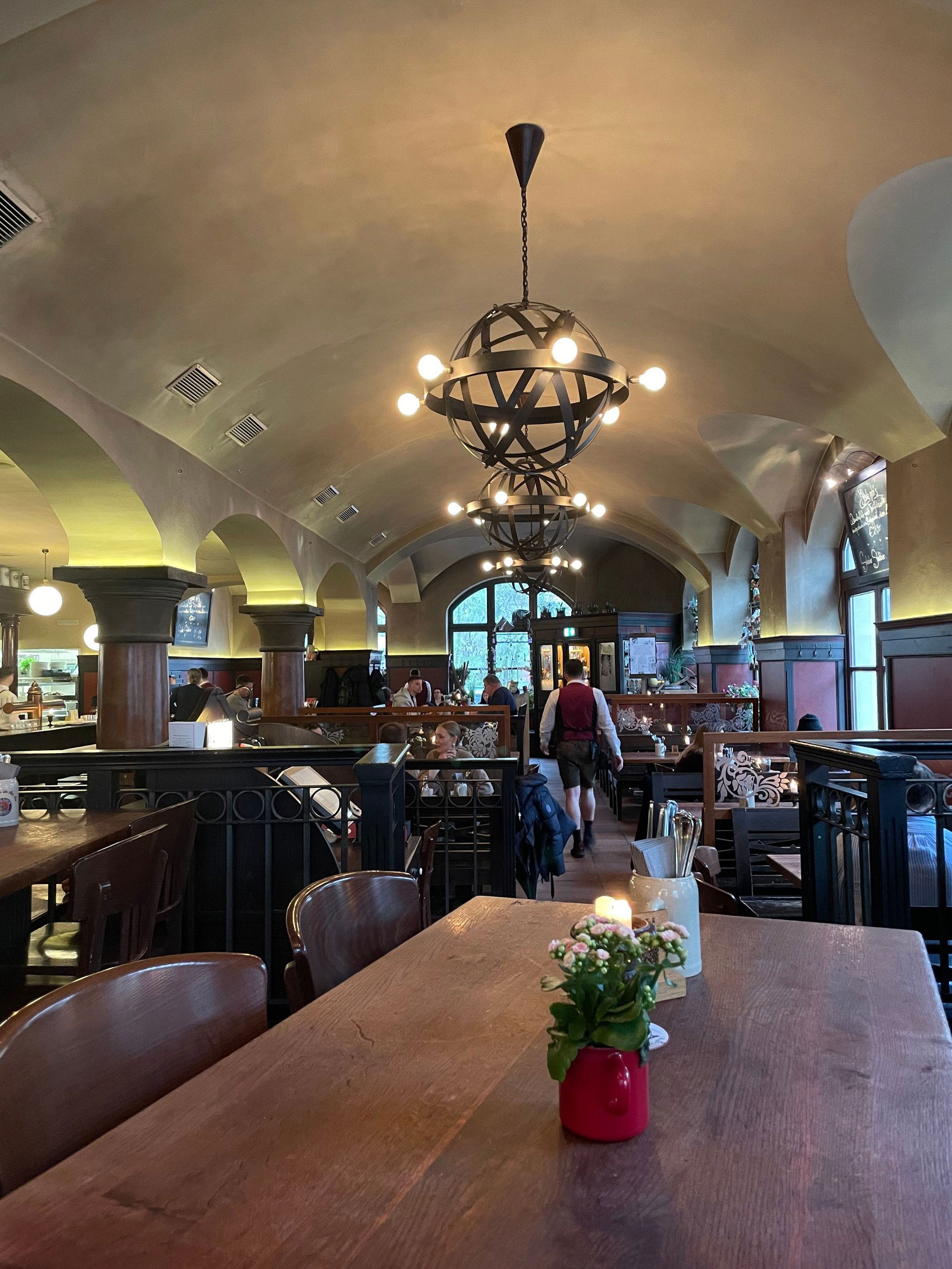
Wirtshaus in der Au is a Munich institution occupying a converted brewery hall in the Au district, southeast of the Isar. The kitchen keeps faith with Bavarian classics — dumplings, roast meats, dark beer sauces — in a room that fills with the same faces week after week. It is the kind of place locals return to not because they have to, but because nothing else quite substitutes for it.
Where the Isar Slows Down and the Pork Knuckle Takes Over
Approach Lilienstraße on a Thursday evening and you will hear Wirtshaus in der Au before you see it: the low percussion of ceramic steins, voices carrying across tables that have been squeezed together with the casual density that Munich treats as a mark of good faith. The building sits in the Au district, one of the city's oldest working neighbourhoods, on the east bank of the Isar just south of the Deutsches Museum. The area has resisted the polish that crept across Haidhausen to its north, and the Wirtshaus matches its surroundings — a high-ceilinged room with exposed stonework and timber that reads as genuinely aged rather than artfully antiqued.
What the Menu Is Actually Telling You
The menu at a traditional Bavarian Wirtshaus is a structural argument, not a list of options, and Wirtshaus in der Au makes that argument with unusual clarity. The architecture follows a logic that prioritises the Stammessen — the regular dishes that anchor Bavarian table culture , over seasonal novelty or modern revision. Schweinshaxe (slow-roasted pork knuckle) and Obazda (a spiced soft cheese preparation) are not heritage gestures here; they are load-bearing columns in a format that has not required renovation because it was not broken to begin with.
That commitment to format discipline is rarer than it sounds. Much of Munich's Wirtshaus category has drifted toward hybrid menus that accommodate international visitors at the cost of internal coherence. When a menu tries to be simultaneously traditional Bavarian and broadly European, the result is usually a weakened version of both. The kitchen at Wirtshaus in der Au does not appear to be interested in that trade-off. The menu signals its allegiances early and sticks to them, which is itself an editorial position in a city where the tourist corridor around Marienplatz has made compromise the default.
The beer card operates with the same structural logic. Weissbier is the primary medium here, ordered by the Maß in summer and arriving with the kind of unhurried efficiency that comes from a staff who have poured several thousand of them. Munich's beer culture has two distinct registers: the Oktoberfest theatrics of the large festival tents, and the quieter, year-round rhythm of the neighbourhood Wirtshaus. This address belongs emphatically to the second category.
Au and Its Neighbours: Reading the Location
The Au and Haidhausen districts together form what Munich's bar and restaurant scene treats as a lower-key alternative to the city centre. The Isar riverbank here draws a specific crowd: locals who cycle down from the English Garden, families from the surrounding streets, and the kind of visitor who has already done the Hofbräuhaus and is now looking for something that functions as an actual neighbourhood institution rather than a set piece. Wirtshaus in der Au falls into that second visit category for most tourists, which has the practical benefit of keeping its weekday atmosphere closer to residential than performative.
For drinking before or after, the Au sits at a reasonable distance from several distinct bar formats. Goldene Bar in the Haus der Kunst operates in a different register entirely , art deco bones, cocktails rather than steins , but the contrast is part of Munich's drinking geography, where the city moves between formal and informal with little friction. Schuman's Bar is the city's most durable cocktail address, and its position near the Englischer Garten makes it a credible pre-dinner option for those coming from the north. Closer in spirit to the Wirtshaus's neighbourhood character, Blaue Libelle and Augustiner Stammhaus offer reference points in Munich's spectrum of traditional drinking culture.
The Bavarian Wirtshaus in a German Context
The Wirtshaus format , a full-service restaurant anchored by regional cooking and local beer, with communal seating and an absence of formality , is Bavaria's most legible contribution to German dining culture. But the format faces specific pressures in Munich that it does not face in smaller Bavarian cities: rising rents in central neighbourhoods, a tourist economy that rewards spectacle, and a generation of diners who came of age with international dining references. Addresses that hold the format without diluting it occupy a narrowing tier of the market.
Elsewhere in Germany, related traditions of anchored local drinking and eating have found their own expressions. Uerige in Dusseldorf operates within Altbier culture the way Wirtshaus in der Au operates within Weissbier culture: format-committed, neighbourhood-rooted, resistant to revision. Kieler Brauerei am Alten Markt in Kiel represents a northern variant of the same instinct. Bar Trattoria Celentano in Cologne crosses the format into Italian territory, but the underlying commitment to a defined, coherent identity is comparable. For cocktail-led departures, Buck & Breck in Berlin and Le Lion Bar de Paris in Hamburg are the German cities' respective technical benchmarks, while The Parlour in Frankfurt on the Main brings a different kind of format discipline to the Rhine-Main region. Further afield, Bar Leather Apron in Honolulu demonstrates how bar-format commitment operates across entirely different cultural contexts.
Planning a Visit
Wirtshaus in der Au is at Lilienstraße 51 in the Au district, accessible by U-Bahn to Fraunhoferstraße or a short walk across the Isar from the Deutsches Museum. As with most Munich Wirtshäuser that have developed a local following, reservations for evening sittings and Sunday lunch are advisable rather than optional , the room fills with regulars who book ahead, and walk-in availability on weekend evenings is unpredictable. The address does not have an Oktoberfest-scale capacity, which is precisely the point. For a broader orientation to the city's dining options, our full Munich restaurants guide maps the category from traditional Bavarian through to the city's newer international formats.
Frequently Asked Questions
- Is Wirtshaus in der Au more low-key or high-energy?
- It runs at the medium-warm pitch of a neighbourhood institution rather than a tourist destination. The room is full and convivial on busy evenings, but the energy is generated by regulars and local families rather than by any programming or performance. Midweek lunches are considerably quieter. If you are comparing it to the large Oktoberfest tents or the central Hofbräuhaus, the contrast is significant.
- What do regulars order at Wirtshaus in der Au?
- The menu's architecture points clearly toward the Stammessen: Schweinshaxe and Weissbier form the load-bearing pairing. Obazda is the standard opening move, consistent with how Bavarian kitchens traditionally sequence a table's order. The menu does not require navigation , it indicates its own priorities without ambiguity.
- What's the main draw of Wirtshaus in der Au?
- The address holds a traditional Bavarian Wirtshaus format with greater coherence than most comparably located Munich alternatives. In a city where the tourist corridor has pushed many kitchens toward hybrid menus, an address that maintains internal format consistency and a genuine neighbourhood clientele represents a real distinction. The Au district location also keeps the atmosphere closer to residential than theatrical.
- Is Wirtshaus in der Au reservation-only?
- Walk-ins are possible but unreliable on weekend evenings and Sunday lunch. Given that no online booking details are publicly confirmed in our records, the safest approach is to contact the venue directly or arrive early for weekday visits. Munich's better-known Wirtshäuser fill quickly in the evening, and this one has enough local reputation to make planning ahead sensible.
- Is Wirtshaus in der Au worth the trip?
- For a visitor who has already covered the central Altstadt beer halls, yes , it represents a different layer of Munich's drinking and eating culture: neighbourhood-scaled, format-committed, and not calibrated for tourists. The Au district itself rewards the short journey from the city centre, particularly along the Isar riverbank.
- Does Wirtshaus in der Au suit non-meat eaters?
- Traditional Bavarian Wirtshaus menus are built around pork and poultry, with plant-forward options typically limited to side dishes and the Obazda cheese preparation. Wirtshaus in der Au operates within that tradition, so the kitchen's output reflects the conventions of the format rather than contemporary dietary breadth. Visitors with strict dietary requirements should verify directly with the venue before booking.
Related editorial
- Best Fine Dining Restaurants in ParisFrom three-Michelin-star icons to the next generation of Parisian chefs pushing boundaries, these are the restaurants that define fine dining in the world's culinary capital.
- Best Luxury Hotels in RomeFrom rooftop terraces overlooking ancient ruins to Michelin-starred hotel dining, these are the luxury hotels that make Rome unforgettable.
- Best Cocktail Bars in KyotoFrom sleek lounges to hidden speakeasies, Kyoto's cocktail scene blends Japanese precision with global influence in ways you won't find anywhere else.
Save or rate Wirtshaus in der Au on Pearl
Keep this venue in your Pearl passport, rate it after you visit, and track it alongside every other place you collect.