
Bar in Milan, Italy
Ristorante Un Posto a Milano
100ptsUrban Cascina Cooking
About Ristorante Un Posto a Milano
Set within the restored 18th-century Cascina Cuccagna farmhouse complex in Milan's Porta Romana district, Un Posto a Milano operates as a restaurant, urban farm, and community space rolled into one address. The kitchen draws on seasonal produce grown on-site, and the wine program leans toward natural and small-producer Italian bottles. It is one of the few Milan dining addresses where the agricultural logic of the glass and the plate genuinely align.
A Farmhouse at the Edge of the City Grid
Milan's dining scene divides cleanly between the design-district polish of Brera and Navigli, and a quieter, more locally rooted circuit that rarely makes international best-of lists. Porta Romana sits in the latter category, and Cascina Cuccagna — the restored 18th-century farmhouse complex on Via Privata Cuccagna — is one of the clearest expressions of what that quieter circuit can produce. Ristorante Un Posto a Milano occupies part of this cascina, a word that in Lombard agricultural tradition describes a working farm compound. The building was derelict for decades before a civic cooperative undertook its restoration, and the restaurant that emerged from that process carries the logic of the space into everything it does: seasonal cooking, an on-site kitchen garden, and a wine list that treats natural and small-producer Italian bottles not as a trend but as an operational commitment.
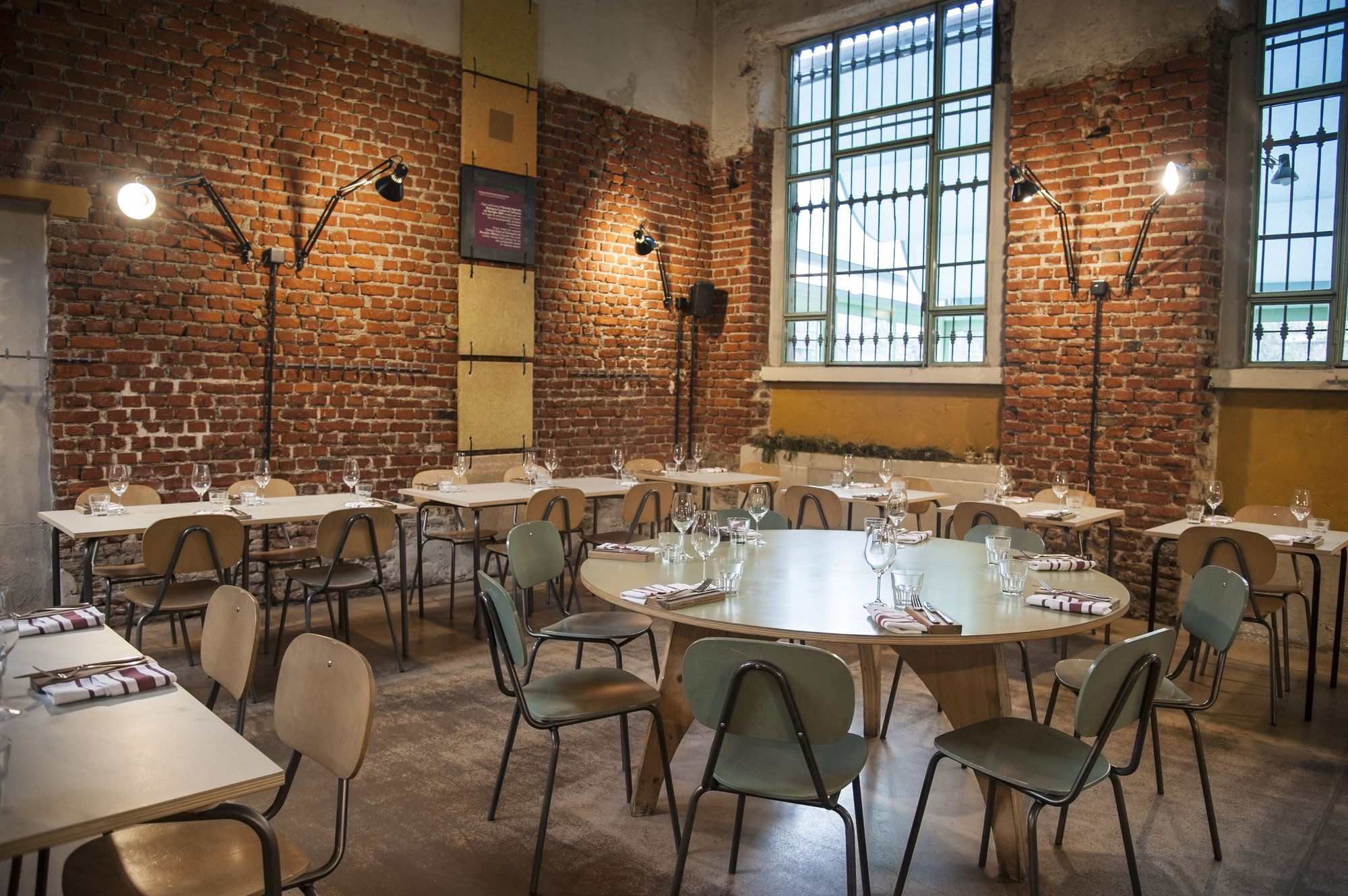
Approaching along the private lane that separates the cascina from the surrounding residential blocks, the shift in register is immediate. The noise of Corso Lodi drops away. The courtyard opens onto a low-rise complex of ochre and brick, with garden beds visible along the perimeter. In summer, tables occupy the courtyard under the open sky. In winter, the interior rooms , low-beamed, simply furnished , close the experience down to something more intimate. The seasonal character of the physical space mirrors the seasonal character of the menu, which is not a coincidence.
The Wine Program as the Room's True Argument
Italian restaurants in the natural wine register tend to fall into two camps: those that use the category as an identity badge, and those that use it as a genuine sourcing discipline. Un Posto a Milano belongs to the second group. The wine list here operates as an extension of the same procurement logic that governs the kitchen: proximity, traceability, small-scale production. Lombard and Piedmontese producers appear alongside Sicilian and Emilian names, with the selection weighted toward bottles that reflect where Italian viticulture is doing its most considered work , hillside Barbera from producers working without SO2 addition, skin-contact Trebbiano from the Emilian plains, Etna Rosso from estates whose farming is too small to seek export distribution.
This orientation places Un Posto a Milano in a distinct peer set within the city. It does not compete with the cellar depth of a dedicated enoteca or a Michelin-starred dining room with a full sommelier team. What it offers instead is coherence: the wines on the list would, almost without exception, sit comfortably alongside the produce-driven dishes coming out of the kitchen. For a traveler arriving from a broader Italian wine tour, pairing a stop here with a visit to Al Covino in Venice or Enoteca Historical Faccioli in Bologna would trace a coherent line through the northern Italian natural wine circuit.
The list changes with the seasons, and the most interesting bottles tend to appear in autumn, when the new harvest arrivals from Piemonte and the Veneto come in alongside older vintages that have been cellared on-site. Visiting in October or November gives access to this rotation at its most dynamic.
The Kitchen Logic and What It Produces
The cooking at Un Posto a Milano draws directly on the kitchen garden within the cascina grounds, supplemented by relationships with small Lombard producers. This is a well-established model in European farm-to-table dining, but what distinguishes this version is the institutional context: the cascina is run as a civic cooperative, which means the sourcing relationships are structural rather than seasonal marketing. The menu shifts with what is ready in the garden and what is available from the producer network, rather than with what is fashionable in Milan's restaurant press.
Dishes tend toward simplicity , preparations that let a correctly grown vegetable or a properly raised protein carry the weight without competitive technique obscuring it. This places the restaurant in a different register from the technically complex tasting menus that populate Milan's upper price tiers, and closer to the tradition of Lombard trattoria cooking: direct, seasonal, ingredient-led. For context on how Milan's broader drinking and bar scene intersects with this tradition, the city's established bars , from the technical precision of 1930 to the aperitivo heritage of Camparino in Galleria , operate in adjacent but distinct registers. Newer venues like Moebius Milano and the enduring Nottingham Forest pull the city toward cocktail-led programming that has little overlap with what Un Posto a Milano is doing, which is precisely the point: the cascina occupies a space in the city that no cocktail bar can.
Placing It in the Broader Italian Circuit
Italy's restaurant culture outside its major cities operates through a network of civic and agricultural projects that rarely attract the same international attention as the Michelin-starred addresses in Milan, Rome, or Florence. Un Posto a Milano sits at an interesting intersection: it is embedded in a major European city while operating with the ethos of a rural agriturismo. This is not common. Most city farm-to-table projects are metaphorical , they reference agricultural values without the actual land. The cascina's kitchen garden is real and productive, which gives the restaurant a credibility that most urban equivalents cannot claim.
For travelers building an Italian itinerary around wine and produce-driven cooking, the northern circuit rewards comparison: Drink Kong in Rome represents a very different approach to Italian hospitality, technically led and urban in every sense. Gucci Giardino in Florence sits at the design-luxury end of the spectrum. L'Antiquario in Naples draws on a completely different southern tradition. Un Posto a Milano answers a specific question , what does civic, land-connected Milan hospitality look like , that none of those addresses can answer. Further afield, the independent bar scene represented by Lost & Found in Nicosia or Bar Leather Apron in Honolulu shows how committed programming in unconventional settings can build a distinct identity, a comparison that holds up well against what the cascina has built in Porta Romana.
Planning a Visit
Un Posto a Milano sits in the Porta Romana district, reachable from the city center by tram along Corso Lodi or a short walk from the Crocetta metro stop on Line 3. The cascina complex hosts events, a small market, and other programming beyond the restaurant, so the courtyard can carry different energies depending on the day. For a quieter experience focused on the dining room, weekday lunches and early weekday dinners tend to offer more space. The summer courtyard service runs through the warmer months and books ahead more quickly than the interior, particularly in June and July. Reservations via the cascina's booking channels are advisable for dinner; the lunch service has historically accommodated walk-ins more readily, though this cannot be guaranteed. For a broader overview of where Un Posto a Milano sits within the city's restaurant circuit, see our full Milan restaurants guide.
Frequently Asked Questions
- What should I drink at Ristorante Un Posto a Milano?
- The wine list is organized around natural and small-producer Italian bottles, with particular depth in Lombard and Piedmontese producers. The most coherent approach is to ask for a pairing recommendation tied to what is on the seasonal menu that day, as the selection is curated to align with the kitchen's produce-driven cooking rather than to showcase labels for their own sake.
- What is the standout thing about Ristorante Un Posto a Milano?
- The address sits within a restored 18th-century working farmhouse cooperative in Porta Romana , an arrangement that gives the kitchen direct access to on-site-grown produce, which is rare for a restaurant operating inside a major European city. The combination of civic context, real agricultural infrastructure, and a wine program built around Italian natural producers creates a coherence that places it in a distinct tier relative to Milan's broader farm-to-table scene, and at a price point more accessible than the city's formal dining rooms.
- Do they take walk-ins at Ristorante Un Posto a Milano?
- Walk-ins are more feasible at lunch, particularly on weekdays, than at dinner. The summer courtyard service, which runs from roughly late May through September, books ahead quickly given the limited outdoor capacity and the cascina's profile among Milan residents. If you are visiting without a reservation, arriving at opening time gives the leading chance of being seated. For a special occasion or weekend dinner, booking in advance is the more reliable route.
- What kind of traveler is Ristorante Un Posto a Milano a good fit for?
- Travelers who prioritize Italian wine depth, seasonal cooking anchored to real agricultural sourcing, and a setting that reflects Milanese civic culture rather than international luxury hotel conventions will find this address most rewarding. It is a less obvious choice than the city's high-profile tasting menus, but it delivers something those rooms cannot: a credible connection between land, plate, and glass within city limits, at a price point that does not require committing the dining budget of a full week.
- Is Cascina Cuccagna only a restaurant, or is there more to the complex?
- The cascina operates as a full civic cooperative, which means the restaurant shares the compound with a small organic market, community event programming, and garden spaces that are accessible to visitors. This broader programming is part of what makes a visit feel different from a standard restaurant outing: the agricultural and civic infrastructure that underpins the kitchen is physically present and visible, not a story told on a menu card.
Related editorial
- Best Fine Dining Restaurants in ParisFrom three-Michelin-star icons to the next generation of Parisian chefs pushing boundaries, these are the restaurants that define fine dining in the world's culinary capital.
- Best Luxury Hotels in RomeFrom rooftop terraces overlooking ancient ruins to Michelin-starred hotel dining, these are the luxury hotels that make Rome unforgettable.
- Best Cocktail Bars in KyotoFrom sleek lounges to hidden speakeasies, Kyoto's cocktail scene blends Japanese precision with global influence in ways you won't find anywhere else.
Save or rate Ristorante Un Posto a Milano on Pearl
Keep this venue in your Pearl passport, rate it after you visit, and track it alongside every other place you collect.