
Bar in Milan, Italy
Osteria del Treno
100ptsStation-Quarter Lombard Cooking
About Osteria del Treno
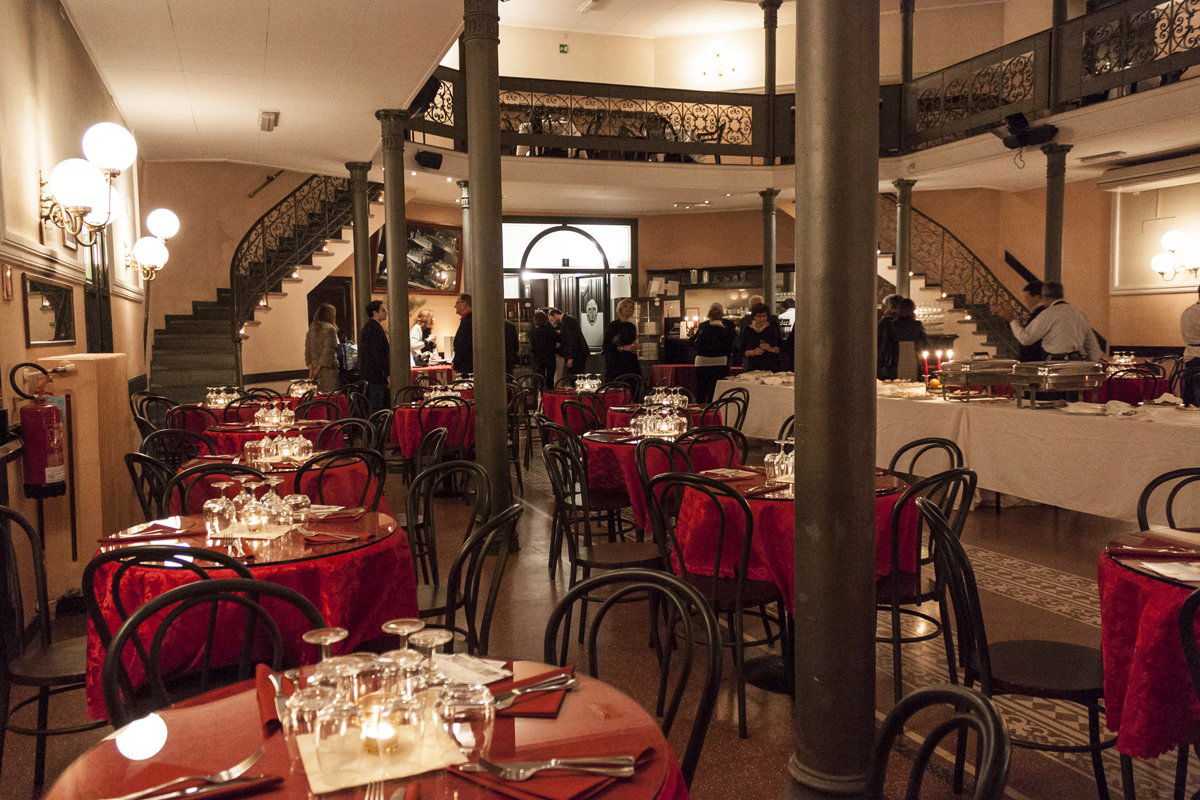
Osteria del Treno occupies a converted railway workers' canteen on Via San Gregorio, a block from Milan's Centrale station, placing it in a corner of the city where working-class tradition and contemporary dining have quietly overlapped for decades. The kitchen leans on Lombard and broader Italian regional cooking, with a front-of-house rhythm shaped by long-standing regulars as much as new arrivals.
The Station Quarter and What It Asks of a Dining Room
Milan's Centrale district has never been a neighbourhood restaurants compete to claim. The area around Via San Gregorio functions as a transit corridor first and a residential quarter second, which means the dining rooms that survive there do so on merit and habit rather than foot traffic or destination fever. Osteria del Treno sits on this street in a space with a documented past as a canteen for railway workers, and that origin shapes how the room feels before any food arrives. The ceiling height, the proportions, the way the tables are spaced: these are not the decisions of a room designed to impress on entry. They are the decisions of a room designed to be occupied at length.
In a city where restaurant openings cluster around Brera, Navigli, and the design-district streets south of Corso Sempione, a place that draws its identity from a labour history rather than a lifestyle trend occupies a genuinely different position in Milan's dining map. For context on where the broader city stands, our full Milan restaurants guide maps the neighbourhood patterns across the centre and periphery.
How the Room Works: A Team That Has Found Its Register
The editorial angle on Osteria del Treno that holds up longest is not the kitchen alone but the way kitchen, floor, and wine service operate as a coordinated unit. In Italian trattoria and osteria culture, the front-of-house carries enormous interpretive weight: a server who knows when to describe a dish in detail and when to let it arrive without ceremony can shift the register of an entire meal. At Osteria del Treno, the floor staff are reported to have the kind of tenure that translates into genuine knowledge of the cellar and of the regulars' preferences, which is a different quality from scripted wine pairings or hospitality-school polish.
This matters because the osteria format, as a category, depends on this integration. Unlike the brigade hierarchy of a formal ristorante, where kitchen and dining room operate in defined lanes, an osteria functions leading when the person pouring wine can also tell you why a particular preparation arrived the way it did, or suggest the dish that makes most sense against the bottle already open. The team dynamic here is calibrated to that expectation. The result is a pace that feels managed rather than rushed or over-attentive, a balance Milan's busier dining rooms often sacrifice in pursuit of turnover.
Lombard Tradition as Culinary Framework
Italian regional cooking in a Milanese osteria context means working within a specific set of constraints and opportunities. Lombard cuisine is not the Mediterranean-inflected cooking that travels most easily abroad: it runs to rice over pasta, braised meats over grilled, butter over olive oil, and slow preparations over quick ones. These are dishes that require time and a kitchen willing to commit to techniques that don't photograph as dramatically as a composed plate.
The advantage of this tradition, when a kitchen respects it, is that the ingredients do significant work. Risotto made correctly in Milan is a lesson in restraint and attention rather than spectacle. Ossibuchi, cotoletta, brasato al Barolo: these are preparations where the team's ability to source, time, and serve in coordination determines everything. A floor that doesn't pace the courses correctly, or a sommelier who doesn't time the decant against the service, can undermine a kitchen that has done its work well. At Osteria del Treno, the coordination between those roles is the product being sold, even if the menu is what most guests describe after the fact.
Italy's osteria format has analogues in bar and wine-bar culture across the country. If you're tracing comparable room-and-service dynamics in other Italian cities, Al Covino in Venice and Enoteca Historical Faccioli in Bologna both operate in the tradition of intimate, knowledge-led service built around Italian regional producers.
The Wine Dimension
An osteria without a considered cellar is closer to a trattoria in all but name. The wine program at an address like Osteria del Treno, given the format and the tenure implied by long-standing floor staff, is most likely structured around Italian regional producers, with Lombard and Piemontese bottles carrying disproportionate weight. This is the correct orientation for a room working with braised meats, risotto, and the broader Lombard pantry: the alignment between regional food and regional wine is not a marketing decision but a functional one, because the tannins and acid structures of northern Italian reds are calibrated against that cooking over centuries of table culture.
The sommelier's role in this context extends beyond list curation into active service: recommending by the glass for solo diners or those committed to a single bottle, reading the table's pace, and knowing when to open conversation about the cellar and when to let the meal find its own rhythm. This is the kind of wine service that accumulates its reputation through repeat visits rather than a single dramatic pairing moment.
Milan's Cocktail and Aperitivo Context
Milanese dining culture is framed by aperitivo at both ends of the evening, and the bar scene the city has built around that ritual is worth understanding as a complement to a meal at a room like this one. For pre-dinner drinks in the city, Camparino in Galleria remains the reference point for Campari-rooted aperitivo in a historical setting, while 1930 and Moebius Milano represent the city's more technically ambitious cocktail programming. Nottingham Forest sits in a longer-standing bracket of Milan cocktail culture with a different register again.
If you're extending an Italian itinerary beyond Milan, Drink Kong in Rome, Gucci Giardino in Florence, and L'Antiquario in Naples each anchor different regional approaches to the bar format. Further afield, Lost and Found in Nicosia and Bar Leather Apron in Honolulu illustrate how the osteria-adjacent philosophy of knowledgeable, unhurried hospitality surfaces in entirely different cultural contexts.
Planning a Visit
Osteria del Treno is located at Via San Gregorio 46, a short walk from Milano Centrale station, which makes it a practical choice before a departure or after an arrival without requiring the kind of reservation lead time that the city's more decorated rooms demand. The Centrale neighbourhood is leading approached on foot from the station or by the M2 and M3 lines that converge at the Centrale stop. Given the working-history of the space and the regular-heavy culture of the room, booking ahead is sensible for dinner, particularly mid-week when the dining room fills with neighbourhood trade rather than tourist flow. Lunch may offer more flexibility, though the kitchen's commitment to slow preparations means some dishes require time that a compressed midday window doesn't always permit.
Frequently Asked Questions
What do regulars order at Osteria del Treno?
The room's Lombard orientation points toward the preparations that reward the kitchen's pacing and the floor's knowledge: risotto in its seasonal form, braised meats, and dishes built around the slow-cooking tradition that defines northern Italian cooking at this price point. Regulars, by definition, are the guests who have worked out which dishes reflect the kitchen at its most confident, and at an osteria operating in the railway-canteen tradition, those tend to be the preparations that don't require spectacle to justify themselves.
What is the standout characteristic of Osteria del Treno in the context of Milan's dining scene?
In a city where dining destinations cluster around design-district neighbourhoods and compete on visual identity, Osteria del Treno's position in the Centrale quarter, in a space with documented working-class history, places it in a smaller category of Milan restaurants that derive authority from continuity and regulars rather than from awards cycles or location premium. The price positioning reflects that context: this is not a room pricing against Brera or Porta Nuova competitors, which makes it a reference point for the kind of value-to-quality relationship that Milan's more prominent dining addresses have largely moved away from.
Is Osteria del Treno suitable for a meal before catching a train from Milano Centrale?
The venue's address on Via San Gregorio places it within walking distance of Milano Centrale station, which is one of the practical factors that defines its regular trade. The caveat is format: an osteria built around unhurried pacing and slow preparations is not optimised for a meal against a hard departure time, and the kitchen's Lombard-rooted cooking rewards the kind of attention that a timetable-driven lunch makes difficult. For a relaxed pre-travel meal with buffer time, it works; for a fast turnaround, the format is likely to create friction.
Related editorial
- Best Fine Dining Restaurants in ParisFrom three-Michelin-star icons to the next generation of Parisian chefs pushing boundaries, these are the restaurants that define fine dining in the world's culinary capital.
- Best Luxury Hotels in RomeFrom rooftop terraces overlooking ancient ruins to Michelin-starred hotel dining, these are the luxury hotels that make Rome unforgettable.
- Best Cocktail Bars in KyotoFrom sleek lounges to hidden speakeasies, Kyoto's cocktail scene blends Japanese precision with global influence in ways you won't find anywhere else.
Save or rate Osteria del Treno on Pearl
Keep this venue in your Pearl passport, rate it after you visit, and track it alongside every other place you collect.