
Bar in Mexico City, Mexico
Salón Tenampa
100ptsMariachi Cantina Tradition
About Salón Tenampa
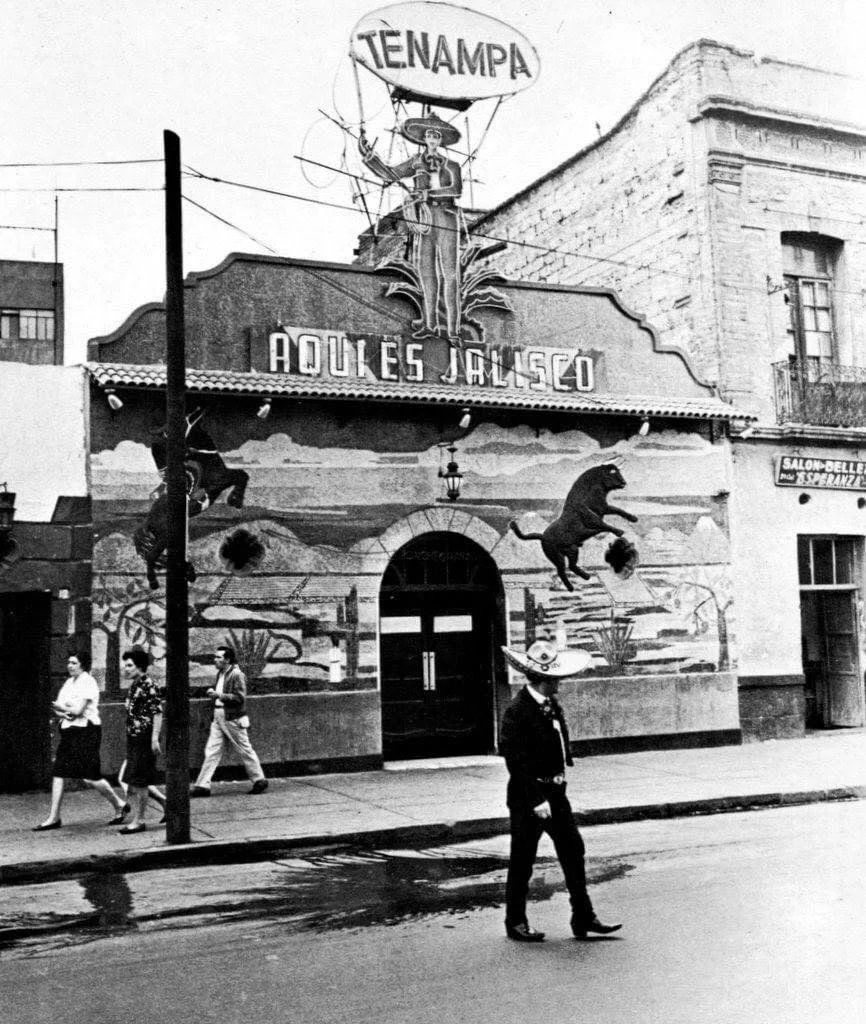
On Plaza Garibaldi, the spiritual centre of mariachi culture in Mexico City, Salón Tenampa has anchored the square since 1925. This is where tequila and mezcal are ordered by the copita alongside live mariachi, and where the rituals of cantina drinking remain largely unchanged. For anyone mapping the city's drinking traditions, it is a reference point before it is a destination.
The Square That Sets the Terms
Approach Plaza Garibaldi on any evening from Thursday onward and the sound arrives before the architecture does. Competing trumpet lines, guitarrón bass notes, and the occasional vihuela chord bleed together across the open square, each band staking out a few metres of cobblestone. The plaza has functioned as the commercial and ceremonial home of mariachi in Mexico City for over a century, and the cantinas that line its edges are inseparable from that identity. Salón Tenampa, at address Plaza Garibaldi 12, is the oldest of those establishments still operating under a recognisable version of its original format. It opened in 1925, which places it a full generation ahead of most cantinas that present themselves as traditional, and that longevity is the first thing any serious assessment must register.
The city's drinking culture has fractures along many lines — mezcalerías that source single-village agave spirits, cocktail bars running technical programmes in Roma Norte, hotel bars positioning themselves against international peers. Salón Tenampa sits outside all of those conversations and is better understood as a category reference rather than a competitor within them. For context on the range of Mexico City's bar scene, our full Mexico City restaurants guide maps those divisions in detail.
Tequila and Mezcal as the Structural Spine
The editorial angle assigned to this page asks for a focus on the drinks list, and at Tenampa the drinks list is, in practice, a tequila and mezcal list. That framing is not reductive — it is accurate, and accuracy here carries more weight than variety. Mexican cantina culture developed around agave spirits as its primary currency long before either tequila or mezcal achieved the international recognition they now hold. A venue that has been pouring both since 1925 operates from institutional memory rather than trend-responsive curation.
Distinction matters because the two spirits have diverged sharply in global positioning over the past decade. Tequila, led by highland Jalisco producers and amplified by celebrity investment, now sits inside a premiumisation story that has pushed aged expressions , añejo and extra-añejo , toward price points once associated with aged Scotch. Mezcal, meanwhile, has developed a parallel niche around terroir, indigenous variety, and small-batch production, with a consumer base that skews toward the same drinkers who track natural wine. Salón Tenampa predates both movements and presumably holds both on its list as continuations of what was always ordered there, rather than as editorial positions. For a very different agave-forward experience from the same country, La Capilla in Tequila offers another kind of historical reference point , the birthplace of the Batanga cocktail.
Across Mexico, venues that use agave spirits as their primary focus have developed in notably different ways depending on geography and audience. El Gallo Altanero in Guadalajara, closer to the heartland of tequila production in Jalisco, operates in a different regional register. Arca in Tulum and Bekeb in San Miguel de Allende each reflect how coastal and colonial-city contexts shape what agave drinking looks like for a particular clientele. Salón Tenampa represents the urban, working cantina tradition , the version in which spirits are served without performance, in the traditional copita format, alongside live music that is not background ambience but the actual point.
Mexico City's Technical Bar Scene as Context
Understanding what Salón Tenampa is requires briefly understanding what it is not. Mexico City has produced several bars that now operate at the level of international cocktail recognition. Baltra Bar and Bijou Drinkery Room represent the more format-conscious, technically oriented tier of the city's cocktail scene. Bar Mauro and Brujas occupy other positions in the same general movement toward programme-led drinking. None of these venues compete with Tenampa, and Tenampa does not compete with them. The city is large enough, and its drinking culture layered enough, that a cantina founded in 1925 and a fermentation-forward cocktail bar in Condesa can both be relevant to the same traveller on different nights.
For reference outside Mexico, the position Tenampa holds is not unlike what a long-established jazz club with a limited but authoritative list holds in New Orleans, or what a traditional izakaya with a deep sake selection holds in Tokyo's older neighbourhoods. The format disciplines the offer, and the offer is understood by regulars in terms of what has always been available rather than what has recently been added. Bar Leather Apron in Honolulu and Aruba Day Drink in Tijuana offer useful comparative frames for how very different markets position their own drinking institutions.
Visiting: What the Format Requires
Salón Tenampa operates in the cantina tradition, which means the format is structured around group tables, live music moving through the room, and a drinks order that runs on agave spirits. The plaza setting means the ambient noise level is significant even indoors , this is not a venue for quiet conversation. Garibaldi is accessible by metro (Garibaldi station, Line 8 and Line B), and the surrounding Centro Histórico neighbourhood is dense with other reference points for traditional Mexican food and culture. The square sees its heaviest activity on weekend evenings, when multiple bands compete simultaneously and the cantinas fill early. Arriving before 9 pm on those nights gives you a seat without negotiation; arriving after midnight gives you a different experience entirely, when the square empties somewhat and the remaining drinkers tend toward the committed regulars. No booking infrastructure is documented for this venue, which is consistent with traditional cantina format , walk-in is the norm.
For those building a wider itinerary around Mexico City's drinking culture, pairing an evening at Tenampa with a later stop at one of the Roma Norte or Condesa bars , Baltra Bar being a natural counterpoint , gives a useful cross-section of what the city's bar scene actually spans in 2024. The contrast is instructive: the same agave spirit, consumed in very different registers, tells you something about how Mexican drinking culture has evolved while keeping its oldest institution largely intact. Elsewhere in the country, Coco Bongo in Cancun shows how entertainment-led venues operate at the tourism-facing extreme, making Tenampa's cantina restraint even more legible by comparison.
Frequently Asked Questions
What do regulars order at Salón Tenampa?
The cantina format at Tenampa centres on tequila and mezcal served in traditional copitas, the small clay or glass cups that have been the vessel of choice in Mexican agave culture for generations. Regulars in a venue of this age and format tend to order by spirit category and producer familiarity rather than by cocktail name , the list is structured around the spirits themselves. Food accompaniments typical to cantina culture, such as botanas, often accompany the drinks.
Why do people go to Salón Tenampa?
The primary draw is the combination of live mariachi and a cantina that has been in continuous operation since 1925, making it a direct point of contact with the cultural tradition that Plaza Garibaldi was built to house. For visitors to Mexico City, it functions as a scene rather than a dining destination , you go to sit inside a working piece of the city's musical and drinking history. The price positioning is consistent with traditional cantina culture, meaning it remains accessible relative to the cocktail bars in Roma or Polanco.
Can I walk in to Salón Tenampa?
Walk-in access is consistent with the cantina format and no advance reservation system is documented for this venue. On busy weekend nights, arriving before 9 pm improves your chances of securing a table without a wait. The plaza itself is a public space, and the flow between the square and the cantinas that line it is informal by design.
Is Salón Tenampa the oldest cantina on Plaza Garibaldi?
Tenampa's founding date of 1925 places it among the earliest establishments on the square and is frequently cited as the cantina most directly associated with the formalisation of mariachi culture in Mexico City. The square itself was being developed as a mariachi hub during roughly the same decade, meaning Tenampa's history and the plaza's cultural identity grew in parallel. That relationship between the venue and the square's broader function as an institution is the primary historical credential it carries.
Related editorial
- Best Fine Dining Restaurants in ParisFrom three-Michelin-star icons to the next generation of Parisian chefs pushing boundaries, these are the restaurants that define fine dining in the world's culinary capital.
- Best Luxury Hotels in RomeFrom rooftop terraces overlooking ancient ruins to Michelin-starred hotel dining, these are the luxury hotels that make Rome unforgettable.
- Best Cocktail Bars in KyotoFrom sleek lounges to hidden speakeasies, Kyoto's cocktail scene blends Japanese precision with global influence in ways you won't find anywhere else.
Save or rate Salón Tenampa on Pearl
Keep this venue in your Pearl passport, rate it after you visit, and track it alongside every other place you collect.