
Bar in Mexico City, Mexico
Hugo
100ptsRoma Norte Spirits Vernacular
About Hugo
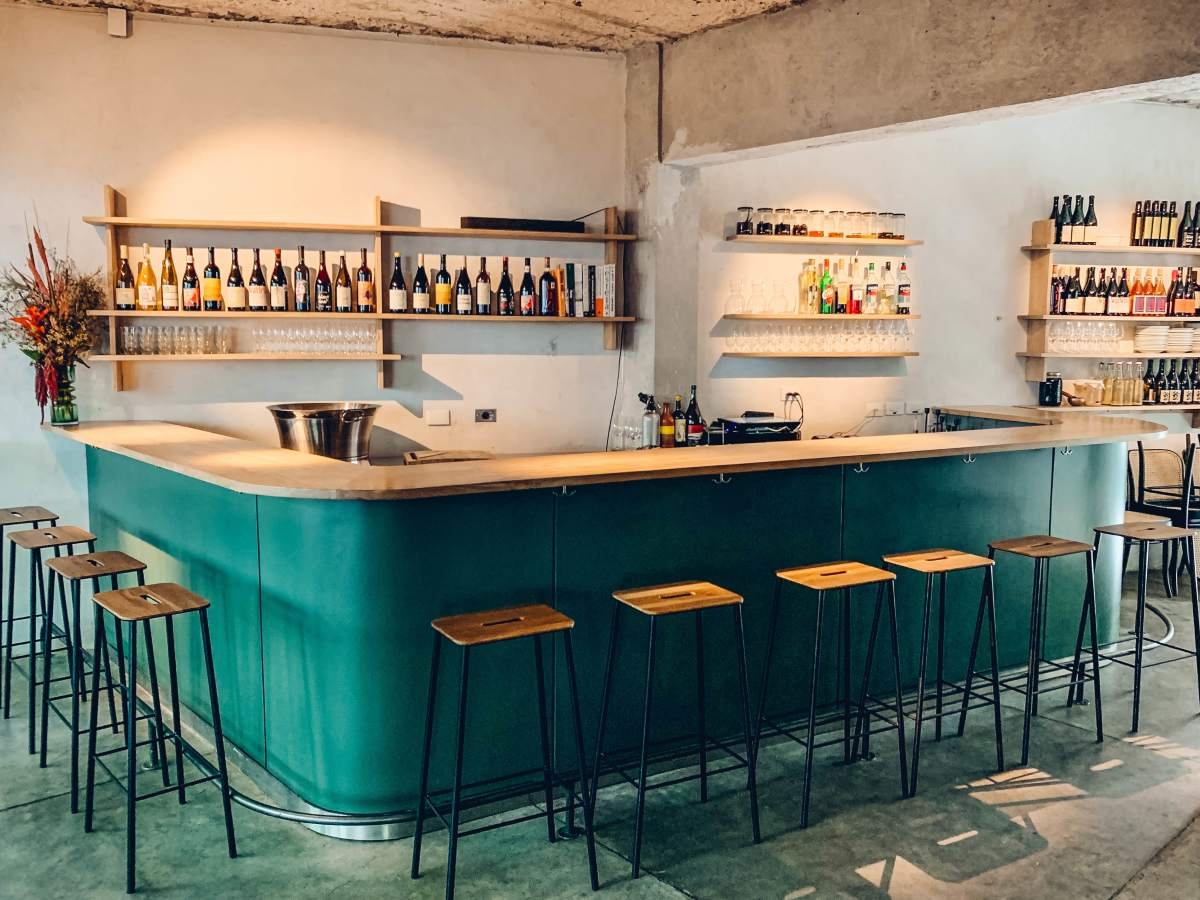
On Avenida Veracruz in Colonia Roma Norte, Hugo occupies a stretch of Mexico City's most concentrated bar territory. The address places it squarely inside a neighbourhood that has redefined how the capital drinks over the past decade, with a format and atmosphere that reward those who take Roma's cocktail scene seriously rather than treating it as a backdrop for a night out.
Where Roma Norte's Drinking Culture Takes Shape
Colonia Roma Norte is not a neighbourhood that announces itself. There are no marquees, no doormen with velvet ropes, no landmark architecture designed to signal arrival. What there is, along Avenida Veracruz and the surrounding blocks, is a concentration of serious drinking establishments that has accumulated quietly over the past ten years into something the rest of Mexico City now looks to for calibration. Hugo, at Av. Veracruz 38, sits inside that accumulation rather than apart from it. The address is both its context and its credential.
Mexico City's bar scene has moved in a direction that mirrors what happened in Tokyo and Copenhagen before it: away from spectacle, toward craft as the organising principle. The city's most closely watched cocktail rooms now compete on the quality of their sourcing, the logic of their menus, and the discipline of their service rather than on theatrics or foot traffic. Hugo belongs to that current, operating on a street where the neighbourhood itself functions as a kind of quality filter.
Roma Norte and the Geography of Mexico City's Cocktail Identity
Understanding where Hugo sits requires understanding what Roma Norte has become. The colonia, bounded by Álvaro Obregón to the south and Sonora to the north, went through a long cycle of decline and recovery after the 1985 earthquake, and its current identity as a centre of independent hospitality is relatively recent. The bars and restaurants that have opened here over the past decade were not following an established luxury corridor; they were creating one, incrementally, without the institutional backing that characterises, say, Polanco's hotel-adjacent dining scene.
That origin matters for how venues in the area position themselves. Baltra Bar and Bar Mauro are both part of this same geography, each representing a distinct approach to what a Roma Norte bar can mean. Bijou Drinkery Room and Brujas extend the neighbourhood's range further, covering territory from technically precise cocktails to more informal late-night formats. Hugo adds its own register to that spread. Together, these addresses make Avenida Veracruz and its immediate surrounds the most coherent single bar zone in the Mexican capital.
The Cultural Logic of Mexico City's Spirits Heritage
Any serious bar operating in Mexico City is, whether it acknowledges it or not, working within one of the world's most consequential distillate traditions. Mezcal and tequila between them represent centuries of agave cultivation and processing knowledge rooted in specific Mexican terroirs: the Valles Centrales of Oaxaca, the highlands and lowlands of Jalisco, the semi-arid zones of Durango and Guerrero. The difference between a bar that treats these spirits as decoration and one that treats them as primary material is audible in how staff discuss them and visible in how menus are structured.
Mexico's bar culture has also absorbed significant influence from the global cocktail revival without losing local identity. The result, at the better addresses in Roma and Condesa, is a hybrid literacy: bartenders who can discuss maceration techniques for amaros in the same conversation as the difference between espadin and tobaziche mezcal. That dual fluency is what distinguishes Mexico City's current generation of bars from their predecessors, and it is the tradition Hugo operates within.
For a broader view of where this fits in Mexico's wider drinking geography, it is worth noting how different the capital's approach is from venues such as Arca in Tulum, where the beach-resort context shapes the program entirely, or La Capilla in Tequila, where a single spirit's hometown heritage defines everything. El Gallo Altanero in Guadalajara and Bekeb in San Miguel de Allende represent regional interpretations that diverge sharply from the capital's cosmopolitan mode. Aruba Day Drink in Tijuana and Coco Bongo in Cancun operate in entirely different registers again. Mexico City, and Roma Norte specifically, is where the country's bar culture is most self-consciously international in its references while remaining most concentrated in local ingredient knowledge.
How to Approach a Visit
Avenida Veracruz rewards walking rather than planning in rigid sequence. The density of good addresses means that treating any single venue as the sole object of an evening produces diminishing returns. A more useful approach is to arrive in the neighbourhood around 8pm, before the later wave of foot traffic, and move between two or three addresses across the course of the night. Hugo at number 38 sits close enough to its neighbours that this kind of evening is logistically direct. The colonia is navigable on foot once you are in it, and the concentration on Avenida Veracruz itself means minimal transit between stops.
For visitors arriving from further afield, Roma Norte is accessible by metro (Insurgentes on Line 1 is the closest major station, roughly a ten-minute walk from the Avenida Veracruz addresses) or by app-based car services, which are the standard mode for most international visitors moving through the city after dark. Reservations at the most in-demand Roma Norte bars, particularly for weekend evenings, are worth securing several days in advance; walk-in capacity during peak hours can be limited. Bar Leather Apron in Honolulu is a useful comparison point for how craft-focused bars in other cities handle similar demand dynamics: early-week visits tend to offer more space and more focused service attention than Friday or Saturday peaks.
Mexico City's bar season does not follow the same logic as beach destinations. The capital runs year-round, with the rainy season (roughly June through September) having minimal effect on the interior bar experience. The cooler, clearer months from October through February tend to attract higher volumes of international visitors, which affects reservation availability across Roma and Condesa. Planning around shoulder periods in March to May or late September tends to give more room to engage with a neighbourhood like this at its own pace.
For a full map of where Hugo sits within Mexico City's wider dining and drinking picture, see our full Mexico City restaurants guide.
Frequently Asked Questions
- What is the defining thing about Hugo?
- Hugo's defining characteristic is its address: Av. Veracruz 38 in Roma Norte places it at the centre of Mexico City's most concentrated independent bar zone, a neighbourhood that has built its reputation incrementally through quality rather than institutional backing. In a city where Polanco carries the hotel-adjacent luxury signal and Condesa the international café crowd, Roma Norte is where the capital's most technically serious drinking culture is concentrated, and Hugo is part of that positioning rather than an outlier within it.
- What's the signature drink at Hugo?
- No verified menu data is available for Hugo at this time, which means specific cocktail names or confirmed house signatures cannot be cited with accuracy. What can be said is that bars at this address in Roma Norte typically operate within Mexico City's dual-fluency cocktail tradition, where agave spirits and international technique coexist on the same menu. Asking staff for current recommendations on arrival is the most reliable approach, and it tends to produce more contextually relevant guidance than a fixed house special would.
- How does Hugo compare to other Roma Norte bars for a first visit to the neighbourhood?
- For a first visit to Roma Norte's bar scene, Hugo's location on Avenida Veracruz makes it a logical anchor point, given the concentration of comparable addresses within walking distance. The neighbourhood's peer set, including Baltra Bar and Bar Mauro, covers a range of formats and price points, which means a single evening can span multiple styles without significant logistical effort. Arriving before 9pm on a weeknight gives the most accessible entry point into the zone's character before later crowds change the pace of service.
Related editorial
- Best Fine Dining Restaurants in ParisFrom three-Michelin-star icons to the next generation of Parisian chefs pushing boundaries, these are the restaurants that define fine dining in the world's culinary capital.
- Best Luxury Hotels in RomeFrom rooftop terraces overlooking ancient ruins to Michelin-starred hotel dining, these are the luxury hotels that make Rome unforgettable.
- Best Cocktail Bars in KyotoFrom sleek lounges to hidden speakeasies, Kyoto's cocktail scene blends Japanese precision with global influence in ways you won't find anywhere else.
Save or rate Hugo on Pearl
Keep this venue in your Pearl passport, rate it after you visit, and track it alongside every other place you collect.