
Bar in Madrid, Spain
Viva Madrid
250ptsOld-Quarter Ceremonial Drinking

About Viva Madrid
One of Madrid's most recognisable 19th-century taverns, Viva Madrid occupies a tiled, ornate corner of the Huertas neighbourhood that has outlasted every passing trend in Spanish bar culture. Ranked 477th in the Top 500 Bars Best Bars 2025 list, it operates at the intersection of vermouth tradition and old-quarter social ritual, drawing a crowd that spans curious visitors and regulars who treat the azulejo-lined interior as an extension of their living room.
A Room That Answers Its Own Question
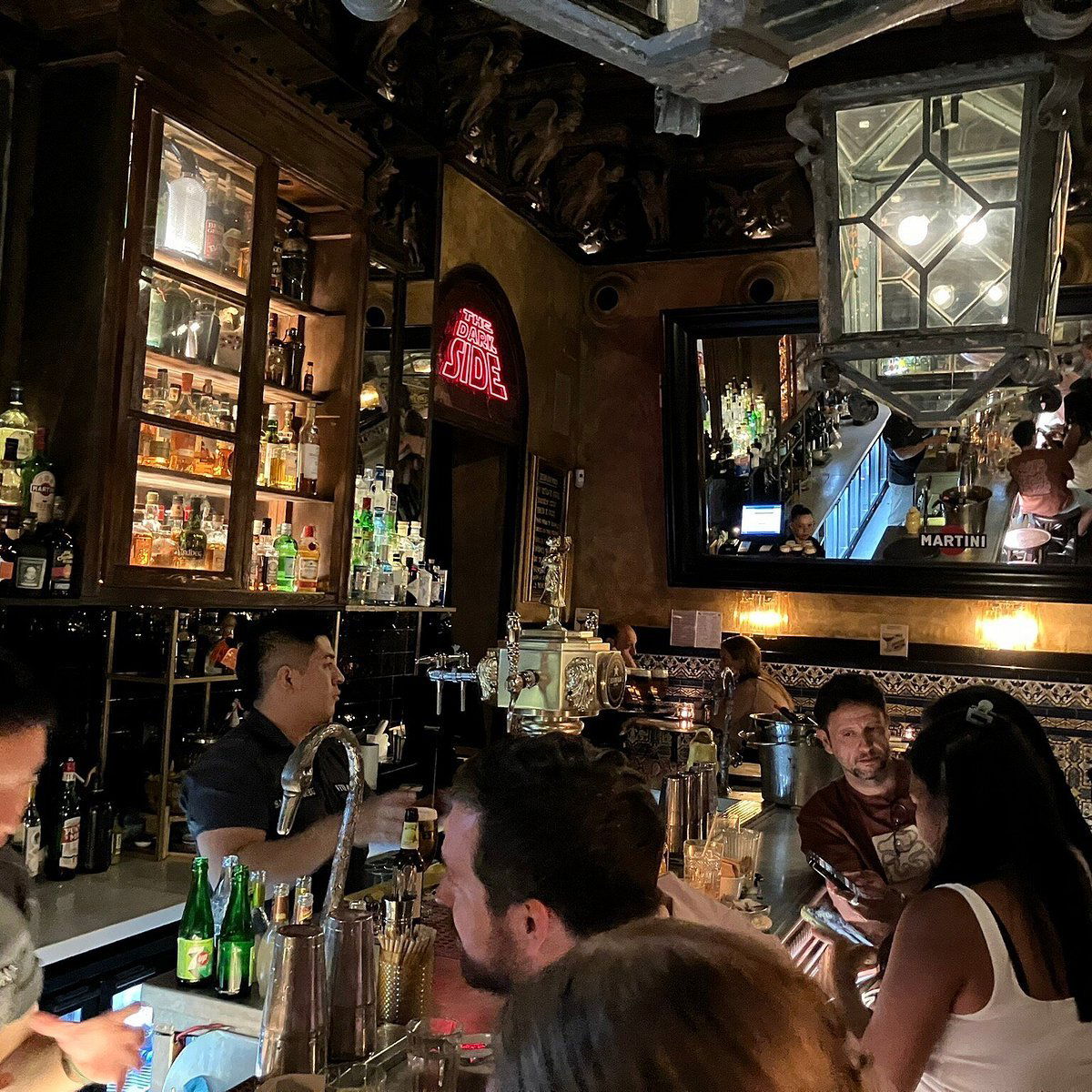
Approach Calle de Manuel Fernández y González on a Saturday afternoon and the exterior of Viva Madrid does most of the persuading before you reach the door. The facade is covered in hand-painted ceramic tiles depicting mythological and pastoral scenes, a style of architectural decoration associated with Madrid's late-19th-century tavern culture that survives in very few places in this form. Inside, the same logic continues: dark wood, glazed tilework running floor to ceiling, mirrors aged to the point where they give back a softened version of whatever is happening in front of them. The physical environment is not a reconstruction or a themed interior. It is the original.
That distinction matters in a city where the line between genuine old-quarter bar and artfully distressed reproduction has become genuinely difficult to locate. Madrid's Huertas and Las Letras districts contain some of Spain's most photographed drinking spaces, but the aesthetic language they borrow traces back to rooms like this one, which existed before the borrowing started.
Where Viva Madrid Sits in Madrid's Bar Hierarchy
In 2025, Viva Madrid appeared at position 477 in the Top 500 Bars Leading Bars ranking, placing it in a recognised tier of globally tracked venues without reaching the upper end of that list where Madrid is represented by more technically driven programs. Salmon Guru and Angelita occupy that upper register, operating cocktail programs built around fermentation, infusion, and structured tasting formats. Viva Madrid's recognition sits on different grounds: longevity, physical authenticity, and a social role that predates the cocktail-bar era entirely.
This positions it within a subset of the global bar rankings that rewards cultural continuity rather than technical innovation. Comparable Spanish bars recognised in part for historical character and neighbourhood function include Boadas in Barcelona and Bar Sal Gorda in Seville, both of which hold their standing through a combination of institutional memory and consistent execution rather than seasonal menu reinvention.
The Drinking Arc: How an Evening at Viva Madrid Develops
The editorial angle for understanding Viva Madrid is sequential: how a visit unfolds over time, from early-afternoon to late evening, and what that progression reveals about the bar's role in Madrid's hospitality culture.
The aperitivo hour in Madrid runs earlier than in most European capitals, and Viva Madrid reads correctly at that hour. Vermouth is the expected opening move, served in the short, generously iced pour that defines the Madrid vermut tradition rather than the longer, cooler Italian format. The bar operates in a neighbourhood where this ritual has been performed continuously for generations, and the tiled interior reinforces the temporal logic of the drink: this is what you have when the afternoon is still open.
As the session moves forward, the room changes register. The Huertas district draws a crowd that skews literary, artistic, and theatre-adjacent, a demographic inheritance from the neighbourhood's historical association with Spanish Golden Age writers whose houses and haunts are documented within a few blocks. That context does not make the bar a museum piece. It makes it a place where conversation is the primary activity and the drink is the supporting structure, which is a different kind of bar from the technically ambitious cocktail rooms that have proliferated elsewhere in the city.
Later in the evening, the offer shifts toward what Madrid's old-quarter bars have always provided at that hour: longer drinks, the possibility of a copa, and a room loud enough to make solitary drinking impractical. The arc from vermut to copa is a standard Spanish progression that Viva Madrid executes in a setting where the physical surroundings give the ritual more weight than it would carry in a newer room.
Huertas and the Architecture of the Old-Quarter Bar
The Las Letras and Huertas districts function as the historical centre of Madrid's evening culture in a way that the newer cocktail corridors of Malasaña and Conde Duque do not replicate. The streets are narrow, the buildings carry plaques, and the density of bars per block means that an evening here moves laterally through space rather than committing to a single room for the night. Viva Madrid's position on Calle de Manuel Fernández y González places it at a junction that connects easily to the broader circuit of the district.
For visitors comparing options across Madrid's bar geography, the distinction worth understanding is this: venues like 11 Nudos Madrid and 1862 Dry Bar are built around defined drinking programs with structured offerings, while Viva Madrid's value is environmental and anthropological. You go there to be in that room, with those tiles, in that neighbourhood, in the company of people doing what Madrid residents have done in that same space for well over a century.
Internationally, bars that sustain this kind of cultural-heritage standing while remaining operationally active are rarer than the heritage bar category might suggest. For comparison, Bar Leather Apron in Honolulu and Garito Cafe in Palma de Mallorca each occupy specific cultural niches in their respective cities; Viva Madrid's niche is the 19th-century Spanish tavern kept functional rather than preserved behind glass.
Planning a Visit
Viva Madrid is located at Calle de Manuel Fernández y González 7, in the Centro district, postcode 28014, a short walk from the Antón Martín or Sevilla metro stations. The Huertas neighbourhood is pedestrian-friendly and the bar sits within easy reach of the broader Las Letras circuit. For visitors building a broader evening around the area, our full Madrid restaurants and bars guide maps the district in more detail. Beyond Madrid, those tracking the character of old-quarter bar culture across Spain may also want to reference Bar Gallardo in Granada and La Margarete in Ciutadella as points of comparison for how different Spanish cities sustain their inherited bar traditions. Garden Bar in Calvia offers a contrasting model in a coastal resort context. Booking details and current hours are leading confirmed directly with the bar before visiting.
Frequently Asked Questions
- What is Viva Madrid known for?
- Viva Madrid is recognised primarily for its 19th-century tiled interior, one of the most intact examples of this decorative tradition in Madrid's Centro district. It appears at position 477 in the Top 500 Bars Leading Bars 2025 ranking, placing it in a globally tracked tier of historically and culturally significant bars. In the city's bar geography, it occupies the old-quarter tavern category rather than the technically driven cocktail segment where venues like Salmon Guru and Angelita compete. Price and format details are leading confirmed directly, as current operating specifics are not held in our database.
- What's the signature drink at Viva Madrid?
- The bar's setting and neighbourhood tradition point strongly toward vermouth as the drink most aligned with the house character. Madrid's vermut culture, served short and cold in the aperitivo hours that run from midday into the early afternoon, is the defining ritual of the old-quarter bar format that Viva Madrid represents. This is consistent with how ranked bars in the heritage-tavern category across Spain, including those recognised in the Top 500 Best Bars list, position their offer: around culturally embedded drinks rather than experimental cocktail formats. Specific current menu details should be verified with the bar directly.
Recognized By

More bars in Madrid
- 28008 Madrid28008 Madrid operates in the Argüelles area of Chamberí, a residential neighbourhood where bars tend to price honestly and draw a committed local crowd. Booking is easy, walk-ins are generally viable, and the area rewards explorers looking for a spirits-focused experience away from Madrid's tourist-heavy centre. Check the current menu before visiting if a specific category is your priority.
- 360º Rooftop BarA central Madrid rooftop that works well for a date night thanks to panoramic city views near the Royal Palace. Booking is easy — no weeks-ahead planning required. For serious cocktail craft, look at Angelita or 1862 Dry Bar instead; for occasion-setting atmosphere with a view, 360º Rooftop Bar earns a place on your shortlist.
Related editorial
- Best Fine Dining Restaurants in ParisFrom three-Michelin-star icons to the next generation of Parisian chefs pushing boundaries, these are the restaurants that define fine dining in the world's culinary capital.
- Best Luxury Hotels in RomeFrom rooftop terraces overlooking ancient ruins to Michelin-starred hotel dining, these are the luxury hotels that make Rome unforgettable.
- Best Cocktail Bars in KyotoFrom sleek lounges to hidden speakeasies, Kyoto's cocktail scene blends Japanese precision with global influence in ways you won't find anywhere else.
Save or rate Viva Madrid on Pearl
Keep this venue in your Pearl passport, rate it after you visit, and track it alongside every other place you collect.