
Bar in Launceston, Australia
Stillwater Restaurant and Stillwater Seven Accommodation
100ptsMill-to-Table Provenance
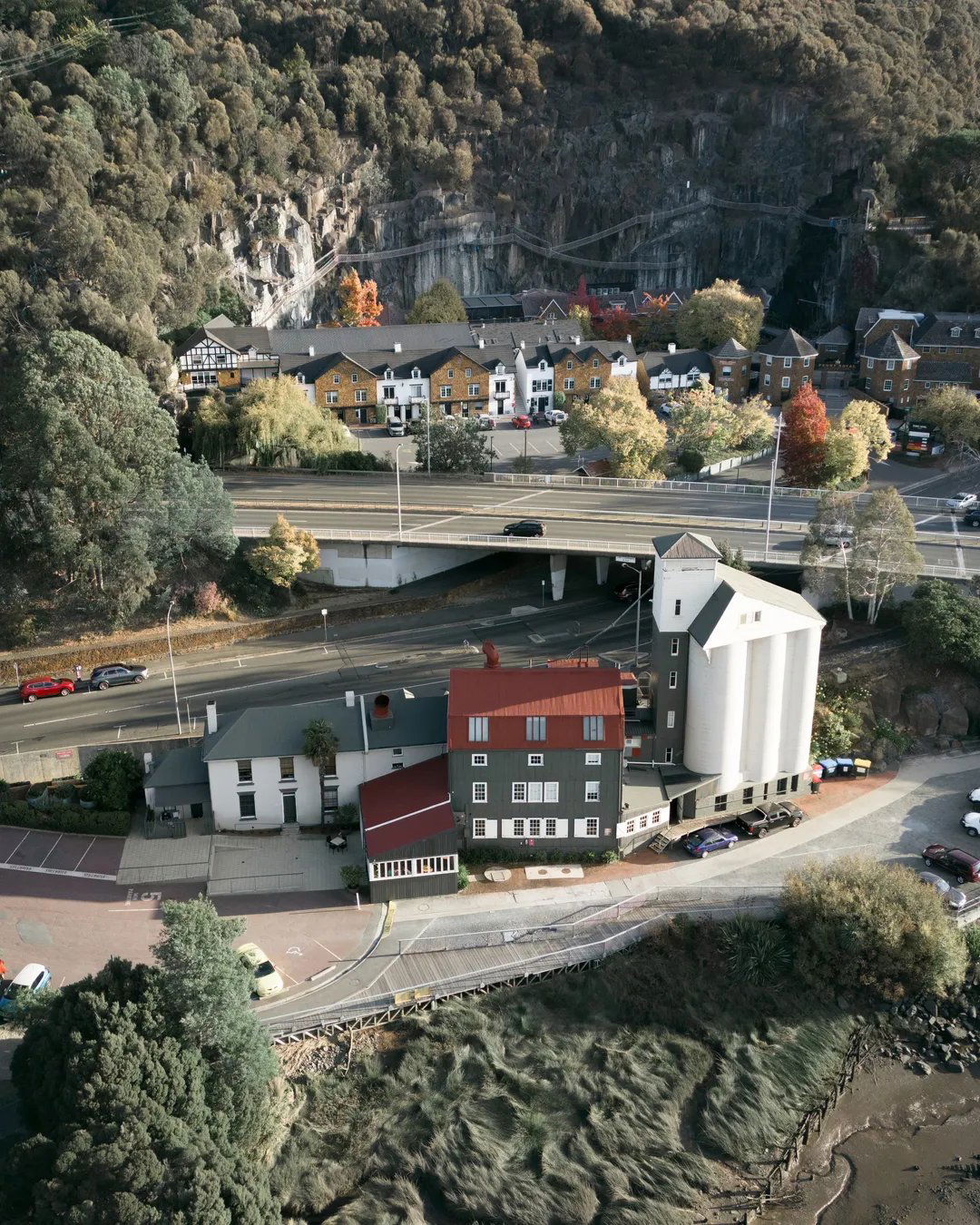
About Stillwater Restaurant and Stillwater Seven Accommodation
Set inside a converted 1830s flour mill on the South Esk River, Stillwater is among Launceston's most established fine dining addresses, pairing a kitchen that draws on Tasmanian produce with a wine and spirits program of considerable depth. The adjoining Stillwater Seven accommodation places guests directly above the restaurant, making it one of the few addresses in regional Australia where serious hospitality extends from the table to the room.
Where the Tamar Meets the Table
Approach Stillwater along the Tamar riverfront and the building does most of the work before you step inside. The converted 1830s flour mill at 2 Bridge Road sits at the water's edge in what has become Launceston's most concentrated pocket of serious eating and drinking, where the industrial grain of the old colonial port district provides the architectural texture that newer precincts manufacture and rarely match. The thick stone walls, low ceilings, and river-facing windows create the kind of environmental specificity that no amount of interior design budget can replicate from scratch. This is dining embedded in material history.
Launceston operates in an interesting register for Australian dining. The city punches well above its population weight in food and wine, partly because of its proximity to some of Tasmania's most productive agricultural land and its position as a hub for producers who might otherwise supply mainland restaurants at arm's length. Visitors arriving from Melbourne or Sydney often find that the competitive pressure here is horizontal rather than vertical: restaurants are not racing to outspend each other on fit-outs or famous names, but rather competing on the quality and provenance of what arrives on the plate. Stillwater belongs firmly to that tradition.
The Back Bar as Editorial Statement
In a city where wine tends to dominate the beverage conversation, the drinks program at Stillwater carries a different kind of authority. The bar occupies its own distinct space within the broader venue, and the approach to spirits curation reflects the kind of collecting instinct more commonly associated with dedicated cocktail destinations. The cellar logic that applies to the wine list here extends, in spirit, to the spirits shelf: depth over breadth, with particular attention paid to Tasmanian distillate, which has matured from a regional novelty into a genuinely credentialed category over the past fifteen years.
Tasmania now produces some of the most closely watched single malt whisky in the southern hemisphere, with distilleries including Sullivans Cove and Lark accumulating international recognition that has sharpened demand for well-curated back bars across the state. At a venue positioned where Stillwater sits, the back bar is not decoration. It functions as a geographic argument: that this island, with its cool maritime climate and clean water, produces spirits worth serious consideration alongside Scottish or Japanese benchmarks. For visitors comparing Australian bar programs, [1806 in Melbourne](https://www.enprimeurclub.com/bars/1806-melbourne) or [Cantina OK! in Sydney](https://www.enprimeurclub.com/bars/cantina-ok-sydney) operate in a different register, oriented toward cocktail technique and global spirits breadth. Stillwater's bar makes a more locally rooted case.
The cocktail format here draws on that Tasmanian ingredient base rather than treating the island's produce as mere garnish. Bars across Australia have moved in this direction at different speeds. [Bowery Bar in Brisbane](https://www.enprimeurclub.com/bars/bowery-bar-brisbane) and [Bakers Lane](https://www.enprimeurclub.com/bars/bakers-lane-launceston-bar) in Launceston itself take their own approaches to place-specific programming. What distinguishes the back bar conversation at Stillwater is the convergence of the food and drinks programs: the same philosophy that shapes sourcing in the kitchen applies to what sits behind the bar, which is rarer than it sounds in practice.
Accommodation Across the River Character
The Stillwater Seven accommodation component reflects a pattern visible in several Australian destinations where premium dining venues have moved laterally into lodging rather than upward into larger hotel formats. Keeping the room count at seven preserves the intimacy that makes the broader Stillwater experience coherent. Guests who stay are spatially embedded in the riverfront precinct rather than arriving from a hotel district several blocks removed. This matters in Launceston more than it might in a larger city, because the dining and drinking scene is concentrated enough that proximity confers real advantage in how an evening unfolds.
Broader boutique accommodation movement across Australia has split between design-led properties with strong local character and those that apply a standardised premium template regardless of location. Properties of this scale, with fewer than ten keys attached to an established culinary program, tend to attract guests who have already made a dining decision and are extending the experience into an overnight. The bar for the room product is therefore set partly by the restaurant below, which is a meaningful constraint.
Situating Stillwater in Launceston's Dining Scene
For those building a Launceston itinerary, the city's dining geography rewards some planning. The riverfront precinct and the CBD grid contain the majority of venues worth serious attention. [Our full Launceston restaurants guide](https://www.enprimeurclub.com/cities/launceston) maps the wider scene for those who want comparative context before committing to a sequence. Beyond Launceston, the broader Australian bar and spirits conversation includes programs as varied as [Fratelli Paradiso in Potts Point](https://www.enprimeurclub.com/bars/fratelli-paradiso-potts-point-bar), [La Cache à Vín in Spring Hill](https://www.enprimeurclub.com/bars/la-cache-a-vin-spring-hill-bar), [Blu Bar on 36 in The Rocks](https://www.enprimeurclub.com/bars/blu-bar-on-36-the-rocks-bar), [Whipper Snapper Distillery in East Perth](https://www.enprimeurclub.com/bars/whipper-snapper-distillery-east-perth-bar), [Leonards House of Love in South Yarra](https://www.enprimeurclub.com/bars/leonards-house-of-love-south-yarra-bar), [Lucky Chan's Laundry and Noodle Bar in Northbridge](https://www.enprimeurclub.com/bars/lucky-chans-laundry-noodle-bar-northbridge-bar), and [Bar Leather Apron in Honolulu](https://www.enprimeurclub.com/bars/bar-leather-apron-honolulu), each with a different answer to the question of what makes a bar program worth travelling for.
Within that broader comparison, Stillwater's answer is geographical specificity: the Tamar Valley and the wider Tasmanian food system as a point of difference rather than a supplement to a more cosmopolitan offering. For visitors who have already formed opinions about Tasmanian produce from Sydney or Melbourne restaurants, arriving at the source and drinking and eating within sight of the river that shapes the surrounding agriculture closes a loop that matters to the most attentive diners.
Planning a Visit
Stillwater sits at 2 Bridge Road in Launceston, on the southern bank of the Tamar at the edge of the Inveresk precinct. The venue is accessible on foot from the CBD in under ten minutes. Guests combining dinner with the Stillwater Seven accommodation should note that the room count is small enough to make advance booking advisable, particularly during peak Tasmanian travel periods in summer (December through February) and around major food and wine events on the regional calendar. The combination of the restaurant, bar program, and accommodation makes this a venue where spending an evening, a night, and a morning in the same location delivers more than treating any single element in isolation.
Frequently Asked Questions
Is Stillwater more low-key or high-energy?
By the standards of Australian capital city dining, Stillwater reads as considered and unhurried rather than high-energy. The stone mill setting and riverside position set a pace that the service style tends to honour. This is not a venue designed around ambient noise and table-turning; it occupies the measured end of the Launceston dining register, which is broadly consistent with how the city's better restaurants position themselves against their Sydney or Melbourne counterparts.
What should I try at Stillwater?
The strongest case for Stillwater is built on Tasmanian provenance: regional produce, local wines, and spirits drawn from the island's now-credentialed distilling scene. Given the editorial angle of the drinks program, working through the Tasmanian whisky selection alongside food is a more specific use of the venue than treating it as a general fine-dining destination. The bar program represents a point of difference that rewards attention.
What makes Stillwater worth visiting?
The combination of a heritage building with genuine architectural character, a food and drinks program rooted in Tasmanian produce, and a seven-room accommodation component is a specific configuration that places Stillwater in a small peer set within Australian dining. Comparable experiences in larger Australian cities tend to involve more separation between the bar, restaurant, and accommodation functions. The convergence here, at this scale, is the point.
Can I walk in to Stillwater?
Walk-in availability at a venue of this profile and room count is always contingent on the day and season. Given that the Stillwater Seven accommodation has only seven keys and the restaurant operates at the premium end of the Launceston market, advance contact is advisable rather than speculative. The address is 2 Bridge Road; the website should be the first point of reference for current availability and booking method.
Is a night at Stillwater worth it?
For visitors whose primary interest is Tasmanian food and drink rather than simply Launceston as a stopover, an overnight stay is a qualitatively different proposition from a dinner reservation. The small room count means the experience does not scale into something impersonal. Whether the overnight rate represents value depends on the traveller's price reference point, but the combination of location, heritage fabric, and the attached restaurant and bar program makes the calculus more favourable than the accommodation component assessed in isolation.
Does Stillwater's bar program draw from Tasmanian distilleries specifically?
Tasmania's distilling scene has developed enough critical mass over the past decade that any serious bar program in the state now has access to a credentialed local category rather than a handful of novelty bottles. Stillwater's back bar sits in the context of a food program that already prioritises regional provenance, which makes the alignment between kitchen and bar philosophically coherent in a way that is not automatic across Australian venues. For visitors tracking the Tasmanian whisky story from distillery to bar, this is a relevant point of engagement in Launceston's dining scene.
Related editorial
- Best Fine Dining Restaurants in ParisFrom three-Michelin-star icons to the next generation of Parisian chefs pushing boundaries, these are the restaurants that define fine dining in the world's culinary capital.
- Best Luxury Hotels in RomeFrom rooftop terraces overlooking ancient ruins to Michelin-starred hotel dining, these are the luxury hotels that make Rome unforgettable.
- Best Cocktail Bars in KyotoFrom sleek lounges to hidden speakeasies, Kyoto's cocktail scene blends Japanese precision with global influence in ways you won't find anywhere else.
Save or rate Stillwater Restaurant and Stillwater Seven Accommodation on Pearl
Keep this venue in your Pearl passport, rate it after you visit, and track it alongside every other place you collect.