
Bar in Charleston, United States
Husk
100ptsSouthern Provenance Sourcing
About Husk
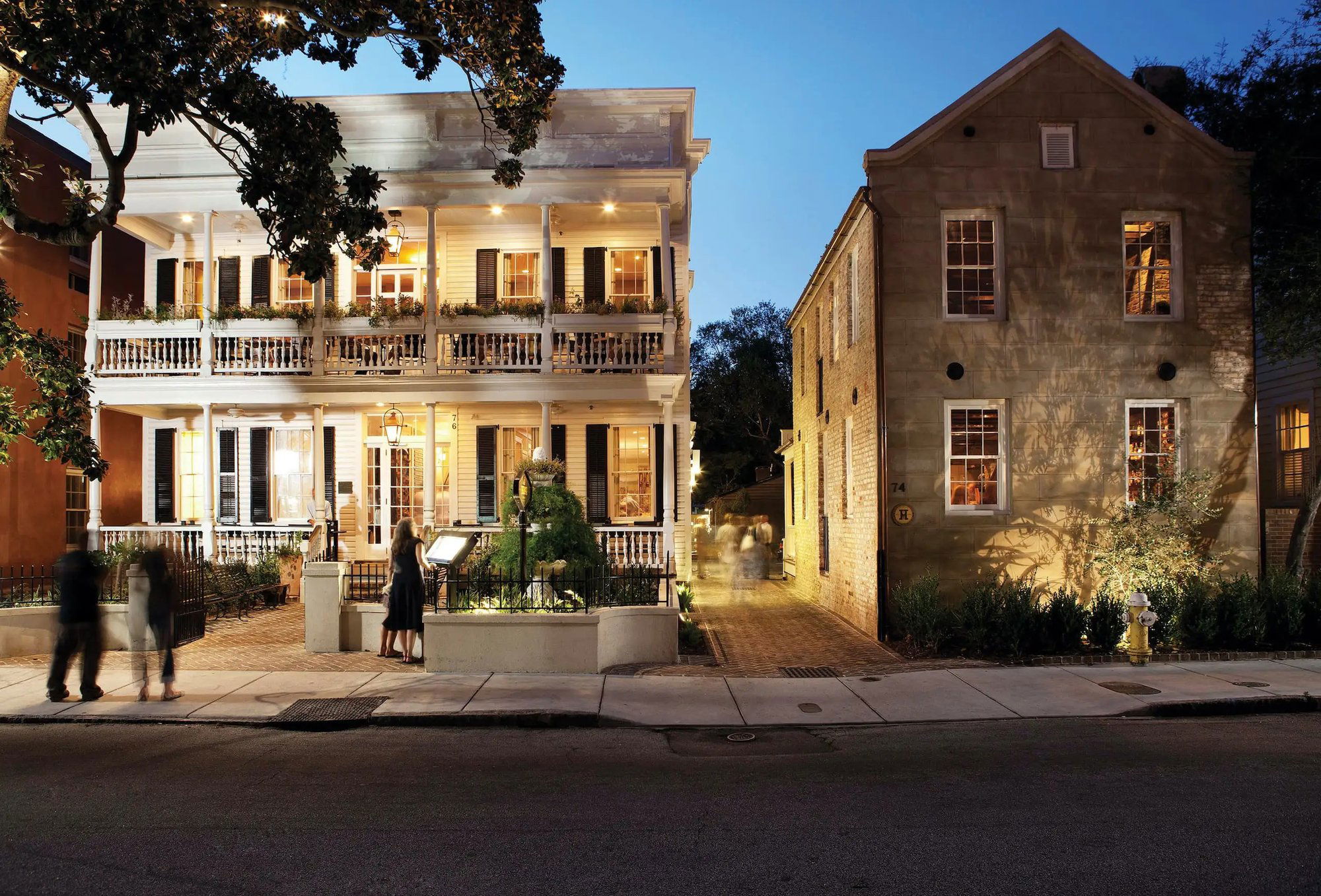
Husk occupies a restored antebellum mansion on Queen Street in Charleston's historic district, anchoring the city's serious conversation about Southern cooking and its agricultural roots. The restaurant has become a reference point for the regional produce-driven movement that redefined what American Southern food could mean in a fine-dining register — drawing visitors and locals alike to a table that takes provenance as seriously as technique.
The Southern Provenance Argument, Made in Brick and Wood
Queen Street in Charleston's lower peninsula carries the kind of weight that only accumulates over centuries. The antebellum houses here were built to last, and the culinary establishments that have taken up residence in them tend to carry an equivalent seriousness of purpose. Husk, at 76 Queen Street, occupies one of those structures: a two-storey mansion with a wide front porch, the kind of building that signals, before a single dish arrives, that something considered is happening inside. That physical context matters. The South has long had a complicated relationship with what counts as "serious" food, and venues that choose to work within historic architecture are implicitly making an argument about continuity and rootedness.
The American South's food identity has spent the past two decades undergoing a significant re-examination. What once read as regional comfort food — cornbread, field peas, cured pork, heritage grain grits — has been reframed by a generation of chefs and restaurateurs who treat the agricultural South as a larder worth defending. That shift has happened in cities across the region, but Charleston has been at the centre of it, partly because of its proximity to working farms in the Lowcountry, partly because its culinary infrastructure developed early enough to attract serious talent. Husk arrived in that context and, in many respects, became its clearest articulation.
What the Lowcountry Tradition Actually Means on a Plate
The Lowcountry is a specific geography , the coastal plain stretching from South Carolina down into Georgia , with a food culture shaped by West African culinary knowledge, Indigenous agricultural practice, and a particular set of ingredients that thrive in heat and humidity. Rice cultivation here dates to the seventeenth century, brought with enslaved West Africans who possessed expertise with the crop that European planters lacked. The so-called "Carolina Gold" rice variety, nearly extinct by the twentieth century, has been revived by agricultural historians and seed-saving farmers, and it has become something of a symbol for the broader project of Southern food recovery.
Husk operates within that tradition in a direct, non-decorative way. The restaurant's stated commitment to sourcing from within the South is not a marketing positioning so much as a culinary constraint that shapes every decision on the menu. When a kitchen restricts its larder geographically, it has to think harder about what grows where, what preserving techniques extend seasonal windows, and how to build depth of flavour without reaching for easy imports. That discipline tends to produce more interesting food than menus assembled from a global shopping list.
Barbecue and smoked preparations have deep roots in the Lowcountry , whole hog traditions in South Carolina follow a distinct mustard-based sauce lineage that differs markedly from Memphis or Texas conventions. The regional specificity of Southern food is often underestimated by those who treat it as a monolith. A Charleston kitchen thinking seriously about its location has a very different frame of reference than one in Nashville or New Orleans, and the leading venues in the city reflect that granularity.
Charleston's Restaurant Scene and Where Husk Sits in It
Charleston has punched above its population weight in American food culture for at least fifteen years. The city's culinary reputation draws comparison with New Orleans in terms of the density of serious restaurants relative to city size, though the two cities operate in very different registers. New Orleans built its identity on a creolized, layered cuisine with French and Spanish colonial roots; Charleston's identity is more directly tied to the agricultural range of the Lowcountry and the African diaspora traditions that shaped it.
Within the city's competitive set, Husk occupies the reference-point tier rather than the experimental fringe. It is the kind of place that visiting food professionals put on their list not to be surprised but to be oriented , to understand what the Southern produce-driven argument looks like when it is executed at high consistency over many years. That positioning is different from, say, a newer restaurant taking formal risks, but it is no less valuable. Restaurants that hold a standard across a long run teach you something about what the cuisine actually is, not just what it can occasionally become.
For a broader picture of where Husk sits among Charleston's dining and drinking options, our full Charleston restaurants guide maps the city's culinary geography across neighbourhoods and price tiers.
Drinking in Charleston's Southern Context
The cocktail program at a venue like Husk is typically calibrated to the food: Southern spirits, particularly bourbon and rye, feature heavily, alongside local craft distillates where the regional sourcing logic can be extended from the kitchen into the glass. Classic Southern cocktails , the julep, the sling, the shrub-based drinks that predate Prohibition in the region , have a cultural legitimacy here that they lack in cities without the same historical connection to those traditions.
Charleston's bar scene has developed in parallel with its food culture, producing a generation of cocktail programs that take the regional spirits canon as seriously as the leading Southern kitchens take their larders. The Cocktail Club, 39 Rue de Jean, 82 Queen, and babas on cannon each represent a different facet of that development, from technically oriented programs to the kind of easy, room-focused hospitality that Charleston has historically done well. The Southern cocktail tradition finds different expressions elsewhere in the country: Jewel of the South in New Orleans and Julep in Houston are useful comparisons for anyone mapping the regional spectrum. For technically driven programs in different cultural registers, Kumiko in Chicago, ABV in San Francisco, Bar Leather Apron in Honolulu, Superbueno in New York City, and The Parlour in Frankfurt on the Main show how far the serious cocktail conversation now extends beyond any single American regional tradition.
Planning a Visit to 76 Queen Street
Husk is located at 76 Queen Street in Charleston's French Quarter neighbourhood, within walking distance of the city's main historic sites and hotel district. The area is dense with dining options, and an evening that begins or ends elsewhere in the neighbourhood is easy to arrange on foot. Given the restaurant's profile and the size of Charleston's visitor market relative to its restaurant stock, reservations made well in advance are the sensible approach, particularly for weekend evenings and during the city's peak travel windows in spring and autumn. Charleston's culinary calendar also includes the Charleston Wine and Food Festival each March, which concentrates demand across the city's leading tables and rewards early planning.
Frequently Asked Questions
What kind of setting is Husk?
Husk occupies a restored antebellum mansion on Queen Street in Charleston's historic French Quarter. The building's two-storey structure and wide porch are characteristic of the neighbourhood's nineteenth-century residential architecture. The setting places it firmly among Charleston's historic-building dining experiences, a tier that includes several of the city's most recognised addresses. There is no published price range in the venue record, but the restaurant's profile and neighbourhood position it at the upper-mid to fine-dining end of the Charleston market.
What's the signature drink at Husk?
No specific drink is documented in the venue record, but the cocktail program at Husk has historically drawn from the Southern spirits tradition , bourbon, rye, and Southern-produced spirits feature prominently in the restaurant's approach, consistent with its sourcing philosophy. Venues anchored in Lowcountry food culture tend to treat the bar as an extension of the kitchen's regional logic rather than a separate program, and Husk's reputation in Charleston aligns with that approach.
Is Husk associated with the broader movement to revive Southern heritage ingredients?
Yes. Husk built its reputation in part on a sourcing philosophy that restricts the kitchen to ingredients grown or produced within the American South , a position that directly supports the agricultural revival work happening around heritage varieties like Carolina Gold rice and Appalachian grain crops. That commitment, sustained over more than a decade since the restaurant's opening, has made it a consistent reference point for chefs and food writers examining how regional American cuisine can be grounded in specific agricultural history rather than generalised tradition. The Charleston location gives it direct access to the Lowcountry's active farming community, which remains one of the South's most productive suppliers of heritage produce.
More bars in Charleston
- 39 Rue de Jean39 Rue de Jean is Charleston's most accessible French bistro option, with an outdoor terrace that earns it a place on the shortlist for group dinners and relaxed evening drinks. Booking is easy, the format is familiar, and it's a useful change of pace from the city's Lowcountry-heavy dining scene. Best for returning visitors who want variety without the reservation battle.
- 82 Queen82 Queen is an easy book by Charleston standards, with a historic courtyard that outperforms most indoor dining rooms in the city during spring and fall evenings. If you've visited once and sat inside, the outdoor terrace is the reason to return. Reservations are straightforward, the address is central, and the setting does most of the heavy lifting.
Related editorial
- Best Fine Dining Restaurants in ParisFrom three-Michelin-star icons to the next generation of Parisian chefs pushing boundaries, these are the restaurants that define fine dining in the world's culinary capital.
- Best Luxury Hotels in RomeFrom rooftop terraces overlooking ancient ruins to Michelin-starred hotel dining, these are the luxury hotels that make Rome unforgettable.
- Best Cocktail Bars in KyotoFrom sleek lounges to hidden speakeasies, Kyoto's cocktail scene blends Japanese precision with global influence in ways you won't find anywhere else.
Save or rate Husk on Pearl
Keep this venue in your Pearl passport, rate it after you visit, and track it alongside every other place you collect.