
Bar in Casmalia, United States
Hitching Post
100ptsRed Oak Grill Pinot
About Hitching Post
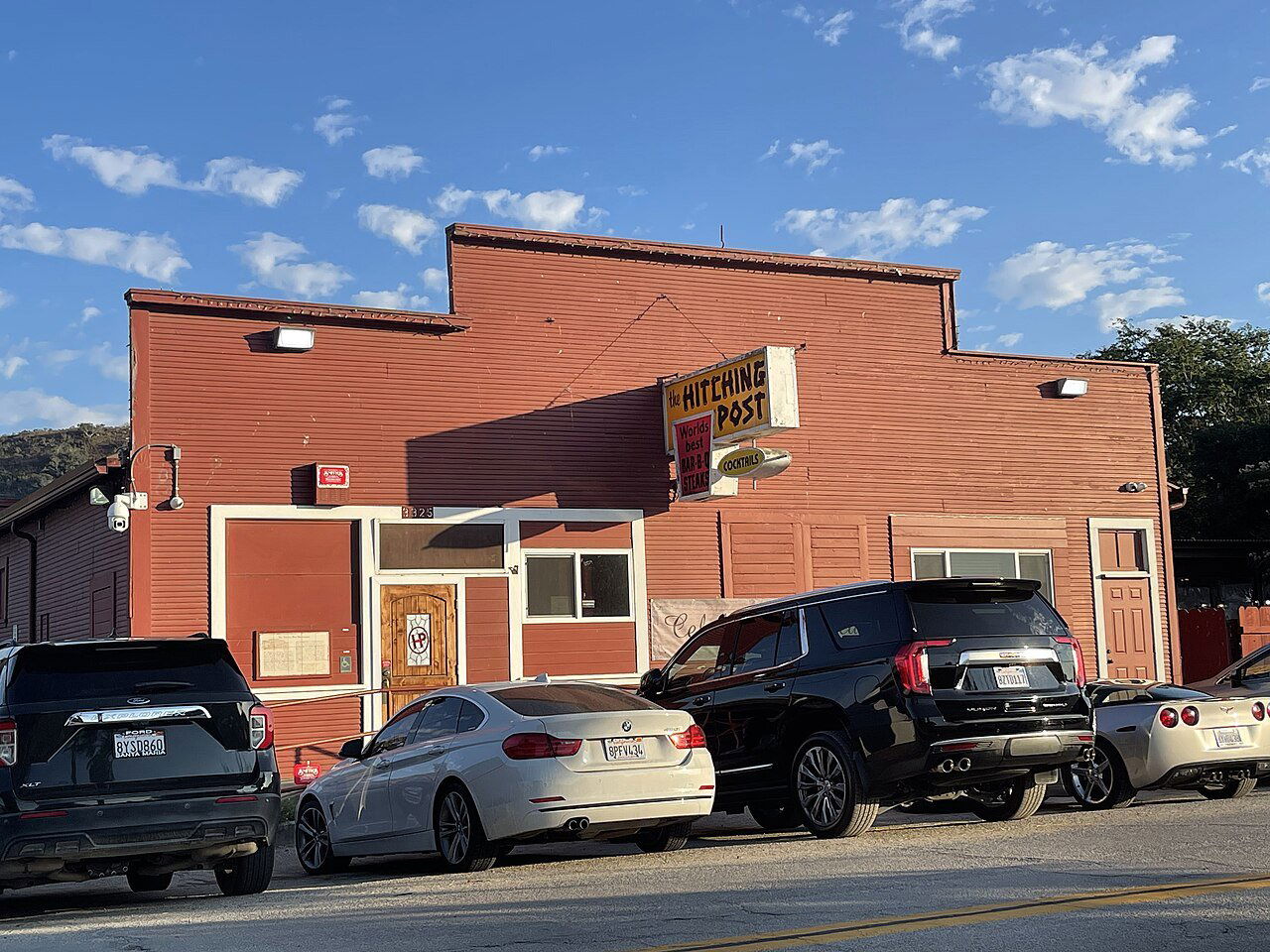
The Hitching Post in Casmalia, California occupies a particular position in the Santa Barbara County wine country orbit: a roadside steakhouse that became a genuine cultural landmark after its appearance in the 2004 film Sideways. The pinot noir pours here helped define a regional identity that persists today, drawing visitors from the broader Central Coast wine trail to a spot that operates more like a local institution than a tourist destination.
Where the Central Coast Road Ends and the Pinot Begins
Point Sal Road out of Casmalia is not the kind of approach that signals a destination dining experience. The drive passes through agricultural flatlands, oil derricks, and open scrub before arriving at a low-slung structure that could be mistaken for any number of ranch-country restaurants scattered across the California interior. That misleading exterior is part of what makes the Hitching Post work as a cultural object: the gap between expectation and reality runs in the right direction. The room inside carries decades of use in its surfaces, the smell of oak smoke hangs in the air from the wood-fired grill, and the wine list leans heavily toward bottles made by the people who cook and pour here. It is a specific kind of California place, one that grew from agricultural community roots rather than being designed for wine country tourism.
The Pinot Noir Question and How It Became the Story
The Hitching Post's association with pinot noir runs deeper than the notoriety it gained after Alexander Payne's film Sideways (2004) brought it to international attention. The restaurant had already been making its own label pinot noir from Santa Barbara County fruit for years before the film placed the grape at the center of American wine conversation. That timing mattered: when the broader market turned its attention toward Santa Ynez Valley and Santa Maria Valley as legitimate pinot noir country, the Hitching Post already had a working winemaking program attached to a restaurant, an arrangement that remains unusual even now.
Santa Barbara County sits in a transitional zone where cold Pacific air funnels inland through transverse valleys, producing growing conditions more similar to coastal Burgundy than to Napa or the Sonoma hills. Pinot noir thrives in that environment in ways it rarely does further south or east in California. The regional argument for this variety is not merely cultural preference; it reflects measurable differences in growing season length, diurnal temperature swings, and fog patterns. The Hitching Post's house wine program treats that regional specificity as a given rather than a selling point, which is the kind of quiet confidence that distinguishes producers who have been working a territory long enough to stop explaining it.
For drinkers arriving from major American bar programs, the contrast is instructive. Venues like Kumiko in Chicago or Bar Leather Apron in Honolulu represent the current direction of high-craft beverage programs: technique-forward, ingredient-obsessive, often spirits-led. The Hitching Post runs a different kind of beverage identity, one built around a wine region and a single grape variety rather than a cocktail philosophy. Both approaches demand expertise; they simply point that expertise in different directions.
The Wood Fire and What It Does to the Wine Pairing
The grill program at the Hitching Post burns California red oak, which burns hotter and cleaner than mesquite and imparts a different flavor signature than the fruitwood common in competition barbecue circuits. That distinction matters for the wine pairing logic: the smokiness is present but not aggressive, and it interacts with the tannin and acidity of Santa Barbara County pinot noir in ways that heavier smoke would not. This is not a theoretical pairing construction. It reflects decades of cooking and serving in the same room, where the relationship between grill and glass has been observed and adjusted across thousands of services.
The pairing principle at work here is worth understanding on its own terms, separate from any particular dish or wine: regional wine programs and wood-fire cooking reach a kind of equilibrium over time that imported wine lists never quite achieve. The same logic applies in other geographies, whether it is lamb and garnacha in Aragon or oysters and muscadet on the Loire. At the Hitching Post, the local pinot noir and the oak-fired beef occupy that same kind of settled relationship.
Casmalia as a Wine Country Coordinate
Casmalia itself is a census-designated place with a population counted in the hundreds. It sits several miles off the US-101 corridor that connects Santa Barbara to San Luis Obispo, and it has no meaningful tourism infrastructure beyond the restaurant. That geography shapes the visit in practical terms: arriving at the Hitching Post requires a decision, a deliberate detour from the main wine country circuit. The Santa Ynez Valley towns of Los Olivos, Solvang, and Buellton have accumulated tasting rooms, hotels, and restaurants oriented around weekend visitors. The Hitching Post in Casmalia sits outside that circuit, which partly explains why its clientele has historically included more ranchers and oil workers alongside wine tourists, a social mix that the room reflects in its atmosphere.
For travelers building a broader Central Coast itinerary, the practical logistics of a Casmalia visit place it in the category of deliberate stop rather than spontaneous drop-in. Those planning around Santa Barbara County wine country should check current hours and reservation availability directly; the restaurant operates in a rural area where service patterns do not always match urban dining schedules. Other bar and beverage programs worth including on a California or broader American trip include ABV in San Francisco, which represents the northern California approach to serious pours in a neighborhood format. For cocktail-led destinations across the United States, the programs at Jewel of the South in New Orleans, Julep in Houston, Superbueno in New York City, Allegory in Washington, D.C., Bar Kaiju in Miami, Bitter & Twisted in Phoenix, Canon in Seattle, and The Parlour in Frankfurt on the Main cover a range of styles and regional identities worth mapping against each other. See our full Casmalia restaurants guide for additional context on the local dining options.
Planning a Visit
Casmalia is accessible by car from Santa Barbara (roughly 45 minutes north on US-101 toward Santa Maria, then west) or from San Luis Obispo heading south. The restaurant sits in a rural corridor with limited cell coverage in spots, so downloading directions before leaving the main highway is advisable. Given the distance from major population centers and the lack of nearby lodging, most visitors treat the Hitching Post as a dinner anchor for a longer Central Coast day, pairing it with winery visits in the Santa Maria Valley appellation earlier in the day. Current hours and reservation options should be confirmed directly, as rural California restaurants occasionally adjust seasonal schedules.
Frequently Asked Questions
- What is the general vibe at the Hitching Post?
- The room reads as a working ranch steakhouse that has been in continuous use for decades rather than a wine country showpiece built for tourism. The smell of oak smoke from the grill is present from the moment you enter, the decor carries genuine patina, and the clientele has historically included a broader social mix than the curated wine-trail crowd found at nearby Santa Ynez Valley restaurants. If you are coming from a polished urban dining environment, the atmosphere will read as deliberately unfussy. The wine list, however, is taken seriously, with the house pinot noir program providing the beverage anchor that has given the restaurant its broader reputation.
- What drink is the Hitching Post famous for?
- The Hitching Post is most closely associated with its house-label pinot noir, produced from Santa Barbara County fruit and poured as the central beverage experience of the room. The grape's connection to this restaurant gained wide cultural exposure through the film Sideways (2004), which used the Hitching Post as a key setting and placed California pinot noir at the center of a broader national conversation about the variety. The wine program reflects the restaurant's position inside one of California's most climatically suitable pinot noir regions, where Pacific air patterns and long growing seasons produce a style distinct from warmer California appellations.
- Is the Hitching Post connected to a winery, and can you buy the wine separately?
- The restaurant operates a house wine label, Hitching Post Wines, which has been producing Santa Barbara County pinot noir and other varieties for several decades, predating the restaurant's surge in visibility after Sideways. The label has its own production and distribution identity separate from the restaurant, meaning the wines appear in retail and direct-purchase channels beyond the dining room. For visitors interested in the wine program specifically, the label provides one of the more traceable connections between a California restaurant's beverage identity and a named regional appellation, with fruit sourcing concentrated in the Santa Maria Valley and Sta. Rita Hills growing areas.
Related editorial
- Best Fine Dining Restaurants in ParisFrom three-Michelin-star icons to the next generation of Parisian chefs pushing boundaries, these are the restaurants that define fine dining in the world's culinary capital.
- Best Luxury Hotels in RomeFrom rooftop terraces overlooking ancient ruins to Michelin-starred hotel dining, these are the luxury hotels that make Rome unforgettable.
- Best Cocktail Bars in KyotoFrom sleek lounges to hidden speakeasies, Kyoto's cocktail scene blends Japanese precision with global influence in ways you won't find anywhere else.
Save or rate Hitching Post on Pearl
Keep this venue in your Pearl passport, rate it after you visit, and track it alongside every other place you collect.