
Bar in Buenos Aires, Argentina
Mishiguene
100ptsDiaspora Cooking, Codified
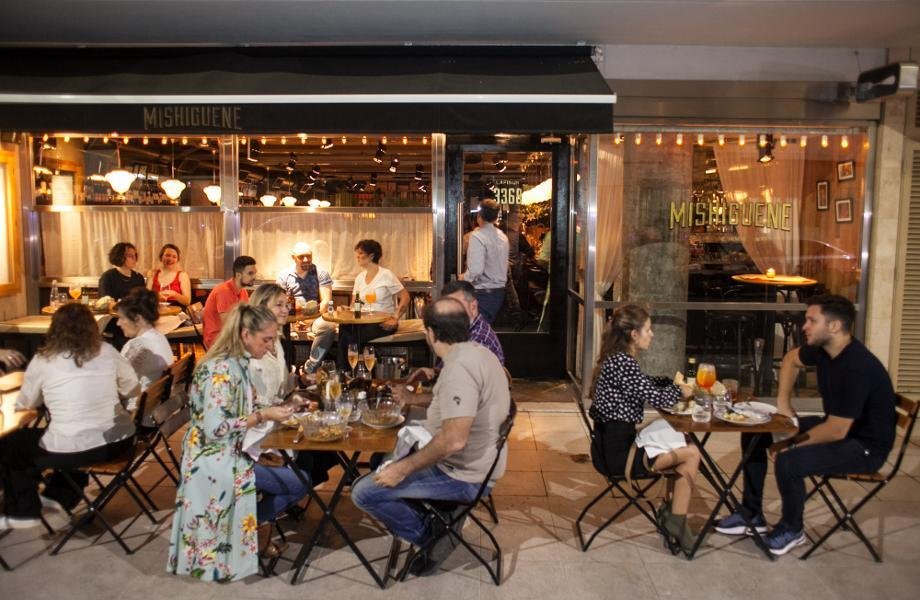
About Mishiguene
Mishiguene brings Ashkenazi and Sephardic Jewish culinary traditions into one of Buenos Aires's most thoughtful dining rooms, at Lafinur 3368 in Palermo. The kitchen works from a tradition rarely articulated at this level in Argentina, while the drinks program holds its own as a serious counterpart to the food. A reference point in a city whose restaurant scene has grown considerably more confident in the past decade.
A Dining Room That Takes Its Reference Points Seriously
Palermo's residential grid does not announce its restaurants with neon or foot traffic. Lafinur 3368 sits on a quiet block where the dominant sounds are plane trees and passing taxis, and the transition from street to dining room is deliberately unhurried. That unhurriedness is a signal: Mishiguene operates on a register where the room, the drinks, and the food are designed to reward attention rather than reward speed. Buenos Aires has accumulated a dense layer of serious restaurants over the past fifteen years, and Mishiguene holds a position in that layer that few kitchens working from Jewish culinary tradition manage anywhere in South America.
The broader context matters here. Argentina carries one of the largest Jewish communities outside Israel and the United States, yet the culinary expression of that heritage had, until relatively recently, been confined largely to bakeries, delicatessens, and home cooking. The decision to bring Ashkenazi and Sephardic cooking into a formal restaurant format, with serious technique applied to dishes rooted in Eastern Europe and the Mediterranean Sephardic diaspora, placed Mishiguene in a category with very few peers on the continent. That positioning is not a marketing stance; it reflects a genuine gap in the regional dining map.
The Drinks Program as a Structural Argument
Buenos Aires bars have undergone a consolidation of seriousness over the past decade. Operations like Florería Atlantico and 878 Bar set a standard for technical rigor and ingredient sourcing that pushed the city's cocktail culture away from volume-oriented service and toward the kind of program that could hold a conversation with comparable bars in New York or London. CoChinChina followed with a different register, and the Four Seasons has long anchored the more formal hotel-bar tier. Mishiguene's drinks sit within this refined city-wide conversation, with a program built to complement food rooted in specific culinary heritage rather than to function as a standalone cocktail destination.
What distinguishes a spirits collection designed around this kind of kitchen is the requirement that it speak two languages simultaneously: it must hold up to the fat, acid, and spice structures of dishes drawn from Sephardic and Ashkenazi traditions, while also operating as a credible standalone program for the Palermo dining crowd that arrives with expectations formed by the city's better bars. The back bar at Mishiguene is curated with that dual purpose in mind. The wine list leans heavily into Argentina's own production, which makes structural sense: the country's Malbec and high-altitude Torrontés offer counterparts to the kitchen's spice registers that imported European lists often fail to match at the same price tier.
For spirits, the program reflects the broader Argentine move toward depth over breadth. Rather than assembling a back bar that signals ambition through sheer bottle count, the selection here is edited to serve the food's logic. This is a recognizable trend in Buenos Aires's more considered dining rooms: the bar operates as a curatorial statement, not a catalog. Internationally, comparable editorial restraint appears at places like Kumiko in Chicago or Bar Leather Apron in Honolulu, where the back bar's depth is legible through precision rather than volume.
The Kitchen's Culinary Register
Sephardic cooking draws from centuries of exchange across the Ottoman Empire, North Africa, and the Iberian Peninsula. Ashkenazi cooking carries the flavors of Central and Eastern Europe, with techniques shaped by preservation, cold climates, and communal tradition. Combining both in a single kitchen requires a coherent editorial point of view, because the flavor profiles, spice vocabularies, and textural logic of the two traditions are genuinely distinct. The success of restaurants working in this vein internationally, from certain New York counter-service spots to more formal European operations, has demonstrated that the combination can cohere when the kitchen commits to specificity rather than fusion compromise.
In Buenos Aires, the format resonates partly because the city's Jewish community has preserved both traditions in domestic and community settings for generations, giving local diners a frame of reference that makes the kitchen's choices legible. Dishes are not explained as exotic; they are presented as part of a culinary inheritance that the restaurant is taking seriously and executing with care. That orientation places Mishiguene closer to the tradition-led restaurant model than to the innovation-led one, which is a deliberate choice and a coherent one.
Palermo and the Wider Buenos Aires Dining Map
Palermo has functioned as the primary zone for ambitious independent restaurants in Buenos Aires for the better part of two decades. The neighborhood has enough residential density and international foot traffic to support restaurants with specific, non-populist concepts, and its dining room real estate allows for the kind of intimate scale that serious cooking requires. Mishiguene at Lafinur 3368 sits comfortably within this framework.
For visitors building a Buenos Aires itinerary with an eye toward the city's wine culture, the trip extends naturally to Argentina's wine regions. Antares Mendoza in Mendoza offers an introduction to the country's flagship wine city, while Colomé Winery in Molinos and Chato's Wine Bar in Cafayate represent the high-altitude northwest, a region whose Torrontés and Malbec now appear on serious wine lists across the country, including in Palermo dining rooms like this one. For a fuller picture of where Mishiguene sits relative to Buenos Aires's broader restaurant and bar scene, see our full Buenos Aires restaurants guide.
For context beyond Argentina, the specialist cocktail and dining model that Mishiguene represents has close analogs in cities with sophisticated bar cultures. Jewel of the South in New Orleans applies a comparable depth of historical research to its drinks program, while Julep in Houston demonstrates how a specific culinary and cultural frame can give a drinks program coherence that a generalist approach cannot achieve.
Planning Your Visit
Mishiguene is located at Lafinur 3368 in Palermo, within easy reach of the neighborhood's main dining and bar cluster. Reservations are advisable, particularly for Thursday through Saturday evenings when Palermo's restaurant density creates genuine competition for tables at this tier. The format rewards an unhurried approach: the kitchen's register and the drinks program are both designed for a meal that unfolds over two to three hours rather than one optimized for turnover.
Frequently Asked Questions
What cocktail do people recommend at Mishiguene?
Mishiguene's drinks program is built to complement the kitchen's Sephardic and Ashkenazi register rather than to stand apart from it, which means the most recommended choices tend to be those that work with the food's spice and acid structures. Argentina's wine list is the natural starting point, with high-altitude Torrontés and Malbec from producers in Cafayate and Mendoza serving as the program's backbone. Cocktails, where offered, follow the same curatorial logic: edited, purposeful, and positioned within one of Buenos Aires's more considered dining-room drink programs.
What is the main draw of Mishiguene?
The primary draw is a culinary tradition rarely articulated at this level of formal restaurant execution in Buenos Aires or elsewhere in South America: the meeting of Ashkenazi and Sephardic Jewish cooking, applied with technique and specificity rather than casual fusion. Buenos Aires carries one of the world's largest Jewish communities outside Israel and North America, which gives the kitchen's choices a local cultural resonance that translates into serious, engaged dining. The address at Lafinur 3368 in Palermo places it at the center of the city's most concentrated zone of ambitious independent restaurants, and the drinks program holds its own within the refined standard that Buenos Aires bars have set over the past decade.
Is Mishiguene the right choice for someone exploring Argentine-Jewish culinary heritage in Buenos Aires?
For anyone tracing the intersection of Argentina's Jewish community and its contemporary restaurant culture, Mishiguene at Lafinur 3368 in Palermo is the clearest single reference point in the city. The kitchen applies formal restaurant technique to Ashkenazi and Sephardic dishes that Buenos Aires's Jewish community has preserved in domestic and community settings for generations, making it the most explicit bridge between that culinary inheritance and the city's current dining ambitions. No comparable operation at the same level of seriousness currently occupies the same position in Argentina's restaurant map.
Related editorial
- Best Fine Dining Restaurants in ParisFrom three-Michelin-star icons to the next generation of Parisian chefs pushing boundaries, these are the restaurants that define fine dining in the world's culinary capital.
- Best Luxury Hotels in RomeFrom rooftop terraces overlooking ancient ruins to Michelin-starred hotel dining, these are the luxury hotels that make Rome unforgettable.
- Best Cocktail Bars in KyotoFrom sleek lounges to hidden speakeasies, Kyoto's cocktail scene blends Japanese precision with global influence in ways you won't find anywhere else.
Save or rate Mishiguene on Pearl
Keep this venue in your Pearl passport, rate it after you visit, and track it alongside every other place you collect.