
Bar in Bethesda, United States
Q By Peter Chang
100ptsFormal Sichuan Register
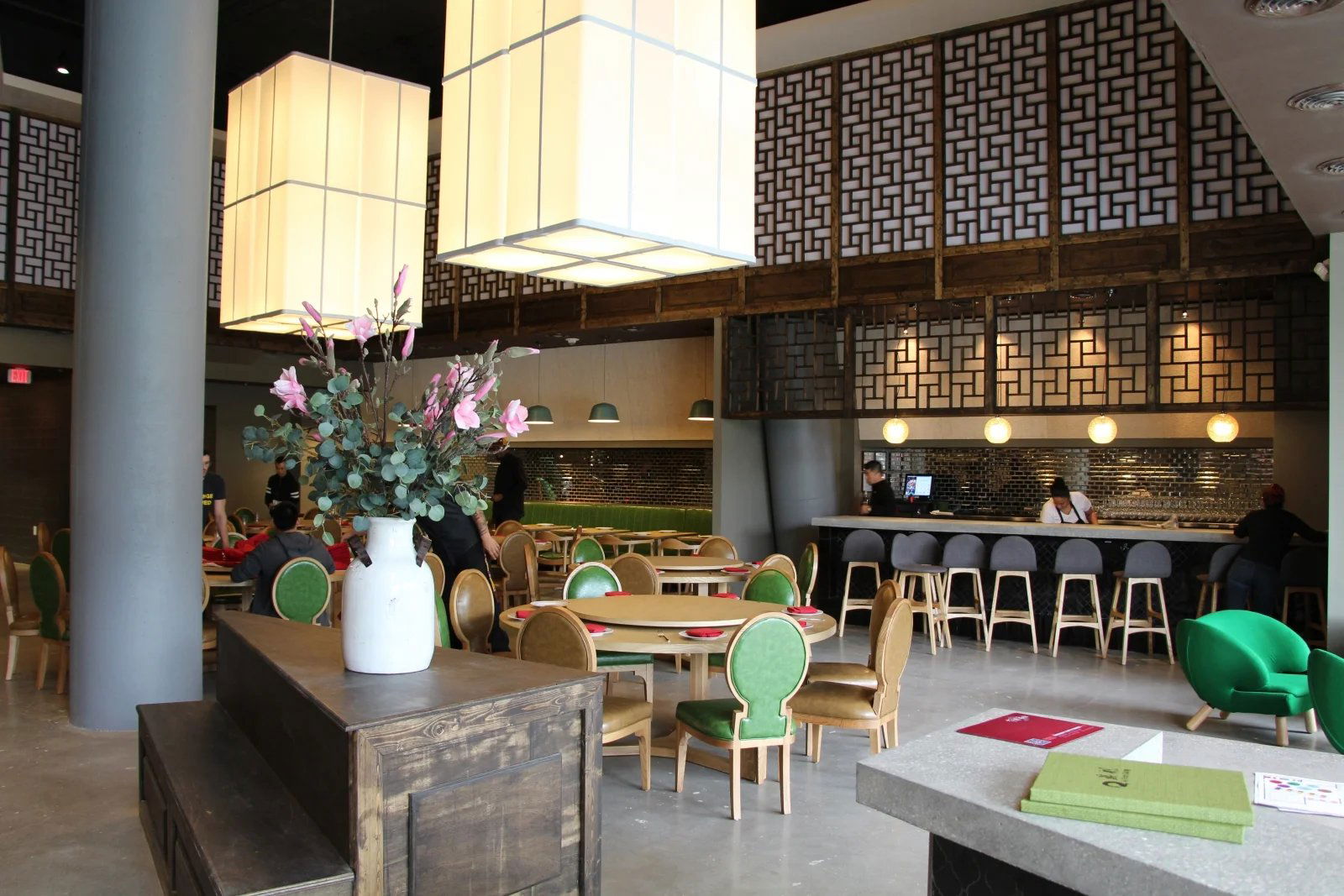
About Q By Peter Chang
Q By Peter Chang sits on East-West Highway in Bethesda as the upscale expression of one of the Mid-Atlantic's most-discussed Chinese cooking names. The format leans toward a composed, sit-down experience that positions itself above the region's standard Chinese-American offer. For the Washington suburbs, it represents a more serious register of Sichuan-inflected cooking.
Where Bethesda's Chinese Dining Scene Reaches Its Formal Register
East-West Highway in Bethesda runs through a corridor that has accumulated a denser-than-average concentration of independent restaurants for a suburban Maryland address. The street carries the practical weight of a commuter artery but reads, block by block, more like an outer-ring dining district. At 4500 East-West Highway, Q By Peter Chang occupies a suite-format space that signals a departure from the casual Chinese-American grammar that defines most of the region's options in this category. The room operates at a different register: the kind of address where the format, the pacing, and the drink program are all considered together, rather than the meal existing in isolation from everything else surrounding it.
For the Washington, D.C., metropolitan area, this matters more than it might in a city with a deeper bench of serious Chinese dining. The suburban Maryland market has historically relied on a handful of independently operated Sichuan and Cantonese rooms, most of which treat the bar as an afterthought. Q By Peter Chang is positioned differently, and that positioning shapes how the cocktail program reads against its surroundings.
The Cocktail Program in a Chinese Dining Context
Across American cities, the restaurants that have most successfully built cocktail programs alongside Chinese cuisine tend to cluster in two modes: the Manhattan or San Francisco model, where the bar acts as a full peer to the kitchen, and the secondary-market model, where a more modest but intentional drink list serves as a signal of seriousness without trying to compete with dedicated cocktail bars. Bethesda, for all its suburban affluence, operates closer to that second mode. The drink programs at Chinese restaurants in this tier of the D.C. suburbs rarely sustain the kind of technical depth you find at bar-forward operations like Kumiko in Chicago or Allegory in Washington, D.C., but they can still function as a meaningful part of the dining arc.
What distinguishes an intentional cocktail list in this context is how it handles the specific flavor architecture of Sichuan cooking: the numbing heat of Sichuan peppercorn, the deep savory weight of fermented black bean, the bright acidity of pickled vegetables. A drink program that ignores these flavor pressures produces a mismatch. The more considered approach builds around lower-proof options, acid-forward structures, and moderate sweetness that doesn't compound the residual heat of the food. Programs at venues like Julep in Houston and Jewel of the South in New Orleans demonstrate how a regionally anchored spirit identity can carry a food-pairing program without the bar needing to function as a standalone destination.
For visitors accustomed to the kind of technical depth at Canon in Seattle or the ingredient-driven precision at Bar Leather Apron in Honolulu, Q By Peter Chang's bar program belongs in a different frame. The expectation here is alignment with the food rather than independence from it.
Peter Chang as a Regional Reference Point
The name attached to this address carries weight that operates independently of any single restaurant. Peter Chang has been one of the most-discussed Chinese chefs working in the Mid-Atlantic and Southeast for well over a decade, with a reputation built initially around Sichuan cooking in Virginia before expanding into a multi-unit operation. That expansion has produced venues at different price points and formats, and Q represents the most composed end of that range: a space built around the idea that Chinese cooking in the American suburbs can sustain a fine-dining frame without abandoning its source material.
That claim is worth taking seriously as a piece of regional restaurant history. Chinese fine dining in American suburban markets has a complicated track record. The economics push toward volume; the customer base often resists the price points that a composed tasting format demands. The venues that have made it work, from the early iterations of refined dim sum in the Bay Area to the Sichuan-forward rooms that began appearing in cities like Houston and New York in the 2010s, have done so by holding a very specific position: serious enough to attract a dining audience that would otherwise travel to the city center, accessible enough not to alienate the neighborhood regulars who make the weeknight numbers work.
Q sits in that tension. The address at East-West Highway and the suite-format space at street level position it as a neighborhood resource first, but the name and the format pitch it at a wider audience willing to make the trip from D.C. proper or from further out in suburban Maryland.
How It Sits in the Broader Mid-Atlantic Bar Scene
Bethesda doesn't generate the same cocktail-bar conversation as Dupont Circle or Shaw in Washington proper. The suburb has produced a handful of wine-bar and craft-beer operations, but the serious bar culture that sustains programs like ABV in San Francisco, Superbueno in New York City, or Bitter & Twisted in Phoenix doesn't translate directly to this geography. What Bethesda does have is spending capacity and a dining audience that travels frequently enough to arrive with comparative references. That audience tends to reward a restaurant that takes its drink program seriously, even if the format is more modest than a full cocktail destination.
For a point of reference in the region itself, Allegory in D.C. represents the high end of the metropolitan area's cocktail ambition. Q operates well below that register on the bar side, but that comparison sets the ceiling rather than the benchmark. The relevant comparison for Q's drink program is other upscale Chinese dining rooms in suburban American markets, where the bar as food-complement rather than independent destination is the appropriate standard.
Venues like Bar Kaiju in Miami and The Parlour in Frankfurt on the Main illustrate how food-adjacent bar programs can hold their own when the anchoring is right. The question at Q is whether the drink list earns its place alongside the cooking, rather than whether it competes with the region's dedicated cocktail operations.
Planning a Visit
Q By Peter Chang is located at 4500 East-West Highway, Suite 100, in Bethesda, Maryland, a short walk from the Bethesda Metro station on the Red Line, which makes it accessible from central Washington without requiring a car. The East-West Highway address places it within a few minutes of several other independent dining options, so a pre- or post-dinner drink at a neighboring bar is a realistic part of the evening. For current hours, reservation availability, and menu pricing, checking directly with the venue is advised, as the operational specifics are subject to change. Those planning a broader evening in the D.C. area can reference our full Bethesda restaurants guide for context on what else the corridor offers across different formats and price points.
Frequently Asked Questions
What kind of setting is Q By Peter Chang?
Q By Peter Chang operates as the upscale, sit-down expression of the Peter Chang restaurant group, set in a suite-format space on East-West Highway in Bethesda, Maryland. The format places it above the casual tier of Chinese-American dining in the D.C. suburbs and positions it toward a composed dining experience where pacing and presentation are part of the offer. For Bethesda specifically, it represents one of the more formally considered Chinese dining addresses in the suburban Maryland market.
What do regulars order at Q By Peter Chang?
Q By Peter Chang is associated with the Sichuan-inflected cooking that has defined Peter Chang's reputation across the Mid-Atlantic and Southeast over the past decade. Regulars at venues in this lineage tend to gravitate toward dishes that showcase Sichuan peppercorn, fermented or pickled elements, and wok technique at the core of the menu. The formal format at Q suggests the kitchen applies that foundation with a composed, multi-course sensibility rather than a purely family-style approach.
How does Q By Peter Chang compare to Peter Chang's other restaurants in the region?
The Peter Chang group operates across multiple price points and formats in the Mid-Atlantic, with Q representing the most composed and formally presented end of that range. Where the group's more casual addresses function as accessible neighborhood Chinese restaurants, Q is oriented toward a dining audience that expects the full-service, sit-down experience associated with upscale American restaurant formats. That positioning distinguishes it within the group's portfolio and within the Bethesda dining market, where few Chinese restaurants operate at a comparable level of format ambition.
Related editorial
- Best Fine Dining Restaurants in ParisFrom three-Michelin-star icons to the next generation of Parisian chefs pushing boundaries, these are the restaurants that define fine dining in the world's culinary capital.
- Best Luxury Hotels in RomeFrom rooftop terraces overlooking ancient ruins to Michelin-starred hotel dining, these are the luxury hotels that make Rome unforgettable.
- Best Cocktail Bars in KyotoFrom sleek lounges to hidden speakeasies, Kyoto's cocktail scene blends Japanese precision with global influence in ways you won't find anywhere else.
Save or rate Q By Peter Chang on Pearl
Keep this venue in your Pearl passport, rate it after you visit, and track it alongside every other place you collect.