
Bar in Berlin, Germany
W The Imbiss
100ptsNeighbourhood Counter Culture
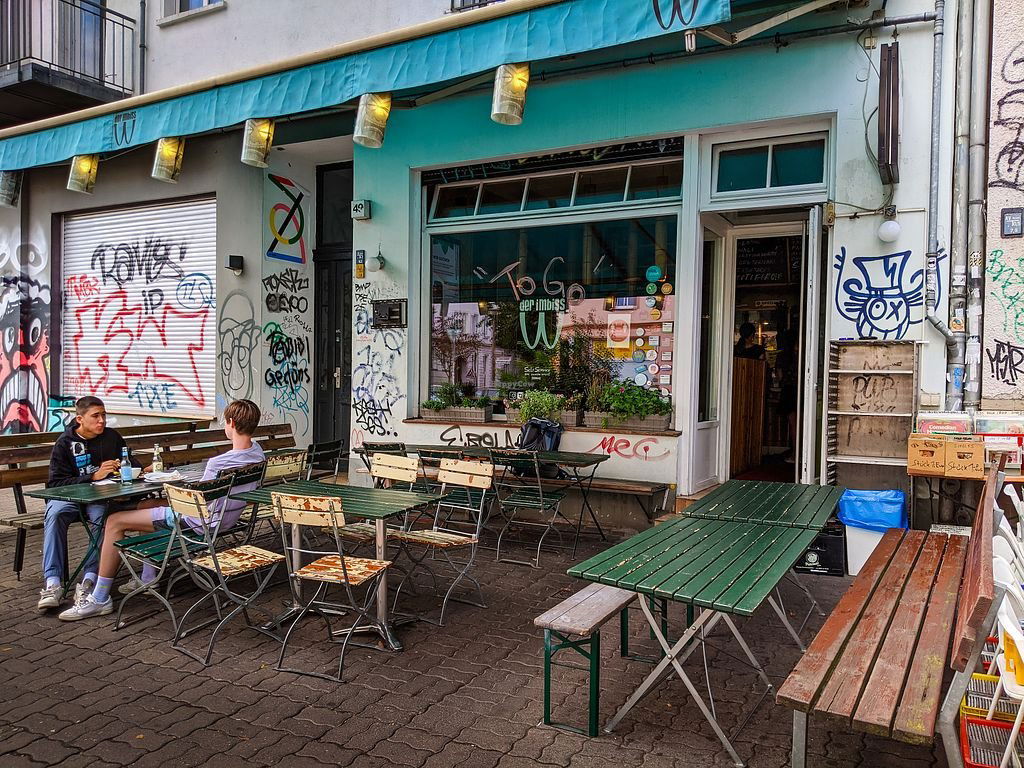
About W The Imbiss
W The Imbiss occupies a corner of Kastanienallee in Prenzlauer Berg, sitting inside the rhythm of one of Berlin's most-walked stretches of pavement. The format is pared-back and local by design: the kind of spot where regulars arrive without occasion and stay longer than planned. For visitors, it reads as a reliable entry point into the neighbourhood's everyday bar culture.
Kastanienallee and the Anatomy of a Berlin Neighbourhood Bar
Kastanienallee runs through the heart of Prenzlauer Berg, and the social logic of the street is worth understanding before you arrive at number 49. This is not a destination strip in the way that Mitte's cocktail corridor operates, nor does it carry the creative-industry theatre of Neukölln's back-bar scene. What Kastanienallee does, consistently and without much effort, is function as a daily thoroughfare for the people who actually live here. Bars on this stretch tend to reflect that: they open early enough for a coffee or a beer after the farmers' market, stay busy through the early evening without demanding much ceremony, and close when the last regular decides to leave. W The Imbiss sits inside that pattern.
The Imbiss format is worth a brief note. In German urban culture, an Imbiss is a small food or drink stop, a counter rather than a restaurant, a place with no pretension about being anything other than convenient and consistent. Applying that word to a bar on a residential shopping street is a statement of intent. It tells you what the place is not before you walk in: not a concept bar, not a tasting menu, not a performance. The name positions W The Imbiss firmly in the neighbourhood-service tier, the kind of operation that accumulates regulars over years rather than press attention over seasons.
The Physical Address and What It Implies
Kastanienallee 49 sits in the section of the street that runs between Zionskirchplatz and Eberswalder Strasse, which is also where the highest foot traffic concentrates. The U-Bahn stop at Eberswalder Strasse (U2 line) deposits people directly into the street's southern end, making the walk to this address direct for anyone arriving from central Berlin or Mitte. That accessibility shapes the crowd: it mixes Prenzlauer Berg residents with visitors who have read correctly that the neighbourhood rewards time spent away from the tourist circuit. The result is a room that rarely feels like either a local-only clubhouse or a tourist holding pen, which is a balance that many bars on recognisable Berlin streets fail to achieve.
Berlin's bar scene in this part of the city has been through several cycles. The early post-reunification era produced spaces that ran on cheap rent and improvised aesthetics. A subsequent wave of gentrification brought sharper interiors and higher prices. What has remained through both shifts, on streets like Kastanienallee, is a tier of bars that serves the neighbourhood's daily social needs rather than its aspirational ones. W The Imbiss operates in that tier, which in Berlin means operating without the weight of expectation that attaches to the city's more celebrated addresses.
How W The Imbiss Sits in Berlin's Broader Bar Peer Set
Berlin's bar culture is stratified more distinctly than outsiders sometimes assume. At the technical end, venues like Buck & Breck and Velvet operate meticulous, reservation-led programs where the cocktail itself is the primary event. Lebensstern and Stagger Lee occupy a mid-tier where atmosphere and program quality are balanced more evenly. W The Imbiss is not competing in those categories. Its peer group is the neighbourhood-anchor bar: lower formality, higher regularity, a place where showing up on a Tuesday with no particular plan is as valid as arriving on a Friday with a group.
This distinction matters for the visitor who is trying to read Berlin honestly. The city's globally recognised nightlife identity, centred on clubs and late-night culture, tells only part of the story. The other part is this: Berlin is also a city of neighbourhood bars that function like extensions of domestic space, places where residents decompress, meet friends, and kill an hour between other things. W The Imbiss addresses that need on a street that has enough pedestrian density to sustain it.
For comparison across German cities, the neighbourhood-anchor format appears in different guises. Uerige in Dusseldorf and Kieler Brauerei am Alten Markt in Kiel carry a similar community-first logic, though their formats lean on brewing tradition. At the opposite end of the tone register, Le Lion Bar de Paris in Hamburg and Goldene Bar in Munich demonstrate how German cities also support bars where the program is the headline. The Parlour in Frankfurt on the Main and Bar Trattoria Celentano in Cologne occupy hybrid positions. W The Imbiss, by contrast, makes no pitch for program recognition. Its value is locational and social, not curatorial.
Visiting W The Imbiss: What to Know Before You Go
Kastanienallee 49 is most directly reached via Eberswalder Strasse on the U2, a short ride from Alexanderplatz or a direct connection from Potsdamer Platz with one change. The bar sits within a few minutes' walk of that exit. Prenzlauer Berg operates on a different schedule to Berlin's nightlife-oriented districts: things open earlier, the crowd shifts earlier, and the later-evening scene is quieter than in Kreuzberg or Neukölln. If you are building an evening around Kastanienallee, earlier is generally more rewarding.
No specific price data is available in our records for W The Imbiss, but the address and format place it broadly within Prenzlauer Berg neighbourhood-bar pricing, which sits below the city's cocktail-bar tier and in line with what the street's regulars would sustain as daily spending. Whether walk-ins are the norm is consistent with the Imbiss-format positioning; calling ahead is always reasonable for small venues, though the format suggests walk-in traffic is the primary model. For a fuller read of what else the city offers, see our full Berlin restaurants guide. For international comparison, Bar Leather Apron in Honolulu shows how the neighbourhood-anchor model plays out in a very different market context.
Frequently Asked Questions
- What's the leading thing to order at W The Imbiss?
- No verified menu data is available for W The Imbiss in our records, and specific dish or drink recommendations require confirmed source material. What the Imbiss format and Kastanienallee address suggest is a concise, unfussy offering suited to the neighbourhood's daily rhythm rather than a broad or technically complex program. Arriving with low formality expectations and ordering whatever is put forward as the house offer is a reasonable approach.
- What's the defining thing about W The Imbiss?
- The defining characteristic is the address and format combination: a small-format bar on one of Prenzlauer Berg's most-used streets, operating with neighbourhood-service logic rather than destination ambition. The name itself signals this, placing the venue in the Imbiss register rather than the bar or restaurant register. Awards data is not available in our records, and that absence is itself informative: this is a spot that accumulates loyalty rather than critical recognition.
- Is W The Imbiss reservation-only?
- No booking information is available in our records. The Imbiss-format positioning and walk-in traffic model of the Kastanienallee strip both suggest that reservations are not the primary mode. As with any small venue, calling ahead for larger groups is prudent. No phone number is currently confirmed in our database.
- What kind of traveler is W The Imbiss a good fit for?
- If your interest is in reading how a Berlin neighbourhood actually functions day-to-day, rather than experiencing the city's nightlife or cocktail circuit, W The Imbiss is a reasonable stop. It suits the traveler who prefers a local bar on a residential street to a curated program, and who finds value in the social texture of a place rather than its awards positioning. It is a poor fit for anyone seeking a technically driven drink or a formal dining experience.
- Is W The Imbiss worth the prices?
- No confirmed price data exists in our records. Based on the venue's positioning within the Prenzlauer Berg neighbourhood-bar tier, pricing is likely consistent with what the local resident base sustains regularly, placing it below Berlin's cocktail-program venues. The value case here is not about price-to-dish ratio but about access to neighbourhood texture: if that is what you are after, the exchange is likely fair.
- How does W The Imbiss compare to other bars in its immediate area on Kastanienallee?
- Kastanienallee supports a range of bar formats, from late-night spots to cafe-bars that run from morning through evening. W The Imbiss, with its Imbiss-register name and Prenzlauer Berg address, positions itself in the accessible, regulars-first part of that spectrum rather than in any specialist or concept tier. No awards or critical recognition data is available in our records, which places it in a peer group defined more by community role than by editorial visibility, a common and legitimate position for bars on streets where residents are the primary audience.
Related editorial
- Best Fine Dining Restaurants in ParisFrom three-Michelin-star icons to the next generation of Parisian chefs pushing boundaries, these are the restaurants that define fine dining in the world's culinary capital.
- Best Luxury Hotels in RomeFrom rooftop terraces overlooking ancient ruins to Michelin-starred hotel dining, these are the luxury hotels that make Rome unforgettable.
- Best Cocktail Bars in KyotoFrom sleek lounges to hidden speakeasies, Kyoto's cocktail scene blends Japanese precision with global influence in ways you won't find anywhere else.
Save or rate W The Imbiss on Pearl
Keep this venue in your Pearl passport, rate it after you visit, and track it alongside every other place you collect.