
Bar in Amsterdam, Netherlands
Pacific Amsterdam
100ptsHarbour-District Sourcing
About Pacific Amsterdam
Pacific Amsterdam occupies a converted warehouse space on Polonceaukade in Amsterdam's western harbour fringe, where the city's industrial past and its current appetite for ingredient-led cooking meet in one address. The format sits within a broader Amsterdam shift toward provenance-conscious dining, where what arrives on the plate is inseparable from where it was grown, caught, or raised.
Where the Harbour Meets the Plate
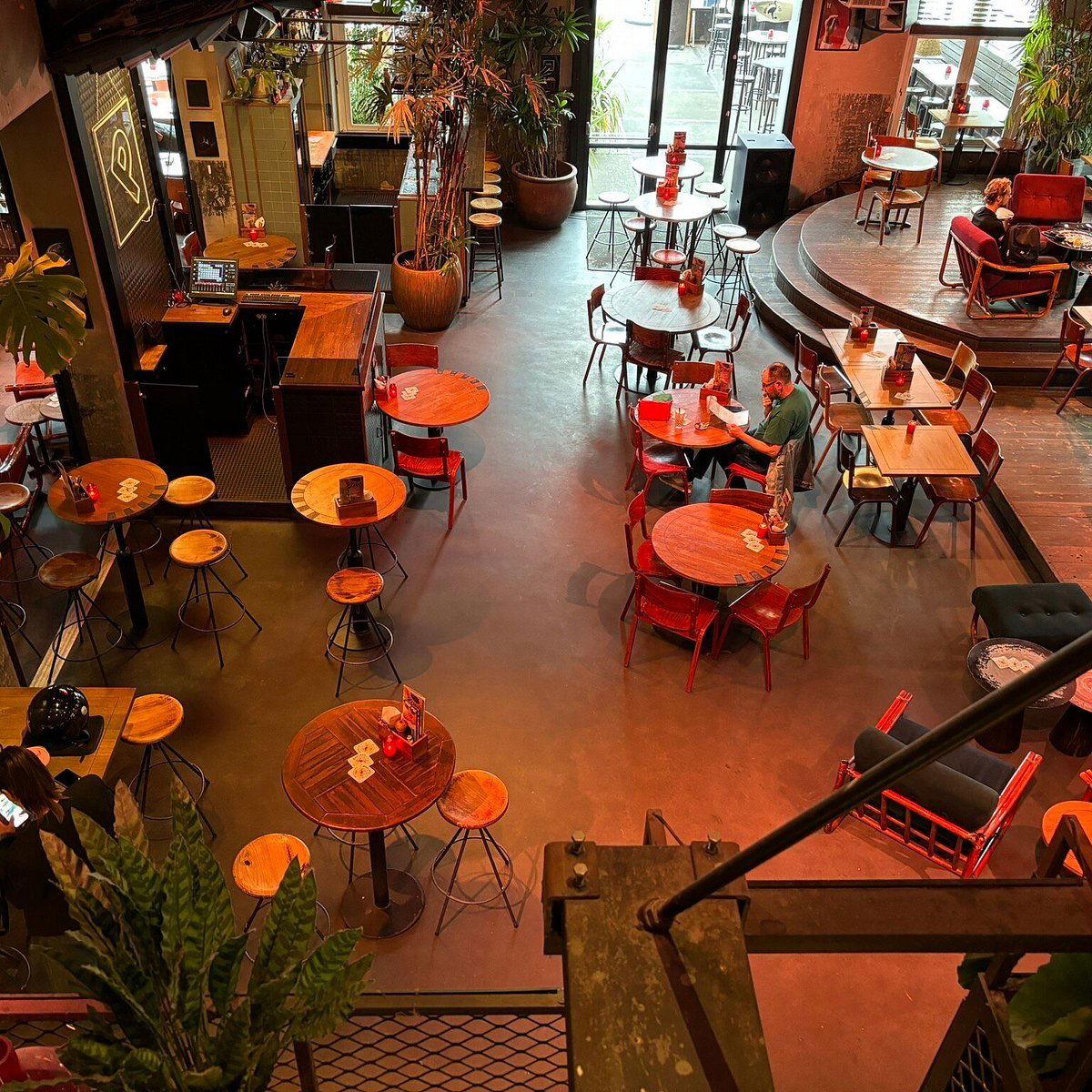
Approach Polonceaukade 23 and the industrial register of Amsterdam's western harbour district sets the tone before you've crossed the threshold. This stretch of the IJ waterfront, once given over entirely to warehousing and freight, has absorbed a particular kind of dining ambition over the past decade: spaces large enough to breathe, buildings with a material history that new construction cannot replicate, and a clientele drawn from across the city rather than from the immediate neighbourhood. Pacific Amsterdam belongs to that pattern. The address sits in a converted warehouse environment where the architecture does not need to perform — the bones of the building carry their own authority.
The western harbour has developed differently from Amsterdam's more celebrated dining corridors in De Pijp or the Jordaan. The density of tables per square kilometre is lower, which means each address that does open tends to carry more weight in its category. Venues here are not propped up by foot traffic; they earn their covers. That dynamic has shaped the kind of cooking that succeeds in this part of the city: food with a point of view, served in a room that justifies the detour.
The Ingredient Logic
Amsterdam's most interesting restaurants over the past several years have converged on a shared argument: that sourcing is not a marketing position but a structural decision that shapes every other choice on the menu. The fish comes from specific boats or specific waters. The vegetables carry provenance — a named farm, a regional tradition, a grower with a traceable practice. Pacific Amsterdam sits within that argument. The name signals a geographic orientation that extends beyond the local, drawing the eye and the palate toward Pacific Rim ingredients and cooking traditions while remaining rooted in the Amsterdam context of seasonality and supply-chain transparency.
This matters because the Pacific Rim reference is not a vague stylistic gesture in the city's better-informed restaurants. It is a sourcing and technique conversation: how fermentation, curing, and high-heat cooking traditions from Japan, Southeast Asia, and the wider Pacific interact with Dutch seasonal produce and the North Sea's own larder. When that conversation is conducted carefully, the result is a menu where the geography is legible in the flavour rather than announced on a chalkboard. Ingredient provenance is the architecture of the dish rather than its decoration.
The broader Amsterdam dining scene has moved steadily toward this position. Restaurants operating in the middle and upper tiers of the market increasingly treat supplier relationships as non-negotiable editorial choices , the same instinct that drives the leading produce-led kitchens in London, Copenhagen, or Sydney. In Amsterdam, that instinct has a particular Dutch inflection: directness, economy of means, an allergy to the gratuitous. Pacific Amsterdam's positioning along Polonceaukade fits that sensibility. Waterside addresses in Amsterdam's harbour fringe carry a similar logistical proximity to supply , fish landed nearby, produce arriving from polders that are genuinely close , which makes the ingredient-first argument easier to sustain.
Amsterdam's Western Harbour in Context
The western harbour district, which includes the Westergasfabriek cultural complex and the broader Westerpark zone, has become one of the city's more coherent food and drink precincts without acquiring the self-consciousness that sometimes accompanies that status. Amsterdam Roest, one of the area's established multi-format spaces, reflects the same industrial-building repurposing logic, combining bar, kitchen, and outdoor terrace in a way that speaks to how Amsterdam has learned to use its post-industrial square footage. The western harbour is not the cocktail belt , for that, the city's more concentrated bar program sits closer to the centre, with Door 74 and Tales & Spirits occupying the serious end of Amsterdam's cocktail conversation in the canal ring and surrounding streets.
What the western harbour does offer is scale and singularity. The buildings are larger, the setting is less crowded, and the experience of arriving by bicycle along the water has a quality that central Amsterdam's tighter streets cannot replicate. For visitors, the journey from Centraal Station takes roughly fifteen minutes by bike or a short tram or bus connection , manageable, and the approach along the IJ is worth the added effort over a central address. Booking ahead is advisable for any western harbour destination that has built a following; the scarcity of comparable nearby alternatives means that popular venues fill their covers without relying on walk-ins.
Planning Your Visit
Pacific Amsterdam's address at Polonceaukade 23 places it in the 1014 DA postcode, within cycling distance of Westerpark and the broader western harbour precinct. Visitors arriving from the centre will find the neighbourhood most legible by bike, which is also the mode leading aligned with how locals treat the area. For those extending their Amsterdam eating and drinking across multiple days, the western harbour pairs naturally with a broader itinerary that includes the canal ring's cocktail program and the city's café culture. Bakers & Roasters represents the kind of daytime all-day format that anchors a neighbourhood visit, and exploring the full spread of what the city offers is easier with a structured plan. Our full Amsterdam restaurants guide maps the city's dining and drinking by area and format, which is useful context before committing to an itinerary in a city where the options are genuinely spread across distinct zones.
For those using Amsterdam as a base for broader Dutch travel, the country's food and drink programme extends well beyond the capital. Florin Utrecht in Utrecht, Brasserie Lalou in Delft, Bowie in The Hague, Café Barolo in Eindhoven, and Boode Foodbar in Bathmen each represent the kind of address that makes a day trip or overnight extension worth considering. Further afield, Espressobar Kopi Soesoe in Rotterdam reflects the Surinamese and Indonesian coffee traditions that run through Dutch café culture in ways that Amsterdam's own café scene echoes. And for Pacific Rim context that stretches beyond Europe, Bar Leather Apron in Honolulu operates at the serious end of the cocktail programme that Pacific Rim cities have developed in parallel with their food scenes.
Frequently Asked Questions
- What should I expect atmosphere-wise at Pacific Amsterdam?
- The setting is a converted warehouse on Amsterdam's western harbour fringe, which means high ceilings, industrial materials, and a spatial register quite different from the canal-ring dining rooms the city is better known for. The neighbourhood is quieter than the centre, the approach along the IJ waterfront is atmospheric, and the overall feel is closer to a considered destination than a neighbourhood drop-in.
- What do regulars order at Pacific Amsterdam?
- The kitchen's orientation toward Pacific Rim ingredients and technique means the menu works along axes of fermentation, curing, and high-heat cooking applied to seasonal Dutch and North Sea produce. Regulars drawn to provenance-led Amsterdam restaurants tend to follow what the kitchen is sourcing most closely at any given time, which in practice means the menu shifts with the season and the supply chain rather than staying fixed around signature anchors.
- What is Pacific Amsterdam leading at?
- The address is well-positioned for ingredient-led cooking that draws on Pacific Rim traditions without losing its Amsterdam grounding in seasonal, traceable produce. Within the western harbour precinct, it occupies a category with few direct competitors , waterside converted-building restaurants operating at this level of culinary seriousness are not common in the city, which gives the address a clarity of purpose that more centrally located restaurants sometimes lack.
- How hard is it to get a table at Pacific Amsterdam?
- Western harbour destinations with a following tend to fill covers without relying on walk-in traffic, partly because the neighbourhood's lower dining density means there are fewer comparable fallback options nearby. Booking in advance is the safer approach, particularly for evening sittings or weekend visits. Contact details are not currently listed in our database, so checking directly via the venue or a current third-party reservation platform is advisable before making the trip from the centre.
- How does Pacific Amsterdam's Pacific Rim focus connect to Dutch food culture?
- The Netherlands has sustained culinary connections to Southeast Asia and the broader Pacific through its colonial and trade history, which means Indonesian, Surinamese, and Pacific-influenced ingredients and techniques are not exotic imports in Dutch cooking , they are part of an established local vocabulary. Amsterdam restaurants working in this space are drawing on a tradition that is genuinely embedded in the city's food culture, rather than adopting an outside reference. That historical grounding gives Pacific Rim-oriented kitchens in Amsterdam a credibility that the same concept might lack in other European cities.
Related editorial
- Best Fine Dining Restaurants in ParisFrom three-Michelin-star icons to the next generation of Parisian chefs pushing boundaries, these are the restaurants that define fine dining in the world's culinary capital.
- Best Luxury Hotels in RomeFrom rooftop terraces overlooking ancient ruins to Michelin-starred hotel dining, these are the luxury hotels that make Rome unforgettable.
- Best Cocktail Bars in KyotoFrom sleek lounges to hidden speakeasies, Kyoto's cocktail scene blends Japanese precision with global influence in ways you won't find anywhere else.
Save or rate Pacific Amsterdam on Pearl
Keep this venue in your Pearl passport, rate it after you visit, and track it alongside every other place you collect.