

Anatolikos Vineyards
Avdira, Xanthi
Winery in Xanthi, Greece
 Book with Pearl
The Read
Aegean-Edge Viticulture
Why go
Book Anatolikos Vineyards if the point of the day is a focused wine stop near Xanthi, not a casual drop-in between city sights. Visitor details are not broadly published, so it suits travelers willing to plan ahead and confirm access before routing through Vistonida.
About Anatolikos Vineyards
Anatolikos Vineyards is a Xanthi venue with Pearl 2 Star Prestige recognition for 2025. Its casual dress code suggests that visitors do not need to plan around formal attire.
Use Anatolikos Vineyards as a Xanthi reference point when planning, but do not assume specific visit formats, food service, prices, hours, group capacity, or reservation rules. If those details matter to your day, confirm them directly before you build an itinerary around the venue. That is especially important if you are coordinating more than one stop, traveling with others, or trying to keep to a fixed schedule. A venue can be worth noting on the strength of its recognition and location alone, yet still require direct confirmation before it becomes the anchor of a practical plan.
Plan with confirmed facts, not assumptions
The grounded facts are simple: Anatolikos Vineyards is in Xanthi, the dress code is casual, and it holds Pearl 2 Star Prestige recognition for 2025. Do not infer a chef, menu, visit length, featured bottle, visitor capacity, or any particular service format. A cautious reading is the most useful one: the venue belongs on a shortlist for Xanthi, but the shape of an actual visit remains something to check directly. That distinction matters. Recognition can help prioritize attention, while practical logistics determine whether a stop fits comfortably into a real day.
For broader planning, compare Anatolikos Vineyards with other reference venues such as Château Nico Lazaridi, Costa Lazaridi Distillery, Ktima Vourvoukelis, Nico Lazaridi Winery (Magiko), and Thrace Distillery. These can be useful reference points when deciding how to structure a wider itinerary, while other dining in Xanthi can be considered separately for meals. The comparison is most helpful at the planning stage, when you are mapping possibilities rather than committing to exact timing or expectations. Looking at several venues side by side can clarify whether Anatolikos Vineyards should be treated as a primary focus, a possible addition, or simply a noted point of interest. Still, the same standard should apply across the plan: confirm the practical details that are essential to you, and avoid assuming that one venue's format, availability, or visitor approach applies to another. For Anatolikos Vineyards specifically, the safest summary is concise but useful: it is a Xanthi venue with casual dress and Pearl 2 Star Prestige recognition for 2025, and any more detailed visit planning should be checked before arrival.
Planning details
- Location
- 5xlm Xanthis - Lagous, Vistonida 671 00
- Website
- anatolikoswinery.gr
- Phone
- +30 2541 092092
The take
The Take
The Vibe
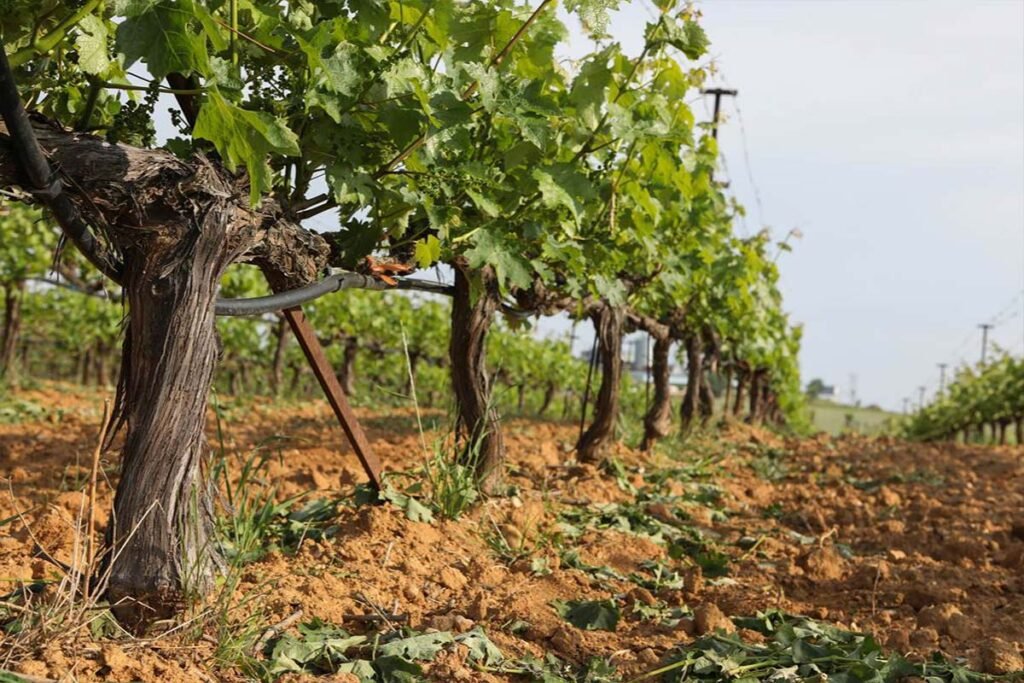
Anatolikos Vineyards presents as an understated, terroir-first address on the edge of northeastern Greece. The writing frames the place less as a destination defined by flash and more as a landscape-driven project: diurnal temperature swings, the nearby Aegean light and proximity to Lake Vistonida all shape what is in the glass. It reads like a producer that rewards attention—an off-map reference point rather than a festival-ready winery—so visitors encounter focused viticulture and a sense of place that is quietly compelling rather than showy.
Best For
This vineyard is best for visitors who come to learn. Wine students, sommeliers and curious travelers who prioritize geology, microclimate and site expression will get the most out of a stop at Anatolikos. The emphasis on regional context and the uncommon Thracian profile makes it a smart choice for solo exploration or small, purpose-driven visits where conversation turns to acidity, phenolic ripeness and how local winds and lake proximity influence canopy decisions. It suits travelers who favor study and discovery over social spectacle.
Tasting Tips
When selecting bottles or asking about the range, look for the estate's recognized bottlings—the text notes a 2025 Pearl 2 Star Prestige distinction—then steer the conversation toward site-driven questions. Ask how Lake Vistonida’s humidity and the Rhodope mountains’ moderation affect specific parcels, and request comparisons to better-known Greek benchmarks when available; staff or the producer can often frame how Thrace diverges from Santorini, Naoussa or Nemea. Focus purchases on wines that emphasize acidity and terroir rather than overt oak or new-world extraction.
Venue details
Ambiance
Rustic and natural atmosphere in a coastal hillside setting with cool sea breezes.
Tags
Vibe
Best For
Experience
Sourcing
View
At the Vineyard
- Appellation
- PGI Avdira
- Varietals
- Assyrtiko, Malagousia, Mavroudi, Limnio, Pamidi
- Tour Duration
- 60-90 minutes
- Visits
- By reservation
- Farming
- Organic
- Production
- Small producer
- Wine Styles
- Still White, Still Red, Orange, Pet Nat
- Food Pairing
- Offered
- Wine Club
- Not available
Know before you go
Know Before You Go
- Getting there
- 5xlm Xanthis - Lagous, Vistonida 671 00
Planning details
Location
Also consider
Also Consider
- Ktima Vourvoukelis, Notable alternative
- Thrace Distillery, Notable alternative
- Château Nico Lazaridi, Notable alternative
- Costa Lazaridi Distillery, Notable alternative
- Nico Lazaridi Winery (Magiko), Notable alternative
Winery context
How it compares in and around Xanthi
Anatolikos Vineyards is the stronger pick if the priority is a focused winery visit near Xanthi and the schedule can be planned in advance. Ktima Vourvoukelis is the closest natural cross-shop for travelers who want another wine-led stop in the area, while Thrace Distillery makes more sense if the group is more interested in spirits than vineyard context.
For travelers willing to widen the route, Château Nico Lazaridi and Nico Lazaridi Winery (Magiko) are better cross-shops when the day is built around a larger wine itinerary rather than staying tight to Xanthi. Costa Lazaridi Distillery is the alternative for mixed groups where not everyone wants a wine-only stop.
The decision is simple: choose Anatolikos Vineyards for a Xanthi-centered wine appointment, Ktima Vourvoukelis for another nearby winery comparison, and the Lazaridi or distillery options when the itinerary can stretch farther and the group wants a broader drinks program.
Explore Xanthi
Around this place
Discover more on Pearl
Unlock the full Anatolikos Vineyards guide in Pearl, including awards, comparisons, FAQs, planning details, and nearby places.
Compare Anatolikos Vineyards
| Venue | Location | Awards |
|---|---|---|
| Anatolikos Vineyards | Xanthi | No published awards |
| Ktima Vourvoukelis | Avdira | No published awards |
| Thrace Distillery | Komotini | No published awards |
| Château Nico Lazaridi | Drama | 2026 Falstaff Winery Guide |
| Costa Lazaridi Distillery | Drama | No published awards |
| Nico Lazaridi Winery (Magiko) | Kavala | No published awards |

How Anatolikos Vineyards Xanthi compares with similar nearby venues.
FAQ
Frequently Asked Questions
What other venues can I compare with Anatolikos Vineyards?
For planning comparisons, consider Ktima Vourvoukelis, Château Nico Lazaridi, and Nico Lazaridi Winery (Magiko). Costa Lazaridi Distillery and Thrace Distillery are also useful reference points for a wider itinerary. Anatolikos Vineyards itself is in Xanthi.
Does Anatolikos Vineyards serve food?
Food service is not listed here. Anatolikos Vineyards is a Xanthi venue with Pearl 2 Star Prestige recognition for 2025, so confirm any dining, tasting, or service details directly before planning around them.
How long should I plan for a visit to Anatolikos Vineyards?
If timing matters, check directly with Anatolikos Vineyards before setting your schedule, especially if you are coordinating it with another Xanthi stop or a wider itinerary.
Are membership or special program details for Anatolikos Vineyards?
Membership or special program terms are not listed here. The confirmed points are that Anatolikos Vineyards is in Xanthi, has a casual dress code, and holds Pearl 2 Star Prestige recognition for 2025.
Can Anatolikos Vineyards handle large groups?
Contact Anatolikos Vineyards directly before planning a group visit, and do not assume a specific setup, seat count, or visitor format from this guide.
Are specific bottles or line-ups at Anatolikos Vineyards?
If a particular selection matters, ask Anatolikos Vineyards directly when planning your visit. For other itinerary comparisons, Costa Lazaridi Distillery and Thrace Distillery may also be useful reference points.
Do I need a reservation at Anatolikos Vineyards?
The safest planning approach is to check directly with Anatolikos Vineyards before you go. The confirmed details are its Xanthi location, casual dress code, and Pearl 2 Star Prestige recognition for 2025.