
Winery in Vienna, Austria
Weingut Walter Wien Distillery
500ptsUrban Winery-Distillery Duality
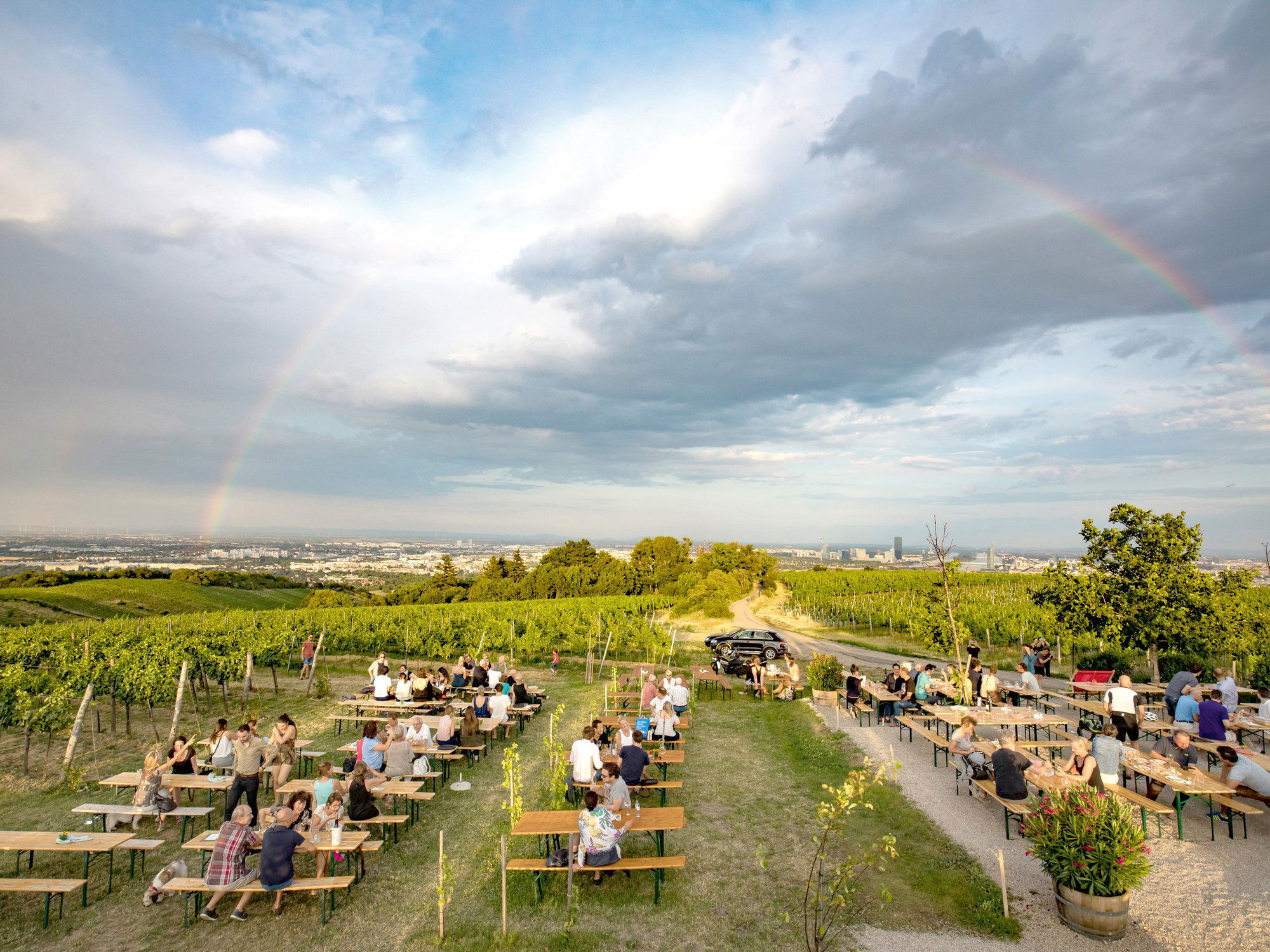
About Weingut Walter Wien Distillery
Weingut Walter Wien Distillery operates from Vienna's 21st district, where the city's northern edge meets the Viennese wine country tradition. Awarded Pearl 2 Star Prestige in 2025, this Floridsdorf-based producer represents the intersection of urban winemaking and distillation that defines Vienna's distinct position among European wine capitals.
Floridsdorf and the Northern Reach of Vienna's Wine Belt
Vienna occupies a category few European capitals share: a city that produces wine within its own municipal boundaries at genuine commercial scale. That fact alone earns attention, but the more interesting editorial question is where within Vienna different producers are operating, and what that geography signals about their approach. The 21st district, Floridsdorf, sits north of the Danube, at the outer perimeter where the city's urban fabric begins to give way to agricultural land and the slopes that feed into the broader Weinviertel. Producers working in this zone tend to engage with Vienna's wine tradition from its margins rather than its centre, which historically has meant a closer relationship with raw materials and process than with the tourist-facing Heuriger culture more prominent in Grinzing or Neustift.
Weingut Walter Wien Distillery, addressed at Jungenberggasse 7 in the 1210 postal district, sits in that northern tier. The distillery designation alongside the winery name places it inside a smaller sub-category of Austrian producers who work across both fermented and distilled spirits, a combination more common in Styria and Burgenland than in Vienna itself. Among Vienna-based producers, that dual focus is a differentiating structural choice rather than a marketing position.
What a Pearl 2 Star Prestige Award in 2025 Signals
The 2025 Pearl 2 Star Prestige award is the most concrete trust signal available for this producer, and it warrants careful reading. Pearl ratings, as a prestige-tier designation, sit within a structured evaluation framework that assesses quality consistency alongside a venue's position within its category. A 2 Star Prestige rating at that tier is not an entry-level recognition; it places Weingut Walter Wien Distillery among producers who have cleared a bar that many Vienna-area operations do not reach. For context, Vienna has a relatively concentrated set of awarded producers: Weingut Fritz Wieninger, Weingut Mayer am Pfarrplatz, and Weingut Rainer Christ each carry recognition that shapes the city's premium wine identity, and a prestige-level award positions Weingut Walter within that recognised cohort rather than outside it.
The timing of the 2025 designation is also worth noting. Austrian wine and spirits production has been through a period of renewed critical attention, partly driven by international interest in Grüner Veltliner and Riesling at the high end, and partly by a growing market for Austrian distillates, particularly fruit brandies and grain spirits. A producer earning a prestige-tier award at this moment enters a more scrutinised field than would have been the case a decade ago, which makes the recognition carry proportionally more weight.
The Ingredient Logic of a Vienna Distillery-Winery
Editorial angle that matters most here is sourcing: where the raw materials come from and what that implies about product character. Vienna's vineyards are overwhelmingly planted on the city's western and northern slopes, with soil profiles that shift between loess, gravel, and clay depending on elevation and aspect. For a Floridsdorf-based producer, proximity to the Viennese Gemischter Satz tradition is part of the operating context, even if individual estates define their own approach to grape selection and vineyard management.
What distinguishes a combined winery-distillery from a pure wine producer is the range of source materials it may work with. Austrian distilleries with winery operations frequently use wine-based distillation (brandy and marc production), but also draw on orchard fruit, grain, and regional botanicals depending on the distillery's focus. Without specific product data available, it is not responsible to characterise Weingut Walter's precise distillate range, but the category itself has a clear precedent in Austrian craft: operations like Weingut Scheiblhofer Distillery in Andau demonstrate how Burgenland producers integrate winemaking and distillation around regional raw materials, and a Vienna-based equivalent sits in a geographically distinct but structurally analogous position.
The sourcing question extends beyond the raw material. Vienna's wine producers who have achieved recognition at the level Weingut Walter has earned in 2025 are generally working with fruit from clearly defined vineyard parcels rather than purchased bulk material. That parcel-level sourcing discipline, standard among awarded Austrian estates, is what allows the kind of product consistency that prestige-tier evaluations depend on. For the reader assessing where this producer sits in the Vienna wine ecosystem, the award functions as an indirect confirmation of that sourcing rigour.
Vienna's Dual Identity: Urban Winemaking and the Heuriger Tradition
Understanding Weingut Walter's position requires a short frame around what makes Vienna's wine culture structurally different from other producing regions. The city runs a legally recognised classification for Viennese wine, and its producers operate inside an urban market where direct sales, estate restaurants (Heurigen), and export all represent legitimate commercial channels. Among Vienna's comparable producers, Weingut Fuhrgassl-Huber and Weingut Mayer am Pfarrplatz have built considerable visibility through the Heuriger model, while producers like Weingut Rainer Christ combine estate hospitality with broader trade distribution.
Floridsdorf sits slightly outside the traditional Heuriger belt, which means producers there operate with a different commercial emphasis. The distillery component at Weingut Walter suggests a business model oriented toward product diversity and direct retail as much as on-site hospitality, which is consistent with how northern-district producers tend to engage with Vienna's wine market. Compared to lower-Austrian estates like Weingut Bründlmayer in Langenlois or Weingut Emmerich Knoll in Dürnstein, which operate in established wine tourism corridors, a Floridsdorf producer is building its audience differently, through product quality and recognition rather than destination traffic.
Planning a Visit
Weingut Walter Wien Distillery is located at Jungenberggasse 7, 1210 Vienna, in the Floridsdorf district north of the Danube. The 21st district is accessible via U-Bahn line U6 and a range of tram connections, though visitors coming from the city centre should allow additional travel time compared to wineries in the more central wine districts. Phone, website, and current opening hours are not listed in available data, so confirming visit logistics directly before travelling is advisable. Given the Pearl 2 Star Prestige recognition earned in 2025, demand for visits may be higher than publicly visible capacity suggests, and pre-arranged appointments are likely the more reliable access route than unscheduled arrivals. Vienna's wine season runs broadly from late spring through autumn, with harvest activity in September and October adding texture to estate visits across the city's producing districts. For a broader map of Vienna's wine and hospitality options, our full Vienna restaurants guide covers the city's wider scene. Visitors with interest in the Austrian winemaking context beyond the city can cross-reference producers including Weingut Pittnauer in Gols, Weingut Kracher in Illmitz, and Weingut Wohlmuth in Kitzeck for the wider Austrian quality spectrum. For those interested in the intersection of craft brewing and distillation within Vienna itself, 1516 Brewing Company Distillery represents a different point on the city's fermented and distilled drinks map. Internationally, the combined winery-distillery model has parallels in producers like Weingut Heinrich Hartl in Oberwaltersdorf and, in an entirely different category context, Accendo Cellars in St. Helena and Aberlour in Aberlour, each of which demonstrates how craft and terroir-focused production translates across very different geographic and regulatory environments.
Frequently Asked Questions
What do visitors recommend trying at Weingut Walter Wien Distillery?
Weingut Walter Wien Distillery holds a Pearl 2 Star Prestige award for 2025, which positions its output within Vienna's recognised tier of producers. Vienna's northern-district wineries with distillery operations typically produce both estate wine and distillates from regional raw materials. For the most accurate current product information, contacting the estate directly is advisable, as no specific menu or product list is available in public records.
What is the standout thing about Weingut Walter Wien Distillery?
The combination of winery and distillery operations in Vienna's 21st district is structurally uncommon among the city's awarded producers. The Pearl 2 Star Prestige recognition in 2025 confirms a quality level that places it within Vienna's upper tier of estate producers, a category where very few Floridsdorf-based operations have achieved equivalent formal recognition.
Can I walk in to Weingut Walter Wien Distillery?
Current opening hours and booking requirements are not listed in available data for this estate. Given the Pearl 2 Star Prestige standing, pre-arranged visits are the more reliable approach. The address is Jungenberggasse 7, 1210 Wien. Visitors should confirm access details directly with the estate before travelling, particularly outside the main Austrian wine season.
How does a Vienna-based winery-distillery differ from a standard Viennese Heuriger operation?
Traditional Heurigen in Vienna are licensed to serve their own wine on-site, typically operating as estate taverns in the city's western wine districts. A combined winery-distillery like Weingut Walter Wien Distillery adds distillate production to that framework, which implies a broader raw-material focus and a product range that extends beyond table wine. This dual designation, recognised within the 2025 Pearl 2 Star Prestige award context, places the estate in a more specialised operational category than a standard Heuriger, and suggests a primary orientation toward craft production rather than hospitality-first estate dining.
Related editorial
- Best Fine Dining Restaurants in ParisFrom three-Michelin-star icons to the next generation of Parisian chefs pushing boundaries, these are the restaurants that define fine dining in the world's culinary capital.
- Best Luxury Hotels in RomeFrom rooftop terraces overlooking ancient ruins to Michelin-starred hotel dining, these are the luxury hotels that make Rome unforgettable.
- Best Cocktail Bars in KyotoFrom sleek lounges to hidden speakeasies, Kyoto's cocktail scene blends Japanese precision with global influence in ways you won't find anywhere else.
Save or rate Weingut Walter Wien Distillery on Pearl
Keep this venue in your Pearl passport, rate it after you visit, and track it alongside every other place you collect.