
Winery in Vienna, Austria
Weingut Fritz Wieninger
500ptsVienna DAC Estate Viticulture
About Weingut Fritz Wieninger
Weingut Fritz Wieninger operates from Vienna's 21st district, Stammersdorf, one of the city's principal wine-growing communes. The estate holds a Pearl 2 Star Prestige rating for 2025, placing it among the upper tier of Vienna's in-city producers. For those tracing the Viennese Heuriger tradition through a sustainability lens, Wieninger represents a reference point in urban viticulture.
Wine Growing Inside a Capital City
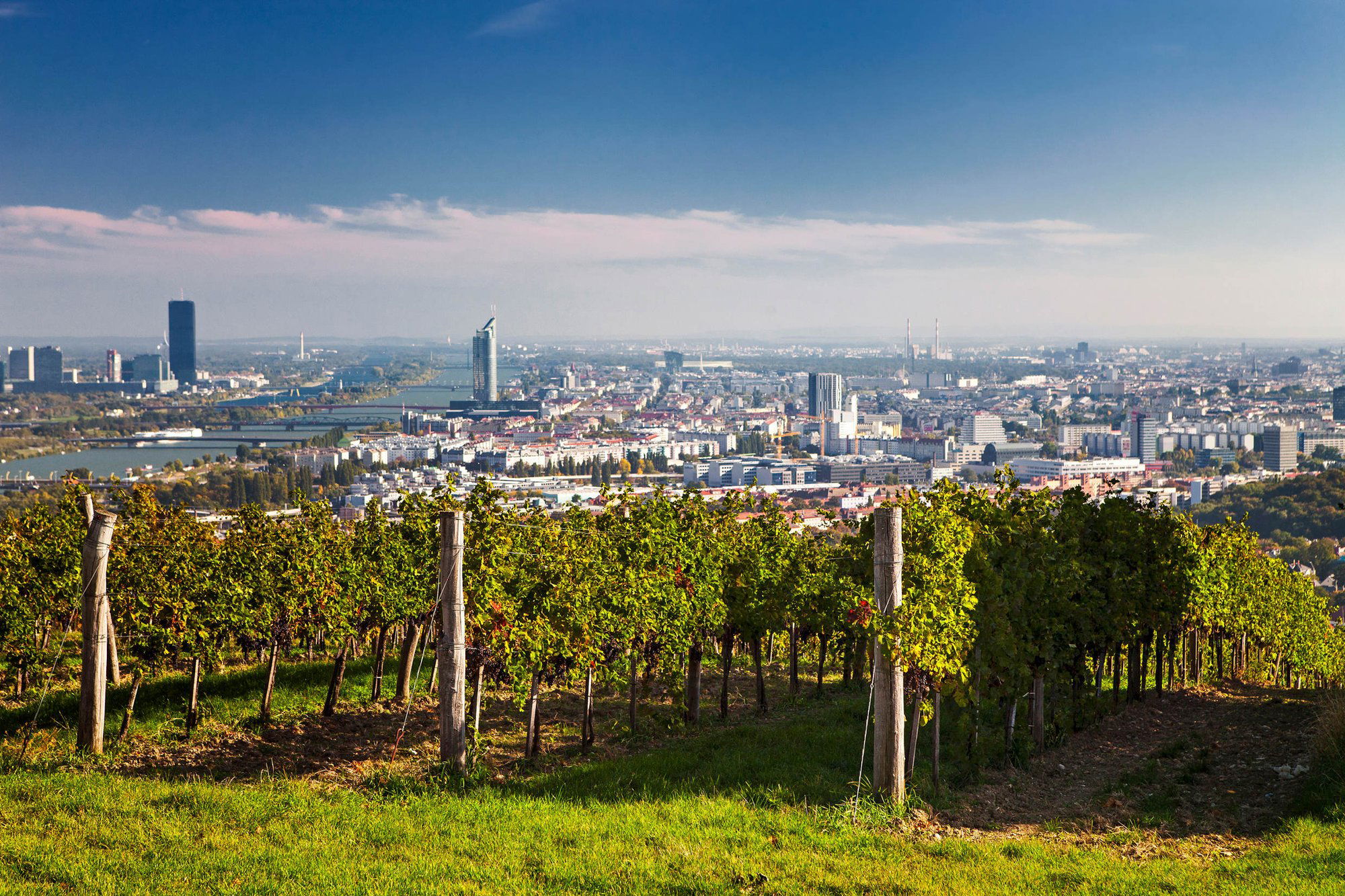
Stammersdorf sits in Vienna's 21st district, far enough from the Ringstrasse to feel genuinely agricultural, close enough to the city centre that the vineyards function as working urban wine land rather than tourist backdrop. The approach along Stammersdorfer Strasse passes rows of vines on slopes that have produced wine continuously for centuries, a fact that reframes what it means to drink a Vienna appellation wine. You are not drinking something from the countryside around a capital. You are drinking something grown within the city limits of a European metropolis of nearly two million people.
That geographic fact shapes the entire category. Vienna is the only city of its scale in the world that maintains a significant, commercially active wine-producing area inside municipal boundaries. The roughly 700 hectares of Viennese vineyards, spread across districts including Stammersdorf, Grinzing, Nussdorf, and Mauer, qualify for the Vienna DAC designation, which codifies the city's identity as a wine appellation in its own right. Weingut Fritz Wieninger sits within this appellation at Stammersdorfer Str. 31, and holds a Pearl 2 Star Prestige rating for 2025 — a recognition that positions it at the upper end of Vienna's in-city producer hierarchy.
Viticulture at the Urban Boundary
The specific character of Stammersdorf viticulture comes partly from soils: the area carries a mix of loess, limestone, and gravel deposits that favour both white and red varieties. Grüner Veltliner and Riesling dominate the white side of Vienna's appellation output, while Gemischter Satz — the traditional field blend planted with multiple varieties in the same vineyard parcel, harvested and fermented together , remains the most culturally embedded style. Gemischter Satz earned DAC recognition in 2013, and the classification now requires minimum vineyard age and sourcing from designated sites, turning a historical accident of mixed planting into a protected regional expression.
For producers working in this environment, the sustainability question is not abstract. Urban vineyards face particular pressures: proximity to residential areas, limited buffer zones from conventional agricultural chemicals, and the symbolic weight of being visible, walkable green space that city residents interact with directly. Vienna's wine-growing community has responded with a concentration of organic and low-intervention approaches that is proportionally higher than most Austrian wine regions. Weingut Fritz Wieninger operates in this context, and its 2025 Pearl 2 Star Prestige recognition reflects the broader quality-focused direction that the most serious Stammersdorf producers have taken. Peer estates in the Viennese producer network include Weingut Mayer am Pfarrplatz, Weingut Rainer Christ, and Weingut Fuhrgassl-Huber, all of whom have pursued quality and environmental positioning alongside the traditional Heuriger hospitality format.
The Heuriger Frame and What Lies Beyond It
The Heuriger , the traditional Viennese wine tavern licensed to sell the estate's own production, typically in an informal open-courtyard setting , is the cultural institution that has sustained urban wine growing in Vienna for generations. The format predates modern wine tourism; its legal foundation goes back to a Josephine decree of 1784 permitting producers to sell food and wine directly. The practical result is that many Viennese estates function both as working wineries and as seasonal hospitality venues, drawing locals as much as visitors.
Wieninger's Stammersdorf address places it squarely within this tradition. Stammersdorf has historically been one of the denser concentrations of Heuriger establishments in the city, and the area's character rewards visitors who arrive by the Linie 30 tram from the city centre rather than by car, a journey that itself signals a shift in register from urban to semi-rural. The 2 Star Prestige rating, however, marks Wieninger as an estate whose wines are evaluated beyond the Heuriger context, against Austrian and international fine wine standards. That dual position, rooted in a folk institution but producing at a level that attracts serious wine assessment, is the more interesting story about where Viennese wine now sits.
For comparison, estates operating at equivalent or higher recognition tiers within wider Austria include Weingut Bründlmayer in Langenlois and Weingut Emmerich Knoll in Dürnstein, both from the Kamptal and Wachau respectively. The Viennese context is different in character , more urban, less insulated from daily life , but the quality ambition has converged toward a common standard.
Sustainability as a Structural Argument
Vienna's urban vineyards increasingly function as a case study for what regenerative viticulture can look like when the vineyard is not remote farmland but shared civic space. The argument for organic or biodynamic approaches in this setting is partly agronomic and partly social: city residents walking through vineyard paths in autumn are a different constituency than rural wine tourists, and their relationship to the land they are walking through changes the producer's implicit obligations.
Across the wider Austrian wine scene, producers who have committed to certified organic or biodynamic farming have found it correlates with both quality recognition and export credibility. Weingut Pittnauer in Gols and Weingut Heinrich Hartl in Oberwaltersdorf represent the Burgenland strand of this development, while Wachau and Kamptal equivalents have pursued their own routes. In Vienna, the sustainability argument connects to the appellation's identity directly: a wine that is grown organically within a living city carries a provenance claim that cannot be replicated by any out-of-city estate.
Navigating a Visit
Weingut Fritz Wieninger is located at Stammersdorf Str. 31 in the 21st district. Stammersdorf is accessible by public transport from central Vienna, making a visit a realistic afternoon or early evening programme without requiring a car. The estate's contact details and current visiting hours are not confirmed in this record, so verifying opening times and whether the Heuriger is currently in season before travelling is advisable. Viennese Heuriger are typically seasonal in their service calendar, with many operating on a rotating schedule rather than year-round. Vienna's wine-growing areas are most actively visited between late summer and late autumn, when the harvest period and post-harvest tastings make the full production context visible.
Other distillery and drinks producers in Vienna worth mapping alongside a Stammersdorf visit include 1516 Brewing Company Distillery and Weingut Walter Wien Distillery, which represent different points in the city's drinks production spread. For a broader map of where Wieninger fits within Vienna's food and drink programming, the full Vienna restaurants and drinks guide covers the city's current range across categories.
Beyond Austria, the pattern of premium estate producers holding dual roles as hospitality venues and serious wine producers appears at estates including Weingut Kracher in Illmitz, Weingut Scheiblhofer Distillery in Andau, and Weingut Wohlmuth in Kitzeck. For those interested in the intersection of fine wine production and place-specific identity outside Europe, Accendo Cellars in St. Helena and Aberlour in Aberlour offer reference points in Napa and Speyside respectively for how appellation identity and hospitality coexist at the premium end.
Frequently Asked Questions
What wines should I try at Weingut Fritz Wieninger?
Given the estate's Stammersdorf location within the Vienna DAC appellation, Grüner Veltliner, Riesling, and Gemischter Satz are the varieties most directly connected to the site's identity. Gemischter Satz in particular is the style most specific to Vienna as a wine region , it cannot be authentically sourced anywhere else , and tasting it from a producer with a Pearl 2 Star Prestige recognition gives context for what the style can achieve at the quality end of the appellation. Specific current releases and vintages should be confirmed directly with the estate.
What's the main draw of Weingut Fritz Wieninger?
The combination of appellation credentials and physical location is the primary draw. Wieninger operates within a wine-growing district that functions as genuine urban viticulture, not a heritage park, and the 2025 Pearl 2 Star Prestige rating positions it among the upper tier of Vienna's in-city producers. For visitors to Vienna interested in wine, tasting a DAC-classified wine on the same land where the grapes were grown, within the city limits, is a context that no imported bottle can replicate. Price information is not confirmed in this record and should be checked directly with the estate.
Do they take walk-ins at Weingut Fritz Wieninger?
Viennese Heuriger traditionally operate on a seasonal schedule and may or may not be open on any given day without a reservation. If Wieninger is running a Heuriger service, walk-ins are often accommodated when the venue is open, consistent with the format's informal tradition. However, given the estate's recognition level and the unpredictability of seasonal scheduling, confirming availability before visiting is the practical approach. No phone number or website is listed in the current record, so checking through current online channels or visiting in person during the Stammersdorf Heuriger season is the most reliable method.
Related editorial
- Best Fine Dining Restaurants in ParisFrom three-Michelin-star icons to the next generation of Parisian chefs pushing boundaries, these are the restaurants that define fine dining in the world's culinary capital.
- Best Luxury Hotels in RomeFrom rooftop terraces overlooking ancient ruins to Michelin-starred hotel dining, these are the luxury hotels that make Rome unforgettable.
- Best Cocktail Bars in KyotoFrom sleek lounges to hidden speakeasies, Kyoto's cocktail scene blends Japanese precision with global influence in ways you won't find anywhere else.
Save or rate Weingut Fritz Wieninger on Pearl
Keep this venue in your Pearl passport, rate it after you visit, and track it alongside every other place you collect.