

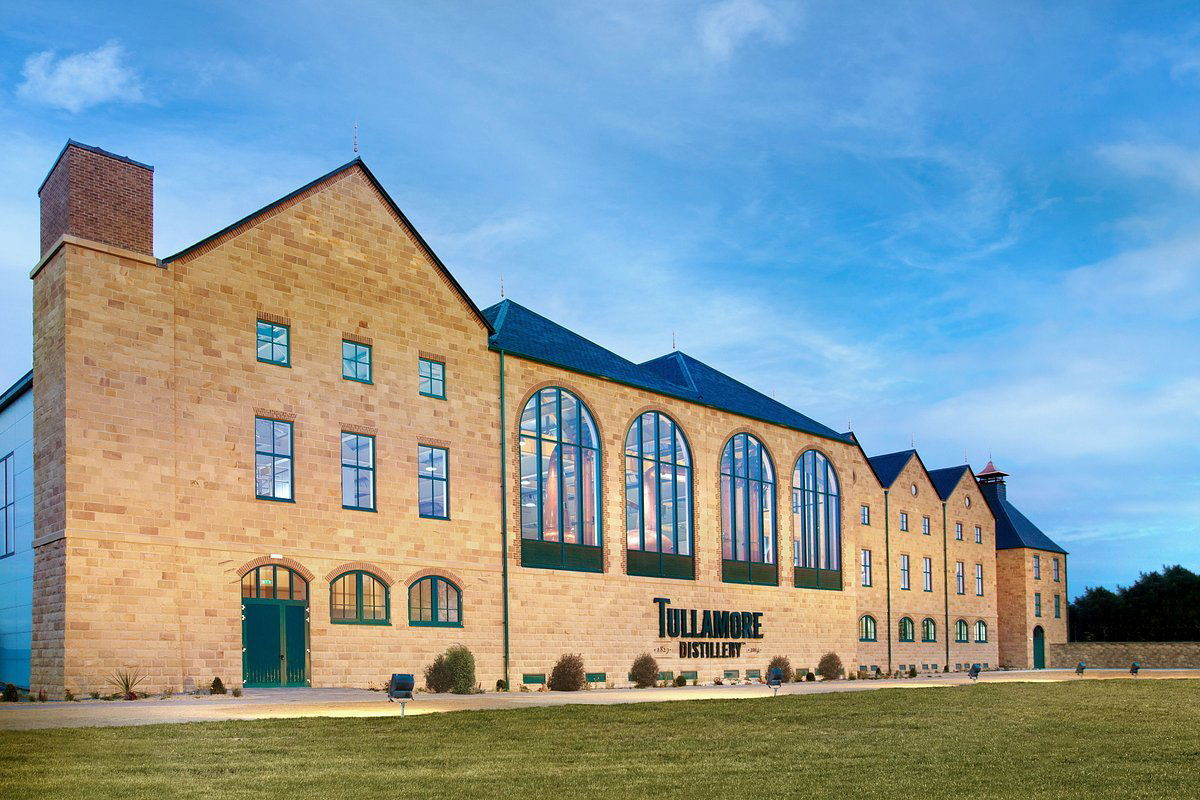
Tullamore D.E.W.
Tullamore
Winery in Tullamore, Ireland
 Book with Pearl
The Read
Triple-Distillate Heritage
Price
$20–30tasting
Why go
Choose Tullamore D.E.W. if the plan needs a whiskey-focused anchor in Tullamore rather than a Dublin crawl or countryside estate stop. It is strongest for couples, celebrations, and small groups who want a recognizable Irish whiskey experience with simpler town logistics. For a broader distillery day, compare it with Kilbeggan Distillery or Slane Irish Whiskey before committing.
About Tullamore D.E.W.
For a planned stop in Tullamore, Tullamore D.E.W. is a strong choice: it is in Tullamore, holds Pearl 3 Star Prestige recognition for 2025, and is open Wednesday through Sunday. The dress code is smart casual.
Use the opening hours and recognition to decide whether it fits the day, and check the venue directly for any visit format, food, drink, booking, or accessibility details.
Plan this for a Tullamore stop with confirmed hours
The main reason to choose Tullamore D.E.W. is direct: it is a Tullamore venue with a clear weekly schedule. It is closed Monday and Tuesday; open Wednesday and Thursday from 9 AM to 11:30 PM; Friday and Saturday from 9 AM to 12 AM; and Sunday from 9 AM to 11 PM.
For a broader comparison, consider how the day is being planned. Kilbeggan Distillery, Slane Irish Whiskey, Roe & Co, Teeling, and Jameson (Bow St.) may suit different routes or city-based plans, while Tullamore D.E.W. keeps the focus on Tullamore itself.
Use it as the anchor, then build the rest of the trip around Tullamore
The practical planning call is to treat the opening hours as the fixed point of the day. If timing matters, check current availability and any booking requirements directly with the venue before building a full itinerary around it.
Value depends on what the group needs from the stop. If the goal is a recognized Tullamore venue with Pearl 3 Star Prestige recognition and smart casual dress, Tullamore D.E.W. is a clear candidate. If the goal is to compare several named venues, weigh it against Jameson (Bow St.), Kilbeggan Distillery, Roe & Co, Slane Irish Whiskey, and Teeling without assuming they are all part of the same local Tullamore plan.
Planning details
- Location
- Bury Quay, Tullamore, Co. Offaly, D35 V2T8
The take
The Take
The Vibe
Tullamore D.E.W. feels like an industrial site that has been carefully repurposed for visitors rather than a theatrical reconstruction. The distillery sits in a working midlands town where the surrounding low-lying landscape, canals and rivers lend a quietly measured character; summer light is described as 'wide and unhurried.' That combination—industrial fabric, practical production activity and a calm regional setting—gives the place a serene, matter-of-fact personality. It reads as authentic and functional: a premium facility that retains the pace and atmosphere of a working distillery rather than a bustling tourist attraction.
Best For
This distillery is best for travelers who want to learn about Irish whiskey in context: students of production, groups organising a dedicated itinerary stop, and visitors marking a special trip. The text positions Tullamore D.E.W. closer to the working rural distillery model—where geography and provenance do explanatory work—so it suits people who value terroir, maturation stories and a less commercialised visitor experience. With a 2025 Pearl 3 Star Prestige award, it also fits those seeking a premium tasting stop on a celebration or curated whiskey tour.
Tasting Tips
Plan ahead and treat a visit as a tasting-focused stop: book a guided tour or tasting to hear about grain selection, water source and the maturation conditions that distinguish midlands whiskey. The write-up emphasises maturation environment and a 'smooth grain-forward profile,' so request expressions or comparative pours that highlight warehouse conditions and aging. If you want context, ask guides about how the Grand Canal/River Brosna and local climate influence maturation—those provenance details are central to the distillery’s interpretive focus.
Venue details
Ambiance
Historic and welcoming with a focus on distillery heritage, featuring modern visitor facilities in a classic Irish whiskey setting.
Tags
Vibe
Best For
Experience
At the Vineyard
- Appellation
- County Offaly
- Tour Duration
- 60-90 minutes
- Tour Languages
- English
- Visits
- By reservation
- Wine Club
- Not available
Know before you go
Know Before You Go
- Getting there
- Bury Quay, Tullamore, Co. Offaly, D35 V2T8
Planning details
Location
Bury Quay, Tullamore, Co. Offaly, D35 V2T8 · Directions
Also consider
Where to look if you cannot get in
Try Kilbeggan Distillery first if the group wants to stay in the Midlands and keep the day whiskey-focused. It is the most natural fallback from this comparison set.
If the date can move toward Dublin, Jameson (Bow St.) is the safer crowd-pleaser for visitors who care about brand recognition, while Teeling is the better fit for a multi-stop city plan.
Winery context
How it compares for an Irish whiskey visit
Tullamore D.E.W. is the practical choice when the trip is already centered on Tullamore. Compared with Kilbeggan Distillery, it is the cleaner fit for visitors who do not want to build the day around transfers. Kilbeggan is the stronger cross-shop for a heritage-led distillery detour outside town.
Slane Irish Whiskey makes more sense for groups who want a destination-estate atmosphere, while Tullamore D.E.W. is easier to fold into a town-based celebration. For Dublin visitors, Roe & Co, Teeling, and Jameson (Bow St.) are better if the priority is a city whiskey crawl with less travel time between venues.
Booking difficulty is the caution point. For a fixed-date occasion, do not treat Tullamore D.E.W. as a backup plan. If availability is tight, Kilbeggan Distillery is the closest practical alternative in this set; if the trip can shift to Dublin, Jameson (Bow St.) gives the highest name recognition among the city options listed here.
Explore Tullamore
Around this place
Discover more on Pearl
Unlock the full Tullamore D.E.W. guide in Pearl, including awards, comparisons, FAQs, planning details, and nearby places.
Compare Tullamore D.E.W.
| Venue | Location | Awards |
|---|---|---|
| Tullamore D.E.W. | Tullamore | No published awards |
| Kilbeggan Distillery | Kilbeggan | No published awards |
| Slane Irish Whiskey | Slane | No published awards |
| Roe & Co | Dublin | No published awards |
| Teeling | Dublin | No published awards |
| Jameson (Bow St.) | Dublin | No published awards |
How Tullamore D.E.W. Tullamore compares with similar nearby venues.
FAQ
Frequently Asked Questions
How long should I plan for a visit to Tullamore D.E.W.?
Plan around the opening hours: Tullamore D.E.W. is closed Monday and Tuesday, open Wednesday and Thursday from 9 AM to 11:30 PM, Friday and Saturday from 9 AM to 12 AM, and Sunday from 9 AM to 11 PM.
Do I need a reservation at Tullamore D.E.W.?
What is the dress code at Tullamore D.E.W.?
The dress code for Tullamore D.E.W. is smart casual.
Where is Tullamore D.E.W. located?
Tullamore D.E.W. is located in Tullamore.