
Winery in Swan Valley, Australia
Houghton
750ptsSwan Valley Institutional Depth
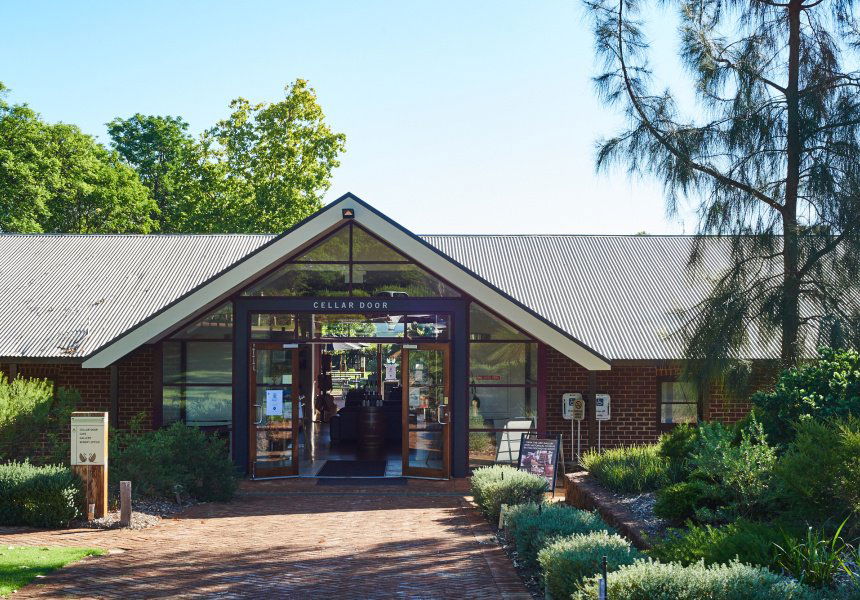
About Houghton
One of Western Australia's most historically significant wine producers, Houghton has shaped Swan Valley viticulture across more than 180 years of continuous winemaking. The estate at Middle Swan holds a Pearl 3 Star Prestige rating for 2025, placing it among Australia's most credentialed regional producers. A visit here is a practical study in how warm-climate terroir and long institutional knowledge translate into the glass.
Where Swan Valley Terroir Meets Institutional Depth
The drive along Dale Road into Middle Swan sets expectations accurately. The valley floor sits low and wide, the Swan River's influence softening what would otherwise be an uncompromisingly hot, dry growing environment. Gum trees break the sight lines between vineyard blocks, and the light in the late afternoon lands flat and golden on the old stone structures that mark the winery entrance. This is not the dramatic coastal scenery of Margaret River, nor the refined cool-climate tension of the Adelaide Hills. Swan Valley viticulture operates on different terms: high summer temperatures, low rainfall, alluvial soils derived from ancient river systems. What Houghton does with that environment, across a production history stretching back to the 1830s, is the editorial story here.
Houghton earned a Pearl 3 Star Prestige rating in 2025, a designation that places it in a peer set defined less by trendy minimalism and more by consistent, credentialed performance across a sustained body of work. In the context of Australian wine, that kind of institutional continuity is rarer than it looks. Most producers operating since the colonial era have been absorbed, rebranded, or allowed to drift. Houghton has remained a specific address, a specific set of vineyards, and a specific argument about what Western Australian wine can be.
The Terroir Argument: Warmth, Alluvium, and Swan Valley Specificity
Swan Valley sits roughly 25 kilometres northeast of Perth, which makes it one of the closest wine regions to a major Australian city. The proximity has historically been commercial rather than prestigious: the valley supplied ordinary table wine to a thirsty Perth population before that population developed more demanding tastes. The shift in reputation, when it came, required producers to articulate what the region could do that cooler, more fashionable regions could not replicate.
The answer lies in variety selection and site management as much as in winemaking intervention. The deep alluvial soils that characterise much of the Swan floor retain moisture at depth even as surface conditions turn dry and hot. For varieties that tolerate or actually require that warmth to achieve full physiological ripeness, the Swan Valley offers something legitimate. Verdelho established itself here earlier than almost anywhere else in Australia, and the region's relationship with the variety is now long enough to count as a genuine tradition rather than an experiment. Chenin Blanc found a foothold here too, developing a character that differs from its Loire Valley origins in texture and weight while maintaining structural acidity.
For context on how different Australian regions express their terroir through distinct varieties, the contrast with [Bass Phillip in Gippsland](https://www.enprimeurclub.com/wineries/bass-phillip-gippsland-winery) is instructive: Bass Phillip's cold-climate Pinot Noir operates from entirely different soil and thermal conditions, producing wines whose identity is inseparable from elevation and maritime influence. Swan Valley's identity runs the other direction, toward heat expression, texture, and early-drinking generosity. Neither is the correct answer; they are different questions asked of different land.
Similarly, producers like [Cape Mentelle in Margaret River](https://www.enprimeurclub.com/wineries/cape-mentelle-margaret-river-winery) work with the coastal cooling influence of two oceans to achieve Cabernet Sauvignon and Chardonnay in a register that Swan Valley simply cannot replicate. What Swan Valley offers instead is a warmer, softer palette, and Houghton has historically been the producer most associated with making that palette legible to a broad audience.
Scale, Reach, and the Question of Prestige Production
Australian wine has a complicated relationship with scale. The country's most recognised export brands operate at volumes that smaller prestige producers in Burgundy or Barossa would consider industrial. Yet within that system, individual estate programs and regional expressions do carry critical weight, and the Pearl 3 Star Prestige designation reflects assessment criteria that go beyond volume to include consistency, regional typicity, and the integrity of the production approach.
Houghton's position in that framework is worth comparing to other long-established Australian producers who have maintained prestige credentials across decades of commercial activity. Penfolds, operating out of South Australia, is the most widely cited example of an institution that sustained quality across scale, building a tiered portfolio that segregates prestige from entry-level without abandoning either. Henschke in the Eden Valley represents a different model: a family-scale operation where single-vineyard expressions carry most of the critical weight. Houghton sits between those poles, with a Western Australian geographic identity that gives it a distinctly regional rather than national story to tell.
Producers like [Brokenwood in Hunter Valley](https://www.enprimeurclub.com/wineries/brokenwood-hunter-valley-winery), [Leading's Wines in Great Western](https://www.enprimeurclub.com/wineries/bests-wines-great-western-winery), and [Brown Brothers in King Valley](https://www.enprimeurclub.com/wineries/brown-brothers-king-valley-winery) have each navigated versions of this same tension between heritage, scale, and critical credibility. The common thread across all of them is a founding regional identity that either gets reinforced or diluted depending on how the portfolio is managed over time. Houghton's 2025 Pearl 3 Star Prestige rating suggests the former.
Swan Valley in the Wider Western Australian Context
Understanding Houghton requires understanding where Swan Valley sits in the hierarchy of Western Australian wine. Margaret River receives the majority of critical attention and premium pricing. Great Southern, with its cooler sites at Mount Barker and Frankland River, has built a strong case for cool-climate Riesling and Shiraz. Swan Valley, as the oldest wine-producing region in the state, occupies an awkward position: historically first, but not currently first in prestige.
That tension has produced two kinds of producers in the valley. The first type leans into heritage and established varieties, making wines that position themselves against the valley's history rather than against Margaret River comparisons. The second type experiments with alternative varieties and minimal-intervention approaches to attract younger, style-conscious consumers. Houghton's Pearl 3 Star Prestige recognition aligns it with the first category, where depth of track record and consistent regional expression carry more weight than novelty.
For a broader picture of what Swan Valley's producer community looks like beyond Houghton, [Old Young's Distillery](https://www.enprimeurclub.com/wineries/old-youngs-distillery-swan-valley-winery) offers a useful point of contrast: a newer operation working in spirits rather than wine, representing the diversification now happening across the valley floor. [Our full Swan Valley restaurants guide](https://www.enprimeurclub.com/cities/swan-valley) maps the broader hospitality context for anyone planning a full day in the region.
Placing Houghton in a National and International Peer Set
At the Pearl 3 Star Prestige tier, Houghton belongs to a cohort of Australian producers whose credibility rests on sustained regional performance rather than single-vintage cult status. The equivalent tier in other regions might include [All Saints Estate in Rutherglen](https://www.enprimeurclub.com/wineries/all-saints-estate-rutherglen-winery), with its deep fortified wine heritage, or [Angove Family Winemakers in Renmark](https://www.enprimeurclub.com/wineries/angove-family-winemakers-renmark-winery), whose multi-generational South Australian identity carries similar weight. [Bird in Hand in Adelaide Hills](https://www.enprimeurclub.com/wineries/bird-in-hand-adelaide-hills-winery) and [Blue Pyrenees Estate in Pyrenees](https://www.enprimeurclub.com/wineries/blue-pyrenees-estate-pyrenees-winery) operate in cooler-climate registers but share the same institutional seriousness that the Prestige designation requires.
Internationally, the comparison is instructive rather than precise. Producers like [Aberlour in Aberlour](https://www.enprimeurclub.com/wineries/aberlour-aberlour-winery) and [Accendo Cellars in St. Helena](https://www.enprimeurclub.com/wineries/accendo-cellars) represent very different production traditions, but the underlying principle is the same: place-specific identity, sustained over time, produces a kind of authority that cannot be constructed quickly. Houghton's longevity in Western Australian wine is itself the credential.
Planning a Visit to Middle Swan
Houghton is located at 148 Dale Road, Middle Swan, accessible from Perth in under 40 minutes by road. The Swan Valley generally rewards a full-day visit rather than a single stop: the cluster of producers and food venues along the valley floor means that arriving early and moving through the region across a morning and afternoon is the practical format that most visitors find suits the geography. For current visiting hours, tasting room availability, and booking information, checking directly with the winery before arrival is the recommended approach, as these details change with season and event programming.
Frequently Asked Questions
What wine is Houghton famous for?
Houghton has historically been associated with Western Australia's Swan Valley, a region where Verdelho and Chenin Blanc have developed genuine regional character under warm growing conditions. The producer's longevity in the region, combined with its Pearl 3 Star Prestige rating in 2025, reflects a sustained body of work across both white and red varietals rather than a single signature style. Swan Valley's alluvial soils and high heat summation give Houghton's whites a textural richness that differs from cooler WA regions like Margaret River or Great Southern.
What is Houghton known for?
Houghton is known as one of Western Australia's oldest and most continuously operating wine producers, with roots in Swan Valley going back to the 1830s. It holds a Pearl 3 Star Prestige rating for 2025, placing it among Australia's credentialed regional estates. Located at Middle Swan, the winery is a reference point for understanding how the Swan Valley has evolved from a bulk-production region into a source of regionally specific wines with genuine critical standing. Its scale and history position it differently from boutique Swan Valley producers, functioning as an institutional anchor for the region's identity.
Related editorial
- Best Fine Dining Restaurants in ParisFrom three-Michelin-star icons to the next generation of Parisian chefs pushing boundaries, these are the restaurants that define fine dining in the world's culinary capital.
- Best Luxury Hotels in RomeFrom rooftop terraces overlooking ancient ruins to Michelin-starred hotel dining, these are the luxury hotels that make Rome unforgettable.
- Best Cocktail Bars in KyotoFrom sleek lounges to hidden speakeasies, Kyoto's cocktail scene blends Japanese precision with global influence in ways you won't find anywhere else.
Save or rate Houghton on Pearl
Keep this venue in your Pearl passport, rate it after you visit, and track it alongside every other place you collect.