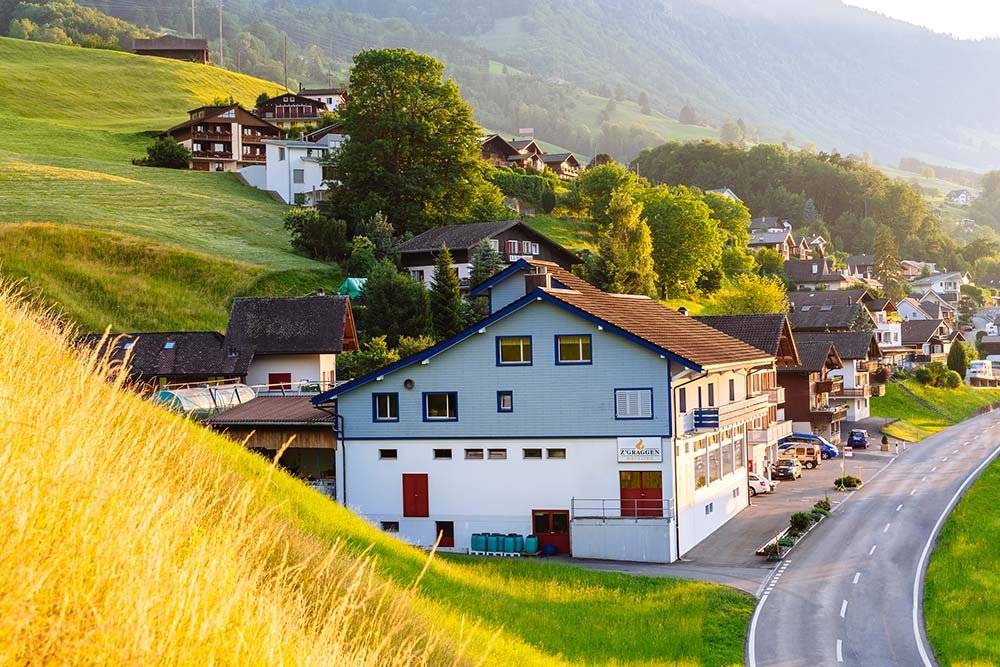
Winery in Steyr, Austria
Brennerei Weigand
250ptsUpper Austrian Edelbrand Craft

About Brennerei Weigand
Brennerei Weigand is a distillery in Steyr, Upper Austria, recognised with a Pearl 1 Star Prestige award in 2025. Operating within Austria's tradition of small-batch fruit and grain distillation, it sits in a tier defined by craft precision and regional character rather than commercial scale. For visitors to Steyr, it represents a grounded point of entry into the country's distilled spirits culture.
Distilling in Upper Austria: Where the Region Shapes the Spirit
Austria's small-batch distillery scene has quietly developed into one of Central Europe's most serious. The country's Obstbrand and Edelbrand traditions, rooted in centuries of fruit-growing along river valleys and alpine foothills, have produced a category of producers who treat distillation with the same terroir-minded attention that the country's wine regions bring to Grüner Veltliner or Riesling. Upper Austria sits at the northern edge of this tradition, where the Enns and Steyr river valleys create microclimates suited to stone fruit and pome fruit cultivation. It is in this context that Brennerei Weigand, based in Steyr, holds its ground.
The distillery received a Pearl 1 Star Prestige recognition in 2025, placing it within a peer set defined by craft consistency and category credibility rather than volume output. In Austria's spirits landscape, that kind of recognition tends to correlate with producers who work from local raw materials and treat distillation as an extension of the land rather than a manufacturing process. Steyr itself, a medieval town at the confluence of the Steyr and Enns rivers, provides the kind of small-city context in which craft producers can operate close to their ingredient sources without the commercial pressures of the major urban centres.
What Terroir Means for a Distillery
The concept of terroir, borrowed from wine, applies to distilled spirits more directly than is often acknowledged. The mineral content of local water, the sugar profiles of fruit grown in specific valley soils, the ambient yeasts that populate a production environment, and the temperature swings between seasons all contribute to what ends up in the bottle. Upper Austria's position, transitioning between the warmer Pannonian influence of the east and the cooler Alpine climate of the south and west, creates growing conditions for fruit that tends toward concentrated flavour with natural acidity. These are not the soft, sweetly ripe profiles of warmer climates; they produce spirits with structural depth and a cleaner finish.
Austrian Edelbrand producers operating in this tradition occupy a different competitive bracket from their counterparts in, say, the Wachau wine corridor or the Burgenland flatlands. Producers like Weingut Scheiblhofer Distillery in Andau or 1310 Spirit of the Country Distillery in Sierning, the latter located just a short distance from Steyr itself, each bring distinct regional raw materials to their production. The proximity of Brennerei Weigand to Sierning underscores how concentrated this craft production tier has become within a relatively tight geographic band of Upper Austria.
Further afield in the Austrian spirits and wine world, producers like Weingut Bründlmayer in Langenlois and Weingut Emmerich Knoll in Dürnstein have demonstrated how rigorously Austrian producers can express regional character through terroir-led production. The same logic applies to the spirits category, where producers who understand their raw materials at a soil and climate level consistently produce work that outlasts trend-driven competitors.
The Steyr Context
Steyr is not a city that positions itself primarily as a drinks destination. Its identity is more architectural and historical, with one of Austria's best-preserved medieval old towns and a riverfront that has drawn visitors for centuries. That relative quietness around the food and drink sector is part of what makes producers operating here worth attention. The distilleries and small producers working in and around Steyr are not riding an established tourism wave; they are building a case for the region through the quality of what they produce.
For travellers spending time in Upper Austria, Steyr functions as a slower-paced counterpoint to the better-known visitor circuits of the Wachau or Vienna's wine bars. A visit to Brennerei Weigand fits into a broader engagement with the town's craft and artisanal character rather than a tick-box spirits tourism itinerary. Those planning a fuller exploration of Upper Austria's drinks scene should also consider the A. Batch Distillery in Bergheim and the 1404 Manufacturing Distillery in Sankt Peter-Freienstein, both of which operate within a similar craft-focused, regionally grounded framework. Our full Steyr restaurants and producers guide covers the broader scene in detail.
Where Brennerei Weigand Sits in Austria's Craft Spirits Tier
Austria's distillery sector has been receiving more structured critical attention over the last decade, with award frameworks now creating clearer differentiation between volume producers and craft-led houses. The Pearl 1 Star Prestige award that Brennerei Weigand earned in 2025 places it in a tier that rewards precision and consistency over output. This is the same recognition logic that elevates certain wine producers into allocation-based distribution: once a producer demonstrates that their work can hold up to formal critical scrutiny, the conversation shifts from availability to access.
Internationally, Austria's spirits sector remains less visible than its wine counterpart, where producers in Burgenland and the Wachau have built global recognition. Weingut Kracher in Illmitz, Weingut Pittnauer in Gols, Weingut Heinrich Hartl in Oberwaltersdorf, and Weingut Wohlmuth in Kitzeck represent the kind of international name recognition that Upper Austrian distilleries are still building toward. The award framework being applied to producers like Brennerei Weigand suggests that critical infrastructure is now in place to accelerate that visibility.
For context on how craft distillation operates at different scales and in different traditions, it is worth noting that producers like Abfindungsbrennerei Franz in Leithaprodersdorf, operating under Austria's traditional Abfindungsbrennerei licensing structure, represent a different, more tightly regulated tier of small-batch production. Brennerei Weigand's prestige recognition positions it above the heritage-licence category and into a zone where craft ambition and formal critical evaluation intersect. Comparison with internationally recognised distillation outside Austria, such as Aberlour in Aberlour or the urban model represented by 1516 Brewing Company Distillery in Vienna, helps frame how different production philosophies and geographic contexts shape the final product.
Planning a Visit
Specific opening hours, booking requirements, and pricing for Brennerei Weigand are not published in publicly accessible records at time of writing, which is consistent with the operating model of many small Austrian distilleries that work primarily through direct contact or local distribution rather than open visitor programmes. Reaching out in advance is advisable for anyone planning a visit specifically around the distillery. Steyr is accessible by rail from Linz, approximately 45 minutes away, making it feasible as a day trip from Upper Austria's regional capital. Those spending more time in the area will find that the cluster of craft producers across the Enns valley rewards a slower itinerary rather than a compressed tasting circuit.
For the full picture of what Steyr offers across dining, drinking, and artisanal production, the EP Club Steyr guide is the most complete starting point, covering the broader network of producers and venues that give the town its understated but genuine claim on serious travellers' attention. And for those drawn to the wider Austrian spirits and drinks world, producers like Accendo Cellars in St. Helena offer a useful international reference point for how terroir-focused craft production earns its reputation through consistency rather than marketing.
Frequently Asked Questions
What should I expect atmosphere-wise at Brennerei Weigand?
Brennerei Weigand operates in Steyr, a historically significant Upper Austrian town with a medieval character and a relatively low commercial tourism profile. Small distilleries in this context typically operate with a working-producer atmosphere rather than a visitor-centre format: the environment reflects the craft itself rather than a curated hospitality experience. Given its Pearl 1 Star Prestige recognition in 2025, it sits in a tier associated with serious production standards, which tends to translate into a focused, no-frills engagement with the spirits rather than ambient theatre. Specific details about tasting room format or visitor facilities are not publicly documented and are leading confirmed directly with the distillery before visiting.
What's the must-try wine at Brennerei Weigand?
Brennerei Weigand is a distillery, not a wine producer, so the relevant category here is spirits rather than wine. Specific products are not documented in publicly available records, but the distillery's Pearl 1 Star Prestige award in 2025 signals that at least one expression has met formal critical standards for craft and regional character. Austrian distilleries operating in the Steyr area typically focus on fruit-based spirits drawn from local pome and stone fruit, reflecting the agricultural character of the Enns valley region. For wine in the broader Austrian context, producers like Weingut Emmerich Knoll and Weingut Bründlmayer represent the benchmark for regional terroir expression.
What's the standout thing about Brennerei Weigand?
The standout credential is the Pearl 1 Star Prestige recognition received in 2025, which places Brennerei Weigand within a formally acknowledged tier of Austrian craft distillation. In Steyr, a city without a large established spirits tourism infrastructure, that kind of recognition carries particular weight: it signals a producer operating at a level that has drawn external critical attention rather than relying on local visibility alone. For travellers interested in Austrian craft spirits beyond the well-documented wine regions, Steyr and its surrounding cluster of distilleries represent a part of the country's drinks culture that formal awards are now beginning to map more systematically.
Related editorial
- Best Fine Dining Restaurants in ParisFrom three-Michelin-star icons to the next generation of Parisian chefs pushing boundaries, these are the restaurants that define fine dining in the world's culinary capital.
- Best Luxury Hotels in RomeFrom rooftop terraces overlooking ancient ruins to Michelin-starred hotel dining, these are the luxury hotels that make Rome unforgettable.
- Best Cocktail Bars in KyotoFrom sleek lounges to hidden speakeasies, Kyoto's cocktail scene blends Japanese precision with global influence in ways you won't find anywhere else.
Save or rate Brennerei Weigand on Pearl
Keep this venue in your Pearl passport, rate it after you visit, and track it alongside every other place you collect.