


Balfour Winery
Staplehurst
Winery in Staplehurst, United Kingdom
 Book with Pearl
The Read
Weald Clay Viticulture
Price
$50–100tasting
Why go
Among Kent wine-country options, Balfour Winery is worth prioritising when the estate setting matters as much as the tasting itself. Recent 2025 recognition strengthens the case, but plan it as a wine-focused countryside visit rather than assuming a full dining or large-group format.
About Balfour Winery
Book Balfour Winery for a winery stop in Staplehurst. The key facts are straightforward: the venue is Balfour Winery in Staplehurst, the dress code is smart casual, and its 2025 recognition includes Pearl 2 Star Prestige, World's 50 Best Vineyards #96, and Decanter World Wine Awards Derived Winery Prestige.
That recognition gives the venue a clear reason to sit on a Staplehurst itinerary. Check directly with the winery for tasting format, dining, bottle list, price point, opening pattern, or group policy before you go.
Choose it for a winery stop in Staplehurst
The safest way to frame Balfour Winery is as a Staplehurst winery with smart casual dress and current 2025 recognition. Build the visit around what is known rather than around assumptions about the menu, a flagship wine, or the tasting structure.
Staplehurst works better as a planned stop when you confirm practical details before travelling. If food, timing, accessibility, group size, or a particular experience format matters, check directly with Balfour Winery before making the trip.
How to frame the decision against other drinks-focused trips
For a winery-focused Staplehurst stop, Balfour Winery is the relevant target. If the broader goal is to compare different drinks-related venues, Beefeater Gin and Hayman's Gin Distillery are natural names to consider separately, while Gusbourne, Ridgeview, and Leonardslee Family Vineyards may also be relevant depending on the kind of visit you want.
Do not choose Balfour Winery on the basis of a dining format, named flagship bottle, price point, or walk-up flexibility. Do choose it if the brief is a Staplehurst winery with smart casual dress and 2025 recognition, including Pearl 2 Star Prestige, World's 50 Best Vineyards #96, and Decanter World Wine Awards Derived Winery Prestige.
Planning details
- Location
- Balfour Winery, Five Oak Ln, Staplehurst, Tonbridge TN12 0HT
- Website
- balfourwinery.com
- Phone
- +44 1622 832794
The take
The Take
The Vibe
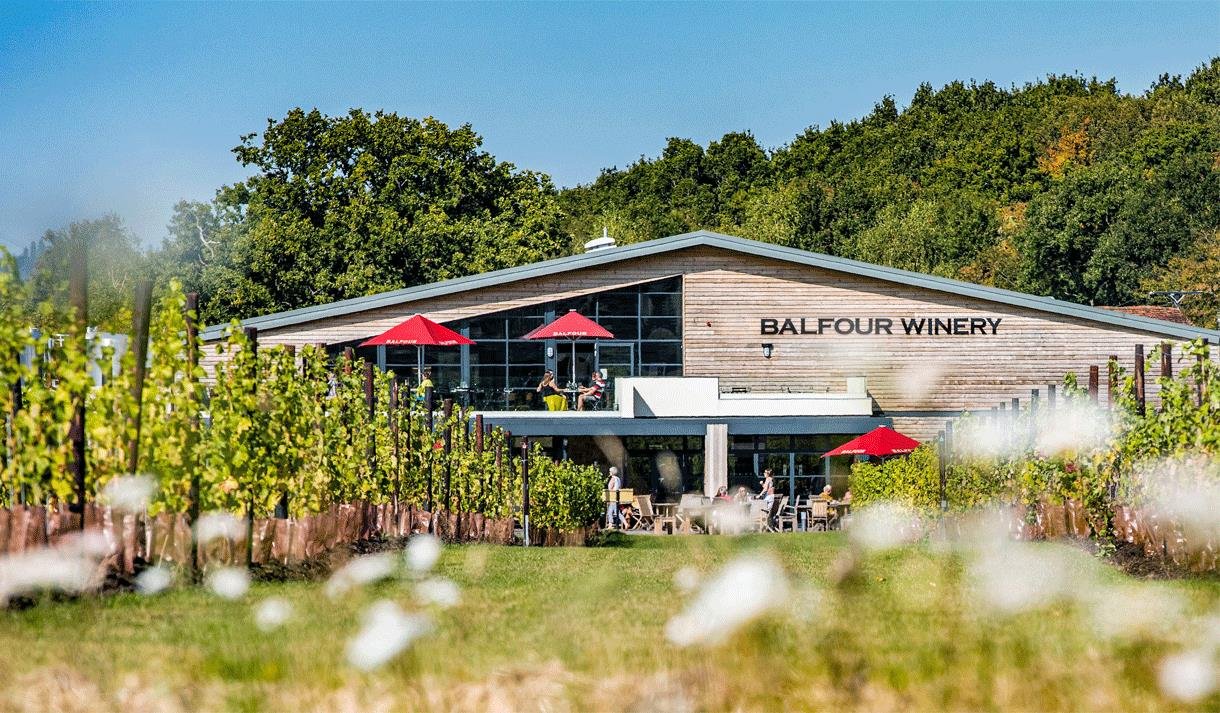
Balfour presents as a considered, historic English estate where the scale of the Tudor property and its working vineyards shape the visitor experience. The writing emphasizes terroir — heavy Wealden clay versus chalk downlands — and positions the house as a thoughtful contributor to conversations about English sparkling wine. The tone is analytical rather than flashy: you read the place through its soils and meadows, and the landscape itself becomes part of the tasting. Expect a refined, pastoral atmosphere that foregrounds terroir and craftsmanship over overt theatrics.
Best For
This estate is best for visitors who come with curiosity about place and production. Wine students, enthusiasts focused on English terroir, and anyone wanting to compare how heavier Weald clay influences sparkling wines will find Balfour especially rewarding. The narrative stresses critical recognition — including recent Decanter awards — so the estate also suits those seeking producers whose output is gaining serious attention beyond regional enthusiasm. It’s less about nightlife or casual drop-ins and more about thoughtful tasting and learning.
Tasting Tips
When exploring Balfour’s wines, prioritize bottles that highlight the estate’s sparkling program and the cuvées mentioned in critical notes: the write-up calls out Decanter-awarded wines, so those are natural starting points. Taste with attention to texture and mineral differences that reflect the Weald’s heavier clay soils; the copy suggests that moving through the vineyards and estate landscape materially alters how you read the wines, so combine tasting with time on the grounds if possible. Focus on side-by-side comparisons that reveal the estate’s terroir-driven specificity.
Venue details
Ambiance
Relaxed and welcoming with beautiful countryside surroundings, private tasting rooms, and an outdoor deck offering scenic views; intimate dining atmosphere enhanced by live music on select evenings.
Tags
Vibe
Best For
Experience
View
At the Vineyard
- Appellation
- Kent
- Varietals
- Pinot Noir, Pinot Meunier, Chardonnay, Bacchus, Pinot Blanc
- Tour Duration
- 2-3 hours
- Visits
- By reservation
- Wine Styles
- Sparkling, Still Red, Still White, Still Rose
- Food Pairing
- Offered
- Wine Club
- Not available
Know before you go
Know Before You Go
- Getting there
- Balfour Winery, Five Oak Ln, Staplehurst, Tonbridge TN12 0HT
Planning details
Location
Balfour Winery, Five Oak Ln, Staplehurst, Tonbridge TN12 0HT · Directions
Recognition and awards


Also consider
Also Consider
- Gusbourne, Notable alternative
- Ridgeview, Notable alternative
- Leonardslee Family Vineyards, Notable alternative
- Hayman's Gin Distillery, Notable alternative
- Beefeater Gin, Notable alternative
Winery context
How it compares for a Kent wine-country decision
Choose Gusbourne if the brief is a more established premium English-wine name and the trip can stretch beyond Staplehurst. Balfour Winery is the better fit when the estate setting is central to the day and Staplehurst is the anchor, but it is not the easy choice for anyone who needs detailed food, price, or group logistics settled in advance.
Ridgeview and Leonardslee Family Vineyards are stronger cross-shops for travellers comparing English vineyard experiences rather than just labels. Pick Ridgeview when the priority is benchmarking another serious English wine producer; pick Leonardslee when the wider estate atmosphere is the draw. Balfour sits between those instincts: wine-led, countryside-led, and more compelling when the grounds are part of the value calculation.
If the group is split between wine and spirits, Hayman's Gin Distillery and Beefeater Gin are cleaner alternatives. They make more sense for a London-based spirits outing, while Balfour is the better call for a slower Kent itinerary where ambiance and vineyard context matter more than urban convenience.
Explore Staplehurst
Around this place
Discover more on Pearl
Unlock the full Balfour Winery guide in Pearl, including awards, comparisons, FAQs, planning details, and nearby places.
Compare Balfour Winery
| Venue | Location | Awards |
|---|---|---|
| Balfour Winery | Staplehurst | 2026 Falstaff Winery Guide2025 World's 50 Best Vineyards · #962025 Decanter Winery Prestige |
| Gusbourne | Ashford | 2026 Falstaff Winery Guide2025 World's 50 Best Vineyards · #282024 World's 50 Best Vineyards · #50 |
| Ridgeview | Fragbarrow Lane | 2026 Falstaff Winery Guide2019 World's 50 Best Vineyards · #36 |
| Leonardslee Family Vineyards | Horsham | 2025 World's 50 Best Vineyards · #56 |
| Hayman's Gin Distillery | London | No published awards |
| Beefeater Gin | London | No published awards |
How Balfour Winery Staplehurst compares with similar nearby venues.
FAQ
Frequently Asked Questions
Is the wine club at Balfour Winery worth joining?
Consider membership only after confirming the current terms directly with the venue.
Can Balfour Winery handle large groups?
What other options can I compare with Balfour Winery?
Gusbourne, Ridgeview, Leonardslee Family Vineyards, Beefeater Gin, and Hayman's Gin Distillery are relevant names to consider for broader comparison. Balfour Winery is the Staplehurst option in this guide.
What is the flagship wine at Balfour Winery?
Do not plan the visit around a specific bottle. The grounded reason to consider Balfour Winery is that it is a Staplehurst winery with smart casual dress and 2025 recognition, including Pearl 2 Star Prestige, World's 50 Best Vineyards #96, and Decanter World Wine Awards Derived Winery Prestige.
How long should I plan for a visit to Balfour Winery?
If timing matters, confirm the current format directly with Balfour Winery before travelling; Beefeater Gin and Hayman's Gin Distillery are better treated as separate comparison venues, while Balfour Winery is the Staplehurst winery choice.