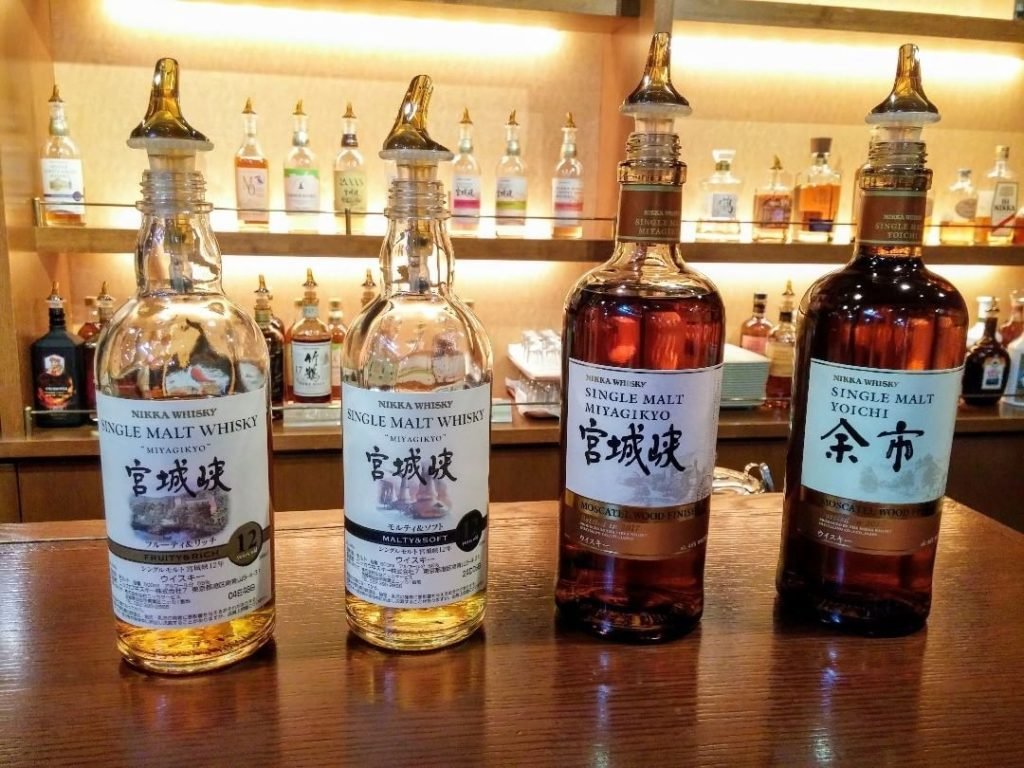
Miyagikyo (Nikka)
Aoba-ku, Sendai
Winery in Sendai, Japan
 Book with Pearl
The Read
Valley-Conditioned Maturation
Why go
A strong choice for Japanese whisky travelers who are already planning around Sendai, not a casual add-on. Booking is difficult, confirmed food and bottle details are limited, and the payoff is strongest for visitors who value producer context over a flexible tasting-room afternoon.
About Miyagikyo (Nikka)
Should you visit Miyagikyo (Nikka) in Sendai? Miyagikyo (Nikka) is a Sendai venue with casual dress and 3 Star Prestige (2025) recognition. Those points make it notable for travelers researching where to focus their time in the city, while the mechanics of a visit should be checked before you build plans around it. Confirm service format, access rules, hours, pricing, tasting options, dining, bottle availability, and other visit logistics directly with the venue.
Use Miyagikyo (Nikka) as a conservative planning note rather than a detailed itinerary. In practical terms, that means treating the listing as a signal of interest, not as a promise of what will happen on arrival. If Miyagikyo (Nikka) is important to your Sendai plans, confirm current arrangements directly with the venue before building the day around it. That extra step matters especially if your schedule is tight, if you are coordinating transport, or if you are deciding between multiple stops in the same day.
A Sendai stop that needs advance planning
The practical verdict is simple: Miyagikyo (Nikka) merits attention, but visitors should not assume walk-in access, dining, tasting formats, reservations, prices, or timing. 3 Star Prestige (2025) is the clearest recognition marker, and the dress code is casual. Read together, those details suggest a venue worth noticing, while also underlining the need to check the mechanics of a visit in advance.
For readers building a broader Sendai trip, leave room to confirm details. A careful plan would avoid making Miyagikyo (Nikka) the only anchor for a meal, a tasting, a purchase, or a timed experience unless those specifics have been checked directly. You can also use our full Sendai restaurants guide for other dining in Sendai, while treating Miyagikyo (Nikka) as its own venue rather than assuming it replaces a meal, bar, or tour stop. Keeping those categories separate helps prevent over-planning around uncertain details.
What to prioritize if Miyagikyo (Nikka) is on your list
Prioritize certainty. Before you go, check the menu, beverage lineup, bottle sales, tasting structure, price range, operating hours, and any specific visitor service directly with the venue. The safest approach is to regard any unconfirmed detail as subject to change and check the venue's official information before you go. If your interest depends on one particular element, such as timing, access, purchasing, or an organized format, that element should be confirmed before it becomes the reason for the trip.
If you are comparing Miyagikyo (Nikka) with other notable destinations in Japan, consider Hakushu (Suntory), Fuji Gotemba Distillery, Mars Shinshu Distillery, Chichibu, and Château Mercian Mariko Winery as separate trip-planning references rather than Sendai substitutes. The comparison can be useful for understanding how different destinations might fit into wider Japan travel, but it should not blur the practical question at hand. Miyagikyo (Nikka) remains the Sendai venue, and features at other places should not be assumed to apply here.
Avoid building plans around specific bottles, dishes, prices, access rules, or experiences without checking first. That restraint protects the planning value of the guide by separating core details from assumptions. The key takeaways are the venue name, Sendai location, casual dress code, and 3 Star Prestige (2025) recognition. Use those facts as a starting point, then confirm anything operational, time-sensitive, or experience-specific before committing your itinerary.
Planning details
- Location
- 1番地 Nikka, Aoba Ward, Sendai, Miyagi 989-3433
- Website
- nikka.com/distilleries/miyagikyo
- Phone
- +81 22-395-2865
The take
The Take
The Vibe
Miyagikyo presents a quietly authoritative presence in Sendai's Aoba Ward, where topography and water shape flavor as deliberately as any recipe. The distillery sits at a river confluence and benefits from cool, humid air funneled down from the Ou Mountains; that climate and the soft local water produce a lighter, floral-and-fruited new-make character. The copy reads like a terroir study, so the mood is contemplative and refined rather than flashy—an environment where natural forces do the heavy lifting and the spirit emerges with subtlety and poise.
Best For
Miyagikyo is best for people who come to learn and to compare. The text frames the site as a distinctive point on Japan’s whisky map: a temperate, moisture-rich middle ground set against Yoichi’s maritime cold and alpine distilleries’ high-altitude influence. That makes Miyagikyo a strong pick for educational visits, tasting-focused solo exploration, or anyone wanting to trace how water, temperature and maturation shape house style. Visitors seeking to understand the technical underpinnings of Japanese whisky will find the discussion of terroir particularly relevant.
Tasting Tips
When engaging with Miyagikyo expressions or reading about the distillery, look for the qualities the description highlights: soft-water influence, floral and fruit-driven notes, and maturation that reflects humid, temperate conditions. Frame comparisons against Yoichi and alpine distilleries to spot the differences in peat, maritime character and body. Ask or read about water source and seasonal temperature ranges—those elements are foregrounded in the profile and explain much of what you taste.
Venue details
Ambiance
Elegant natural setting with lush greenery, pristine forests, and serene atmosphere highlighted by Western-style red-brick architecture and manicured Japanese gardens.
Tags
Vibe
Best For
Experience
View
At the Vineyard
- Appellation
- Miyagi Prefecture
- Varietals
- malted barley
- Tour Duration
- 70 minutes
- Wine Club
- Not available
Know before you go
Know Before You Go
- Getting there
- 1番地 Nikka, Aoba Ward, Sendai, Miyagi 989-3433
Planning details
Location
1番地 Nikka, Aoba Ward, Sendai, Miyagi 989-3433 · Directions
Also consider
If you cannot secure Miyagikyo
For another serious whisky-led stop, try Hakushu (Suntory) if the route points toward Hokuto, or Fuji Gotemba Distillery if Shizuoka-area logistics are easier. For wine rather than whisky, Château Mercian Mariko Winery is the cleaner substitute.
Winery context
How Miyagikyo compares with other Japanese whisky and wine stops
Choose Miyagikyo (Nikka) if Sendai or Tohoku is already part of the route and the goal is a quieter Japanese whisky visit with a planned, destination feel. Chichibu is the stronger collector-minded comparison, but it is not the easier fallback; both demand planning, and Chichibu carries heavier scarcity appeal.
Hakushu (Suntory) and Fuji Gotemba Distillery make more sense for travelers building around central Japan or Mount Fuji-area logistics. Hakushu is better for a forested Suntory context, while Fuji Gotemba is easier to justify when the trip already points toward Shizuoka. Miyagikyo is better when Sendai is the anchor and a calmer whisky-focused day is the priority.
Mars Shinshu Distillery is the better cross-shop for travelers who want an independent-feeling mountain distillery route, while Château Mercian Mariko Winery is the clearer choice if the question is wine rather than whisky. Do not treat these as interchangeable: Miyagikyo is for spirits depth; Château Mercian Mariko is for a wine-led stop.
Explore Sendai
Around this place
Discover more on Pearl
Unlock the full Miyagikyo (Nikka) guide in Pearl, including awards, comparisons, FAQs, planning details, and nearby places.
Compare Miyagikyo (Nikka)
| Venue | Location | Awards |
|---|---|---|
| Miyagikyo (Nikka) | Sendai | No published awards |
| Chichibu | Chichibu | No published awards |
| Château Mercian Mariko Winery | Nagano | 2025 World's 50 Best Vineyards · #462023 World's 50 Best Vineyards · #382021 World's 50 Best Vineyards · #332020 World's 50 Best Vineyards · #30 |
| Hakushu (Suntory) | Hokuto | No published awards |
| Fuji Gotemba Distillery | Gotemba | No published awards |
| Mars Shinshu Distillery | Miyada | No published awards |

How Miyagikyo (Nikka) Sendai compares with similar nearby venues.
FAQ
Frequently Asked Questions
How long should I plan for a visit to Miyagikyo (Nikka)?
Before setting your schedule, check the current visit length, format, hours, and access rules directly with Miyagikyo (Nikka) in Sendai. 3 Star Prestige (2025) recognition does not establish visit duration.
What other venues can I compare with Miyagikyo (Nikka)?
For broader Japan trip planning, Château Mercian Mariko Winery, Hakushu (Suntory), Fuji Gotemba Distillery, Mars Shinshu Distillery, and Chichibu are separate references to compare with Miyagikyo (Nikka).
Does Miyagikyo (Nikka) have a membership program?
Check directly with Miyagikyo (Nikka) for any current membership details. The key planning details are the Sendai venue, casual dress code, and 3 Star Prestige (2025) recognition.
When is the best time to visit Miyagikyo (Nikka)?
Choose a time only after confirming current operating hours, seasonal patterns, and reservation availability directly with Miyagikyo (Nikka) in Sendai.
What specific offerings are available at Miyagikyo (Nikka)?
Rely on the venue's official information for current offerings at Miyagikyo (Nikka).