
Winery in Santiago, Chile
Viña Aquitania
500ptsAndean-Edge Viticulture
About Viña Aquitania
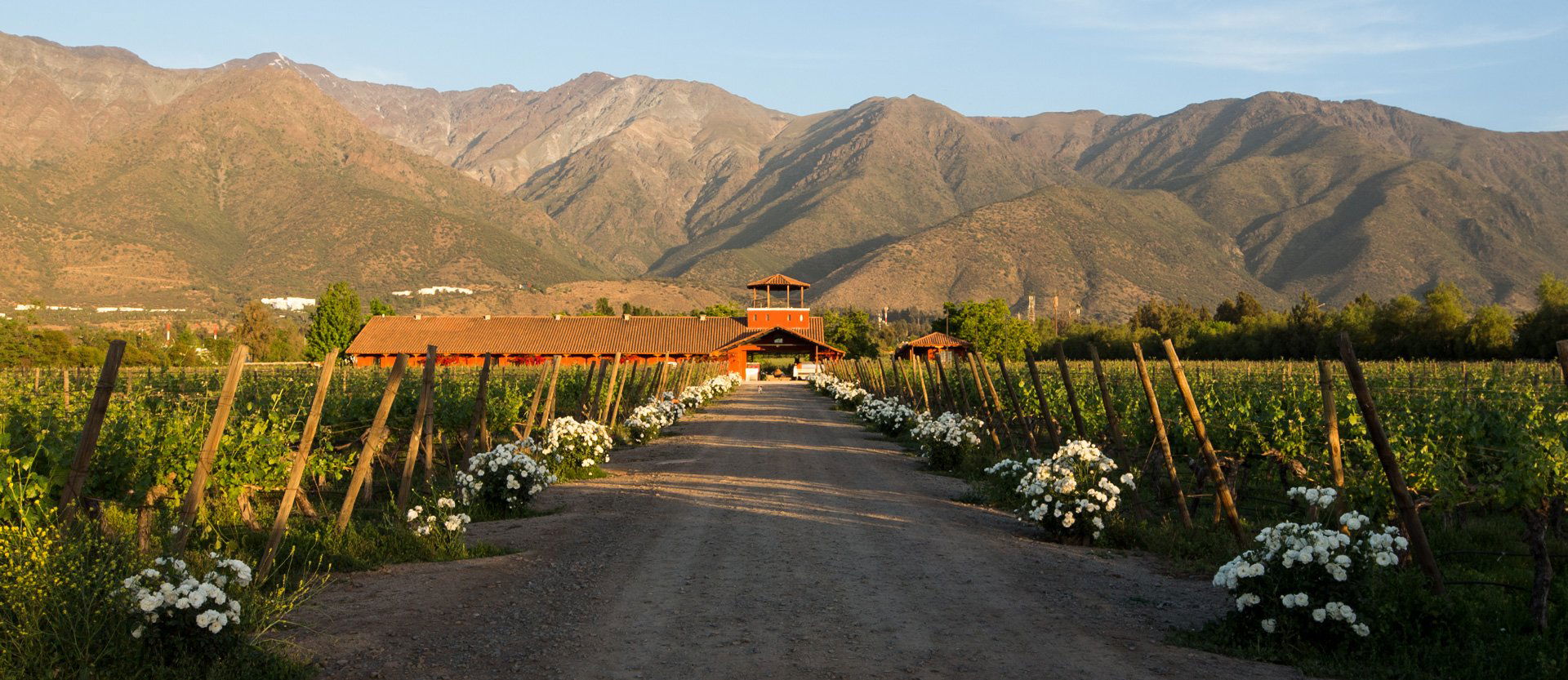
Viña Aquitania sits in the foothills of Peñalolén on Santiago's eastern edge, where the Andes begin their serious climb and the diurnal temperature swings that define premium Chilean viticulture are most pronounced. The winery holds a Pearl 2 Star Prestige rating (2025), placing it among a small tier of Chilean producers whose work rewards cellar time and critical attention. Visit for a direct encounter with high-altitude terroir expression close to the capital.
Where the Andes Begin to Matter
Santiago's eastern fringe is not where most visitors expect to find serious viticulture. The city sprawls toward Peñalolén with the practical geometry of a growing capital, and the transition from dense urban fabric to the foothills happens with little ceremony. But the elevation gain is real, and at Av. Consistorial 5090, the Andes are no longer backdrop. The mountain geography here does specific, measurable work on the fruit: afternoon shadows arrive earlier, morning temperatures stay cool longer, and the thermal gap between day and night compresses ripening into a window that rewards precision over volume.
This is the core argument for why the Metropolitan Region's high-altitude eastern corridor produces wines that read differently from Chile's better-publicised coastal and valley-floor appellations. Where a Casablanca Chardonnay negotiates Pacific fog and a Maipo floor Cabernet draws on deep alluvial warmth, the Peñalolén foothills sit at an intersection of altitude-driven acidity, gravelly Andean soils, and a dryness that limits disease pressure and concentrates flavour without artificial intervention. Viña Aquitania holds a Pearl 2 Star Prestige rating for 2025, a designation that places it above the threshold of serious regional interest and into a peer group that includes producers making deliberate, site-specific cases for their geography.
The Terroir Case for Peñalolén
Chilean wine criticism spent decades anchored to the Maipo Valley's Cabernet Sauvignon, and for comprehensible reasons: the valley's deep, well-drained soils and reliable heat accumulation produce structurally consistent reds that age predictably and translate clearly to international palates. The Colchagua Valley then absorbed the narrative of premium Carménère, and Casablanca and San Antonio took ownership of cool-climate white wine conversation. Peñalolén's proximity to Santiago made it, paradoxically, easier to overlook as a serious wine zone, associated in many minds with suburban expansion rather than agricultural identity.
That oversight is correcting. The foothills directly east of the capital have granitic and alluvial soils deposited by Andean glaciation, with a stone content that drains aggressively and forces vine roots deep. Compared to the heavier clay profiles further south, this substrate delivers wines with less textural weight but more precision on the finish, where mineral salinity tends to register more cleanly. The altitude, ranging through the 600 to 900 metre band in the most favourable sites, extends the growing season by weeks relative to valley floor plantings at lower elevations, building phenolic complexity without sacrificing the natural acidity that makes wines interesting at the table rather than merely impressive in isolation.
Aquitania's position at Consistorial 5090 plants it inside this argument rather than adjacent to it. The winery is not making an abstract claim about regional potential; it is operating from a specific piece of ground with documented terroir characteristics. For producers working at comparable elevations and soil profiles across Chile, the results tend to share identifiable features: freshness at higher alcohol levels, tannin that resolves finely rather than gripping broadly, and a capacity to carry age without requiring it. Compare the structural approach here to [Viña De Martino in Isla de Maipo](https://www.enprimeurclub.com/wineries/vina-de-martino-isla-de-maipo-winery), which works the valley floor with a different set of terroir priorities, and the contrast clarifies what altitude and granite actually contribute.
Santiago's Winery Geography
Most of Chile's premium wine production sits at least ninety minutes from Santiago by road, requiring either a dedicated day trip or an overnight stay. The Colchagua Valley, home to estates like [Viña Casa Silva in San Fernando](https://www.enprimeurclub.com/wineries/vina-casa-silva-san-fernando-winery), demands roughly two hours south. [Viña Seña in Panquehue](https://www.enprimeurclub.com/wineries/vina-sena-panquehue-winery) and the Aconcagua Valley producers sit a similar distance north. Even the Maipo floor wineries cluster around Isla de Maipo and Buin, thirty to fifty kilometres from the city centre.
Peñalolén changes that calculus. A winery operating here is accessible from Santiago's eastern suburbs without the logistical overhead of a full valley excursion. For visitors whose itinerary combines the capital with wine country, or for those without a full day to commit to a single estate, the proximity is a genuine practical advantage. It also positions Aquitania differently within the Santiago wine scene compared to producers whose identity is built around distance from the city, including peers like [Viña Cousiño-Macul](https://www.enprimeurclub.com/wineries/vina-cousino-macul-santiago-winery) and [Viña Santa Carolina](https://www.enprimeurclub.com/wineries/vina-santa-carolina-santiago-winery), both of which have century-deep roots in the capital's wine culture but operate within a more urbanised context.
Visitors planning a broader Chilean wine itinerary will find Aquitania a logical starting point before moving south to [Viña MontGras in Palmilla](https://www.enprimeurclub.com/wineries/vina-montgras-palmilla-winery), [Viña Valdivieso in Lontué](https://www.enprimeurclub.com/wineries/vina-valdivieso-lontue-winery), or west toward [Viña Ventisquero](https://www.enprimeurclub.com/wineries/vina-ventisquero-santiago-winery), whose coastal and valley operations represent a different chapter of Chilean viticulture. For those extending the journey north, [Viña Falernia in Vicuña](https://www.enprimeurclub.com/wineries/vina-falernia-vicuna-winery) and [Pisco Alto del Carmen Distillery in Huasco](https://www.enprimeurclub.com/wineries/pisco-alto-del-carmen-distillery-huasco-winery) demonstrate the extraordinary range of Chile's northern extremes. Aquitania's 2025 Pearl 2 Star Prestige rating sits it within the upper tier of Santiago-proximate producers alongside the recognition clusters tracked in our [full Santiago restaurants and venue guide](https://www.enprimeurclub.com/cities/santiago).
Aquitania in the Chilean Prestige Tier
Chile's premium wine identity has grown increasingly fragmented across appellations, and the critical vocabulary used to describe its leading producers has become more differentiated accordingly. The Pearl 2 Star Prestige designation reflects a recognition framework that separates volume producers from those making a consistent case for site and quality. Within that framework, Aquitania occupies a position that rewards the kind of attention normally directed at Burgundy-trained producers in Napa or Margaret River: careful growing, restrained intervention, and wines that carry genuine address information in the glass.
For context on where the Chilean prestige tier now sits internationally, it is instructive to compare the structural ambition at estates like Aquitania with producers at comparable quality levels in other countries. [Accendo Cellars in St. Helena](https://www.enprimeurclub.com/wineries/accendo-cellars) operates within Napa's allocation-led prestige model, while [Aberlour in Aberlour](https://www.enprimeurclub.com/wineries/aberlour-aberlour-winery) demonstrates a different kind of provenance argument in Speyside. The common thread is not style but intention: a clear case made for geography. Chile's premium tier, when it functions well, operates from the same premise. [Viña Undurraga in Talagante](https://www.enprimeurclub.com/wineries/vina-undurraga-talagante-winery) and [El Gobernador (Miguel Torres Chile) in Curicó](https://www.enprimeurclub.com/wineries/el-gobernador-miguel-torres-chile-curico-winery) each represent different expressions of that Chilean ambition across different appellations and ownership structures.
Planning a Visit
Viña Aquitania is located at Av. Consistorial 5090 in Peñalolén, reachable by taxi or rideshare from Santiago's centre in under thirty minutes in normal traffic, making it one of the more accessible premium winery visits in the region. As the venue database does not currently carry confirmed hours, booking formats, or tasting room pricing, contact directly before arriving; premium Chilean wineries of this tier typically operate visits by appointment rather than walk-in, and lead times of several days are standard. Dress comfortably for outdoor movement: the foothills setting means uneven terrain and, depending on season, significant temperature variation between midday and late afternoon. Morning visits in the austral summer (December through February) capture cooler air and the leading light on the Andes. Autumn harvest months (March through May) bring the vineyards into active use and provide the most direct read on what the growing season has produced.
Frequently Asked Questions
What should I taste at Viña Aquitania?
The winery's Pearl 2 Star Prestige rating (2025) signals wines operating at a level where terroir expression and structure are primary concerns. Given its Peñalolén foothills location, with granitic Andean soils and altitude-driven acidity, look for wines where freshness and mineral precision register on the finish. High-altitude Santiago-region producers at this recognition level typically produce Cabernet Sauvignon or Bordeaux-blend reds that read leaner and more defined than Maipo valley-floor equivalents, often with whites or rosés from the same high-elevation growing conditions. Confirm current release availability directly with the winery, as small-production estates at this tier often have limited allocation for walk-in or same-day tasting.
What should I know about Viña Aquitania before I go?
Aquitania is in Peñalolén, on Santiago's eastern edge where the city meets the Andean foothills, placing it significantly closer to the capital than most Chilean premium winery destinations. The 2025 Pearl 2 Star Prestige award positions it within the upper tier of Santiago-area producers. Specific hours, tasting fees, and booking requirements are not currently confirmed in our database; contact the winery directly before visiting. For a broader Santiago wine and dining context, the [EP Club Santiago guide](https://www.enprimeurclub.com/cities/santiago) maps the full range of venues across the city and surrounding region.
Related editorial
- Best Fine Dining Restaurants in ParisFrom three-Michelin-star icons to the next generation of Parisian chefs pushing boundaries, these are the restaurants that define fine dining in the world's culinary capital.
- Best Luxury Hotels in RomeFrom rooftop terraces overlooking ancient ruins to Michelin-starred hotel dining, these are the luxury hotels that make Rome unforgettable.
- Best Cocktail Bars in KyotoFrom sleek lounges to hidden speakeasies, Kyoto's cocktail scene blends Japanese precision with global influence in ways you won't find anywhere else.
Save or rate Viña Aquitania on Pearl
Keep this venue in your Pearl passport, rate it after you visit, and track it alongside every other place you collect.