
Winery in Santa Maria, United States
Presqu'ile Winery
750ptsCool-Climate Estate Precision

About Presqu'ile Winery
Presqu'ile Winery sits on a Santa Barbara County estate that has grown Pinot Noir and Chardonnay since its first vintage in 2009, under the direction of winemaker Dieter Cronje. The property earned a Pearl 3 Star Prestige rating in 2025, placing it in the upper tier of the region's cool-climate wine producers. It occupies a distinct position in the Santa Maria Valley's small-estate scene.
Santa Maria Valley and the Cool-Climate Case for Restraint
The Santa Ynez transverse ranges funnel cold Pacific air directly into the Santa Maria Valley each afternoon, dropping temperatures faster and harder than most California appellations manage. That thermal pattern is the foundation of everything the valley's serious producers do: longer hang times, higher natural acidity, and fruit that builds flavor without losing structure. Presqu'ile Winery, operating from its estate on Presquile Drive since its first vintage in 2009, sits in that environment and makes decisions shaped by it. Winemaker Dieter Cronje has worked within those conditions long enough to let the site set the terms rather than imposing a house style over them.
The 2025 Pearl 3 Star Prestige award places Presqu'ile in a selective tier of Santa Barbara County producers, alongside peers who have spent comparable time building estate-specific programs. In a region where Bien Nacido Estate and Cambria Estate Winery have long anchored the valley's identity, Presqu'ile's recognition signals a producer that has moved past early-stage establishment into a more settled critical consensus.
Arriving at the Estate
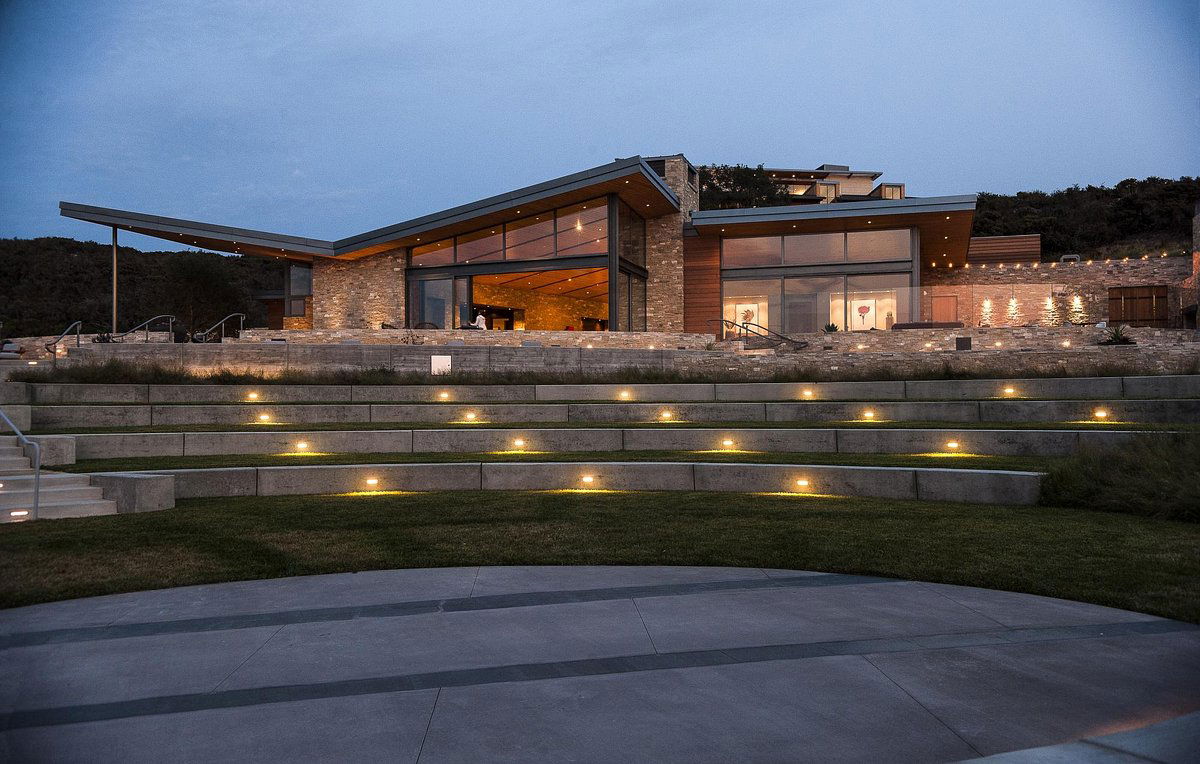
Drive out along Presquile Drive is instructive before a single glass is poured. The valley floor gives way to rolling hillside terrain, and the absence of roadside commercial activity makes the property feel genuinely agricultural rather than wine-tourism adjacent. What you encounter is working land: vine rows that carry the physical record of the site's choices about training, canopy management, and cover cropping. The tasting facility exists within that context rather than as a destination separate from it. The approach frames your expectations correctly: this is an estate program built around what the land produces, not a hospitality operation that happens to have a vineyard attached.
Viticulture as the Argument
California wine's more credible producers have spent the last decade shifting the conversation from cellar technique to field practice, and Santa Maria Valley has been part of that shift. The argument runs as follows: cool climates already work against overripeness, but sustainable or regenerative field practices extend the advantage by building soil health that stabilizes vine behavior year over year. The valley's leading estates treat cover cropping, reduced irrigation, and organic material return not as marketing choices but as technical ones, because the alternative, pushing yields and chemistry in a marginal climate, tends to produce wines that show the intervention.
Presqu'ile's estate program reflects that broader regional turn. The combination of Cronje's winemaking approach and the site's natural characteristics places the winery in a peer set that includes Foxen Vineyard and Winery and Rancho Sisquoc Winery, both of which have long positioned sustainable viticulture as a foundation rather than an afterthought. Across the wider California coastal wine scene, a similar orientation can be found at Adelaida Vineyards in Paso Robles and at Alban Vineyards in Arroyo Grande, where the field-to-cellar logic is similarly central to the producer identity.
What the Wines Represent in Regional Terms
Santa Maria Valley Pinot Noir occupies a specific position in the California Pinot conversation. It is not the richer, more immediately approachable style associated with parts of Sonoma, nor the more mineral-forward profile of parts of the Willamette Valley as practiced by producers like Adelsheim Vineyard in Newberg. Santa Maria sits somewhere between those poles: firm acidity, red-fruit primary character, and a structure that tends to reward time in the bottle. Chardonnay from the valley runs in a parallel direction, with higher natural tension than warmer California growing areas allow.
Presqu'ile's first vintage in 2009 gives Cronje more than fifteen years of estate data to draw on, which matters in cool-climate winemaking. Vintage variation in the Santa Maria Valley is real and measurable; producers with extended site histories can adjust earlier and more accurately than those still building their baseline knowledge. That depth of experience with a single site is one signal that distinguishes serious estate producers from contract-grown or multi-appellation operations.
Within the Santa Maria peer set, Costa de Oro Winery represents an accessible entry point to the valley's character, while Bien Nacido and Cambria work at a scale that brings institutional weight. Presqu'ile occupies the smaller-estate, higher-precision tier, where the Pearl 3 Star Prestige recognition functions as an external confirmation of what the critical community has been tracking.
Comparing Ambitions: Estate Scale and Precision
Across California's premium wine regions, a meaningful divide has opened between large-production operations with wide distribution and allocation-model estates where the entire program is built around a specific piece of ground. Napa has its own version of this split, visible in properties like Accendo Cellars in St. Helena and Alpha Omega Winery in Rutherford, where high site specificity defines the positioning. Further south, Andrew Murray Vineyards in Los Olivos shows how Rhône-variety focus can anchor a distinct producer identity in Santa Barbara County.
Presqu'ile functions within that smaller, site-focused tier in Santa Maria. The practical consequence for visitors is that the tasting experience is shaped by estate production limits rather than by a broad portfolio of sourced fruit. What you taste is directly connected to the specific hill and soil conditions of the Presquile Drive property, which is both a constraint and a feature. It is a different kind of visit than a large-scale tasting room with a dozen SKUs from across California, and it asks a corresponding level of engagement from the person across the counter.
For comparison beyond California entirely, the estate-first approach finds parallels in producers like Alexander Valley Vineyards in Geyserville, where single-estate identity has driven the program for decades. The logic scales internationally as well: Aberlour in Aberlour and Achaia Clauss in Patras represent how place-rooted production creates a different kind of authority than blended-source programs, even in entirely different categories.
Planning a Visit
Presqu'ile Winery is located at 5391 Presquile Drive, Santa Maria, CA 93455. The estate sits outside the town center, so the visit warrants a deliberate half-day rather than a quick stop between other appointments. Booking arrangements and current tasting formats are leading confirmed directly through the winery, as estate programs of this type frequently operate on reservation-only schedules that do not accommodate walk-in traffic. The Pearl 3 Star Prestige recognition in 2025 has increased interest in the property, so advance planning is advisable. For context on other producers operating in the same valley, the full Santa Maria guide maps the range of options from large-estate institutions to smaller operations like Presqu'ile.
Frequently Asked Questions
What wines is Presqu'ile Winery known for?
Presqu'ile works primarily with the cool-climate varieties that define the Santa Maria Valley: Pinot Noir and Chardonnay are the program's core, shaped by the valley's strong Pacific influence and the estate's specific hillside terroir. Winemaker Dieter Cronje has been building the program since the first vintage in 2009, which gives the wines a depth of site-specific development that newer Santa Barbara County producers cannot yet match. The Pearl 3 Star Prestige award in 2025 reflects critical recognition of that accumulated precision.
What's the defining thing about Presqu'ile Winery?
The defining characteristic is the combination of a serious Santa Maria Valley estate address, a winemaker with over fifteen years of single-site experience, and formal recognition at the Pearl 3 Star Prestige level in 2025. In a city and county where the premium wine conversation moves between large institutional estates and small allocation producers, Presqu'ile sits in the latter category with credentials that place it at the upper end of that tier. It is not the most accessible entry point to Santa Maria wine, but it is among the most focused.
Recognized By

Related editorial
- Best Fine Dining Restaurants in ParisFrom three-Michelin-star icons to the next generation of Parisian chefs pushing boundaries, these are the restaurants that define fine dining in the world's culinary capital.
- Best Luxury Hotels in RomeFrom rooftop terraces overlooking ancient ruins to Michelin-starred hotel dining, these are the luxury hotels that make Rome unforgettable.
- Best Cocktail Bars in KyotoFrom sleek lounges to hidden speakeasies, Kyoto's cocktail scene blends Japanese precision with global influence in ways you won't find anywhere else.
Save or rate Presqu'ile Winery on Pearl
Keep this venue in your Pearl passport, rate it after you visit, and track it alongside every other place you collect.