

Wedding Oak Winery
San Saba
Winery in San Saba, United States
 Book with Pearl
The Read
Central Texas Terroir Precision
Why go
Book Wedding Oak Winery if San Saba is already part of the trip and the priority is a recognized local wine stop. Treat wine-club membership as a second-step decision after confirming current release, shipping, and allocation details; for broader Texas wine touring, compare it with Fall Creek Vineyards, Perissos Vineyard and Winery, Sandstone Cellars Winery, and Brennan Vineyards.
About Wedding Oak Winery
Wedding Oak Winery is a San Saba venue with a casual dress code and Pearl 2 Star Prestige recognition for 2025. Use the confirmed basics as the anchor and confirm any visit-specific details directly with the venue before building a full itinerary around it.
The strongest use case is direct San Saba planning. The confirmed facts support the venue name, city, casual dress code, and 2025 recognition; they do not support specific claims about food service, pricing, seating, hours, tasting formats, wine-club terms, shipping, or other operational details. Keep the plan flexible and verify current details directly before committing the day, especially if the visit depends on timing, group size, or a particular format. It is better to ask plainly than to infer too much from the category alone.
A San Saba winery pick with limited planning detail
Wedding Oak Winery is best framed as a San Saba venue to consider when the priority is visiting a recognized local stop. The available profile does not support promising a particular menu, service format, package, seating setup, or visit length, so decisions should be made on the confirmed basics rather than assumed extras. If the group needs guaranteed dining, published packages, or a highly choreographed visit, confirm those details directly before locking in plans.
For any purchase, membership, or repeat-visit decision, the smart approach is cautious. Pearl 2 Star Prestige recognition helps establish Wedding Oak Winery as a notable San Saba entry, but practical value still depends on details such as current offerings, pickup or shipping terms, and any membership structure. Treat a first visit as a chance to confirm whether the venue fits how you actually plan to visit. If those details matter to the decision, they should be checked at the source rather than filled in from assumptions.
How to frame the day against other comparison options
Compared with other venues in this comparison set, Wedding Oak Winery is the San Saba choice. Fall Creek Vineyards and Perissos Vineyard and Winery are useful cross-shops for travelers comparing other venue options more broadly. Sandstone Cellars Winery and Brennan Vineyards are other names to consider when the brief is another comparison stop. War Trail Spirits is a different kind of comparison, so use it when the group is considering a change of direction rather than a like-for-like plan. The clearest comparison is not about ranking amenities, but about deciding what kind of stop the day needs.
For travelers benchmarking beyond Wedding Oak Winery, keep the comparison general. A San Saba plan rewards confirmed stops and direct checks with each venue. If the goal is breadth, compare Wedding Oak Winery with other options rather than assuming amenities, formats, or services. If the goal is a San Saba-specific stop, the existing profile gives enough to place it on the shortlist, while still calling for direct confirmation before the visit becomes the centerpiece of the itinerary.
Planning details
- Location
- 316 E Wallace St, San Saba, TX 76877
- Website
- weddingoakwinery.com
- Phone
- +1 325-372-4050
The take
The Take
The Vibe
Wedding Oak Winery presents as an off-the-beaten-path, terroir-first operation that takes its wines seriously. Located on the limestone edge of the Texas Hill Country in San Saba, the estate foregrounds geology and climate — fast-draining soils, hot summers and meaningful diurnal swing — as the primary determinants of style. The recent Pearl 2 Star Prestige designation underlines a level of craft and judgement that feels deliberate rather than flashy. Visitors encounter a quietly confident producer whose acclaim arrives from careful site expression rather than marketing, making the place feel like a thoughtfully restrained, high-quality discovery.
Best For
This is a destination for people who visit to learn about place-driven wines and to taste how limestone soils and Hill Country conditions translate into bottles. The focus on terroir and the winery’s recognized prestige make it well suited to small groups of wine-interested visitors, enthusiasts seeking comparative tasting notes, and travelers who favor off-grid wine experiences. It reads less like a party cellar and more like a study in regional viticulture, so it’s especially appropriate for purposeful wine-focused outings and celebrations centered on the wines themselves.
Tasting Tips
Center your visit on the wines that reference the estate’s limestone origins and the bottles associated with the Pearl 2 Star Prestige recognition. Ask staff about site-specific expressions and how heat, drainage and diurnal swing influence acidity and mineral character; those are the descriptive threads running through the tasting notes. Because the description emphasizes terroir over stylistic mimicry, prioritize wines that speak to place rather than attempts to emulate other regions. Avoid assuming California-style profiles and seek conversations about vineyard decisions and varietal fit in the Hill Country context.
Venue details
Ambiance
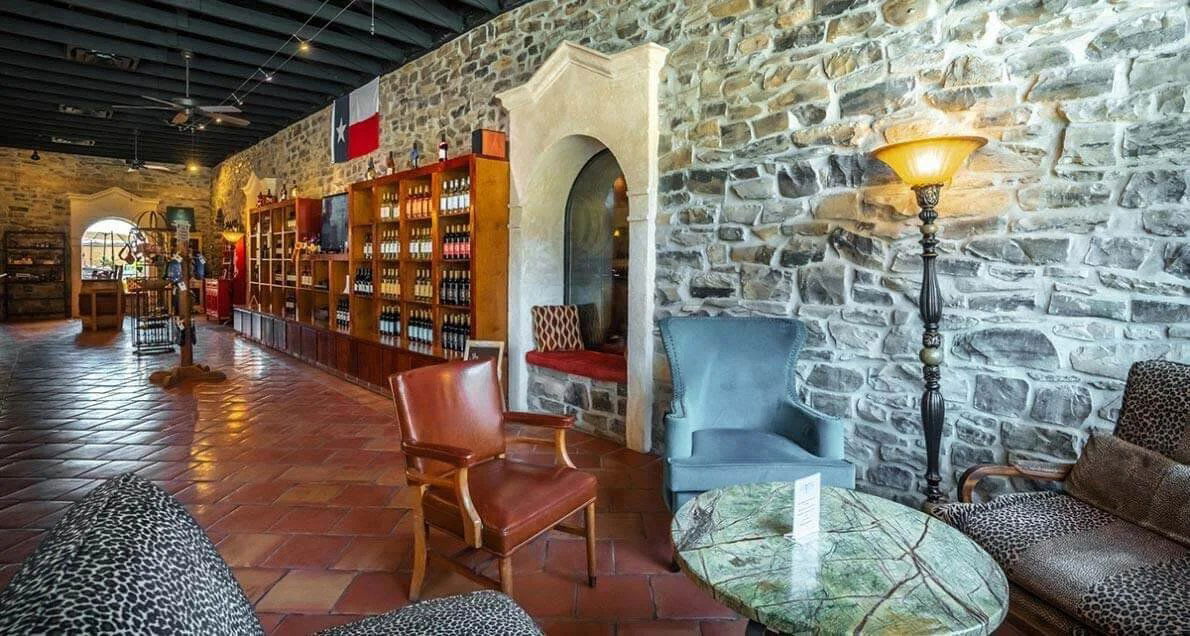
Warm and inviting with restored historic charm, ambient lighting, and a relaxed atmosphere enhanced by potted plants and cushioned outdoor seating.
Tags
Vibe
Best For
Experience
Sourcing
View
At the Vineyard
- Appellation
- Texas Hill Country AVA
- Varietals
- Tannat, Tempranillo, Merlot, Mourvèdre, Rousanne
- Wine Club
- Available
Know before you go
Know Before You Go
- Getting there
- 316 E Wallace St, San Saba, TX 76877
Planning details
Location
Also consider
If Wedding Oak Winery does not fit the plan
Try Fall Creek Vineyards or Perissos Vineyard and Winery if the group wants a wider Texas wine itinerary and is willing to travel beyond San Saba. Try War Trail Spirits if the group includes non-wine drinkers and needs a spirits-led backup.
Winery context
How Wedding Oak Winery compares in the San Saba wine set
Wedding Oak Winery is the focused San Saba pick: choose it when the goal is a wine-led stop in town and the group is comfortable planning around the winery rather than expecting a heavily packaged visit. War Trail Spirits is the better fallback for mixed groups that may prefer spirits over wine, especially if one tasting room needs to satisfy different drinking preferences.
Fall Creek Vineyards and Perissos Vineyard and Winery are stronger cross-shops for travelers building a wider Texas wine itinerary, particularly when the drive is part of the plan. Wedding Oak Winery works better as a San Saba anchor; those peers are better for visitors comparing multiple Texas wine regions in one trip.
Sandstone Cellars Winery and Brennan Vineyards are the practical alternatives if availability, group fit, or membership terms do not line up. For value, the deciding factor is not a headline tasting fee but whether the visit gives the group enough clarity to buy bottles or join a club with confidence.
Explore San Saba
Around this place
Discover more on Pearl
Unlock the full Wedding Oak Winery guide in Pearl, including awards, comparisons, FAQs, planning details, and nearby places.
Compare Wedding Oak Winery
| Venue | Location | Awards |
|---|---|---|
| Wedding Oak Winery | San Saba | No published awards |
| War Trail Spirits | Llano | No published awards |
| Fall Creek Vineyards | Tow | No published awards |
| Perissos Vineyard and Winery | Burnet | 2026 Falstaff Winery Guide |
| Sandstone Cellars Winery | Mason | No published awards |
| Brennan Vineyards | Comanche | 2026 Falstaff Winery Guide |

How Wedding Oak Winery San Saba compares with similar nearby venues.
FAQ
Frequently Asked Questions
What other venues can I compare with Wedding Oak Winery?
For other options to compare, look at Fall Creek Vineyards, Perissos Vineyard and Winery, Sandstone Cellars Winery, and Brennan Vineyards. War Trail Spirits is a different kind of comparison, so it is more useful if the group is considering a broader set of stops.