Bodega El Grifo
San Bartolomé, San Bartolomé (Lanzarote)
Winery in San Bartolomé (Lanzarote), Spain
 Book with Pearl
The Read
Volcanic Terroir Precision
Price
$30–50tasting
Why go
Book Bodega El Grifo if the priority is a serious Lanzarote wine stop rather than a quick tasting. It suits couples and small groups building a San Bartolomé wine day, especially if an upgraded or private format is available; larger groups should be more cautious because key planning details are not listed.
About Bodega El Grifo
Bodega El Grifo is a venue in San Bartolomé (Lanzarote) with casual dress and Pearl 2 Star Prestige recognition for 2025. Plan ahead and confirm practical details directly before making it a fixed part of an itinerary.
If your plans depend on a particular schedule, group arrangement, format, or meal component, verify those details with the venue before you go.
Choose Bodega El Grifo if the confirmed profile fits your plans
The profile is simple: Bodega El Grifo is in San Bartolomé (Lanzarote), the dress code is casual, and it holds Pearl 2 Star Prestige recognition for 2025. That makes it a notable option for travelers considering venues in this category.
For travelers comparing broader venues, Bodega El Grifo can be considered alongside Bodegas Barbadillo, Bodegas Monje, González Byass (Tío Pepe), Hidalgo La Gitana, and Williams & Humbert. Those names are best treated as separate points of comparison rather than as part of the same local San Bartolomé (Lanzarote) scene.
Plan it as part of a San Bartolomé (Lanzarote) day, not a detail-free errand
Use the location as the planning anchor: Bodega El Grifo is in San Bartolomé (Lanzarote). Avoid building a tight itinerary around assumed hours, services, prices, or food availability. Confirm the latest practical details directly before visiting.
Verdict: consider Bodega El Grifo if you want a casual-dress venue in San Bartolomé (Lanzarote) with confirmed Pearl 2 Star Prestige recognition for 2025. If your plans require specific timing, dining, pricing, group capacity, or service details, verify those separately before committing.
Planning details
- Location
- LZ-30, Km 11, 35559 San Bartolomé, Las Palmas
- Website
- elgrifo.com/pages/experiencias
- Phone
- +34 928 52 40 36
The take
The Take
The Vibe
Bodega El Grifo presents a sober, time-weathered character rooted in Lanzarote’s volcanic landscape. The writing frames the winery as a longstanding, formally recognized institution—one of the island’s earliest expressions of viticulture—so visiting feels like stepping into a legacy of place-driven winemaking. The surrounding black basalt fields and individually sheltered zocos create a stark, elemental backdrop that underlines the wines’ geological provenance rather than decorative hospitality. With an award profile that pushes it into the region’s upper tier, the overall tone is refined and serious: this is a classic, sophisticated winery where terroir and history are the principal attractions.
Best For
This is a destination for people who come to learn and to feel the landscape that shapes the wines. The text emphasizes education and context—how picón and lapilli work on the vines—so it’s well suited to wine-education visits and solo exploration for curious oenophiles. The bodega’s formal recognition and a recent prestige award also make it appropriate for marking a special occasion with a purpose-driven tasting. Visits reward those interested in geology-driven viticulture and the distinct character of Malvasía Volcánica, rather than diners seeking a social or culinary spectacle.
Tasting Tips
When tasting at El Grifo, focus on the island’s signature grape and any labeled Malvasía Volcánica expressions; the description specifically highlights that variety as Lanzarote’s primary grape. Ask about the bodega’s award-winning bottlings—the text cites a 2025 Pearl 2 Star Prestige distinction—which can point you to standout recent releases. Use your tasting as an opportunity to probe how the picón (lapilli) and the zoco planting method influence acidity, fruit concentration and ripening; the copy makes clear that the geology is central to understanding these wines.
Venue details
Ambiance
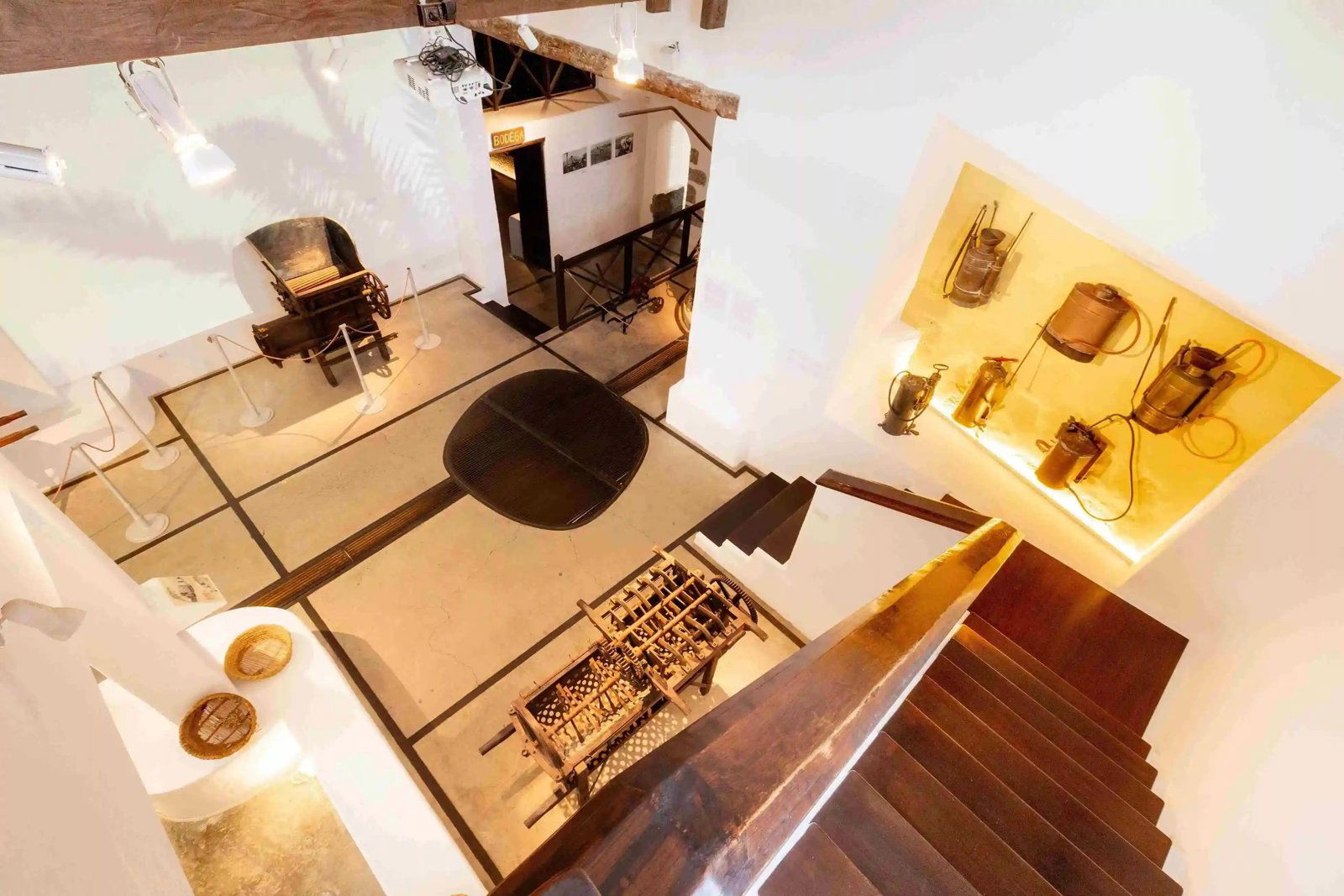
Elegant wine bar surrounded by volcanic lava with modern tasting rooms and atmospheric historic museum exhibits.
Tags
Vibe
Best For
Experience
Sourcing
View
At the Vineyard
- Appellation
- Lanzarote DOP
- Varietals
- Malvasía Volcánica, Listán Negro, Syrah, Moscatel, Listán Blanco
- Tour Duration
- 60-120 minutes
- Tour Languages
- Spanish, English, French, Italian, German
- Visits
- By reservation
- Farming
- Regenerative
- Wine Styles
- Still White, Still Red, Still Rose, Sparkling
- Food Pairing
- Offered
- Wine Club
- Not available
Know before you go
Know Before You Go
- Getting there
- LZ-30, Km 11, 35559 San Bartolomé, Las Palmas
Planning details
Location
LZ-30, Km 11, 35559 San Bartolomé, Las Palmas · Directions
Also consider
Smart cross-shops
Try Bodegas Monje if the trip needs another Canary Islands wine reference. For sherry-focused travelers, Hidalgo La Gitana is the cleaner alternative to compare by style and regional tradition.
Winery context
How it compares for a wine-focused Lanzarote trip
Bodega El Grifo is the stronger choice if the trip is specifically about Lanzarote and the traveler wants the winery visit to carry the day. Bodegas Monje is the more relevant cross-shop for Canary Islands wine context, while Hidalgo La Gitana, Bodegas Barbadillo, Williams & Humbert, and González Byass (Tío Pepe) make more sense for travelers focused on Andalusian sherry houses rather than island wine.
For value, the decision is less about headline price and more about how much context the visit delivers. If a private or guided tasting is available, Bodega El Grifo is worth considering for travelers who want a slower, more interpretive stop. If ease of booking, predictable tour infrastructure, and a larger visitor operation matter more, González Byass (Tío Pepe), Williams & Humbert, or Bodegas Barbadillo are safer cross-shops.
For ambiance, choose Bodega El Grifo when volcanic-island setting is central to the appeal. Choose Hidalgo La Gitana or Bodegas Barbadillo if the draw is sherry-country tradition, or Bodegas Monje if the goal is another Canary Islands comparison rather than a mainland contrast.
Explore San Bartolomé (Lanzarote)
Around this place
Discover more on Pearl
Unlock the full Bodega El Grifo guide in Pearl, including awards, comparisons, FAQs, planning details, and nearby places.
Compare Bodega El Grifo
| Venue | Location | Awards |
|---|---|---|
| Bodega El Grifo | San Bartolomé (Lanzarote) | No published awards |
| Bodegas Monje | El Sauzal | No published awards |
| Hidalgo La Gitana | Sanlúcar de Barrameda | 2026 Falstaff Winery Guide |
| Bodegas Barbadillo | Sanlúcar de Barrameda | 2026 Falstaff Winery Guide |
| Williams & Humbert | Jerez de la Frontera | 2026 Falstaff Winery Guide |
| González Byass (Tío Pepe) | Jerez | 2025 World's 50 Best Vineyards · #212024 World's 50 Best Vineyards · #342023 World's 50 Best Vineyards · #212022 World's 50 Best Vineyards · #62021 World's 50 Best Vineyards · #92020 World's 50 Best Vineyards · #18 |


How Bodega El Grifo compares with similar nearby venues.
FAQ
Frequently Asked Questions
Can Bodega El Grifo handle large groups?
Group capacity should be confirmed directly with the venue. Bodega El Grifo is in San Bartolomé (Lanzarote) with casual dress and Pearl 2 Star Prestige recognition for 2025, but any group-specific arrangements should be checked in advance.
How long should I plan for a visit to Bodega El Grifo?
If Bodega El Grifo is part of your San Bartolomé (Lanzarote) plans, confirm current timing, booking requirements, and any visit format directly before arranging the rest of your day.
When is the best time to visit Bodega El Grifo?
Plan around confirmed details from the venue rather than assuming a particular time of day, schedule, or service window in San Bartolomé (Lanzarote).
Are membership or purchasing options available at Bodega El Grifo?
Check directly with the venue for any current details. Bodega El Grifo is in San Bartolomé (Lanzarote), has a casual dress code, and holds Pearl 2 Star Prestige recognition for 2025.
What other venues can I compare with Bodega El Grifo?
For comparison, travelers may also look at Bodegas Monje, Hidalgo La Gitana, Bodegas Barbadillo, Williams & Humbert, and González Byass (Tío Pepe). Treat these as broader comparison points rather than assuming they are in San Bartolomé (Lanzarote).
Does Bodega El Grifo serve food?
Confirm any current food details directly before relying on them. Bodega El Grifo is a venue in San Bartolomé (Lanzarote) with casual dress and Pearl 2 Star Prestige recognition for 2025.