Samos Wine Cooperative
Malagari, Samos
Winery in Samos, Greece
 Book with Pearl
The Read
Aegean Muscat Tradition
Why go
Samos Wine Cooperative is worth prioritizing if the goal is Samos wine context rather than a food-led tasting or distillery-style visit. It suits wine travelers who want a grounded daytime anchor, but larger groups and tight itineraries should confirm arrangements before building the day around it.
About Samos Wine Cooperative
Samos Wine Cooperative is a Samos venue with a casual dress code and Pearl 2 Star Prestige recognition for 2025. Specific public-facing details such as hours, pricing, tasting format, food service, reservations, group capacity, and address should be checked directly with the venue before planning a visit.
If you are comparing related venues, Samos Distillery is another named option, while Barbayannis Ouzo Museum & Distillery, Hios Mastiha Distillery, Isidoros Arvanitis Distillery, and Psychis Distillery can be considered separately when planning a broader itinerary.
Choose this for a Samos stop
Samos Wine Cooperative is a named Samos venue with Pearl 2 Star Prestige recognition for 2025. Do not assume a meal, pairing menu, tour format, tasting structure, or particular opening window unless the venue confirms those details directly.
For planning, keep expectations simple: casual dress is expected, and operational details should be confirmed. Build the rest of the day with flexibility and confirm practical information before committing to transport, timing, or additional stops.
Who should put it on the itinerary
Consider it if you are specifically researching Samos Wine Cooperative and want a casual Samos venue with Pearl 2 Star Prestige recognition in 2025. A food-led visit, a formal tasting, a tour, a shop, a membership program, or a specific hospitality format are not assured.
Planning should therefore be conservative. Contact the venue directly for current hours, booking requirements, group arrangements, location details within Samos, and any available services before treating it as a fixed part of an itinerary.
Planning details
- Location
- Malagariou, Samos 831 00
- Website
- samoswine.gr
- Phone
- +30 2273 087510
The take
The Take
The Vibe
Samos Wine Cooperative sits within a landscape that reads like a living archive of the island's winemaking past. Terraced, stone-walled slopes planted almost entirely with Muscat Blanc à Petits Grains create a serene, historic atmosphere where viticulture defines the place. The cooperative’s institutional role gives the site a sense of provenance and stewardship rather than a commercial tasting-room gloss; visitors encounter an organization that consolidates generations of small-plot work into a coordinated production. The overall impression is contemplative and rooted—this is a working, place-based winery whose identity is inseparable from its steep Aegean slopes.
Best For
This cooperative is ideal for anyone looking to deepen their understanding of Samos's Muscat tradition. It serves wine-education-minded visitors who want to parse PDO distinctions, production techniques, and the island’s range of styles—from dry Muscat to intensely sweet late-harvest expressions. Solo explorers and students of terroir also benefit, because the site foregrounds grape, slope, and climate more than spectacle. While it is less about flashy hospitality, it is well suited to deliberate tasting and learning, and to those who value context and continuity in winemaking.
Tasting Tips
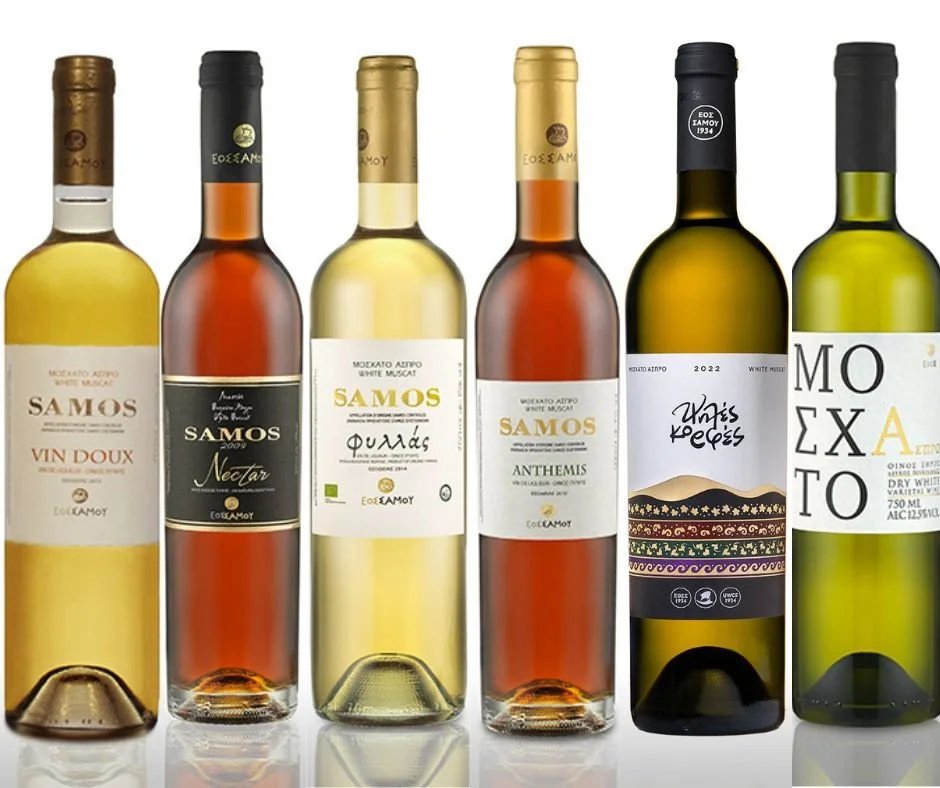
When engaging with wines from the cooperative, sample across the stylistic spectrum rather than settling on a single bottle. The cooperative produces both dry and sweeter Muscat expressions; ask staff to explain differences driven by late harvest, sun-drying and elevation. Inquire about vintage variation and how the island’s steep terraces and Aegean exposure influence ripeness. Request examples that demonstrate the PDO range so you can compare concentrated, naturally sweet wines with the drier expressions that reveal more mineral and acidity-driven character.
Venue details
Ambiance
Historic and traditional atmosphere in facilities featuring a wine museum, blending rustic cooperative charm with modern technology amid scenic vineyard terraces.
Tags
Vibe
Best For
Experience
View
At the Vineyard
- Appellation
- P.D.O. Samos
- Varietals
- Muscat Blanc à Petits Grains, Ritino, Fokiano, Avgoustiatis
- Tour Duration
- 60-90 minutes
- Wine Styles
- Still White, Fortified, Dessert
- Shipping
- Available
- Wine Club
- Not available
Know before you go
Know Before You Go
- Getting there
- Malagariou, Samos 831 00
Planning details
Location
Also consider
Where to look if this does not fit
If the group wants a Samos drinks stop but not a wine-led visit, start with Samos Distillery. It is the closest conceptual substitute for readers who want a local beverage experience without making wine the central subject.
For a broader Greek spirits route, compare Barbayannis Ouzo Museum & Distillery with Isidoros Arvanitis Distillery. They make more sense than the cooperative when ouzo is the priority.
Winery context
How it compares with Samos drinks stops
Samos Wine Cooperative is the better pick when wine is the reason for the stop. Samos Distillery is the cleaner alternative for readers who want a spirits-led visit, while the cooperative is stronger for understanding the island through wine rather than distillation.
Against Psychis Distillery and Hios Mastiha Distillery, the choice is mainly about travel intent. Pick the cooperative for a Samos-focused itinerary; pick those peers only if the trip is already expanding beyond the island and the goal is a broader Greek spirits comparison.
Barbayannis Ouzo Museum & Distillery and Isidoros Arvanitis Distillery make more sense for ouzo context. For value, the cooperative is strongest when it replaces a generic tasting slot with a place-specific wine stop; for ease, assume any of these venues needs advance planning rather than same-day improvisation.
Explore Samos
Around this place
Discover more on Pearl
Unlock the full Samos Wine Cooperative guide in Pearl, including awards, comparisons, FAQs, planning details, and nearby places.
Compare Samos Wine Cooperative
| Venue | Location | Awards |
|---|---|---|
| Samos Wine Cooperative | Samos | No published awards |
| Samos Distillery | Samos | No published awards |
| Psychis Distillery | Chios | No published awards |
| Hios Mastiha Distillery | Chios | No published awards |
| Barbayannis Ouzo Museum & Distillery | Plomari | No published awards |
| Isidoros Arvanitis Distillery | Plomari | No published awards |
How Samos Wine Cooperative compares with similar nearby venues.
FAQ
Frequently Asked Questions
What other venues can I compare with Samos Wine Cooperative?
For another named option, consider Samos Distillery. Barbayannis Ouzo Museum & Distillery, Hios Mastiha Distillery, Isidoros Arvanitis Distillery, and Psychis Distillery are separate comparison venues to consider when planning a broader itinerary.
When is the best time to visit Samos Wine Cooperative?
Can Samos Wine Cooperative handle large groups?
Group capacity is not specified. If you are planning for more than a small party, contact Samos Wine Cooperative directly to confirm whether arrangements are possible.
Are membership programs at Samos Wine Cooperative ?
Information on a membership program is not available. Samos Wine Cooperative is in Samos, has a casual dress code, and holds Pearl 2 Star Prestige recognition for 2025.
Do I need a reservation at Samos Wine Cooperative?
Reservation requirements are not specified. Contact Samos Wine Cooperative directly before visiting, especially if timing or group size matters to your plans.