
Winery in Rutherford, United States
Quintessa
750ptsSingle-Wine Estate Discipline

About Quintessa
Quintessa is a Rutherford estate producing a single Bordeaux-style red blend from its 280-acre hillside property on the Silverado Trail, with its first vintage dating to 1994. Winemaker Rebekah Wineburg leads production, and the estate holds a Pearl 3 Star Prestige rating for 2025. Visits are appointment-based, placing it firmly in Napa's reservation-only, allocation-driven tier.
The Silverado Trail's Single-Wine Estate
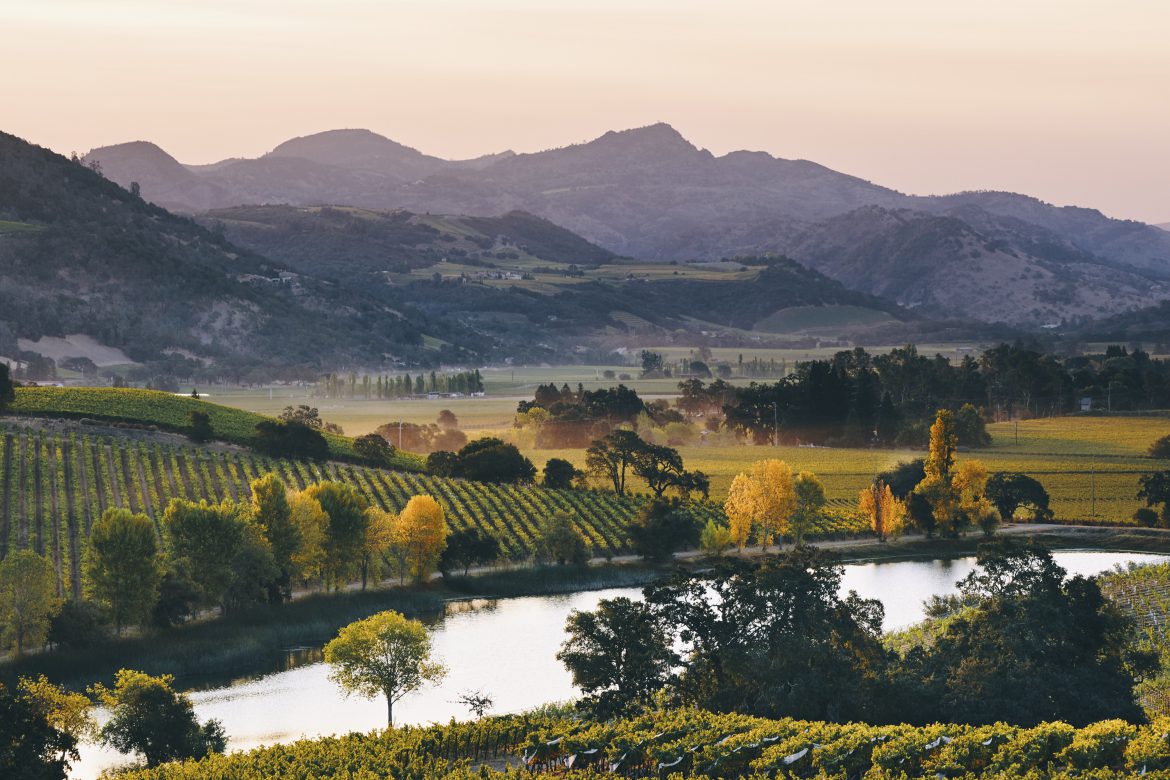
There is a particular kind of winery that announces its ambition through restraint. No sprawling tasting portfolio, no retail shelf presence, no walk-in traffic. On the Silverado Trail south of St. Helena, Quintessa operates on precisely that model: one wine, one estate, one appointment at a time. The arc of land the property occupies — volcanic hillsides, valley floor blocks, a natural lake — was chosen and managed from the beginning as a single integrated growing unit, and every decision since the first vintage in 1994 has pointed back to that idea. What the visitor encounters is not a winery that has edited itself down over time, but one that was constructed around a narrower premise from the start.
That premise sits in clear contrast to how most of Rutherford works. Neighbours along this stretch include operations with large visitor programs, multiple label tiers, and international distribution at scale. Wineries such as Beaulieu Vineyard (BV), Caymus Vineyards, and Alpha Omega Winery all occupy different points on that accessibility spectrum. Quintessa instead belongs to the allocation-and-appointment tier: a smaller peer set defined less by geography than by the decision to make one flagship red and hold access to it deliberately tight.
Rutherford's Upper Tier and What It Demands
Rutherford has long carried Cabernet Sauvignon as its primary identity, with the term "Rutherford dust" appearing in the vocabulary of critics since at least the mid-twentieth century to describe the powdery, tobacco-edged tannin structure associated with this particular section of the valley floor. The appellation's upper tier , estates producing limited volumes of single-origin red blends from self-contained properties , has grown more defined and more expensive over the past two decades as collector demand for allocation wines increased faster than production. Quintessa fits squarely into that tier, holding a Pearl 3 Star Prestige rating for 2025 that places it alongside the valley's most scrutinised addresses.
That rating carries weight in the context of Napa Cabernet, where the gap between a two-star and three-star designation tends to track directly with allocation waitlist depth, secondary market pricing, and the degree to which a wine appears in serious private cellar collections. Estates operating at this level, including Cathiard in the same appellation, tend to be discussed not in the language of casual tasting visits but in the language of investment-grade winemaking , a shift that has reshaped how the most serious Rutherford addresses position themselves against Napa as a whole.
Winemaker Rebekah Wineburg and the Continuity Argument
In a region where winemaker changes tend to produce anxious re-assessment among collectors, the continuity at Quintessa matters as a market signal. Rebekah Wineburg holds the winemaking role, and her tenure represents the kind of institutional knowledge that allocation-driven estates depend on. The estate's red blend is Bordeaux-inspired in its variety composition, drawing on the valley floor and hillside blocks that give the wine its textural range: the flatter blocks tend to contribute density and mid-palate weight, while the refined, rockier terrain pulls the wine toward structure and length.
Wineburg's approach fits the broader movement among Napa's top-tier estates toward lower alcohol thresholds and more precise extraction , a recalibration visible across the appellation's serious players over roughly the past decade. Comparable estates outside Rutherford, including Accendo Cellars in St. Helena, have moved in a similar direction, and the convergence suggests a shared response to critical pressure rather than individual style choices alone.
The Progression of a Quintessa Visit
Approaching the estate from the Silverado Trail, the property reads less like a winery than a working agricultural landscape: the hillside rises to the east, the lake sits lower and anchors the centre of the property, and the architecture , largely subterranean in its functional core , stays low against the terrain. The intention behind that design is consistent with how the wine is made: the building serves the land rather than competing with it.
Because visits are appointment-only and the format is structured, there is a clear sequencing to the experience. Guests typically begin with context: the estate map, the vintage arc, the block-by-block logic of the blend. That foundation matters because Quintessa does not offer multiple wines to compare , the tasting exists to unpack a single wine across its layers rather than to survey a range. The progression moves from understanding the growing conditions of individual blocks to tasting the assembled wine, which means the sensory part of the visit arrives with accumulated context rather than in isolation. For a wine built on complexity of place, that sequencing is deliberately chosen and markedly different from the pour-and-move model that governs most appellation tasting rooms.
Among Rutherford estates structured around a comparable format, Cakebread Cellars offers a point of comparison, though its portfolio breadth and visitor volume sit in a different category. The single-wine, deep-dive format at Quintessa has more in common with how small-production Burgundy domaines manage their tastings , not as product sampling but as an argument about place.
Placing Quintessa in a Wider California Context
Napa's Silverado Trail corridor hosts a concentration of estate-driven producers that extends well beyond Rutherford. Looking further south, Artesa Vineyards and Winery in Napa operates at the valley's southern end with a different architectural and varietal approach, while coastal California alternatives span from Alban Vineyards in Arroyo Grande , one of the state's foundational Rhône-variety producers , to Adelaida Vineyards in Paso Robles, which works in a cooler, limestone-influenced context. The point is not that these estates are direct competitors but that California's serious wine geography is wider than the Napa valley floor, and understanding where Quintessa sits within it requires placing it against both its immediate neighbours and that broader map.
On the domestic Cabernet circuit, estates such as Alexander Valley Vineyards in Geyserville and Adelsheim Vineyard in Newberg (the latter in Oregon's Willamette Valley, primarily for Pinot) mark the outer edges of the serious West Coast red wine conversation. Internationally, the Bordeaux-blend model that Quintessa follows has established precedents everywhere from Achaia Clauss in Patras to Aberlour in Scotland, where single-origin, estate-disciplined production tells a version of the same story in a radically different climate. Closer to home, Andrew Murray Vineyards in Los Olivos and Adelaida Vineyards represent the Central Coast's own answer to the estate-integrity argument that Quintessa makes in a Napa register.
Planning Your Visit
The estate sits at 1601 Silverado Trail S in St. Helena, in Rutherford's eastern corridor. Because Quintessa operates exclusively by appointment, planning several weeks in advance is advisable, particularly for visits during harvest season (September through November) when demand against limited appointment slots is highest. The estate does not list a public phone number or booking portal in its current record, so direct outreach through the website is the appropriate channel. Mailing list placement is the standard route to wine allocation, and the visit itself often functions as both an introduction to the wine and a first step toward list membership. For context on what else the appellation offers before or after a visit to Quintessa, the full Rutherford guide covers the range of estates and access formats across the area.
Frequently Asked Questions
What wines should I try at Quintessa?
Quintessa produces a single estate red blend under winemaker Rebekah Wineburg , there is no second label or alternative wine to choose between. The blend is Bordeaux-variety-based, with composition varying by vintage depending on what the individual blocks deliver in a given year. Given the estate's Pearl 3 Star Prestige recognition for 2025 and a track record stretching back to 1994, the current release and any available back vintages represent the full scope of what the winery makes. Visitors who want broader Rutherford Cabernet context can pair a Quintessa appointment with a visit to neighbouring estates such as Beaulieu Vineyard (BV) or Caymus Vineyards to see how the appellation's flavour register varies across differently managed estates.
What's the defining thing about Quintessa?
The combination of a single-wine philosophy, an estate-integrated growing approach, and a Pearl 3 Star Prestige rating for 2025 puts Quintessa in a narrow peer group within Rutherford. Most wineries of comparable recognition carry multiple tiers of production; Quintessa's refusal to do so , holding the same position since the 1994 first vintage , is what separates it from similarly credentialed neighbours. For Rutherford specifically, where the appellation's reputation rests on Cabernet Sauvignon's expression of a particular soil type, making one wine that attempts to capture the full range of the estate's blocks is both a creative and a commercial argument about what the land is capable of.
Do they take walk-ins at Quintessa?
No. Quintessa operates by appointment only. If you are planning a visit to this part of the Silverado Trail, build in lead time: appointment availability is tighter during the September-to-November harvest window, and the estate's allocation-tier positioning means demand against available slots tends to be consistent year-round. Walk-in options in Rutherford exist at other appellation addresses , see the full Rutherford guide for estates with more accessible formats , but Quintessa is not among them.
Recognized By

Related editorial
- Best Fine Dining Restaurants in ParisFrom three-Michelin-star icons to the next generation of Parisian chefs pushing boundaries, these are the restaurants that define fine dining in the world's culinary capital.
- Best Luxury Hotels in RomeFrom rooftop terraces overlooking ancient ruins to Michelin-starred hotel dining, these are the luxury hotels that make Rome unforgettable.
- Best Cocktail Bars in KyotoFrom sleek lounges to hidden speakeasies, Kyoto's cocktail scene blends Japanese precision with global influence in ways you won't find anywhere else.
Save or rate Quintessa on Pearl
Keep this venue in your Pearl passport, rate it after you visit, and track it alongside every other place you collect.