
Winery in Rutherford, United States
Frog's Leap Winery
750ptsDry-Farmed Napa Terroir

About Frog's Leap Winery
Frog's Leap Winery has farmed Rutherford's Conn Creek corridor since its first vintage in 1977, building a reputation around dry-farmed viticulture at a time when irrigation was standard Napa practice. Under winemaker John Williams, the estate holds a Pearl 3 Star Prestige rating (2025) and sits in a peer set defined by agricultural conviction rather than production scale. It is one of the valley's longer-running independent voices.
Conn Creek and the Longer View of Rutherford
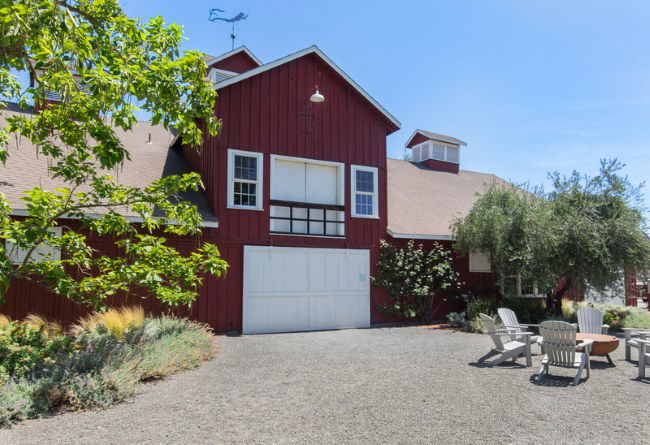
The approach along Conn Creek Road in Rutherford puts you in the middle of the valley floor before the cellar door comes into view. This is the agricultural core of Napa, where the alluvial benchland soil that wine writers call Rutherford Dust has been shaping Cabernet Sauvignon character for over a century. Frog's Leap Winery has been part of that story since its first vintage in 1977, making it one of the earlier independent estates in a corridor that has since attracted considerable capital and competition. The property reads less like a contemporary tasting room and more like a working farm, which is consistent with an approach to viticulture that has long prioritized dry farming over irrigation-dependent vine management.
That commitment to dry farming is not a marketing position adopted in recent years. It has been a structural choice for decades, one that places Frog's Leap in a distinct minority among Napa operations, particularly on the valley floor where summer irrigation is close to universal. Dry-farmed vines push roots deeper, stress more visibly in drought years, and typically yield smaller crops with more concentrated physiological maturity. Whether or not you accept every argument made on dry farming's behalf, the practice requires a level of agronomic confidence that separates it from conventional viticulture. Winemaker John Williams has been the consistent figure behind that commitment.
Where Frog's Leap Sits in the Rutherford Peer Set
Rutherford is a competitive appellational address. Caymus Vineyards has operated at scale from the same corridor for decades, building one of Napa's most recognizable Cabernet programs. Beaulieu Vineyard (BV) holds historic appellation authority through its long tenure and the legacy of Georges de Latour Private Reserve. Newer entrants like Alpha Omega Winery have repositioned the address toward a more internationally styled, high-extraction profile. Cathiard brings a Bordeaux-ownership angle to the same geography. The range of stylistic ambitions operating within a few miles of each other is considerable.
Frog's Leap occupies a different position within that group. Its 2025 Pearl 3 Star Prestige recognition places it in the certified quality tier, but the estate's character is less defined by prestige pricing signals and more by what its long track record implies: consistent production over nearly five decades, a defined agricultural philosophy, and a resistance to the heavier, more extracted style that came to define Napa Cabernet through the 1990s and 2000s. That resistance was not commercially costless. Estates that chased higher Parker scores during that period often commanded significantly stronger prices on release. Frog's Leap held a different line, which is now read as prescience given the current critical preference for restraint.
For comparison, Cakebread Cellars has maintained a similarly long independent history in the Oakville-Rutherford corridor, with a reputation built partly on Chardonnay alongside Cabernet. Frog's Leap's identity has been more agronomically focused, with dry farming as the through-line rather than a specific varietal program. Elsewhere in Napa, Artesa Vineyards and Winery in Napa represents a different model, combining architectural ambition with Carneros-sourced cooler-climate wines. Accendo Cellars in St. Helena operates from the same valley but at a much smaller allocation-driven scale. These are different choices made by different operations, and each one tells you something about the directions available within Napa's premium tier.
The Cultural Logic Behind Dry Farming in California
California's wine culture has always had a complicated relationship with European reference points. The 1976 Paris Tasting validated Napa as a producer of internationally competitive wine, but the decades that followed saw much of the valley pursue a house style that diverged sharply from French models: riper, richer, higher in alcohol, and dependent on water management to achieve consistency in a Mediterranean climate. The critical and commercial success of that style was undeniable, but it also generated a counter-current among producers who saw in dry farming a way to connect California viticulture back to older, less interventionist traditions.
Dry farming in California has pre-industrial roots. Before irrigation infrastructure reached California's wine regions, every vine was dry farmed by necessity. The postwar expansion of California agriculture, combined with the ambitions of Napa's 1970s wine boom, normalized irrigation as a production tool. Choosing to farm without it now is less a recovery of tradition than a deliberate agronomic argument: that the vine's response to water stress produces a different kind of fruit character, one more reflective of site and season than of managed inputs. Frog's Leap has been making that argument, in the vineyard and in the bottle, since the late 1970s. That consistency across nearly five decades gives the position a credibility that newer converts to low-intervention farming cannot yet claim.
This context matters because it connects Frog's Leap to a broader pattern visible across California wine. Adelaida Vineyards in Paso Robles has operated on a similar dry-farmed, old-vine model in a much hotter growing region. Adelsheim Vineyard in Newberg represents the Oregon response to similar questions about site fidelity and agricultural restraint. Alban Vineyards in Arroyo Grande has built its entire identity on deep-rooted dry-farmed Rhône varieties. The thread running through all these operations is a preference for the vine's own response to its environment over managed consistency. Frog's Leap in Rutherford belongs to that tradition, applied to the most commercially significant address in California wine.
Beyond Rutherford: California's Range in Context
Rutherford's Cabernet authority is well-established, but the variety of California wine worth knowing extends well past the valley floor. Alexander Valley Vineyards in Geyserville produces Cabernet from warmer, less prestigious benchland at a price point that reflects its different address. Andrew Murray Vineyards in Los Olivos has spent decades making the case for Santa Ynez Valley Rhône varieties against the dominance of Pinot and Chardonnay in that county's reputation. For those whose interest extends to historically significant European producers, Achaia Clauss in Patras and Aberlour in Aberlour represent entirely different traditions worth tracking alongside California's contemporary output.
Planning a Visit
Frog's Leap is located at 8815 Conn Creek Road in Rutherford, placing it on the eastern benchland of the appellation within easy reach of the main Highway 29 corridor. Given Rutherford's concentration of notable producers, a visit to the estate fits naturally alongside calls to neighboring wineries. The Rutherford appellation as a whole rewards extended exploration: see our full Rutherford restaurants guide for context on the broader area. Tasting visits to Napa wineries at this level generally benefit from advance booking, particularly during the spring and fall peak periods when appellation tourism is at its highest volume. The estate's first vintage dates to 1977, which means older library vintages may be available through the winery's allocation systems, though current inventory and booking protocols are leading confirmed directly with the property before travel.
Frequently Asked Questions
- What's the must-try wine at Frog's Leap Winery?
- Frog's Leap's Rutherford Cabernet Sauvignon is the natural place to start, given that the estate's identity is built on dry-farmed viticulture in one of Napa's most historically significant Cabernet appellations. Winemaker John Williams has held that program together since the first vintage in 1977, and the 2025 Pearl 3 Star Prestige recognition reflects the consistency of that long run. Visitors with interest in how Rutherford Cabernet reads across different production philosophies should also note the range available from peer estates including Caymus Vineyards and Beaulieu Vineyard (BV) for direct comparison.
- What's Frog's Leap Winery leading at?
- Frog's Leap is most clearly distinguished by its long-running commitment to dry-farmed viticulture in Rutherford, maintained across nearly five decades of production. In a Napa context where irrigation is standard practice, that agronomic consistency represents a specific and demonstrable position rather than a stylistic trend. The Pearl 3 Star Prestige rating (2025) provides external validation of the quality argument. For visitors trying to map the range of Rutherford's production character, comparing Frog's Leap against both the historically grounded programs at Beaulieu Vineyard (BV) and the newer-entrant style of Alpha Omega Winery is instructive.
Recognized By

Related editorial
- Best Fine Dining Restaurants in ParisFrom three-Michelin-star icons to the next generation of Parisian chefs pushing boundaries, these are the restaurants that define fine dining in the world's culinary capital.
- Best Luxury Hotels in RomeFrom rooftop terraces overlooking ancient ruins to Michelin-starred hotel dining, these are the luxury hotels that make Rome unforgettable.
- Best Cocktail Bars in KyotoFrom sleek lounges to hidden speakeasies, Kyoto's cocktail scene blends Japanese precision with global influence in ways you won't find anywhere else.
Save or rate Frog's Leap Winery on Pearl
Keep this venue in your Pearl passport, rate it after you visit, and track it alongside every other place you collect.