
Winery in Renmark, Australia
Twenty Third Street Distillery
500ptsRiverland Craft Distilling
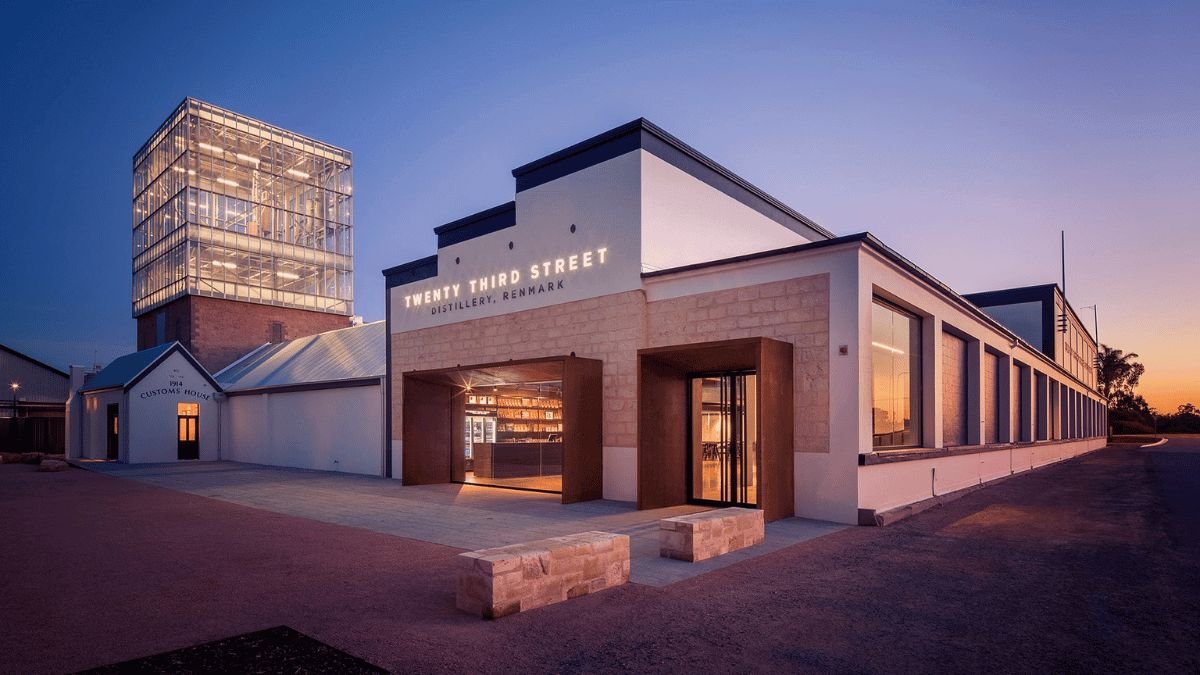
About Twenty Third Street Distillery
Twenty Third Street Distillery in Renmark, South Australia holds a Pearl 2 Star Prestige rating (2025), placing it among a select tier of Australian spirits producers drawing serious attention to the Riverland region. Located on Twentythird Street in the heart of Renmark, the distillery represents a growing movement of premium craft production in a region long associated with volume wine output rather than artisan spirits.
Renmark's Spirits Tier: Where the Riverland Shifts Register
The Riverland has spent generations as South Australia's engine room for volume production, a flat, sun-hammered corridor of river red gums and irrigation channels that feeds the commercial wine trade rather than the trophy cabinet. What's changed in the past decade is the emergence of a smaller, more deliberate cohort of producers working within that same geography but operating against entirely different parameters. Twenty Third Street Distillery sits squarely in that cohort. Its 2025 Pearl 2 Star Prestige rating places it alongside a tier of Australian craft spirits producers being assessed not against regional expectations but against the national conversation around serious distilling.
Renmark is not an obvious address for premium spirits. That's partly what makes operations like this one worth the detour. The town itself sits roughly 250 kilometres northeast of Adelaide, reachable by car through the Murray Mallee, where the highway eventually gives way to wide river bends and the particular stillness of an irrigation town that has always known how to work with water. The distillery's address on Twentythird Street gives the operation its name and, implicitly, its sense of place: rooted, local, unpretentious about geography in a way that signals confidence rather than apology.
Renmark's drinks producers don't cluster in the way that Barossa or McLaren Vale wineries do, where cellar doors line the roads and tastings circuits run themselves. The town's better-known producers, including Angove Family Winemakers and St Agnes Distillery, each occupy distinct positions in the local story, and Twenty Third Street operates in that same self-contained tradition: you go there with intention, not by accident.
The Craft Distilling Frame: What a Pearl 2 Star Prestige Rating Actually Signals
Award structures in Australian spirits are still finding their footing, but the Pearl rating system has established itself as a credible measure of prestige-tier production, with the 2 Star Prestige designation sitting above the entry-level recognition and indicating a product evaluated against a national peer set rather than a regional one. For a Riverland operation to carry that rating in 2025 is a meaningful signal: it suggests the distillery is not being graded on a curve of regional goodwill but held to the same standards applied to urban craft producers and established names.
Across Australia, the craft distilling category has matured considerably from its early boutique-curiosity phase. The most cited reference point for premium urban craft production is Archie Rose Distilling Co in Sydney, which built a case for serious Australian whisky and spirits through consistent technical execution and transparent production methods. That model, rigour over romance, has set a benchmark that regional producers now measure themselves against, consciously or not. The Riverland equivalent, working without the marketing infrastructure of a major city, has to do more with less, which is perhaps why Twenty Third Street's recognition carries particular weight.
The broader Australian distilling scene also draws comparisons to heritage rum production. Bundaberg Rum Distillery in Bundaberg represents the established, volume end of Australian spirits heritage, a point of contrast that clarifies how differently the artisan tier operates in terms of scale, philosophy, and product positioning.
Placing Twenty Third Street in the South Australian Context
South Australia's drinks identity is overwhelmingly shaped by wine, and within that, by the Barossa Valley's Shiraz dominance and the premium reputations of producers like Henschke, Clarendon Hills, and Penfolds. Spirits have historically occupied a secondary position in the state's hospitality narrative, treated as an extension of the wine economy rather than a standalone category. What makes the current moment interesting is that distilling is beginning to assert its own logic: different raw materials, different ageing constraints, different relationships to geography.
The Riverland's climate, long growing seasons, high sugar accumulation in fruit, and proximity to the Murray River, creates conditions that a thoughtful distiller can work with rather than around. The same environmental factors that made the region productive for bulk wine production also offer real material for spirits work, provided the approach is disciplined. This is the argument that Twenty Third Street is quietly making through its production, an argument better read through the Pearl rating than through any promotional language.
For context on how premium South Australian drinks producers position themselves relative to interstate peers, it's worth considering the range of approaches on the EP Club platform, from Bird in Hand in Adelaide Hills to the long-established Victorian reference points of Leading's Wines in Great Western and Brown Brothers in King Valley. Each occupies a different relationship to place and tradition. The distilling tier adds another layer to that conversation, one that Australian drinking culture is only beginning to take seriously at the level of critical evaluation.
Distilling Versus Winemaking: The Different Kind of Patience
The comparison to wine is inevitable in a region defined by viticulture, but spirits production operates on a fundamentally different clock. Where winemakers at estates like Bass Phillip in Gippsland or Cape Mentelle in Margaret River manage annual vintage cycles with defined release windows, distilling compounds time differently. Barrel maturation for whisky or brandy operates across years or decades, meaning that decisions made today about wood selection, cut points, and distillation approach don't resolve into reviewable product for a considerable period. The Pearl 2 Star Prestige recognition in 2025 reflects output from decisions made years prior, which is worth bearing in mind when assessing what the distillery's current trajectory might produce.
In international terms, this patience-as-craft argument is most familiarly made in Scotch whisky country. Aberlour in Aberlour represents the Speyside tradition of long maturation in quality wood, a reference point that serious Australian distillers often cite when framing their own ageing programs. The comparison isn't always flattering to the younger Australian category, but it gives Twenty Third Street and its peers a meaningful target.
Planning a Visit to Renmark
The distillery sits on Twentythird Street in Renmark, a town that rewards the unhurried approach. Visitors coming from Adelaide should allow the better part of a day for the drive, which passes through the Murray Mallee before the river country opens up. Renmark's drinks scene is not compressed into a single precinct, so mapping out multiple stops, including Angove Family Winemakers and St Agnes Distillery, makes the journey more productive. Our full Renmark restaurants and producers guide maps the broader picture for anyone building a Riverland itinerary. Booking ahead is advisable; Renmark is not a high-volume tourism destination, and operating hours at smaller producers can vary outside of peak season. Contacting the distillery directly before visiting will avoid the frustration of a closed door after a 250-kilometre drive.
For those building a wider Australian spirits and wine itinerary, the EP Club platform covers the full range from Brokenwood in Hunter Valley to Blue Pyrenees Estate in Pyrenees, and internationally from All Saints Estate in Rutherglen to Accendo Cellars in St. Helena. Twenty Third Street is a useful reminder that prestige-tier production doesn't require a famous postcode, just the discipline to do the work regardless of audience.
Frequently Asked Questions
How would you describe the overall feel of Twenty Third Street Distillery?
The distillery occupies a position that feels consistent with Renmark itself: purposeful, unshowy, and grounded in the practical realities of Riverland production rather than the lifestyle aesthetics of better-known wine regions. Its Pearl 2 Star Prestige rating (2025) places it at the serious end of the Australian craft spirits category, which sets expectations for the quality of what's being made here. Renmark is a working river town rather than a curated tourism precinct, and the distillery fits that register. Pricing and specific format details are not publicly listed, so prospective visitors should contact the distillery directly before planning a visit.
What wine is Twenty Third Street Distillery famous for?
Twenty Third Street operates as a distillery rather than a winery, so the question of wine isn't directly applicable. The Riverland's wine heritage is substantial, with producers like Angove Family Winemakers and St Agnes Distillery representing the region's established drinks identity. Twenty Third Street's reputation rests on its spirits production, recognised with a Pearl 2 Star Prestige award in 2025. No specific winemaker is attributed to the operation in available records, which is consistent with a spirits-focused model where the distilling team rather than a named viticulturist drives the product.
Related editorial
- Best Fine Dining Restaurants in ParisFrom three-Michelin-star icons to the next generation of Parisian chefs pushing boundaries, these are the restaurants that define fine dining in the world's culinary capital.
- Best Luxury Hotels in RomeFrom rooftop terraces overlooking ancient ruins to Michelin-starred hotel dining, these are the luxury hotels that make Rome unforgettable.
- Best Cocktail Bars in KyotoFrom sleek lounges to hidden speakeasies, Kyoto's cocktail scene blends Japanese precision with global influence in ways you won't find anywhere else.
Save or rate Twenty Third Street Distillery on Pearl
Keep this venue in your Pearl passport, rate it after you visit, and track it alongside every other place you collect.