
Winery in Puerto Natales, Chile
Last Hope Distillery
500ptsPatagonian Terroir Distilling
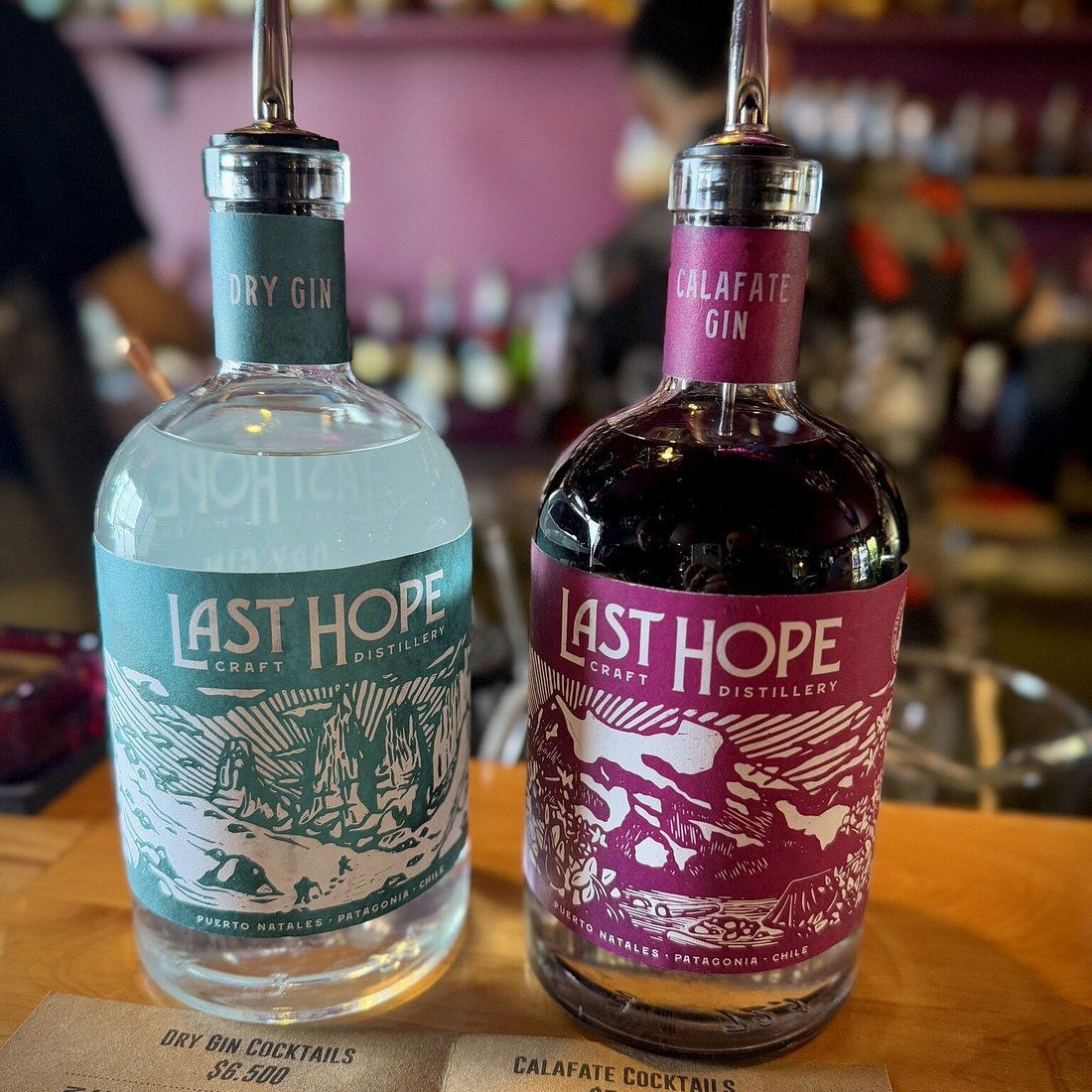
About Last Hope Distillery
Last Hope Distillery operates at the edge of Chilean Patagonia in Puerto Natales, where the raw climate of the Magallanes region shapes everything it produces. Recognised with a Pearl 2 Star Prestige award in 2025, it occupies a category of its own among Chilean craft spirits producers, drawing visitors en route to Torres del Paine who want something more considered than a souvenir bottle.
Where the Cold Comes In
Puerto Natales sits roughly 250 kilometres north of Punta Arenas, at the point where Patagonian steppe meets the channels and fjords that feed into the Southern Ocean. The wind here is not a weather event; it is a permanent condition. Buildings on Esmeralda, one of the town's central streets, are built low and squared against it, and Last Hope Distillery at number 882 is no exception. The physical environment is not backdrop — in a distillery at this latitude, it is an active ingredient. Cold, clean water, extreme seasonal temperature swings, and air with almost no agricultural or industrial contamination: these are the raw materials before anything enters a still.
For context on why this matters, consider that some of Chile's most discussed producers — from Viña Ventisquero in Santiago to Viña De Martino in Isla de Maipo , have spent the last decade arguing for terroir-driven production at the level of winemaking. That argument is now migrating into spirits, and Patagonia is one of the more compelling cases for it. The terroir argument in distilling is harder to sustain than in viticulture, but when a producer is working in an environment this specific and this extreme, the conversation becomes more credible.
What a 2 Star Prestige Award Signals in This Context
EP Club's Pearl 2 Star Prestige recognition, awarded in 2025, places Last Hope Distillery above the threshold of general quality and into a tier where production discipline, regional expression, and consistent output are taken as given. In a country whose spirits recognition has historically been dominated by the pisco corridor further north , producers like Pisco Alto del Carmen in Huasco and Viña Falernia in Vicuña, both operating in the Atacama and Elqui zones , a Patagonian distillery earning two-star recognition marks a genuine geographic expansion of Chilean craft spirits prestige.
It is worth framing that against the national picture. Chile's formal spirits culture has been anchored in the north for generations: pisco is a controlled designation, the Atacama and Coquimbo regions hold the relevant terroir credentials, and producers have invested heavily in that identity. The emergence of a southern distillery at award level is not just a regional footnote. It suggests that the cool-climate, extreme-environment case for southern Chilean spirits production is gaining traction beyond local novelty.
For comparison, Atacamasour Distillery in San Pedro de Atacama represents the high-altitude, hyper-arid end of Chilean craft distilling. Last Hope operates at the opposite extreme: cold, wet, fjord-adjacent, with a climate closer to Scotch whisky country than to the Atacama Desert. The contrast between these two production environments illustrates how wide the Chilean craft spirits map has become.
The Terroir of Patagonia in a Glass
The editorial angle on terroir in distilling is often contested , spirits critics have long debated whether climate and geography genuinely express themselves in finished spirits the way they do in wine. But Puerto Natales makes the argument more tractable than most production sites. The water source, the fermentation temperature range, the maturation environment, and the nature of the local botanicals or grains all carry the imprint of a place that is climatically extreme and geographically remote.
Southern Chilean Patagonia receives some of the purest rainfall on the planet, fed by westerly systems crossing thousands of kilometres of open Pacific before hitting the Andes. That water enters production. The cold during maturation months slows certain chemical reactions and preserves aromatic precision. These are not marketing claims , they are physical realities of the production environment, and they distinguish what comes out of a still in Natales from what comes out of a still in, say, the Maipo Valley or the Elqui Valley.
For context across Chilean wine and spirits geography, producers like Viña Casa Silva in San Fernando and Viña MontGras in Palmilla have built their identities around the specific thermal conditions of the Colchagua Valley. Last Hope is doing something analogous at the far southern end of the country, in a climate so different from the Central Valley that the comparison itself underlines how varied Chilean terroir actually is.
Puerto Natales as a Production Location
The town's relationship with premium food and drink has developed in direct proportion to the growth of Torres del Paine as a global trekking destination. Puerto Natales is the mandatory staging point for the W Trek and the Circuit; visitors arrive having booked months in advance and leave via the same town. That visitor profile , international, experience-oriented, willing to spend , has pushed the quality bar upward across the hospitality sector over the past decade.
The distillery sits on Esmeralda, one of the streets closest to the waterfront and the main commercial axis of town. Reaching Puerto Natales typically means flying into Punta Arenas from Santiago and then driving three to four hours north, or flying directly into the smaller Teniente Julio Gallardo Airport on limited routes. The town's compact size means Esmeralda is walkable from most accommodation. The visit to Last Hope fits naturally into the pre- or post-trek itinerary that defines most travellers' time in Natales, and it sits at a different register from the outdoor gear shops and hostel bars that dominate the street-level experience elsewhere in town.
For a broader orientation to what the town offers in terms of food and drink, see our full Puerto Natales restaurants guide.
Where It Sits Among Chilean Producers
Chile's premium drinks producers are concentrated overwhelmingly in the Central Valley and the Norte Chico. The major wine estates that carry Chilean prestige internationally , Viña Seña in Panquehue, Viña Santa Rita in Buin, Viña Undurraga in Talagante, and Viña Valdivieso in Lontué , all operate within a relatively contained geographic corridor. El Gobernador (Miguel Torres Chile) in Curicó similarly anchors itself to the Central Valley's established winemaking identity.
Last Hope operates entirely outside that corridor, at the country's southern extreme, and its 2025 recognition places it in a peer conversation not with those Central Valley producers but with the emerging generation of southern and extreme-climate Chilean makers. For an international reference point on what extreme-climate distilling can achieve, Aberlour in Aberlour represents the Speyside end of how cold-climate maturation shapes spirit character. The comparison is loose but instructive: geography at the margins tends to produce character at the margins.
The broader craft spirits movement in the Americas has produced award-level producers in unlikely locations before , Accendo Cellars in St. Helena being an example of a producer whose location carries prestige by association. Puerto Natales works differently: the location does not borrow prestige, it generates specificity. Patagonia is not a glamour address in the drinks world yet. That may be part of the point.
Planning a Visit
The distillery is located at Esmeralda 882, Puerto Natales, in the Magallanes y la Antártica Chilena region. No booking contact details or opening hours are publicly listed at this time; given the town's relatively small scale, arrival in person or a query through local accommodation is the practical route to confirming current visit arrangements. The optimal window for Puerto Natales visits is October through March, when the austral summer keeps daylight long and the ferry and road connections from Punta Arenas run on expanded schedules. That period also aligns with the peak Torres del Paine season, so accommodation across the town books out well in advance , planning around the distillery visit means planning accommodation first.
Related editorial
- Best Fine Dining Restaurants in ParisFrom three-Michelin-star icons to the next generation of Parisian chefs pushing boundaries, these are the restaurants that define fine dining in the world's culinary capital.
- Best Luxury Hotels in RomeFrom rooftop terraces overlooking ancient ruins to Michelin-starred hotel dining, these are the luxury hotels that make Rome unforgettable.
- Best Cocktail Bars in KyotoFrom sleek lounges to hidden speakeasies, Kyoto's cocktail scene blends Japanese precision with global influence in ways you won't find anywhere else.
Save or rate Last Hope Distillery on Pearl
Keep this venue in your Pearl passport, rate it after you visit, and track it alongside every other place you collect.