
Winery in Neuquén, Argentina
Bosque Craft Gin
250ptsPatagonian Botanical Distilling
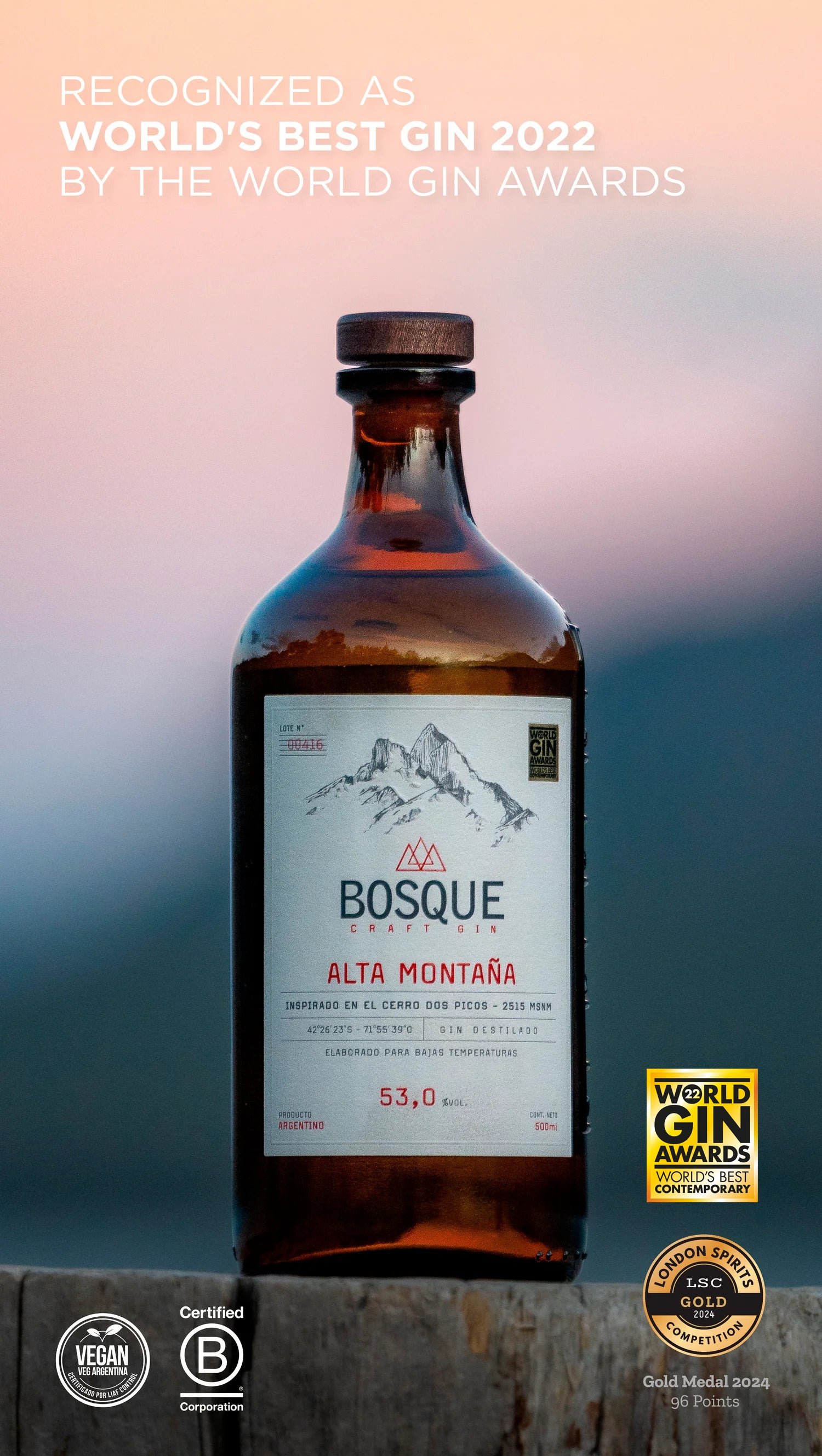
About Bosque Craft Gin
Bosque Craft Gin is a Patagonian spirits producer operating out of Neuquén, Argentina, and the holder of a Pearl 1 Star Prestige award (2025). Set against one of South America's most geographically dramatic distilling environments, Bosque works within a small but growing cohort of Argentine craft spirits producers translating high-altitude, steppe-edge terroir into botanical-driven spirits.
Patagonia's Craft Spirits Frontier
Argentina's spirits conversation has long been dominated by wine. Mendoza draws the headlines, the investment, and the international critics, while producers from [Bodega Norton in Luján de Cuyo](https://www.enprimeurclub.com/wineries/bodega-norton-lujan-de-cuyo-winery) to [Terrazas de los Andes in Mendoza](https://www.enprimeurclub.com/wineries/terrazas-de-los-andes-mendoza-winery) have spent decades building the country's premium identity around Malbec and altitude viticulture. But craft gin and distilled spirits are carving a parallel trajectory, particularly in Patagonia, where the raw material conditions, the remoteness, and the botanical diversity of the steppe and Andean foothills create a genuinely different proposition from anything emerging out of Buenos Aires or the Cuyo wine belt.
Neuquén sits at the northern edge of Patagonia, roughly where the high desert gives way to river-cut valleys and the wind off the cordillera becomes a constant variable in any agricultural or production equation. It is not, by any conventional measure, a distilling capital. That is precisely what makes the emergence of producers like Bosque Craft Gin worth examining. The 2025 Pearl 1 Star Prestige award signals that the category is being taken seriously at a regional recognition level, and Bosque now sits within a peer set that includes other Neuquén-area spirits producers such as [Patagonia Whisky Co.](https://www.enprimeurclub.com/wineries/patagonia-whisky-co-neuquen-winery) and wineries that have extended into spirits or premium botanical production.
Terroir and Botanical Identity in the Patagonian Steppe
The editorial angle that matters most when assessing a craft gin from this geography is not brand or format but terroir expression. What does the land actually contribute? In Patagonia's case, the answers are meaningful. The region sits between the 38th and 40th parallels south, at elevations and in climatic conditions that produce intense UV exposure, wide diurnal temperature ranges, and an arid-to-semi-arid environment shaped by the rain shadow of the Andes. These are the same variables that producers like [Bodega Del Fin del Mundo](https://www.enprimeurclub.com/bodega-del-fin-del-mundo-neuquen-winery) and [Familia Schroeder in San Patricio del Chañar](https://www.enprimeurclub.com/wineries/familia-schroeder-san-patricio-del-chanar-winery) have used to argue for Patagonian distinctiveness in wine. For gin, the same environmental logic applies to botanicals: native herbs, shrubs, and seeds grown in high-stress, low-humidity conditions tend to produce more concentrated aromatic compounds than their counterparts from moderate climates.
This connects Bosque to a broader argument happening across South American craft spirits. In the same way that [Bodega Colomé in Molinos](https://www.enprimeurclub.com/wineries/bodega-colome-molinos-winery) has built its identity around extreme altitude viticulture in Salta, or [Bodega DiamAndes in Tunuyán](https://www.enprimeurclub.com/wineries/bodega-diamandes-tunuyan-winery) has leaned into Uco Valley's thermal variation as a winemaking asset, craft distillers in Patagonia are beginning to articulate their environment as a production variable rather than merely a backdrop. The steppe's native flora, including species of molle, calafate, and various Andean herbs, gives producers here access to botanical signatures that have no direct equivalent in European or North American gin traditions.
That botanical distinctiveness is where the Pearl 1 Star Prestige recognition becomes meaningful context. Award frameworks that recognise emerging producers in under-mapped categories are typically looking for coherence, execution, and some form of differentiated identity, not just technical correctness. For a Neuquén gin producer to draw that recognition in 2025 suggests the terroir argument is being made credibly in the glass, not just in the marketing copy.
Where Bosque Fits in the Argentine Spirits Picture
Argentina's craft spirits sector is at an early stage compared to, say, the country's premium wine tier. The distilling operations coming out of Buenos Aires, some influenced by European heritage producers like [Fratelli Branca Distillery in Buenos Aires](https://www.enprimeurclub.com/wineries/fratelli-branca-distillery-buenos-aires-winery), tend to operate with stronger distribution infrastructure and broader export visibility. Patagonian producers work against that with a differentiated terroir story and a smaller-batch positioning that suits the current international appetite for provenance-led spirits.
Comparing across Argentine producing regions is instructive. The northwest, represented by producers in and around [Bodega El Esteco in Cafayate](https://www.enprimeurclub.com/wineries/bodega-el-esteco-cafayate-winery), operates at extreme altitude with its own distinctive aridity. Mendoza's corridor, anchored by operations like [Escorihuela Gascón in Godoy Cruz](https://www.enprimeurclub.com/wineries/escorihuela-gascon-godoy-cruz-winery) and [Rutini Wines (La Rural) in Tupungato](https://www.enprimeurclub.com/wineries/rutini-wines-la-rural-tupungato-winery), is better irrigated and more temperate. Patagonia offers something else: latitude, wind, cold nights, and a native flora that does not map onto any other Argentine zone. Bosque operates within that specificity, and that separation from the Mendoza mainstream is part of what the Pearl recognition signals as worth attention.
For context on how craft spirits recognition at this level translates internationally, it is useful to look at how single-malt producers in non-traditional regions have used awards and peer-comparison narratives to build credibility before distribution follows. The trajectory seen at operations like [Aberlour in Aberlour](https://www.enprimeurclub.com/wineries/aberlour-aberlour-winery) in Scotland, or the way Napa Valley producers such as [Accendo Cellars in St. Helena](https://www.enprimeurclub.com/wineries/accendo-cellars) have used critical recognition as an entry credential into premium retail, suggests a recognisable playbook. A Pearl 1 Star at the 2025 stage of Patagonian craft spirits is an early-category signal, not a market-maturity indicator.
Planning a Visit to Neuquén's Spirits Scene
Neuquén city is a provincial capital with regional airport connections from Buenos Aires (roughly two hours by air), and the broader wine and spirits route through San Patricio del Chañar, where operations like Familia Schroeder are located, extends north and west from there. Detailed logistics for visiting Bosque Craft Gin, including hours, address, tasting formats, and booking requirements, are not publicly confirmed in the current record. Travellers interested in the Patagonian spirits corridor should verify opening arrangements directly through current channels before planning a visit; the craft producer tier in Patagonia tends to operate without the standardised visitor infrastructure that Mendoza's larger bodegas maintain. For broader Neuquén orientation, [our full Neuquén restaurants and producers guide](https://www.enprimeurclub.com/cities/neuquen) covers the regional picture in more detail.
[Bodega Trapiche in El Trapiche](https://www.enprimeurclub.com/wineries/bodega-trapiche-el-trapiche-winery) and [Bodega Del Fin del Mundo](https://www.enprimeurclub.com/bodega-del-fin-del-mundo-neuquen-winery) offer reference points for the kind of production scale and visitor experience that the Patagonian region can support at its most established end, which provides useful calibration for expectations at a craft-level operation like Bosque.
Frequently Asked Questions
- What should I taste at Bosque Craft Gin?
- The core argument for tasting here is terroir-driven: the botanical sources in Patagonia's steppe and Andean foothills differ markedly from European gin traditions, and the Pearl 1 Star Prestige (2025) suggests the execution is credible enough to hold critical attention. Without confirmed public tasting notes or a documented menu, the directive is to approach the gin range as an expression of place rather than a style exercise, and to ask directly about the botanical provenance when you visit.
- What's the defining thing about Bosque Craft Gin?
- The defining element is geographic: operating from Neuquén, at the northern edge of Patagonia, places Bosque in one of South America's least-mapped craft spirits zones. The 2025 Pearl 1 Star Prestige award marks it as a producer drawing formal recognition ahead of the broader category's consolidation. In practical terms, the price and format are not publicly confirmed, but the positioning within Patagonian craft spirits puts it in a small peer set rather than the larger Buenos Aires or Mendoza spirits field.
- Do they take walk-ins at Bosque Craft Gin?
- Walk-in policy, hours, and contact details are not confirmed in the public record at this time. Craft producers in the Neuquén region tend to operate on a smaller, often appointment-preferred basis compared to the open-cellar-door model common in Mendoza. The Pearl 1 Star Prestige (2025) signals that Bosque is operating at a quality level that warrants a proactive approach: confirm visit arrangements before travelling, rather than arriving unannounced.
- How does Bosque Craft Gin differ from other Argentine craft spirits producers?
- Bosque's separation from the mainstream lies in geography rather than style category alone. Most Argentine craft spirits visibility is concentrated in Mendoza and Buenos Aires, regions with better distribution infrastructure and higher tourist foot traffic. Neuquén's steppe-edge environment, with its cold nights, high UV exposure, and access to native Patagonian botanicals, produces a materially different source palette. The 2025 Pearl 1 Star Prestige recognition places Bosque ahead of most of its Patagonian peers in formal critical standing at this stage of the category's development.
Related editorial
- Best Fine Dining Restaurants in ParisFrom three-Michelin-star icons to the next generation of Parisian chefs pushing boundaries, these are the restaurants that define fine dining in the world's culinary capital.
- Best Luxury Hotels in RomeFrom rooftop terraces overlooking ancient ruins to Michelin-starred hotel dining, these are the luxury hotels that make Rome unforgettable.
- Best Cocktail Bars in KyotoFrom sleek lounges to hidden speakeasies, Kyoto's cocktail scene blends Japanese precision with global influence in ways you won't find anywhere else.
Save or rate Bosque Craft Gin on Pearl
Keep this venue in your Pearl passport, rate it after you visit, and track it alongside every other place you collect.