
Winery in Montevideo, Uruguay
Destilería Montevideo
500ptsUrban Spirits Precision
About Destilería Montevideo
Awarded Pearl 2 Star Prestige recognition in 2025, Destilería Montevideo operates from Pérez Castellano 1364 in the heart of Uruguay's capital, placing it among the city's most credentialed spirits producers. It holds a distinct position within Montevideo's small but growing distillation scene, where craft spirits production has begun to carve space alongside the country's better-known wine sector.
Spirits in a Wine Country: Where Destilería Montevideo Sits
Uruguay's drinks identity has long been shaped by wine. The country's Atlantic-facing vineyards, from the Tannat strongholds around Canelones to coastal plots in Maldonado, draw most of the international attention, and producers like Bodega Bouza and Bodega Traversa have spent decades shaping the country's export reputation. Against that backdrop, a distillery operating in downtown Montevideo occupies a different register entirely. Destilería Montevideo, at Pérez Castellano 1364 in the Old City, is part of a narrower category: spirits producers working inside an urban setting, building an identity around distillation in a country where that tradition is considerably less codified than its winemaking equivalent.
That position is not a disadvantage. In many cities globally, the most interesting drinks venues now sit at the intersection of an established agricultural or fermentation culture and a newer craft distillation movement. Montevideo's version of that story is still forming, and Destilería Montevideo holds a front-row seat.
The Old City Address and What It Signals
Pérez Castellano 1364 places the distillery in Montevideo's Ciudad Vieja, the original colonial grid that runs along the Río de la Plata waterfront. This is a neighbourhood that has seen significant reinvestment over the past decade, with cultural venues, independent restaurants, and specialist producers settling into buildings that once housed commercial warehouses and trade offices. For a distillery, the Old City address carries specific meaning: proximity to the port district, to the city's food market corridor, and to a growing density of visitors who come to the area specifically to find producers and makers rather than chain establishments.
The area's character rewards the kind of visit built around deliberate discovery. Foot traffic here is slower and more purposeful than in the modern commercial districts further east, and venues in this zone tend to attract guests who have sought them out. That dynamic suits a specialist producer well. For comparison, ANCAP Alcoholes and Espíritu Libre Destilería represent other points on Montevideo's spirits production map, each operating with different scales and approaches, and together they sketch the outlines of a category that is still finding its shape in the city.
The 2025 Pearl 2 Star Prestige Recognition
In 2025, Destilería Montevideo received Pearl 2 Star Prestige recognition, which positions it in the upper tier of assessed producers in this market. In a country where the awards infrastructure for distilled spirits is less dense than for wine, a formal prestige designation carries weight precisely because it is rare. The Pearl system evaluates producers across quality, presentation, and experience criteria, and a two-star result signals a producer operating well above the baseline of the local category.
For visitors planning a Montevideo itinerary that extends into the city's drinks scene, this credential is a useful filter. It places Destilería Montevideo alongside credentialed wine producers in the broader regional context, even as it operates in a distinct category. Uruguay's wine sector has producers like Varela Zarranz in Canelones, Bodega Carrau in Las Piedras, and Bodega Los Cerros de San Juan in Colonia del Sacramento drawing specialist visitors from outside the country. A distillery with formal prestige recognition invites a similar kind of attention.
The Tasting Experience: Format and Feel
Craft distilleries in urban settings tend to organise the visitor experience around one of two formats: a retail-forward model where the production space is visible but the commercial transaction is central, or an education-forward model where the visit is structured around understanding the production process, the raw materials, and the sensory profile of what's in the glass. The better operators in this category lean toward the latter, because it is the format that justifies the visit as an experience rather than a transaction.
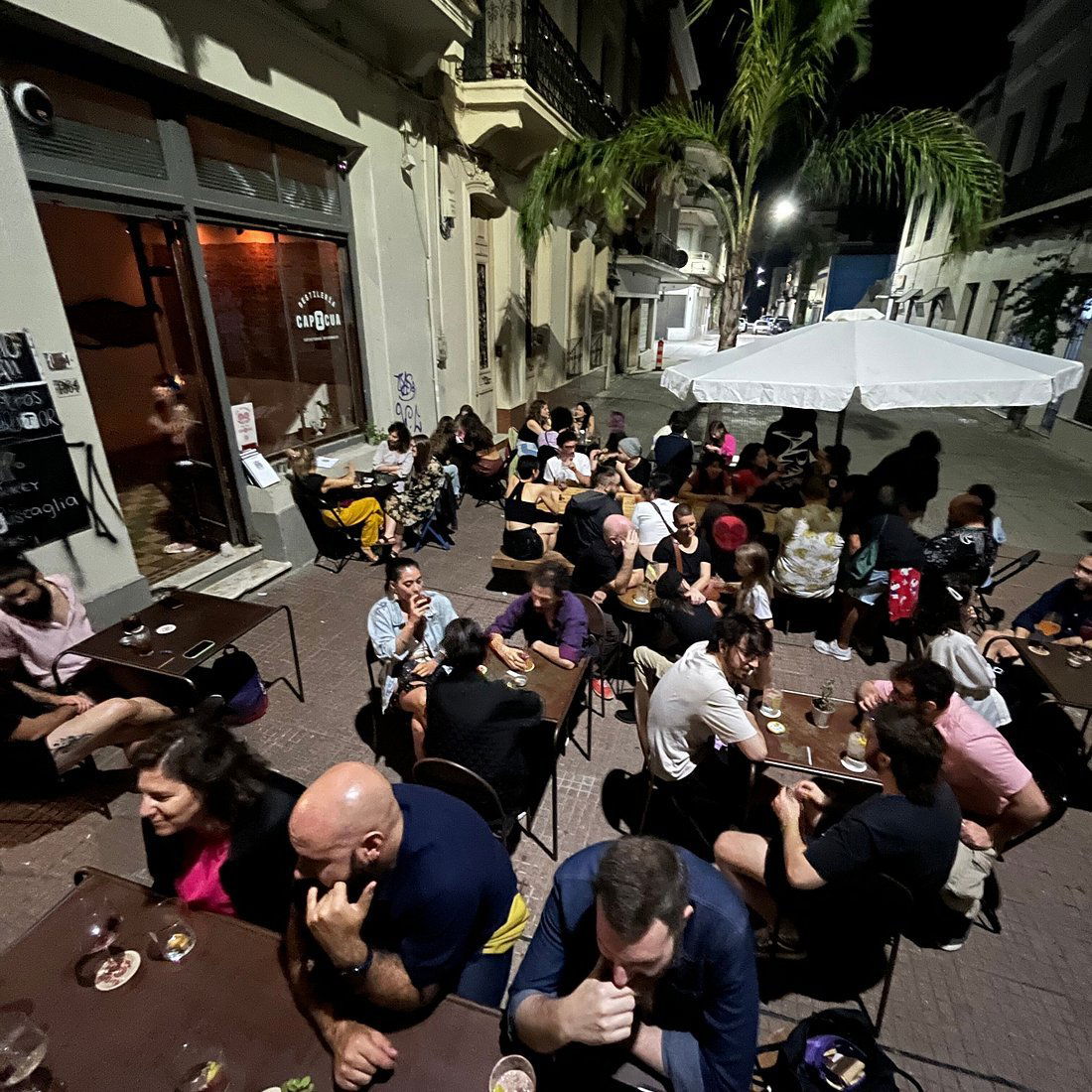
For a distillery at Pérez Castellano 1364, the Old City address supports the experience-forward approach. Visitors arriving in the Ciudad Vieja are already in a frame of mind oriented toward discovery rather than convenience. The physical environment of this district, with its colonial-era streetscape and the ambient proximity of the waterfront, provides a specific kind of context that shapes how spirits are received and remembered. A glass tasted here carries different associations than the same glass tasted in a modern commercial suburb.
Uruguay's craft distillation scene is small enough that each operator who has achieved formal recognition becomes a reference point for the whole category. Producers like Portón del Uruguay contribute to this collective map. Visitors building a thorough understanding of what Uruguayan spirits producers are doing would be well served by treating Destilería Montevideo as a primary stop rather than an addendum to a wine-focused itinerary.
Montevideo in the Wider Uruguayan Drinks Context
A single visit to Destilería Montevideo sits more richly if the wider context is understood. Uruguay's wine geography extends well beyond the capital, with coastal producers like Bodega Oceánica José Ignacio in Maldonado and Bodega Cerro del Toro in Piriápolis attracting visitors who follow the Atlantic route. Inland, producers like Cerro Chapeu (Carrau) in Rivera and El Legado in Carmelo round out a country that punches considerably above its size in beverage production terms.
A distillery holding prestige recognition in this environment is not trying to compete with that wine infrastructure. It occupies a different lane, one that rewards visitors who want depth across the full range of what Uruguay produces rather than a wine-only itinerary. Internationally, the comparison points might be producers like Aberlour in Aberlour or Accendo Cellars in St. Helena, each operating within a well-established production tradition that gives visitors immediate context. Uruguay's distillation tradition is younger and less codified, which means producers like Destilería Montevideo are, in part, building the reference frame as they go.
Planning a Visit
Destilería Montevideo is located at Pérez Castellano 1364 in the Ciudad Vieja, Montevideo's Old City. The address is walkable from the waterfront Rambla and from the central Mercado del Puerto, making it a natural addition to a half-day exploration of the neighbourhood. Contact details and booking information are leading confirmed directly ahead of any planned visit, as operating hours for specialist producers in this category can vary. For visitors building a broader Montevideo drinks itinerary, the EP Club's full Montevideo restaurants and venues guide maps the city's scene across categories and neighbourhoods.
Frequently Asked Questions
- What kind of setting is Destilería Montevideo?
- Destilería Montevideo operates from Pérez Castellano 1364 in Montevideo's Ciudad Vieja, the colonial-era Old City district along the Río de la Plata waterfront. It is an urban distillery in a neighbourhood characterised by historic architecture and a growing concentration of specialist food and drinks producers. The 2025 Pearl 2 Star Prestige award places it at the credentialed end of the city's spirits scene.
- What spirits is Destilería Montevideo known for?
- Specific production details are leading confirmed directly with the distillery. What the 2025 Pearl 2 Star Prestige recognition confirms is that the producer is operating at a high level within Uruguay's craft spirits sector, a category that sits alongside but distinct from the country's better-documented wine production tradition.
- What is Destilería Montevideo leading at?
- The Pearl 2 Star Prestige credential awarded in 2025 signals consistent performance across quality and experience criteria. Within Montevideo's drinks scene, the distillery occupies a specific position: a prestige-recognised spirits producer in a city and country where formal recognition for distillation is less common than in the wine sector, making the award a meaningful indicator of where it sits relative to peers.
Related editorial
- Best Fine Dining Restaurants in ParisFrom three-Michelin-star icons to the next generation of Parisian chefs pushing boundaries, these are the restaurants that define fine dining in the world's culinary capital.
- Best Luxury Hotels in RomeFrom rooftop terraces overlooking ancient ruins to Michelin-starred hotel dining, these are the luxury hotels that make Rome unforgettable.
- Best Cocktail Bars in KyotoFrom sleek lounges to hidden speakeasies, Kyoto's cocktail scene blends Japanese precision with global influence in ways you won't find anywhere else.
Save or rate Destilería Montevideo on Pearl
Keep this venue in your Pearl passport, rate it after you visit, and track it alongside every other place you collect.