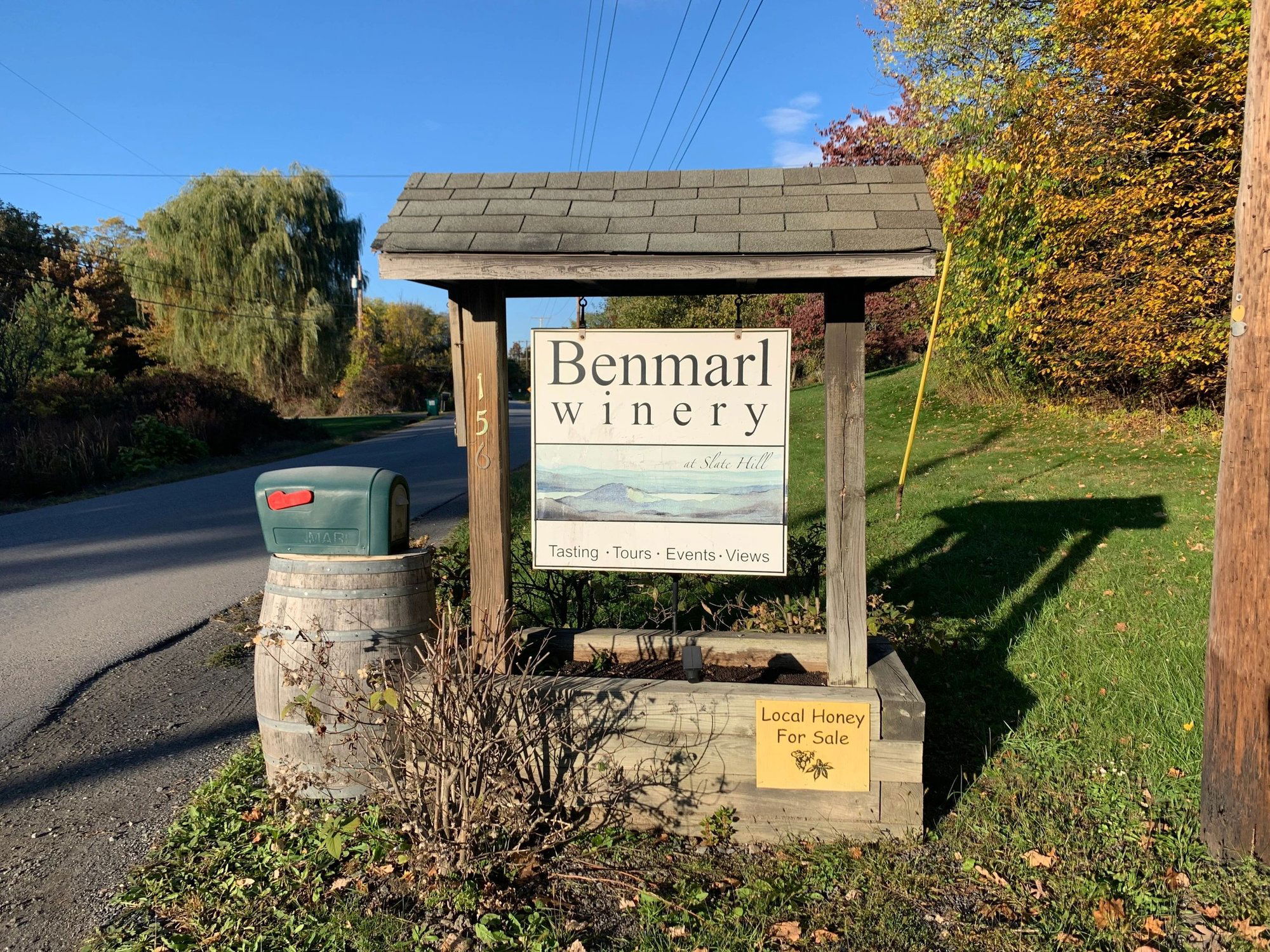
Benmarl Winery
Marlboro
Winery in Marlboro, United States
 Book with Pearl
The Read
Ridge-Top Hudson Terroir
Price
$20–30tasting
Why go
Benmarl Winery is the better fit if the day should stay wine-focused rather than drift into a spirits crawl. First-timers should treat it as the anchor stop in Marlboro and plan ahead for peak Hudson Valley weekends, especially with a group.
About Benmarl Winery
Benmarl Winery is a Marlboro venue with a casual dress code and Pearl 2 Star Prestige (2025) recognition. With only limited details available here, the safest way to plan is to treat it as a winery stop in Marlboro and confirm current visit details directly with the venue before building a full itinerary around it.
For comparison, Benmarl Winery can be considered alongside Brotherhood Winery and Millbrook Vineyards & Winery when the day is focused on wineries, while Denning's Point Distillery, Taconic Distillery, and Tuthilltown Spirits (Hudson Whiskey) point the itinerary toward distillery-focused stops. Keep those comparisons practical rather than assuming the same format, hours, or services across venues.
Choose this for a Marlboro winery stop
The grounded appeal is direct: Benmarl Winery is a Marlboro winery with casual dress and Pearl 2 Star Prestige (2025).
That makes Benmarl Winery best framed as a confirmed Marlboro venue rather than a page built around service claims. If your plans depend on a particular experience, confirm the details first and keep the rest of the day flexible.
How to build the rest of the Marlboro day
Use Benmarl Winery as the Marlboro anchor, then decide whether the rest of the day should stay local or widen into the region. For nearby planning, round out the trip with other dining in Marlboro if needed.
For readers comparing beyond Benmarl Winery, Brotherhood Winery and Millbrook Vineyards & Winery offer other winery references, while Denning's Point Distillery, Taconic Distillery, and Tuthilltown Spirits (Hudson Whiskey) are useful if the itinerary is shifting toward distillery visits. Do not assume the same services, schedules, or visit requirements across any of these venues without confirming them directly.
Planning details
- Location
- 156 Highland Ave, Marlboro, NY 12542
- Website
- benmarl.com
- Phone
- +1 845-236-4265
The take
The Take
The Vibe
Benmarl sits high on a Marlboro ridge and reads like a study in quiet, site-driven winemaking. The prose leans into geography: schist and shale soils, well-drained slopes, and a tempering river below create a deliberate, restrained personality. That sense of place translates into a serene tasting experience rather than loud theatrics—visitors can expect measured, terroir-forward conversation about acidity, structure and varietal performance at this latitude. The winery’s setting rewards slow looking and attentive tasting: it feels like a working estate where landscape and geology take the lead, and the atmosphere follows.
Best For
Benmarl is best for wine-minded visitors who come to explore terroir as much as bottles. The write-up positions the property as part of a larger regional argument about vinifera at Hudson Valley latitudes, and its Pearl 2 Star Prestige recognition underscores that focus. It suits couples seeking a thoughtful escape, small groups interested in comparing vintages, and anyone who values explanatory tasting experiences that emphasize site, soil and acid-driven structure over fruit-forward weight. The location’s river view and ridge-top aspect also make it appealing for short scenic visits or relaxed afternoons.
Tasting Tips
When you visit, center your tasting around questions of site and vintage: ask staff about the schist-based soils, slope aspect and how late-season rain affects particular vintages. Request a flight that showcases the estate’s vinifera examples alongside any hybrids or cold-hardy varieties so you can contrast structure and acidity. Mention the winery’s recent Pearl recognition and ask which bottlings exemplify that pedigree. Keep expectations geared toward finesse and midpalate acidity rather than heavy extract; lean on staff guidance to understand how the ridge’s drainage and microclimate shape each bottle.
Venue details
Ambiance
Cozy and peaceful with stunning vistas of vineyards and the Hudson River, enhanced by rolling hills and a historic charm.
Tags
Vibe
Best For
Experience
View
At the Vineyard
- Appellation
- Hudson River Region AVA
- Varietals
- Cabernet Franc, Riesling, dry_rose
- Visits
- By reservation
- Production
- Small producer
- Wine Styles
- Still Red, Still White
- Food Pairing
- Offered
- Wine Club
- Not available
Know before you go
Know Before You Go
- Getting there
- 156 Highland Ave, Marlboro, NY 12542
Planning details
Location
Also consider
Where to go if you cannot get in
Try Millbrook Vineyards & Winery if the group still wants a winery-led afternoon, or Brotherhood Winery for another established Hudson Valley wine stop.
If the group is flexible on category, Tuthilltown Spirits (Hudson Whiskey) is the better pivot than forcing a wine plan that no longer fits the schedule.
Winery context
How It Compares
Benmarl Winery is the more direct choice for a wine-first Marlboro outing. Denning's Point Distillery and Tuthilltown Spirits (Hudson Whiskey) make more sense when the group wants spirits, cocktails, or whiskey as the focus. For a first-timer who specifically wants a winery visit, those are side trips rather than substitutes.
Brotherhood Winery and Millbrook Vineyards & Winery are the stronger cross-shops if the plan is to compare Hudson Valley wine settings in one trip. Choose Brotherhood or Millbrook when the group wants a broader regional circuit; choose Benmarl when the day is centered on Marlboro and a quieter wine-led visit.
Taconic Distillery is useful as a contrast pick, not a direct replacement. It works better for a spirits-leaning group, while Benmarl is the safer call for guests expecting a traditional winery rhythm and a tasting-led afternoon.
Explore Marlboro
Around this place
Discover more on Pearl
Unlock the full Benmarl Winery guide in Pearl, including awards, comparisons, FAQs, planning details, and nearby places.
Compare Benmarl Winery
| Venue | Location | Awards |
|---|---|---|
| Benmarl Winery | Marlboro | No published awards |
| Denning’s Point Distillery | Beacon | No published awards |
| Tuthilltown Spirits (Hudson Whiskey) | Gardiner | No published awards |
| Brotherhood Winery | Washingtonville | No published awards |
| Millbrook Vineyards & Winery | Millbrook | No published awards |
| Taconic Distillery | Stanfordville | No published awards |
How Benmarl Winery Marlboro compares with similar nearby venues.
FAQ
Frequently Asked Questions
Do I need a reservation at Benmarl Winery?
Benmarl Winery is in Marlboro, has a casual dress code, and carries Pearl 2 Star Prestige (2025); confirm current booking or walk-in details directly with the venue before visiting.
What other wineries are near Benmarl Winery?
Brotherhood Winery and Millbrook Vineyards & Winery are the winery comparisons in this set. They are useful references for planning a broader regional winery itinerary, but their specific services, hours, and visit formats should be checked directly.
How long should I plan for a visit to Benmarl Winery?
Plan around Benmarl Winery as a Marlboro stop and confirm current details with the venue before committing a fixed amount of time.
Is the wine club at Benmarl Winery worth joining?
If membership matters to your visit, contact Benmarl Winery directly and base the decision on the current terms and how often you expect to return.
Does Benmarl Winery serve food?
Can Benmarl Winery handle large groups?
Larger parties should contact Benmarl Winery directly before visiting rather than assuming availability.