
Winery in Lynchburg, United States
Jack Daniel's
750ptsLincoln County Process Birthplace
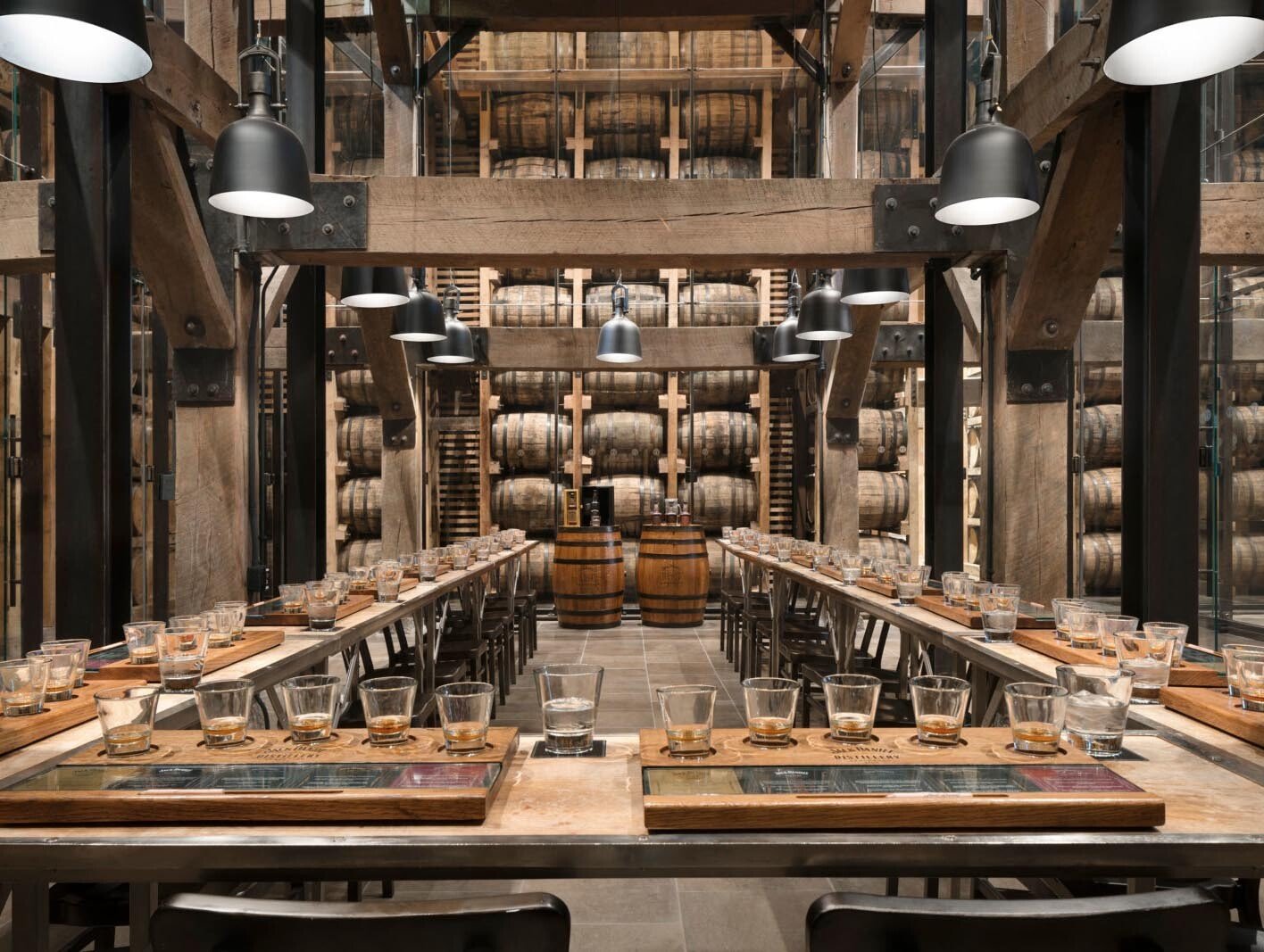
About Jack Daniel's
The Jack Daniel's distillery in Lynchburg, Tennessee sits at the center of American whiskey's most documented origin story, drawing visitors to Moore County's limestone-rich hollow where iron-free cave spring water has shaped a recognizable spirit style for more than a century. Awarded Pearl 3 Star Prestige in 2025, it anchors Lynchburg's identity as a whiskey destination in a way few single sites achieve anywhere in the country.
Moore County, Tennessee does not look like a place that shaped a global industry. The town of Lynchburg has roughly 6,000 residents, a dry-county designation that still technically prohibits most alcohol sales despite sitting atop one of the world's most-visited distilleries, and a landscape defined by limestone karst, hardwood ridges, and the kind of quiet that makes the cave spring at the heart of Jack Daniel's operation feel less like a geological feature and more like an argument. That argument — that place produces flavor — is one American whiskey has been making against Scotch regionalism for decades, and nowhere makes it more concretely than this hollow off Lynchburg Highway.
What Limestone Means Here
The terroir conversation in spirits has lagged behind wine by a generation. While properties like Accendo Cellars in St. Helena or Adelaida Vineyards in Paso Robles have long articulated how soil composition shapes what ends up in the glass, distilleries have been slower to frame their water sources in the same terms. The cave spring beneath the Lynchburg property changes that framing. The water emerges at a consistent 56 degrees Fahrenheit, filtered through layers of limestone that strip iron from the supply before it reaches the still. Iron affects fermentation chemistry in measurable ways: its presence can introduce metallic off-notes and interfere with yeast activity. Its absence, in this water, contributes to a cleaner fermentation base and informs the specific flavor profile that has made this particular Tennessee whiskey identifiable across markets for more than 150 years.
That is a terroir argument. It is not identical to the soil-to-vine logic applied at Alban Vineyards in Arroyo Grande or the climate-driven choices at Adelsheim Vineyard in Newberg, but the underlying principle holds: the specific characteristics of a production site leave a traceable mark on the finished product. At Lynchburg, the site is not incidental. It is the production condition.
Tennessee Whiskey vs. Bourbon: A Distinction That Matters
American whiskey tourism tends to collapse Tennessee whiskey and bourbon into the same category for visitors outside the region, which distorts the competitive set. The Lincoln County Process , filtering new distillate through charcoal made from sugar maple before barrel entry , is a legal requirement for Tennessee whiskey designation and a genuine production difference, not a marketing distinction. The filtration takes days and removes certain congeners that would otherwise survive into the aged spirit. The result is a whiskey that sits in a different flavor register than Kentucky bourbon produced on similar grain bills, and understanding that difference is part of what a visit to Lynchburg offers. You arrive at a site where the production method is geographically specific, legally defined, and physically visible in the rick yards and filtration operations on the property.
For context on how regional identity shapes spirits production across different traditions, the comparison with Scotch whisky regionalism is instructive. Aberlour in Aberlour operates under a Speyside designation with its own water-source logic, and the parallels to Lynchburg's cave spring water argument are closer than most whiskey tourists realize. What Tennessee whiskey lacks in the formal appellation infrastructure that Scotch benefits from, it compensates for with a production specificity that is written into state law.
The 2025 Pearl 3 Star Prestige Award
EP Club's Pearl 3 Star Prestige designation in 2025 places the Lynchburg property in a tier that reflects sustained significance rather than novelty. The award functions as a trust signal for travelers calibrating their itinerary against verified quality benchmarks rather than travel-section hyperbole. Within American whiskey tourism, which has expanded considerably since the Kentucky Bourbon Trail formalized that state's industry into a visitor circuit, a Prestige-level recognition marks Lynchburg as a reference point rather than a regional alternative. Visitors arriving with that context will find a property scaled to meet it: the distillery operates as one of the most-visited spirits production sites in the United States, with tour infrastructure developed over decades to handle volume without reducing the site's educational depth. For comparable prestige-tier experiences in wine, properties like Alpha Omega Winery in Rutherford or Artesa Vineyards and Winery in Napa offer a useful frame: recognized properties where the visit carries institutional weight alongside sensory experience.
The Physical Experience of the Distillery
Approaching the property along Lynchburg Highway, the visual context arrives before the distillery itself: Moore County's low hills, the absence of large commercial infrastructure, and the black fungal staining on surrounding buildings and trees , a byproduct of ethanol evaporation from aging barrels known as Baudoinia compniacensis, or whiskey fungus, that marks the air around active rick yards. It is one of the more literal demonstrations of how a production site imprints itself on its surroundings. The rick houses themselves, where barrels age in the temperature swings of Tennessee's four-season climate, represent a different kind of terroir logic than the controlled cellars at Au Bon Climat in Santa Barbara or the cave-aged programs at Aubert Wines in Calistoga. Heat expands the spirit into the wood in summer; cold contracts it in winter. The Tennessee climate does the aging work that a winemaker's cellar manages by other means.
The cave spring, accessible on property tours, anchors the visit with something concrete: water flowing at a consistent temperature from a geological formation that predates the distillery by millennia. It is not theatrical in the way that many premium experiences are staged to be. The hollow is simply present, functional, and tied to production in a way that removes abstraction from the terroir argument. For visitors who have made stops at Andrew Murray Vineyards in Los Olivos or Alexander Valley Vineyards in Geyserville and engaged with how landscape shapes wine, Lynchburg offers the same conversation in a different idiom.
Planning a Visit
Lynchburg sits roughly 75 miles southeast of Nashville, accessible by car in under 90 minutes from the city. The town has limited accommodation options given its size, which means most visitors plan Lynchburg as a day trip from Nashville or from Chattanooga to the southeast, rather than as a multi-night base. Tour formats at the distillery range from standard walking tours of the production process to more in-depth offerings that cover the rick houses and tasting components; given the dry-county context, the legal structure of what can and cannot be purchased on-site has evolved over the years through specific legislative carve-outs, and current on-site retail and tasting options reflect those accommodations. Visitors should confirm current tour availability and format directly with the distillery before arrival, as capacity and programming can vary seasonally. The broader Lynchburg dining and experience context is covered in our full Lynchburg restaurants guide.
For travelers building a wider American whiskey and spirits itinerary, the Lynchburg visit pairs logically with a Scotch-comparative frame: Achaia Clauss in Patras represents the kind of 19th-century production heritage that Lynchburg shares in its own tradition, and the comparison between Old World and New World approaches to place-specific production is one worth carrying into the tour. Properties like Babcock Winery in Lompoc or B.R. Cohn Winery in Glen Ellen occupy different production traditions but share the same fundamental logic: a specific geography producing a specific character, visited in person to close the gap between label and land.
Frequently Asked Questions
- Is Jack Daniel's more low-key or high-energy?
- The atmosphere at Lynchburg reads as low-key relative to larger tourism circuits. Moore County's rural character, the small-town scale of Lynchburg itself, and the functional, production-oriented nature of the distillery site create a visit that is more educational than festive. The 2025 Pearl 3 Star Prestige award confirms its standing as a serious production destination rather than an entertainment venue. Visitors expecting Nashville's energy will find a different register here: quieter, more focused on process, and shaped by the geography of a Tennessee hollow rather than the infrastructure of a hospitality district. Pricing for tours is accessible relative to premium wine or spirits experiences at comparable prestige-tier properties.
- What wines is Jack Daniel's known for?
- Jack Daniel's does not produce wine. The Lynchburg property is a whiskey distillery, specifically producing Tennessee whiskey under the Lincoln County Process. The relevant production credentials are its iron-free cave spring water source, its charcoal filtration method, and its barrel-aging program in Tennessee's climate conditions. The EP Club Pearl 3 Star Prestige award (2025) recognizes it within the spirits category. For wine recommendations in comparable prestige tiers, the EP Club database covers producers across Napa, Sonoma, Paso Robles, and international appellations.
Related editorial
- Best Fine Dining Restaurants in ParisFrom three-Michelin-star icons to the next generation of Parisian chefs pushing boundaries, these are the restaurants that define fine dining in the world's culinary capital.
- Best Luxury Hotels in RomeFrom rooftop terraces overlooking ancient ruins to Michelin-starred hotel dining, these are the luxury hotels that make Rome unforgettable.
- Best Cocktail Bars in KyotoFrom sleek lounges to hidden speakeasies, Kyoto's cocktail scene blends Japanese precision with global influence in ways you won't find anywhere else.
Save or rate Jack Daniel's on Pearl
Keep this venue in your Pearl passport, rate it after you visit, and track it alongside every other place you collect.