

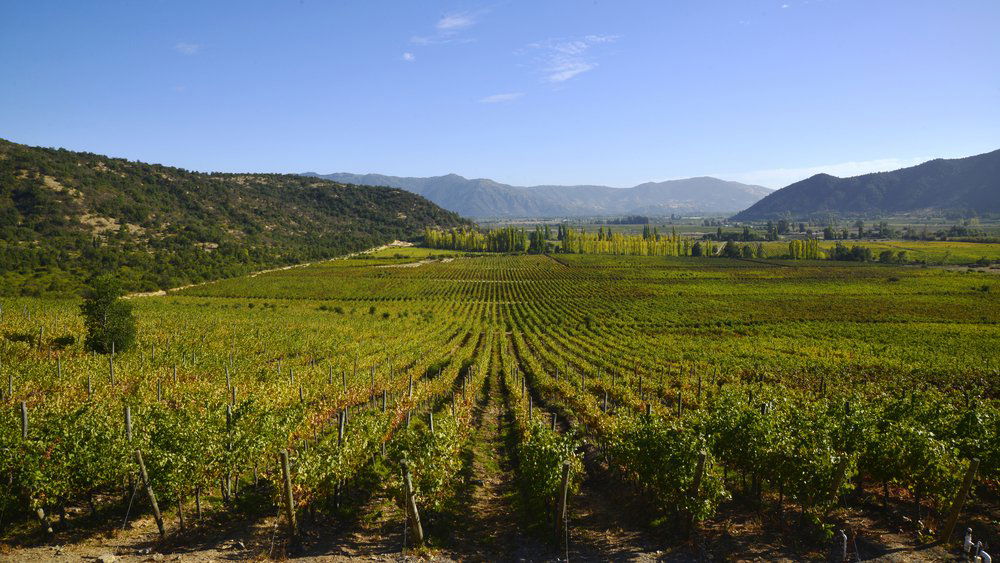
Viña Valdivieso
Lontué
Winery in Lontué, Chile
 Book with Pearl
The Read
Granitic Maule Terroir
Why go
Viña Valdivieso is worth pursuing for a planned Lontué wine-country occasion, especially when the winery visit is the anchor rather than a casual add-on. Because public-facing details on format, food, and pricing are thin, value depends on securing the right appointment and comparing it against nearby winery options before building the day around it.
About Viña Valdivieso
Viña Valdivieso in Lontué holds Pearl 3 Star Prestige recognition for 2025. That distinction gives the venue a clear reason to appear on a shortlist when a recognized quality marker matters. It establishes Viña Valdivieso as a notable venue to consider, especially for a planned outing where the venue itself is the focus rather than simply a quick stop along the way. For readers comparing options in and around Lontué, the recognition can help separate a deliberate destination from a more casual possibility.
Plan with flexibility around practical details such as service format, food service, pricing, hours, reservations, and group arrangements, and use the venue's official channels for current visit information. In practical terms, avoid assuming how a visit works until those details have been checked directly. The dress code is smart casual, which gives a useful planning cue: the venue is better matched with a polished, tidy approach than with an overly informal one, while still not calling for formalwear.
A better fit for a planned occasion than a casual add-on
For occasion planning, Viña Valdivieso is best approached as a Lontué venue with Pearl 3 Star Prestige recognition rather than as a casual walk-in stop. Its strongest appeal is for intentional planning rather than spontaneous decision-making. If the purpose of the day is to choose a venue with recognized standing and build the outing around that choice, Viña Valdivieso has a clear reason to be in the conversation. If, instead, the plan depends on precise timing, an assumed meal, an easy drop-in format, or arrangements for a larger party, check those details in advance rather than treating them as guaranteed.
Readers planning a broader route should use current local planning resources to decide whether the trip needs food, lodging, or another activity nearby. A route can be made smoother when the essential questions are addressed in advance: when to arrive, whether the venue is available for the intended kind of visit, whether any reservation or advance communication is needed, and whether the rest of the day should include other nearby plans. None of those details should be inferred from the recognition alone. Treat the Pearl 3 Star Prestige recognition as the reason to investigate further, not as a substitute for current operating information.
The decision is direct: consider Viña Valdivieso when its Lontué setting, smart casual dress code, and 2025 Pearl 3 Star Prestige recognition match the occasion. It is a stronger fit for readers who already want the venue itself to carry the weight of the outing, and who are comfortable confirming the practical details before committing. Confirm timing, availability, prices, food, or group suitability directly before building the day around it. That extra step keeps expectations aligned with the visit as it will actually work.
Planning details
- Location
- Luz Pereira 320, 3380063 Lontue, Molina, Maule
- Website
- valdiviesovineyard.com
- Phone
- +56752471000
The take
The Take
The Vibe
Viña Valdivieso presents a quietly authoritative character that leans into place rather than performance. The tasting experience is rooted in Maule’s drier, wind‑torn interior: warm days, cool nights and a patchwork of granitic and clay‑loam soils that reward patient viticulture. As one of Chile’s longer‑established producers, the estate reads as experienced and grounded — less spectacle, more geological and stylistic fidelity. Its Pearl 3 Star Prestige ranking underlines a commitment to quality over volume. The overall effect is an understated, scenic winery experience for those who value terroir expression and historical continuity.
Best For
Valdivieso works best for visitors focused on learning about place and concentrated, terroir‑driven wines. Its location in Lontué and emphasis on how soil and climate shape vine behavior make it a natural stop for wine education and longer daytime visits. The producer’s regional prestige also makes it appropriate for low‑key special occasions and group outings that prioritize meaningful tasting over flashy hospitality. Travelers who want a measured, contemplative exploration of Maule’s inland character will find this estate aligns with that purpose.
Tasting Tips
When choosing bottles here, prioritize expressions that emphasize varietal ageing and site specificity: the description highlights how Lontué’s granitic upper slopes and clay terraces drive different vine behaviors, and it notes a historical leaning toward red varieties that build slowly toward ripeness. Favor estate or single‑site bottlings and wines presented as terroir‑focused or reserve‑level, as the Pearl 3 Star Prestige suggests stronger, quality‑oriented cuvées. Ask staff about parcels or slope distinctions to better understand how the geology shapes each wine’s profile.
Venue details
Ambiance
Historic and sophisticated atmosphere in modern facilities with oak barrel aging cellars, evoking a sense of tradition and quality craftsmanship.
Tags
Vibe
Best For
Experience
View
At the Vineyard
- Appellation
- Curicó Valley
- Varietals
- Cabernet Sauvignon, Carmenere, Syrah, Cabernet Franc, Merlot
- Tour Duration
- 60-90 minutes
- Wine Club
- Not available
Know before you go
Know Before You Go
- Getting there
- Luz Pereira 320, 3380063 Lontue, Molina, Maule
Planning details
Location
Also consider
Also Consider
- El Gobernador (Miguel Torres Chile), Notable alternative
- Viña San Pedro, Notable alternative
- Viña Requingua, Notable alternative
- Viña Viu Manent, Notable alternative
- Viña Santa Cruz, Notable alternative
Winery context
Against El Gobernador (Miguel Torres Chile), Viña San Pedro, and Viña Requingua, Viña Valdivieso is the higher-effort choice: better for travelers who want the winery to define the day, weaker for anyone trying to keep plans flexible. With booking difficulty set high, it is not the safest backup if the group needs a quick confirmation.
For value, the smarter move is to compare access and format before judging price. If a nearby peer can confirm timing, group handling, and tasting structure earlier, that may deliver better practical value even if the name carries less pull. For ambiance-led winery days, also cross-shop Viña Viu Manent and Viña Santa Cruz, especially if the occasion needs a smoother guest experience over a harder-to-secure appointment.
Recommendation: choose Viña Valdivieso for a serious Maule wine stop where recognition and selectivity matter. Choose one of the peers if the brief is easier booking, clearer logistics, or a more predictable group outing.
Explore Lontué
Around this place
Discover more on Pearl
Unlock the full Viña Valdivieso guide in Pearl, including awards, comparisons, FAQs, planning details, and nearby places.
Compare Viña Valdivieso
| Venue | Location | Awards |
|---|---|---|
| Viña Valdivieso | Lontué | No published awards |
| El Gobernador (Miguel Torres Chile) | Curicó | No published awards |
| Viña San Pedro | Curicó | 2026 Falstaff Winery Guide |
| Viña Requingua | Curicó | No published awards |
| Viña Viu Manent | Santa Cruz | 2026 Falstaff Winery Guide2025 World's 50 Best Vineyards · #402024 World's 50 Best Vineyards · #192023 World's 50 Best Vineyards · #432022 World's 50 Best Vineyards · #322021 World's 50 Best Vineyards · #452020 World's 50 Best Vineyards · #432019 World's 50 Best Vineyards · #23 |
| Viña Santa Cruz | Lolol | No published awards |


How Viña Valdivieso Lontué compares with similar nearby venues.
FAQ
Frequently Asked Questions
When is the best time to visit Viña Valdivieso?
Can Viña Valdivieso handle large groups?
What is the dress code at Viña Valdivieso?
The dress code for Viña Valdivieso is smart casual.
What recognition does Viña Valdivieso have?
Viña Valdivieso holds Pearl 3 Star Prestige recognition for 2025.