

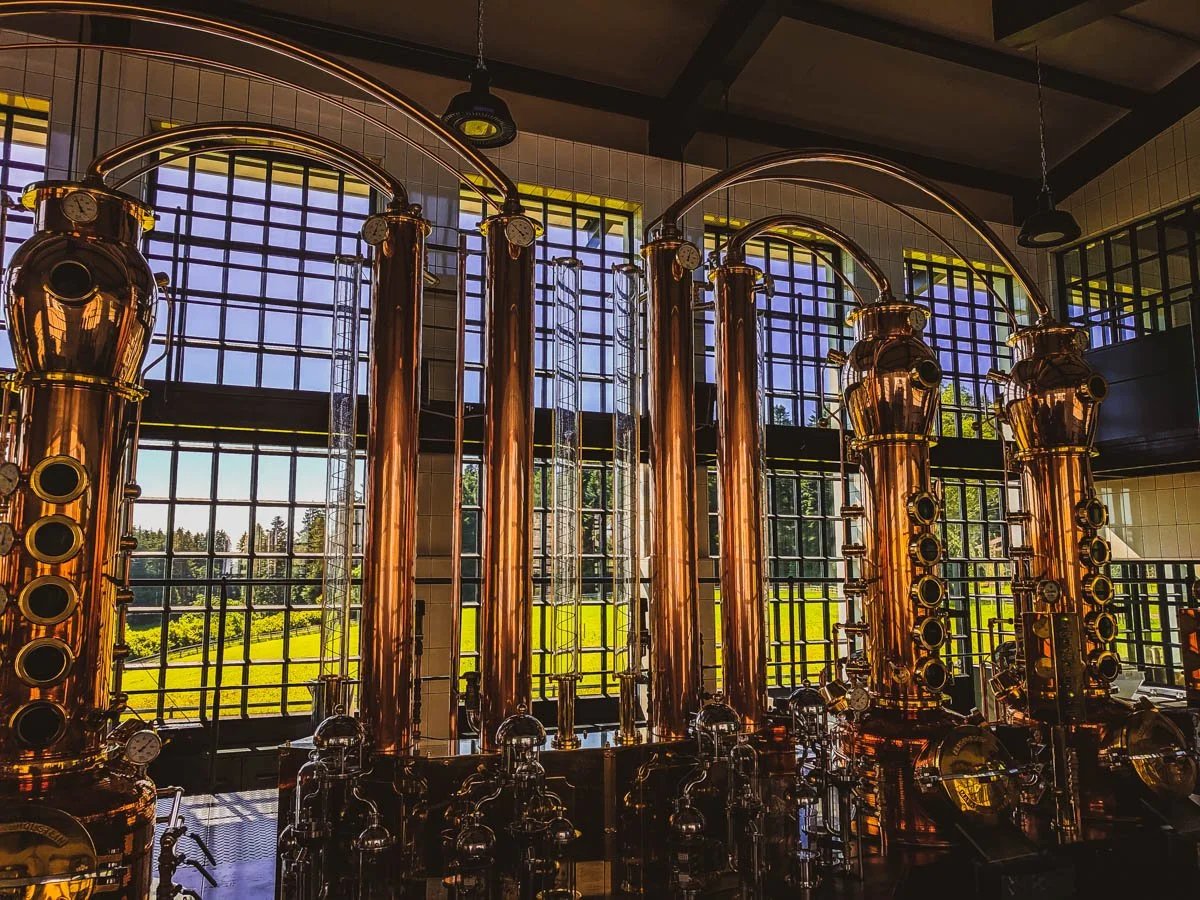
Monkey 47
Black Forest, Loßburg
Winery in Loßburg, Germany
 Book with Pearl
The Read
Black Forest Botanical Precision
Why go
Monkey 47 is worth prioritizing only for travelers who specifically want a spirits-led stop in the Black Forest. It is a weaker fit for casual tasting groups because public-facing practical details are thin, so compare it with Baden wineries or another distillery before building an itinerary around it.
About Monkey 47
Monkey 47 in Loßburg is listed with a smart casual dress code and Pearl 2 Star Prestige (2025). Those details make it a notable stop for travelers looking for an elevated visit in the area.
If you need specifics before committing, such as availability, food expectations, group handling, or the exact nature of a visit, confirm them directly with the venue through its official channels.
Worth it for travelers who can confirm the details first
The strongest reasons to keep Monkey 47 on a Loßburg shortlist are its Pearl 2 Star Prestige (2025) recognition and smart casual dress code. Those facts are useful, but they do not by themselves define the guest experience.
For broader trip planning, compare Monkey 47 with other named options such as Lehmann Distillery, Weingut Andreas Laible, Weingut Bernhard Huber, Weingut Franz Keller, and Weingut Salwey, or consider other dining in Loßburg generically. Check each venue directly before relying on details such as opening times, reservations, menus, tastings, or group arrangements.
Visit details: confirm before planning around them
If a specific kind of visit is the reason for going, do not assume it is offered; ask the venue directly before building an itinerary around it.
Timing and logistics should also be handled cautiously. Plan to check hours, prices, a phone number, a website, and a public booking path directly with the venue before visiting. Treat Monkey 47 as a Loßburg venue to verify in advance, not as a spontaneous stop with confirmed public-facing details.
Planning details
- Location
- Äußerer Vogelsberg 7
- Phone
- '+49 (0) 7446 91 766 20
The take
The Take
The Vibe
Monkey 47 presents a refined, terroir-driven personality that reads more like a craft estate than a conventional distillery. The Black Forest is treated as the primary ingredient, and that discipline—sourcing forty-seven botanicals from the local ecology—gives the gin layered complexity and technical precision. The producer’s Pearl 2 Star Prestige designation and the essay’s comparisons to site-specific German winemakers position the operation as sophisticated and elegant: a thoughtful, restrained maker that foregrounds provenance and botanical nuance rather than loud branding or volume-driven craft flourishes.
Best For
This is a place for people who come to learn and to taste closely: scholars of botanical expression, spirits enthusiasts curious about site-specific production, and visitors traveling alone to focus on nuance. The write-up frames Monkey 47 as part of a broader shift toward terroir and restraint, making it especially rewarding for those interested in the intersection of landscape and flavour. Rather than a boisterous tasting-room scene, the operation suits contemplative visits that prioritise education, close sensory attention and conversations about sourcing and technique.
Tasting Tips
When exploring Monkey 47’s offerings, centre your questions on provenance and botanical profile: the distillery’s defining claim is its forty-seven botanicals, many harvested from the Black Forest. Ask staff which expressions best showcase local berries, mosses and herbs and look for higher-tier bottlings tied to the producer’s Pearl 2 Star Prestige standing if you want the most site-specific examples. Keep requests focused on how individual botanicals and local sourcing shape the spirit rather than on cocktail-driven interpretations—this is about terroir and precision.
Venue details
Ambiance
Artisanal and historic atmosphere in the heart of the Black Forest with a focus on craftsmanship and sensory exploration during guided tours.
Tags
Vibe
Best For
Experience
Sourcing
At the Vineyard
- Appellation
- Schwarzwald
- Tour Duration
- 60-90 minutes
- Wine Club
- Not available
Know before you go
Know Before You Go
- Getting there
- Äußerer Vogelsberg 7
Planning details
Location
Äußerer Vogelsberg 7 · Directions
Also consider
Where to look if this is hard to arrange
If Monkey 47 cannot be made to work, spirits-focused travelers should look at Lehmann Distillery first. Wine-focused travelers should shift to Weingut Bernhard Huber or Weingut Franz Keller, where the category fit is clearer for a tasting itinerary.
Winery context
How it compares with nearby wine and spirits options
Choose Monkey 47 if the point is spirits rather than a conventional winery visit. Compared with Weingut Andreas Laible, Weingut Bernhard Huber, Weingut Franz Keller, and Weingut Salwey, it is the less obvious pick for a wine-country itinerary but the better fit for travelers who want a production story outside vineyard tasting.
For value and ease, the Baden wineries are safer cross-shops because the visitor expectation is clearer: wine tasting, estate context, and a more familiar route-planning rhythm. Monkey 47 is more compelling for enthusiasts who care about gin and are comfortable confirming details ahead of time. It is not the practical first choice for large groups or anyone trying to compare tasting fees in advance.
Lehmann Distillery is the closest comparison by category rather than geography. If the trip is spirits-led, compare those two first; if the trip is built around wine, start with Weingut Bernhard Huber or Weingut Franz Keller and use Monkey 47 only if the group wants a sharper detour from the vineyard format.
Explore Loßburg
Around this place
Discover more on Pearl
Unlock the full Monkey 47 guide in Pearl, including awards, comparisons, FAQs, planning details, and nearby places.
Compare Monkey 47
| Venue | Location | Awards |
|---|---|---|
| Monkey 47 | Loßburg | No published awards |
| Weingut Andreas Laible | Durbach | 2026 Falstaff Winery Guide |
| Weingut Bernhard Huber | Malterdingen | 2026 Falstaff Winery Guide |
| Weingut Franz Keller | Vogtsburg im Kaiserstuhl | 2026 Falstaff Winery Guide |
| Weingut Salwey | Oberrotweil | 2026 Falstaff Winery Guide |
| Lehmann Distillery | Obernai | No published awards |

How Monkey 47 Loßburg compares with similar nearby venues.
FAQ
Frequently Asked Questions
What is about Monkey 47 in Loßburg?
The confirmed details are the Loßburg location, smart casual dress code, and Pearl 2 Star Prestige (2025). Other specifics, including hours, pricing, booking method, menu, and service format, are not included here.
Does Monkey 47 offer shipping or retail sales?
Shipping, retail sales, and ordering details are not included for Monkey 47 in Loßburg. If those details matter, confirm directly with the venue through its official channels.
What should I expect from a visit to Monkey 47?
The exact visitor format is not included here. The confirmed details are smart casual dress code and Pearl 2 Star Prestige (2025), so do not assume a particular menu, tasting, beverage program, tour, or retail experience without checking directly.