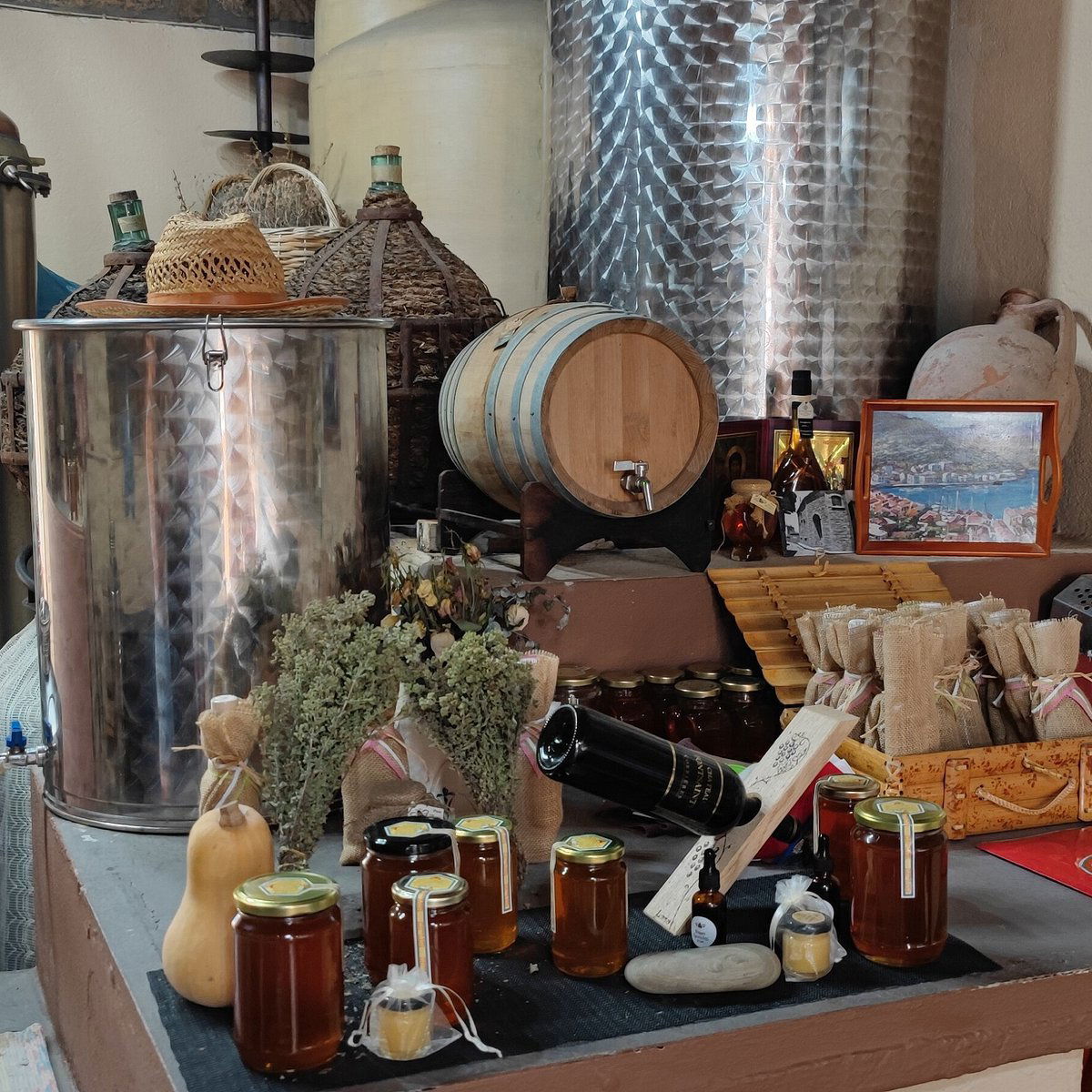

Winery in Limnos, Greece
Kazakis Distillery
250ptsNorth Aegean Craft Distillation

About Kazakis Distillery
Kazakis Distillery operates on Limnos, a North Aegean island whose volcanic soils and dry winds shape spirits and wines with a distinctly mineral, salt-edged character. Recognised with a Pearl 1 Star Prestige in 2025, it sits among a small tier of Greek producers drawing international attention to the island's underappreciated terroir. For visitors making the crossing to Limnos, a stop here is a direct encounter with what this landscape tastes like.
What Limnos Tastes Like
The North Aegean islands do not produce spirits and wines the way the Greek mainland does. Limnos sits at a latitude where the summers are long and harsh, the soils volcanic and mineral-heavy, and the winds persistent enough to concentrate everything growing in the ground. That environmental pressure shows up in what comes out of any bottle made here: a lean, saline quality that no technique fully manufactures and no other region in Greece quite replicates. Kazakis Distillery works inside that set of conditions, and the 2025 Pearl 1 Star Prestige recognition it received is, in effect, a signal that what the island naturally provides is being handled with care and precision.
Limnos has historically sat outside the circuits that wine and spirits tourists run in Greece. Santorini draws the volcanic-terroir crowds, Naoussa draws the red-wine serious drinker, and the Peloponnese handles most of the heritage distillery traffic. The North Aegean remains quieter on the international calendar, which means producers working there are not competing on visibility the same way. Kazakis benefits from that position: the audience that arrives has specifically sought out what the island offers, not a branded experience built around mass recognition.
The Island's Distillery Tradition in Context
Greece's distillery sector occupies a different category from its wine production in terms of international profile. Tsipouro and ouzo are the dominant spirits traditions, and both have strong regional identities tied to specific appellations. Limnos has its own protected designation for Muscat-based wines, and the island's aromatics carry through into spirit production as well. Where a producer like Apostolakis Distillery in Volos operates in a mainland context with broader raw material access, an island producer on Limnos is working with a more constrained and specific agricultural base. That constraint, in most serious food and drink traditions, tends to produce more defined character rather than less.
The comparison point worth holding is what happens when a distillery draws directly from its immediate agricultural environment rather than sourcing ingredients from across a wider region. On Limnos, the Muscat of Alexandria vine has been cultivated for centuries, and it imprints a particular aromatic register on everything made from it. Producers in other parts of Greece, including Abraam's Vineyards in Komninades and Acra Winery in Nemea, work with distinctive indigenous varieties in their own zones. The Limnos version of terroir expression runs through that Muscat character: florals on the nose, a drier and more mineral finish than the sweetness might suggest.
Arriving and Approaching the Visit
Limnos is accessible by ferry from Kavala and Thessaloniki, and by domestic flight from Athens and Thessaloniki. The island is not compact in the way some Aegean islands are; distances between settlements are real, and a visit to a producer requires more deliberate planning than a day-trip stop on a wine trail. That logistical investment is, for a certain kind of traveller, precisely the point. The producers who survive on islands with limited visitor infrastructure tend to be the ones who have something worth the effort.
The atmosphere at a working distillery on a Greek island sits well away from formal tasting-room conventions. Visits tend to be direct and production-led, with the process itself doing the explaining rather than a scripted tasting narrative. There is typically little theatrical staging in these environments. What visitors encounter at Kazakis is more likely to resemble a working operation that opens its doors than a hospitality venue that also makes products. The dress code expectation follows accordingly: practical rather than dressed for a restaurant occasion.
For those building a broader Limnos itinerary, our full Limnos restaurants guide covers the island's eating scene in depth. Pairing a distillery visit with a meal at one of the island's fish tavernas, where Muscat-based wines appear regularly on the table, provides useful context for the spirit production as well.
Where Kazakis Sits in the Greek Spirits Tier
The Pearl 1 Star Prestige designation in 2025 places Kazakis Distillery at a recognised quality tier within a competitive set that increasingly includes well-capitalised operations drawing on multiple appellation sources. The Greek spirits sector has attracted international attention over the last decade, with producers across Attica, the Peloponnese, and Macedonia investing in modern distillation infrastructure while simultaneously arguing for the heritage credentials of tsipouro and ouzo. Kazakis operates within that conversation but from a geographically specific position that larger, more commercially-oriented producers cannot replicate simply by sourcing Limnos fruit.
The comparison to wine producers working in similar specialist terroir conditions is instructive. Alpha Estate in Amyntaio has built a case for Florina-region precision over decades. Artemis Karamolegos Winery in Santorini operates where volcanic terroir is the primary argument. Artisans Vignerons de Naoussa represents the collective small-producer model in a celebrated red wine zone. In each case, the award recognition functions as verification that the terroir argument holds up in the glass. The Pearl 1 Star Prestige at Kazakis makes the same kind of claim for North Aegean distillate.
Greek producers working in less-trafficked regions face a structural challenge: the reference points that educated drinkers carry into a tasting are built around the well-known appellations. Visitors coming to Kazakis from a background in Scotch whisky can look at Aberlour in Aberlour as a parallel for single-origin, site-specific spirit production with strong terroir identity. Those approaching from a Napa perspective might find Accendo Cellars in St. Helena a useful frame for how place-of-origin claims translate into premium positioning. The Kazakis approach belongs to the same category of argument, applied to a Greek island context where the raw materials are distinctive but the international recognition infrastructure is less developed.
Other Greek Producers Worth Knowing
Understanding where Kazakis Distillery sits within the broader Greek production map is easier when you have reference points across different regions. Achaia Clauss in Patras represents the heritage end of Greek wine and spirit production, operating since the nineteenth century. Aiolos Winery in Palaio Faliro and Aoton Winery in Peania work in Attica, where proximity to Athens has shaped a more urban-facing production model. Akrathos Newlands Winery in Panagia and Anatolikos Vineyards in Xanthi push into the northern and northeastern edges of Greece's wine map, where the terroir arguments are similarly place-specific and less mainstream-familiar. Avantis Estate in Chalkida and Aiolos Winery round out a picture of Greek production that is far more geographically and stylistically varied than the Santorini-and-Nemea shorthand suggests.
Planning a Visit
Because specific booking methods, opening hours, and contact details for Kazakis Distillery are not publicly confirmed at the time of writing, the practical approach is to make contact through local tourism offices in Limnos or through accommodation hosts on the island, who typically maintain current producer contacts. This is common practice with smaller island producers in Greece, where hospitality arrangements are often handled informally and schedules follow production rhythms rather than fixed visitor timetables. Arriving in Limnos with flexibility built into the itinerary gives the visit a better chance of coinciding with the distillery's availability.
The island's visitor season concentrates in July and August, when ferries and flights run at higher frequency. Visiting in shoulder months, particularly May, June, or September, offers better access conditions, cooler working temperatures, and a more direct interaction with producers who are not managing peak-season tourist volume at the same time.
Frequently Asked Questions
Is Kazakis Distillery more formal or casual?
Based on the context of working island distilleries in Greece and the production-first character that defines operations at this scale, Kazakis is almost certainly a casual, process-led experience rather than a formal tasting venue. The Pearl 1 Star Prestige recognition speaks to product quality, not hospitality infrastructure. Visitors should expect an authentic production environment rather than a curated presentation space.
What wines and spirits should I try at Kazakis Distillery?
The Limnos appellation is built on Muscat of Alexandria, which produces wines and spirits with a distinctly aromatic and mineral character shaped by the island's volcanic soils. Any production from Kazakis drawing on that local variety will give the clearest expression of what the island's terroir delivers. The 2025 Pearl 1 Star Prestige recognition confirms that what is being made here meets a recognised quality standard.
Why do people go to Kazakis Distillery?
The primary draw is terroir specificity: Limnos produces spirit and wine character that the Greek mainland does not replicate. The Pearl 1 Star Prestige award gives visitors a verifiable quality anchor before the trip, and the island's relative remove from the main Greek wine tourism circuits means the visit carries a degree of intentionality that guided tours of more accessible producers do not. Visitors come because they want to understand what this particular island, with its particular soils and climate, tastes like in a glass.
Related editorial
- Best Fine Dining Restaurants in ParisFrom three-Michelin-star icons to the next generation of Parisian chefs pushing boundaries, these are the restaurants that define fine dining in the world's culinary capital.
- Best Luxury Hotels in RomeFrom rooftop terraces overlooking ancient ruins to Michelin-starred hotel dining, these are the luxury hotels that make Rome unforgettable.
- Best Cocktail Bars in KyotoFrom sleek lounges to hidden speakeasies, Kyoto's cocktail scene blends Japanese precision with global influence in ways you won't find anywhere else.
Save or rate Kazakis Distillery on Pearl
Keep this venue in your Pearl passport, rate it after you visit, and track it alongside every other place you collect.