
Winery in La Rioja, Argentina
Bodega Chañarmuyo
500ptsHigh-Altitude Famatina Viticulture
About Bodega Chañarmuyo
Bodega Chañarmuyo operates at serious altitude in Argentina's La Rioja province, where the Famatina mountain range creates growing conditions distinct from the better-known valleys further south. A Pearl 2 Star Prestige award in 2025 places it among the more closely watched producers in the country's emerging high-altitude tier. For those exploring Argentine wine beyond Mendoza's mainstream, this is a producer worth understanding.
Where the Famatina Range Sets the Terms
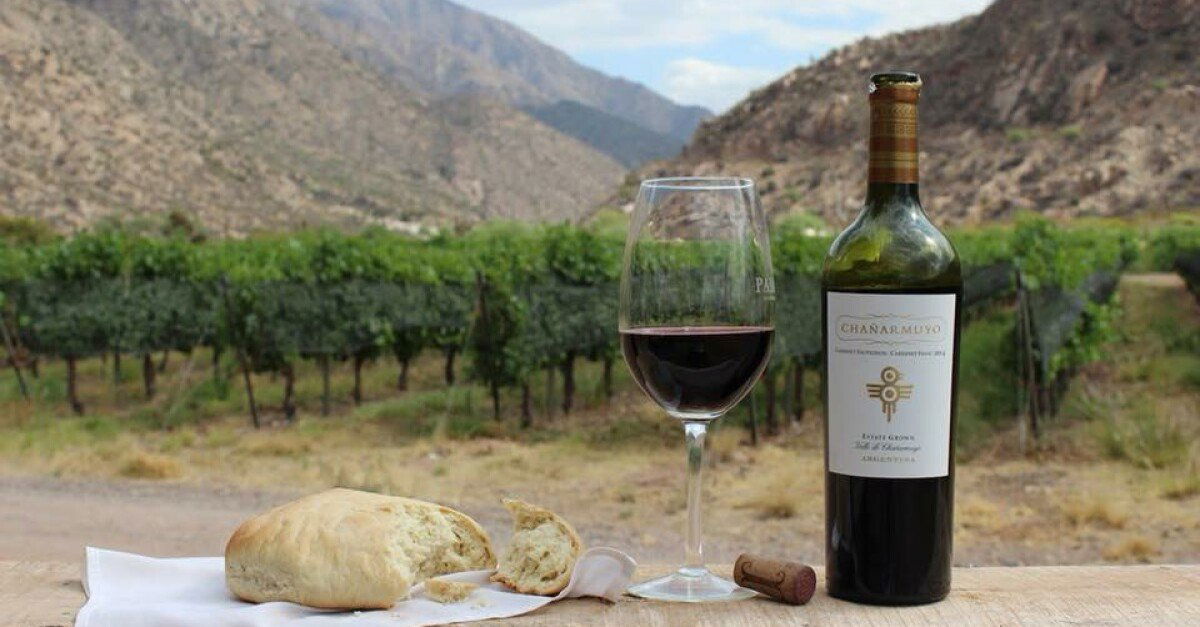
There is a particular quality of light in La Rioja's pre-cordillera that photographers and viticulturalists both notice: thin, fierce, and direct in a way that the broader Mendoza valley rarely is. At Bodega Chañarmuyo, situated along the road to the Chañarmuyo reservoir in the foothills of the Famatina mountain range, the physical environment is not background detail. It is the primary winemaking variable. The combination of extreme diurnal temperature swings, low humidity, and high-altitude ultraviolet exposure produces fruit with a character that diverges clearly from what Mendoza's better-irrigated, lower-elevation floors deliver.
Argentina's wine story has long been anchored further south. The Luján de Cuyo and Maipú subregions, home to producers like Bodega Norton in Luján de Cuyo and Bodega Antigal in Maipú, have historically set the benchmark for how international markets understand Argentine Malbec. La Rioja sits further north, with a drier continental climate and vineyard elevations that shade into territory more comparable to Salta's Calchaquí Valleys than to Mendoza's warmer floor zones. That positioning matters. Wines from this latitude and altitude tend to carry higher natural acidity, more concentrated phenolics, and aromatic profiles that reward attention rather than immediate accessibility.
A 2025 Pearl 2 Star Prestige: What That Signals
Bodega Chañarmuyo holds a Pearl 2 Star Prestige rating for 2025, an award designation that places it within the upper tier of EP Club's recognition framework. In Argentina's broader producer landscape, this kind of recognition is increasingly being extended to wineries operating outside the traditional Mendoza axis, reflecting a wider critical reassessment of what high-altitude, lower-profile regions can achieve. Salta's Cafayate valley, home to Bodega El Esteco in Cafayate and Bodega Colomé in Molinos, made this transition into serious critical attention over the past two decades. La Rioja is earlier in that arc.
For a producer in a province that rarely appears on international tasting itineraries, a prestige-tier rating is not merely a badge; it functions as a navigational signal for buyers and collectors who have already worked through the Mendoza catalogue and are looking at what's next. The award confirms that the winemaking here responds to the environment with enough precision to draw comparisons against established peers rather than simply being evaluated on a curve for regional novelty.
Terroir Without Qualification
La Rioja's wine-growing terroir is built on geology that predates most of the province's viticultural history. The Famatina massif, which defines the landscape around Chañarmuyo, is an old crystalline block that deposits granite and alluvial material across its piedmont. Soils in this zone tend toward sandy loam with good drainage, low organic matter, and enough mineral complexity to influence wine character directly. At altitude, root systems work harder, vine stress is higher, and berry size is typically smaller, concentrating juice composition.
The diurnal range here, the gap between daytime high and overnight low temperatures during the growing season, is one of the most pronounced in Argentine viticulture. This is the mechanism that preserves aromatic freshness and natural acidity in fruit that also accumulates significant sugar under intense solar radiation. The result is wines with structural contrast: warmth from phenolic ripeness sitting alongside tension from acid retention. That combination is the regional signature, and it positions La Rioja alongside the high-altitude producers in Salta rather than the mainstream Mendoza floor.
Producers working comparable elevation-driven terroir in Argentina include Terrazas de los Andes in Mendoza, whose altitude-stratified approach to Malbec has been influential in demonstrating how elevation changes the varietal's character, and Bodega DiamAndes in Tunuyán, which works the Valle de Uco's higher-altitude zones. Chañarmuyo, positioned further north and at comparable or greater heights, represents a distinct expression within this emerging high-altitude argument.
La Rioja in the Wider Argentine Wine Picture
Argentina's wine regions are not a single market. The country spans a vertical range of climatic zones, from the low-elevation warmth of San Rafael to the extreme altitude of Salta's Payogasta, and serious producers at each level make wines that differ fundamentally in structure and ambition. La Rioja's place in this spectrum has historically been undervalued, partly because the province lacked the infrastructure that Mendoza built over a century of export-oriented production, and partly because the market narrative around Argentine wine consolidated early around Malbec from a small set of well-funded estates.
That consolidation is loosening. Critical attention has moved north and upward in altitude, following producers who can demonstrate that terroir-driven character, rather than brand investment, is the primary differentiator. Rutini Wines (La Rural) in Tupungato and Bodega Bressia in Agrelo both operate within Mendoza's increasingly varied subregional geography, illustrating how the market has already begun differentiating within the province. La Rioja takes that differentiation a step further, offering conditions that Mendoza simply cannot replicate at equivalent latitudes.
For visitors oriented toward wine exploration rather than branded tourism, the province offers something that Mendoza's more developed circuit cannot: proximity to the winemaking without the commercial insulation that comes with high visitor volume. Estates here are working wineries in the most direct sense, surrounded by landscape that has not yet been softened by boutique hotel infrastructure and tasting-room architecture designed for Instagram. Familia Schroeder in San Patricio del Chañar, operating in Patagonia's Neuquén province, represents a parallel model of serious production in a lower-profile region; the dynamics of discovery are similar.
Planning a Visit to Chañarmuyo
The address at Camino Al Dique s/n places Bodega Chañarmuyo outside any urban centre, on the route toward the Chañarmuyo reservoir in the pre-cordillera. Access requires independent transport; this is not a destination reachable by local transit from the provincial capital of La Rioja city. The road environment and surrounding terrain are part of what makes a visit worthwhile, as the agricultural zone sits within a mountain approach that gives physical context to the growing conditions before the first bottle is opened.
Visitors planning a broader Argentine wine itinerary can use Chañarmuyo as the northern anchor of a circuit that moves south through Mendoza's varied subregions. Those building a focused La Rioja component should consult our full La Rioja restaurants guide for dining context and regional orientation. Given the limited public information currently available about booking procedures and visiting hours, direct contact with the bodega is advisable before travelling. The absence of published visitor infrastructure data reflects the winery's operational model rather than any lack of hospitality once on-site.
For context on how Argentina's other ambitious producers approach comparable terroir, the work being done at Escorihuela Gascón in Godoy Cruz and Bodega Trapiche in El Trapiche offers useful comparative points within the Mendoza axis. Beyond Argentina entirely, the elevation and isolation parallels at Accendo Cellars in St. Helena illustrate how site-specific production across different hemispheres converges on similar principles: constraint as a creative condition.
Frequently Asked Questions
- What kind of setting is Bodega Chañarmuyo?
- Bodega Chañarmuyo is a working winery in the pre-cordillera foothills of La Rioja province, Argentina, situated along the road to the Chañarmuyo reservoir in the Famatina mountain range. The setting is rural and remote, with no urban infrastructure nearby. It holds a Pearl 2 Star Prestige award for 2025, placing it within EP Club's upper recognition tier. Pricing and booking details are not publicly listed, and direct contact with the bodega is the recommended approach for visit planning.
- What wine is Bodega Chañarmuyo famous for?
- Chañarmuyo operates in a high-altitude La Rioja zone defined by large diurnal temperature variation, low humidity, and granitic-alluvial soils, conditions that produce wines with concentrated phenolics and retained natural acidity. The region shares climatic logic with Salta's Calchaquí Valleys, where producers like Bodega El Esteco and Bodega Colomé have built reputations on high-altitude expression. Specific winemaker details and labelled varietals are not published in available records, but the Pearl 2 Star Prestige recognition from EP Club confirms production at a level that warrants serious attention. For deeper context on the region, see our full La Rioja guide.
Related editorial
- Best Fine Dining Restaurants in ParisFrom three-Michelin-star icons to the next generation of Parisian chefs pushing boundaries, these are the restaurants that define fine dining in the world's culinary capital.
- Best Luxury Hotels in RomeFrom rooftop terraces overlooking ancient ruins to Michelin-starred hotel dining, these are the luxury hotels that make Rome unforgettable.
- Best Cocktail Bars in KyotoFrom sleek lounges to hidden speakeasies, Kyoto's cocktail scene blends Japanese precision with global influence in ways you won't find anywhere else.
Save or rate Bodega Chañarmuyo on Pearl
Keep this venue in your Pearl passport, rate it after you visit, and track it alongside every other place you collect.