
Winery in Kokkinogia, Greece
Ktima Pavlidis
500ptsNorthern Greek Terroir Precision
About Ktima Pavlidis
Ktima Pavlidis sits in Kokkinogia in northern Greece, a region where Drama's high-altitude vineyards produce wines of marked structure and cool-climate restraint. The estate holds a Pearl 2 Star Prestige rating for 2025, placing it in the upper tier of Greek wine producers operating outside the country's more commercially familiar appellations. For those tracking the evolution of Drama as a serious wine region, Ktima Pavlidis is a reference point.
Drama's Vineyards and the Case for Northern Greece
The Drama wine region in northeastern Greece doesn't announce itself the way Santorini or Nemea does. There are no volcanic soils to invoke, no ancient grape mythology attached to a single indigenous variety. What Drama has instead is altitude, continental temperature swings, and a generation of producers who have spent the past two decades quietly building an argument for the region's seriousness. Ktima Pavlidis, based in Kokkinogia, is among the estates that have pushed that argument furthest. Its Pearl 2 Star Prestige recognition for 2025 positions it in the upper bracket of Greek wine production, a tier where the evidence is expected to arrive in the glass rather than on the label.
For context on where that sits within the Greek wine scene, consider that most international attention still flows toward Assyrtiko-driven Santorini producers like Artemis Karamolegos Winery or Xinomavro specialists in the north such as Artisans Vignerons de Naoussa and Alpha Estate in Amyntaio. Drama operates in a smaller orbit, which means the estates earning prestige-level recognition here are doing so without the appellation halo that accelerates recognition elsewhere.
Terroir in the Drama Basin
Kokkinogia sits within the Drama regional unit in the Macedonia-Thrace zone of Greece, where the Rhodope mountain range to the north and the Falakro massif to the west create a natural amphitheatre that moderates the otherwise hot Aegean summer. Vineyards here can reach elevations that keep nights cool well into the growing season, compressing fruit development and building the kind of phenolic structure that makes wines capable of extended bottle age. The soils in the area shift between sandy loams and heavier clay-limestone compositions depending on the specific plot, which gives producers working across multiple parcels a palate of different raw material to work with.
This combination of factors, warm days, cool nights, varied soils, and significant diurnal range, is precisely the profile that international winemaking has chased across Patagonia, the Adelaide Hills, and the higher elevations of Tuscany. Drama arrived at it naturally and has been refining how to translate it into the bottle for several decades. What distinguishes estates like Ktima Pavlidis within this geography is their sustained focus on expressing that specific character rather than chasing an internationally legible style at the expense of place.
The Estate at Kokkinogia
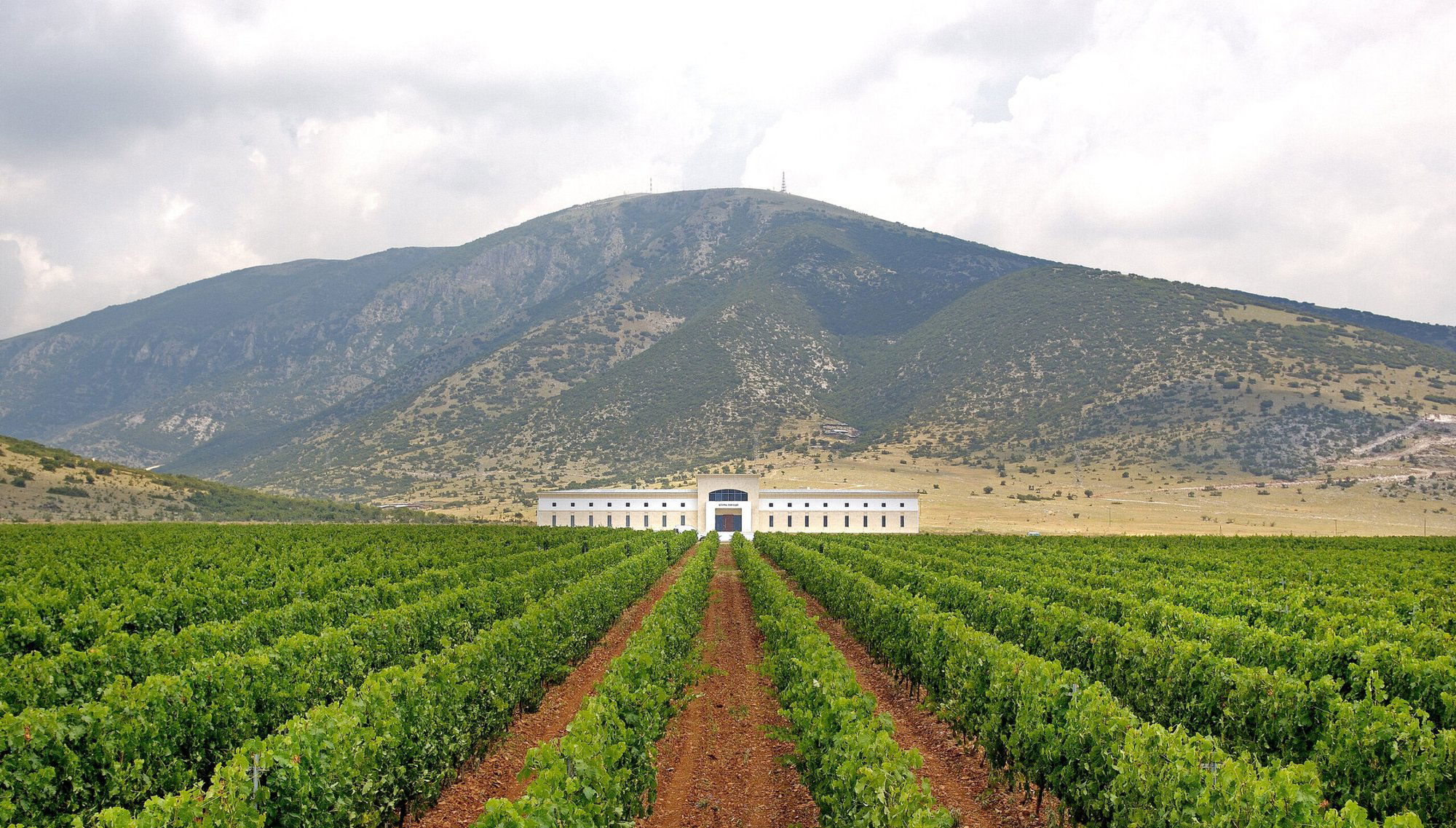
Arriving at a winery in this part of Greece requires a recalibration of expectation. The landscape is not the whitewashed-cliff postcard that drives so much wine tourism further south. Kokkinogia is agricultural territory, and the wineries here are working properties first. The visual register is forest, farmland, and modest infrastructure, which means the sensory experience is rooted in the land itself rather than in designed hospitality architecture. This is not a detraction. Producers operating in this mode tend to put their resources into the vineyard and cellar rather than into the visitor-facing amenities that characterise the premium agritourism circuit.
For visitors coming specifically for the wine, that orientation is a feature. The attention is on the liquid. For those comparing this kind of experience to, say, the more developed visitor infrastructure at Achaia Clauss in Patras or the coastal draw of Avantis Estate in Chalkida, the proposition is different but complementary. Ktima Pavlidis offers proximity to the source of a serious wine program in a region that rewards the effort to get there.
What the 2025 Pearl Prestige Rating Signals
Pearl's 2 Star Prestige designation for 2025 is not handed out on the basis of category or regional goodwill. Within the Pearl rating framework, it marks a producer operating at a level where consistency, typicity, and quality across the range justify positioning in the prestige tier. For Ktima Pavlidis, holding that recognition in a region like Drama rather than in an established appellation with built-in credibility carries additional weight. It signals that the wines are competitive on their own terms.
Across Greece, this kind of award-level recognition at the producer level is increasingly the metric that serious buyers and collectors use to build their cellar maps. The Michelin-equivalent logic applies: a rating attached to a producer operating in a less-scrutinised zone is often a sharper signal than the same rating attached to a producer in a zone where prestige is structural. Comparable producers earning recognition in adjacent or similarly positioned regions include Akrathos Newlands Winery in Panagia, Anatolikos Vineyards in Xanthi, and Abraam's Vineyards in Komninades, all of which are building cases for northeastern Greek wine on independent merit.
Planning a Visit
Kokkinogia is located in the Drama regional unit of eastern Macedonia. The nearest significant transport hub is the city of Drama, accessible by road from Thessaloniki in approximately two hours. There is no publicly listed booking method, phone number, or website in the current venue record, so visitors should plan to make contact through regional wine tourism networks, through tour operators specialising in northern Greek wine routes, or through EP Club's destination resources. Our full Kokkinogia guide provides additional context on how to structure a visit to this part of Greece. The growing season typically runs from late spring through October, and visiting in September or early October aligns a winery trip with harvest activity across the region.
For those building a broader northern Greece wine itinerary, pairing a visit to Ktima Pavlidis with stops at Acra Winery in Nemea, Aoton Winery in Peania, or Aiolos Winery in Palaio Faliro allows a comparison across Greece's diverse microclimates and grape programs. Those with a wider European wine itinerary might also note the contrast available through producers operating in entirely different traditions, such as Aberlour in Scotland or Accendo Cellars in St. Helena.
Separately, Apostolakis Distillery in Volos offers an interesting detour for those interested in Greek spirits production alongside wine.
Frequently Asked Questions
- What should I expect atmosphere-wise at Ktima Pavlidis?
- Ktima Pavlidis is a working agricultural estate in Kokkinogia, in the Drama wine region of northeastern Greece. The atmosphere reflects the land rather than a designed hospitality experience: forested surroundings, a production-focused environment, and the sensory context of a serious winery rather than a wine tourism venue built around aesthetics. The estate holds a Pearl 2 Star Prestige rating for 2025, which indicates the primary draw is the quality of the wine program itself.
- What's the signature bottle at Ktima Pavlidis?
- No specific bottles or winemaker details are confirmed in the current record, so a named signature wine cannot be specified here without risk of inaccuracy. What the Pearl 2 Star Prestige recognition for 2025 does confirm is that the range as assessed meets prestige-level criteria. The Drama region produces both indigenous and international varieties, and producers at this recognition level typically anchor their portfolio around the varieties that most directly express the region's cool-climate, high-altitude character.
- What's the main draw of Ktima Pavlidis?
- The primary draw is access to a prestige-rated wine producer in Drama, a northeastern Greek region that has been building serious credentials over the past two decades largely outside the international spotlight. The Pearl 2 Star Prestige designation for 2025 places Ktima Pavlidis in a competitive tier that rewards direct engagement with the wines, and Kokkinogia itself offers the kind of working-vineyard context that is harder to find in Greece's more commercially developed wine zones.
- How hard is it to get in to Ktima Pavlidis?
- No phone number, website, or formal booking method is listed in the current venue record, which means access currently requires contact through regional wine tourism channels or tour operators covering northern Greece. The absence of a developed booking infrastructure is typical for production-focused estates in Drama and should be factored into trip planning, particularly for visits during the harvest window in September and October. Checking our Kokkinogia guide for updated contact and logistics information is the recommended starting point.
- Is Ktima Pavlidis relevant for collectors tracking emerging Greek wine regions?
- For collectors building positions in Greek wine beyond the established Assyrtiko and Xinomavro categories, Drama is one of the regions that merits attention, and Ktima Pavlidis's Pearl 2 Star Prestige recognition for 2025 makes it a named reference point within that geography. The region's combination of altitude, diurnal range, and varied soils supports wines with structural depth, and prestige-rated producers here are earning that designation in a competitive field rather than on the back of appellation familiarity.
Related editorial
- Best Fine Dining Restaurants in ParisFrom three-Michelin-star icons to the next generation of Parisian chefs pushing boundaries, these are the restaurants that define fine dining in the world's culinary capital.
- Best Luxury Hotels in RomeFrom rooftop terraces overlooking ancient ruins to Michelin-starred hotel dining, these are the luxury hotels that make Rome unforgettable.
- Best Cocktail Bars in KyotoFrom sleek lounges to hidden speakeasies, Kyoto's cocktail scene blends Japanese precision with global influence in ways you won't find anywhere else.
Save or rate Ktima Pavlidis on Pearl
Keep this venue in your Pearl passport, rate it after you visit, and track it alongside every other place you collect.