
Winery in Kisharsány, Hungary
Vylyan Winery
500ptsFekete-hegy Terroir Precision
About Vylyan Winery
Vylyan Winery sits on Fekete-hegy in Kisharsány, at the southern edge of Hungary's Villány wine region, where volcanic basalt soils and a warm Pannonian climate shape wines of pronounced structure and regional character. The estate holds a Pearl 2 Star Prestige award for 2025, placing it among the recognised names in southern Hungarian viticulture. For those tracing the Villány style at its most site-specific, Vylyan is a reference point worth understanding.
Fekete-hegy and the Southern Hungarian Terroir That Defines Vylyan
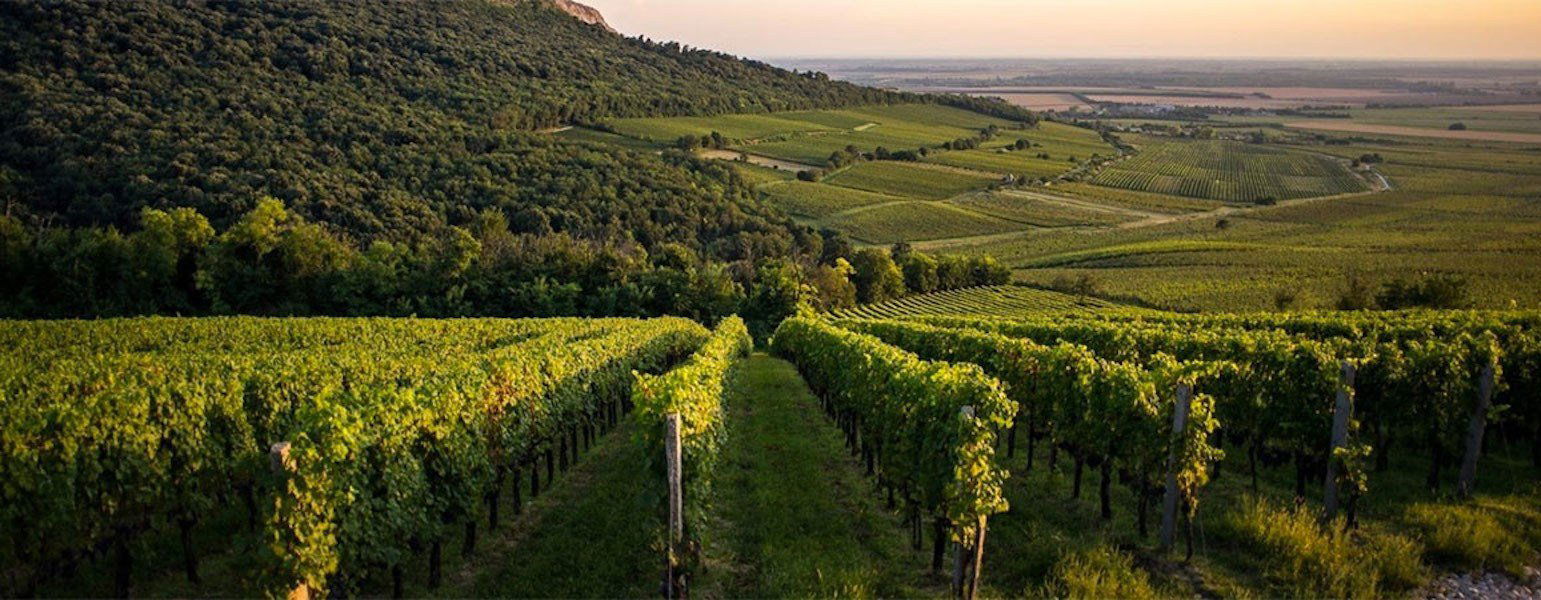
There is a particular quality of light in the Villány Hills in late afternoon, when the sun drops toward Croatia and the basalt ridges of Fekete-hegy absorb the last warmth of a Pannonian summer. This is the physical context for Vylyan Winery, located at 7800 Kisharsány on Fekete-hegy — Black Mountain — a site whose geological character is inseparable from the wines produced here. To visit or to open a bottle from this address is to encounter one of Hungary's most geographically specific wine identities, not merely a regional label.
The Villány wine region occupies Hungary's southernmost tip, abutting the Croatian border, and benefits from a climate measurably warmer and drier than the country's more famous Tokaj region to the northeast. Mean annual temperatures and long growing seasons support full ripening of red varieties, particularly Cabernet Franc, Cabernet Sauvignon, Merlot, and the indigenous Kadarka. But within Villány, not all sites perform equally. Fekete-hegy's basalt-derived soils , heavier, more mineral-retentive than the loess and clay found elsewhere in the appellation , impose a structural logic on the wines that distinguishes them from neighbouring subzones. That soil signature, more than any single winemaking decision, is the editorial subject here.
For anyone building a picture of Hungarian fine wine beyond Tokaj's Furmint-and-Aszú identity, Villány represents the country's most serious red wine tradition, and Fekete-hegy sits at the sharper end of that tradition. Vylyan's 2025 Pearl 2 Star Prestige award confirms its position within the recognised tier of Hungarian producers , a trust signal worth noting when the country's wine ratings infrastructure remains less legible to international audiences than Bordeaux or Burgundy classifications. See our full Kisharsány wineries guide for broader regional context.
The Villány Style: What the Land Argues For
Villány's wine identity has been built, somewhat deliberately, around a French Bordeaux varietal framework , Cabernet Franc in particular has found advocates here who argue that Hungary's south produces a structurally convincing expression of the grape, distinct from Loire Valley models in its riper tannin profile and darker fruit register. Whether that argument holds at individual producer level is a matter of vintage and site, but at Fekete-hegy the basalt subsoil provides the mineral tension that prevents full ripeness from tipping into excess weight.
This is a recurring tension in warm-climate red wine production globally: how to preserve definition and longevity when a generous climate pushes alcohol and softens acidity. The most persuasive answers usually come from altitude, soil mineralogy, or varietal selection , ideally some combination. At Fekete-hegy, the volcanic geology is the primary counterbalance, functioning in broadly the same way that volcanic soils define house styles at producers in Sicily's Etna appellation or Spain's Canary Islands , cooler and more reductive than surrounding soils, lending wines a firmer spine than the climate would suggest.
Producers working comparable terroir within Hungary include Bock Winery in Villány, one of the region's most established names, and Babarczi Winery in Gyor, which approaches the Hungarian red wine question from a different angle. The comparison set matters because Villány is not a monolithic style: sub-appellations and individual hillside sites produce wines that argue different points about what southern Hungary can achieve. Vylyan's position on Fekete-hegy places it in the more structured, site-specific tier of that internal debate.
Kisharsány as a Base: Practical Orientation
Kisharsány is a small village at the foot of Fekete-hegy, close enough to the town of Villány (the regional administrative and hospitality centre) that visitors typically base themselves there or in the slightly larger Pécs, Hungary's fifth-largest city, roughly 30 kilometres to the northwest and well-served by rail from Budapest's Keleti station. Pécs offers the broadest accommodation range for anyone spending multiple days in the region; consult our full Kisharsány hotels guide for options closer to the vineyards themselves.
The Villány wine road is navigable by car, and most serious visitors cover several estates over two days rather than treating it as a day trip from Budapest. The capital is approximately 280 kilometres to the north, making it a four-hour round-trip drive that works against deep wine engagement. Arriving by train to Pécs and renting a car locally is the more practical approach for anyone who wants to visit multiple producers. For dining in the area, our full Kisharsány restaurants guide maps the options, which skew toward regional Hungarian cooking with strong meat traditions that pair logically with the area's red wines.
The harvest season, typically running from late September into October in Villány's warm conditions, is the period when the region is most active and when visiting producers carries the most context. Spring, when new vintages are released and cellars open for tastings, is the other natural window. Off-season visits are quieter and, depending on the producer, may require advance arrangement. For bars and evening options in the area, see our full Kisharsány bars guide, and for activities beyond wine, our full Kisharsány experiences guide.
Placing Vylyan in the Hungarian Fine Wine Context
Hungarian wine has operated in an international awareness gap for most of the post-Communist era, with Tokaj's sweet wine tradition serving as the country's primary export identity. That picture has been shifting, and Villány has been central to the shift. The region's leading producers have sought recognition through international competitions and wine guides precisely because the domestic recognition framework does not yet carry the same weight as French or Italian equivalents with export-market buyers.
Vylyan's Pearl 2 Star Prestige award for 2025 is meaningful in that context: it places the estate within a recognised tier without overstating the case. Comparable producers earning similar recognition in Hungary include estates working Tokaj's different varietal vocabulary , Disznókő in Mezőzombor, Royal Tokaji in Mád, Tokaj Hétszőlő in Tokaj, Tokaj Oremus in Tolcsva, and Árvay Winery in Rátka , which operate in a different appellation with different stylistic goals. The distinction matters: Tokaj's white and sweet wine tradition and Villány's red wine ambitions are parallel tracks within Hungarian fine wine, not interchangeable.
For international reference points on how a warm-climate, terroir-specific estate earns recognition through structured red wines rather than spectacle, Abadía Retuerta in Sardón de Duero offers a useful comparison in terms of estate scale and seriousness, while Béres Winery in Erdőbénye provides another domestic reference operating in the premium Hungarian tier. Aberlour in Aberlour represents a different category entirely but illustrates how regional specificity , in that case Scottish Highland provenance , functions as a differentiator in premium beverage markets, a dynamic Villány producers are working to establish for Hungarian red wine.
What Vylyan's Site Communicates
Strip away producer branding and the Fekete-hegy address communicates a specific set of conditions: basalt soils, southerly aspect, Pannonian warmth moderated by elevation, and proximity to the Croatian border where the climate becomes measurably Mediterranean in character. These are the inputs. The wines that result from those inputs carry, in good vintages, a combination of ripeness and mineral tension that defines the Villány argument for serious red wine production in Central Europe.
That argument is not yet universally accepted by international buyers and critics, who continue to treat Hungary primarily as a Tokaj story. Vylyan and its Fekete-hegy neighbours are part of a longer-term reframing. The 2025 Pearl 2 Star Prestige award is one data point in that process, not the conclusion. Visitors who arrive at Kisharsány with some understanding of what Fekete-hegy's geology argues for will leave with a more coherent picture of Hungarian wine than any amount of reading about Furmint can provide.
Frequently Asked Questions
- Is Vylyan Winery more low-key or high-energy?
- Given its village setting in Kisharsány and its positioning as a site-specific estate on Fekete-hegy, Vylyan occupies the quieter, producer-focused end of wine tourism rather than a high-volume visitor-centre format. The Pearl 2 Star Prestige recognition for 2025 suggests a producer oriented toward wine quality and critical recognition rather than hospitality spectacle. Expect an environment calibrated for serious engagement with the wines rather than event-driven energy.
- What wines is Vylyan Winery known for?
- Vylyan operates in Hungary's Villány region, where the dominant identity is built around red Bordeaux varieties , Cabernet Franc, Cabernet Sauvignon, and Merlot , shaped by Fekete-hegy's basalt soils. The winemaker and specific labels are not confirmed in available data, but the estate's 2025 Pearl 2 Star Prestige award indicates recognised quality within that regional red wine tradition. For the fullest picture of the Kisharsány and Villány producer set, see our full Kisharsány wineries guide.
- What is Vylyan Winery known for?
- Vylyan is known as a Kisharsány-based estate working Fekete-hegy's distinctive basalt terroir in Hungary's southernmost wine region. Its 2025 Pearl 2 Star Prestige award places it within the recognised tier of Hungarian producers at a moment when Villány is asserting its red wine credentials more forcefully on the international stage. In the context of Hungarian fine wine, it represents the Villány counterargument to Tokaj's white and sweet wine dominance.
Related editorial
- Best Fine Dining Restaurants in ParisFrom three-Michelin-star icons to the next generation of Parisian chefs pushing boundaries, these are the restaurants that define fine dining in the world's culinary capital.
- Best Luxury Hotels in RomeFrom rooftop terraces overlooking ancient ruins to Michelin-starred hotel dining, these are the luxury hotels that make Rome unforgettable.
- Best Cocktail Bars in KyotoFrom sleek lounges to hidden speakeasies, Kyoto's cocktail scene blends Japanese precision with global influence in ways you won't find anywhere else.
Save or rate Vylyan Winery on Pearl
Keep this venue in your Pearl passport, rate it after you visit, and track it alongside every other place you collect.