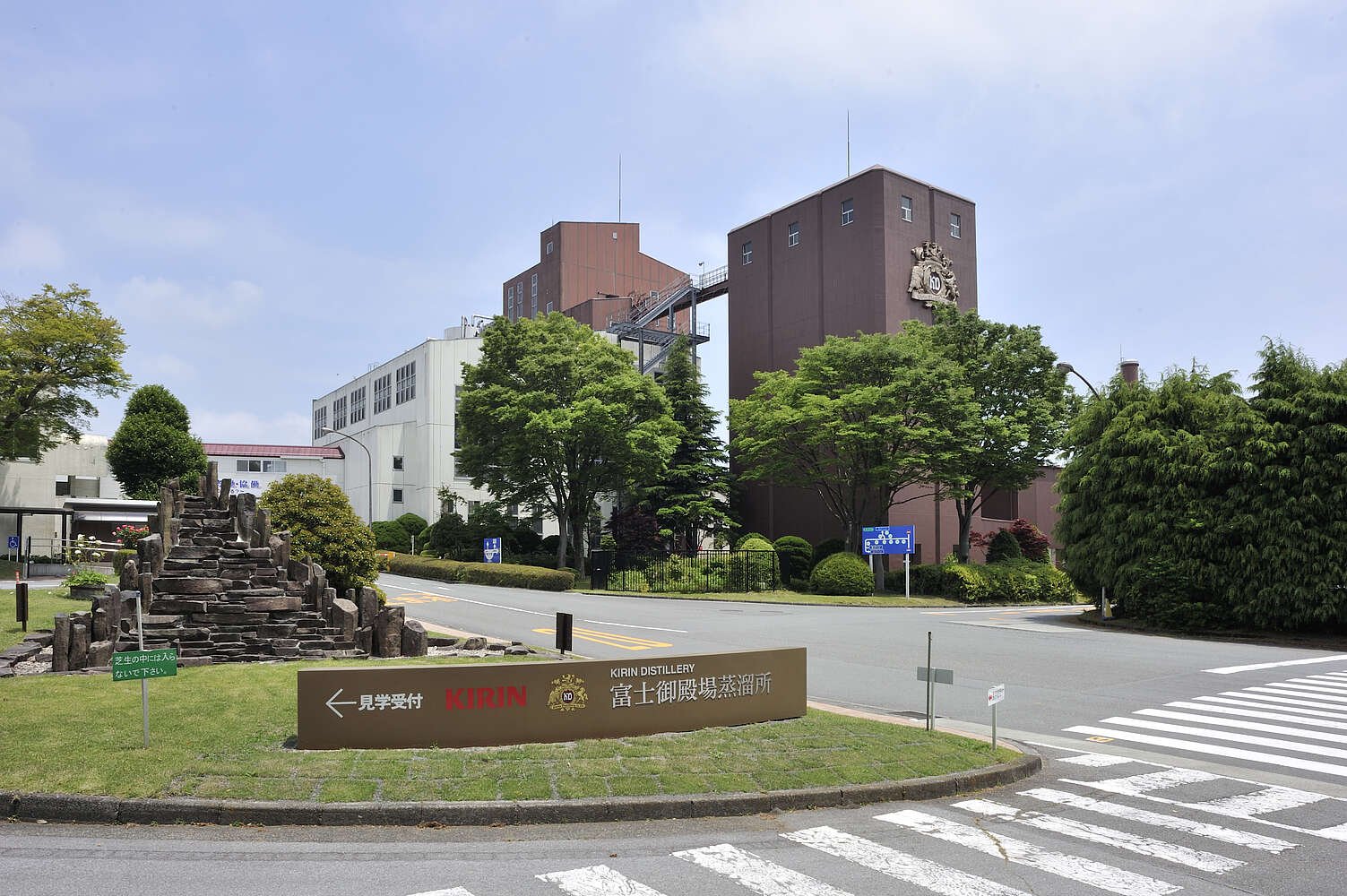
Winery in Gotemba, Japan

    Fuji Gotemba Distillery

    750pts

    Highland Maturation Whisky

    Fuji Gotemba Distillery, Winery in Gotemba

    About Fuji Gotemba Distillery

    Situated at the base of Mount Fuji in Shizuoka Prefecture, Fuji Gotemba Distillery operates in one of Japan's most geographically distinctive whisky environments, where snowmelt water and cool highland air shape the production conditions. The distillery holds a Pearl 3 Star Prestige rating (2025), placing it among the recognised leaders in Japan's increasingly competitive single-malt scene.

    Where the Mountain Does the Work

    There is a particular kind of silence at elevation that changes how you perceive a place. Approaching Gotemba from the Tokaido Shinkansen corridor, the terrain shifts quickly: the urban density of the Kanto plain gives way to the forested lower slopes of Mount Fuji, and by the time you reach the distillery address at 970 Shibanta, the mountain is not a backdrop but a presence. That proximity is not incidental to what happens inside. It is the argument the distillery makes about itself — that site, water source, and ambient climate are not marketing language but technical inputs.

    Fuji Gotemba sits within a broader Japanese whisky category that has spent the last decade repositioning itself at the premium end of the global spirits market. Where the early international recognition of Japanese whisky leaned on the soft, approachable blends from Suntory and Nikka, the more recent conversation has moved toward single-malt expressions that can be read as terroir-driven in the same way a Burgundy can: climate, mineral content of the water, and the character of the wood all legible in the glass. Gotemba's production conditions place it at a credible point in that conversation.

    The Terroir Argument in Practice

    Whisky terroir is a contested term, but the conditions at Gotemba give it more traction than most. The distillery draws on water filtered through the volcanic rock and snowpack of Mount Fuji, a source with a mineral profile distinct from the peat-influenced water systems of Islay or the softer well water of Speyside. The altitude, combined with the temperature variance that comes with proximity to a 3,776-metre mountain, creates maturation conditions that differ from lowland Japanese sites: cooler mean temperatures slow the extraction from cask, and the seasonal swing between cold winters and humid summers accelerates it at different points in the year. The result is a maturation rhythm specific to this location.

    This is the framework through which Fuji Gotemba's Pearl 3 Star Prestige rating (2025) should be understood. That recognition does not exist in a vacuum; it positions the distillery within a peer set that includes [Hakushu (Suntory) in Hokuto](https://www.enprimeurclub.com/wineries/hakushu-suntory-hokuto-winery), whose alpine forest site also uses elevation and clean water as production assets, and [Chichibu in Chichibu](https://www.enprimeurclub.com/wineries/chichibu-chichibu-winery), which has built its reputation on small-batch, site-specific maturation in the Chichibu basin. Gotemba occupies a different point on that map, with the scale of a Suntory-owned operation and the geographic specificity of a mountain-facing site.

    Reading the Distillery Against Its Japanese Peers

    Japan's distillery landscape has fragmented productively over the past decade. The older duopoly of Suntory and Nikka gave the category its international foundation, but the newer generation of producers has pulled the conversation in a more artisanal direction. [Mars Shinshu Distillery in Miyada](https://www.enprimeurclub.com/wineries/mars-shinshu-distillery-miyada-winery) operates at over 800 metres in the Japanese Alps, making an explicit case for highland maturation. [Miyagikyo (Nikka) in Sendai](https://www.enprimeurclub.com/wineries/miyagikyo-nikka-sendai-winery) draws on the convergence of two rivers and a valley microclimate. [Yoichi (Nikka) in Yoichi](https://www.enprimeurclub.com/wineries/yoichi-nikka-yoichi-winery), on Hokkaido's coast, uses sea air and peat to produce expressions that read as more overtly Scottish in character. Each of these producers is making an argument from geography. Fuji Gotemba's argument is among the most visually legible: you can see the mountain from the production floor.

    At the other end of the Japanese spirits spectrum, [Kanosuke in Kagoshima](https://www.enprimeurclub.com/wineries/kanosuke-kagoshima-winery) and [Eigashima (White Oak) in Akashi](https://www.enprimeurclub.com/wineries/eigashima-white-oak-akashi-winery) operate in coastal or lowland environments where the terroir case is built differently, around humidity, salt air, and heat-driven maturation. Comparing those expressions with Gotemba's output illustrates how geographically diverse Japanese whisky production has become, and why single-origin releases from mountain-facing sites command a separate tier of critical attention.

    Gotemba in the Shizuoka Prefecture Context

    Shizuoka Prefecture has quietly developed a credible spirits and fermentation identity alongside its more publicised role in tea production and seafood. [Shizuoka in Shizuoka](https://www.enprimeurclub.com/wineries/shizuoka-shizuoka-winery) represents the newer wave of Shizuoka-based distilling, with a profile built on local timber-fired distillation and an emphasis on water provenance. Fuji Gotemba, operating at larger scale and with a longer production history, sits as the established reference point in the prefecture's whisky category. The two producers are not direct competitors in format or scale, but together they mark Shizuoka as a prefecture where geography and water source are treated as genuine production variables rather than label copy.

    For visitors travelling from Tokyo, Gotemba is accessible via the JR Gotemba Line from Shinjuku (approximately 90 minutes) or via the Tomei Expressway by road. The city itself is a functional junction town rather than a destination in its own right, but that changes the moment you turn toward the Fuji foothills. The distillery's address in the Shibanta area places it within the buffer zone of the Fuji-Hakone-Izu National Park, which sets the visual and atmospheric conditions for any visit. For broader context on eating and drinking in the area, the [Gotemba restaurants guide](https://www.enprimeurclub.com/cities/gotemba) covers the wider food and drink scene across the city.

    What the Pearl 3 Star Prestige Rating Implies

    EP Club's Pearl 3 Star Prestige designation (2025) is the relevant trust signal here, and it implies positioning within a peer set defined by production quality and site specificity rather than volume or commercial reach. Across the wider Japanese whisky category, Prestige-level recognition tends to attach to operations where the relationship between geography, water, and maturation conditions is both intentional and legible in the product. That criteria fits Gotemba's profile as a high-elevation, volcanic-water site operating under a major spirits group that has the resources to take long maturation windows seriously.

    For comparative international reference, the category-level conversation around terroir-driven distilling connects Gotemba's positioning to houses like [Aberlour in Aberlour](https://www.enprimeurclub.com/wineries/aberlour-aberlour-winery), where river water and valley microclimate form the production narrative, though the stylistic outcomes differ considerably. The comparison is structural rather than sensory: what matters is that both operate within a critical framework where place is treated as a primary variable.

    Planning a Visit

    Booking and access details are not available in our current database record, so prospective visitors should confirm hours and tour formats directly through official channels before travelling. Given the distillery's location within the Fuji-Hakone-Izu National Park buffer zone, seasonal timing matters: the approach roads and the mountain views both shift considerably between summer and the winter snowpack months, and spring cherry blossom season concentrates visitor traffic across the entire Gotemba area. Arriving on a weekday outside peak holiday windows generally allows for a quieter experience at mountain-facing sites in this part of Shizuoka.

    For those building a broader Japanese distillery itinerary, Fuji Gotemba pairs logically with [Hakushu (Suntory) in Hokuto](https://www.enprimeurclub.com/wineries/hakushu-suntory-hokuto-winery) to the northwest, another alpine-context Suntory operation, or with [Yamazaki (Suntory) in Shimamoto](https://www.enprimeurclub.com/wineries/yamazaki-suntory-shimamoto-winery) near Osaka for a contrast between the original urban-adjacent flagship and this mountain-facing counterpart. Wine travellers moving through central Honshu might also consider [Château Mercian Mariko Winery in Nagano Prefecture](https://www.enprimeurclub.com/wineries/chateau-mercian-mariko-winery-nagano-prefecture-winery) or [98Wines in Yamanashi](https://www.enprimeurclub.com/wineries/98wines-yamanashi-winery) as part of the same regional circuit, where the argument from terroir runs across both spirits and wine production in the Fuji foothills corridor.

    Frequently Asked Questions

    Is Fuji Gotemba Distillery more low-key or high-energy?

    The setting does most of the tonal work. Gotemba is a working town rather than a curated tourist destination, and the distillery sits in a mountain-facing industrial zone with national park land as its backdrop. The experience tends toward the contemplative end of the distillery-visit spectrum, shaped by the physical environment rather than visitor-experience programming. The Pearl 3 Star Prestige rating (2025) reflects production credentials, not hospitality scale.

    What's the must-try whisky at Fuji Gotemba Distillery?

    Specific current expressions are not confirmed in our database, so we are not going to fabricate a tasting note. What the terroir context suggests is that any single-malt release tied to the site's volcanic water source and mountain-elevation maturation conditions represents the most direct argument the distillery makes from geography. Those expressions tend to be the most informative for visitors travelling specifically for the production story.

    What's the defining thing about Fuji Gotemba Distillery?

    The combination of a Mount Fuji water source, highland maturation conditions, and the Pearl 3 Star Prestige recognition (2025) places this distillery in a narrow cohort of Japanese producers where geography is a verifiable production input rather than a label narrative. That specificity is what separates it from lower-elevation or urban-adjacent operations elsewhere in the Suntory portfolio and across the wider Japanese category.

    How hard is it to get in to Fuji Gotemba Distillery?

    Current booking details, tour formats, and capacity information are not available in our database record. If you are planning a visit, confirm directly through official channels. The general pattern for Japanese distillery visits operated by major spirits groups is that tours require advance reservation, particularly during peak Fuji tourism season in spring and autumn. Given the distillery's location on a busy visitor corridor, planning several weeks ahead is advisable for weekend visits.

    Keep this place

    Save or rate Fuji Gotemba Distillery on Pearl

    Keep this venue in your Pearl passport, rate it after you visit, and track it alongside every other place you collect.